
Small Apartment Decorating Ideas That Actually Change the Room
Most small apartment advice is about buying smaller furniture. Most of the actual gain comes from four other decisions. Here they are, then room by room, on a budget, and in a rental.
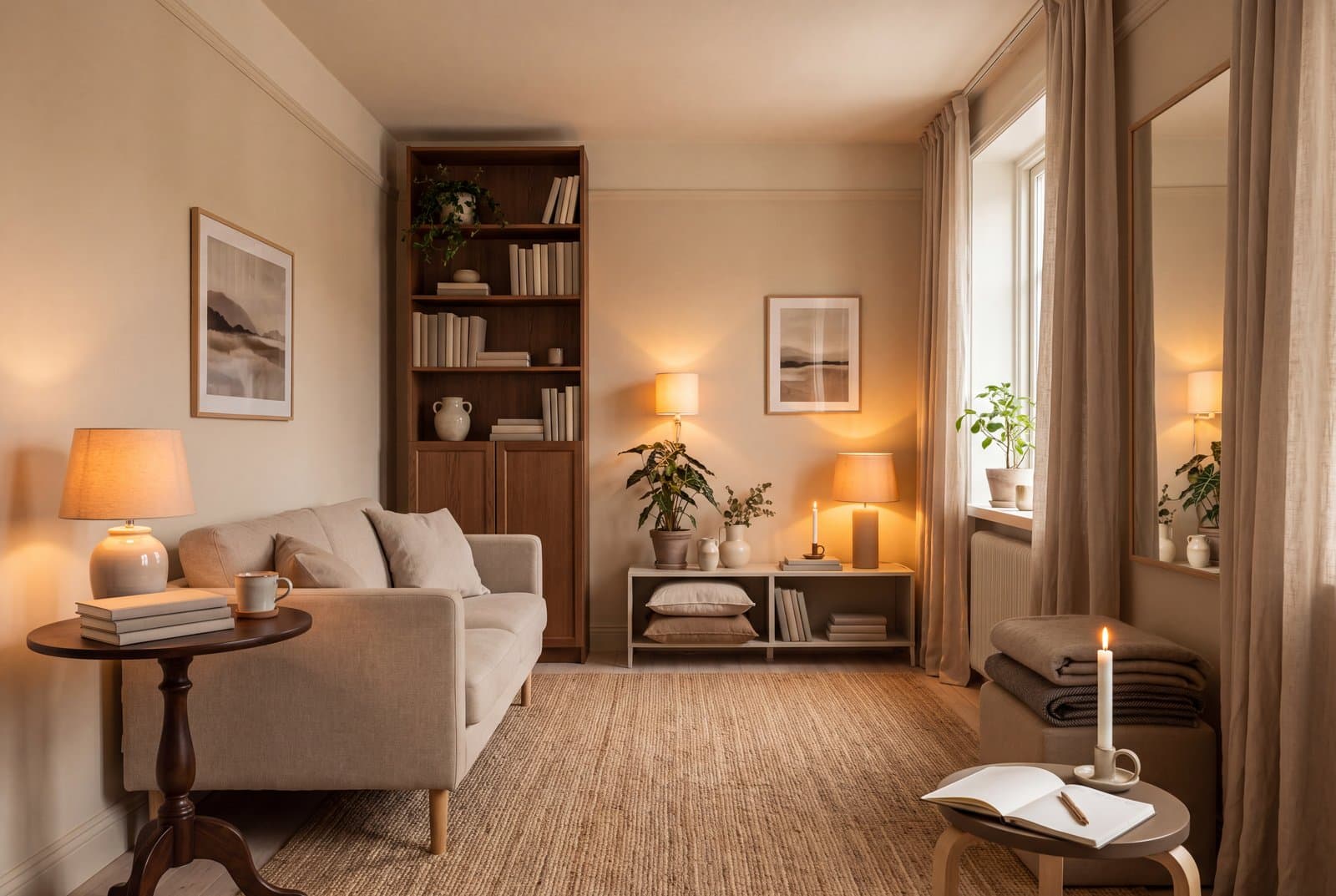
Almost all small apartment advice starts and ends with buying smaller furniture. It is not wrong, and it is not where most of the gain is.
Four other decisions do more: where the light comes from, how much floor you can see, how many different visual lines the eye has to resolve, and whether the room has one job or four. Get those right and a small apartment stops feeling small. Get them wrong and a room full of apartment-scale furniture still feels cramped.
What follows is those four rules, then the specific version of them for each room, plus the budget and rental constraints most people are actually working inside.
The Four Rules That Change a Small Apartment
1. Show more floor. Visible floor is the single strongest signal of space. Legs on furniture rather than skirts to the ground. Wall-hung storage where possible. A console or nightstand you can see under. This is why a leggy mid-century sofa reads larger in a room than a bulky one of the same footprint, and it is the highest-return rule on this list.
2. Fewer, larger pieces. The instinct in a small room is to buy small furniture, and it backfires. Six small objects create six edges, six shadows and six things to resolve. One large sofa and one large piece of art create two. Scale down the *quantity*, not the size.
3. Light from multiple low sources, never one overhead. A single ceiling light flattens a room and pushes the corners into shadow, which makes the room read as its lit portion only. Three or four lamps at different heights let the eye reach the edges, and the room reads its full size.
4. One continuous color, floor to ceiling to trim. Contrast breaks a small room into pieces. A single wall color carried across the trim, and ideally the ceiling, removes the lines that tell you where the room stops. This costs the price of paint and does more than most furniture.
Two smaller decorating tips for a small apartment that punch above their cost: hang curtains at ceiling height and wider than the window, which makes the window read as much larger than it is; and put one large mirror opposite or adjacent to the main light source rather than several small ones.
Small Apartment Living Room
The small apartment living room usually has to do three jobs, and naming them first is what makes the layout solvable.
Decide what it is: somewhere to sit with people, somewhere to watch things, somewhere to eat, somewhere to work. Most small living rooms are asked to do at least two. Furniture that serves one job well beats furniture that half-serves three.
Seating. One properly sized sofa, raised on legs, positioned against the longest wall. Do not buy a loveseat because the room is small; an apartment-depth full sofa in the same footprint gives you more usable seating. Add one light, movable chair rather than a second fixed one.
Table. A nesting pair or a round table with a pedestal base. Round is genuinely better in tight rooms because there are no corners to walk into and the eye follows the curve rather than stopping at an edge.
Storage. Go vertical and go closed. A tall narrow bookcase or a wall of shelving to the ceiling, with the lower two thirds closed. Open storage in a small room accumulates visual noise fast.
Rug. Bigger than you think. A rug that is too small makes the seating group float and cuts the floor into pieces. It should reach at least under the front legs of everything.
Then get the sofa off the wall by even two inches, hang the art low enough to relate to the furniture, and keep the surfaces mostly clear.
Decorating a Small Studio Apartment
A studio is a different problem from a small one-bedroom, because you cannot close a door on any part of it.
Zone with furniture, not with paint. An open-backed bookcase, a sofa placed with its back to the bed, a rug that defines the living area. Contrasting paint colors will chop a studio into several small rooms rather than making it read as one coherent one.
Give the bed a boundary. The single biggest improvement in most studios is making the bed feel like it is in its own place. A curtain track across the ceiling, a low open shelf unit, a folding screen, or a headboard placed as a room divider. Even a partial boundary works.
Buy furniture that does two jobs, but only two. A storage ottoman, a bed with drawers under it, a drop-leaf table, a sofa bed if you actually have guests. Multi-function furniture that tries to do four jobs usually does none of them well and costs more.
One material and one palette throughout. In a studio the whole apartment is one view. A single wood tone and a single narrow color range makes it read as designed rather than as an accumulation.
Small efficiency apartment decorating adds one more constraint: the kitchen is in the room. Treat it as furniture rather than as a kitchen. Match or paint the cabinet fronts to the wall color, put a runner in front of it, and keep the countertop nearly clear so it does not read as a work zone from the sofa.
Small Apartment Bedroom
A small apartment bedroom is a storage problem wearing the costume of a decorating problem.
Deal with storage first. Under-bed drawers or a divan base. A wardrobe that goes to the ceiling rather than stopping short and collecting dust and boxes on top. Wall hooks and a wall shelf instead of a chest of drawers if the floor space is genuinely tight.
Then the bed. Push it into a corner only if you sleep alone; otherwise center it on the longest available wall and accept losing the floor. Choose a low frame and a low headboard, because the more wall you can see above the bed, the taller the room reads.
Skip the two matching nightstands if they do not fit. One nightstand and one wall-mounted shelf or a small sconce on the other side works fine and looks deliberate.
Curtains to the ceiling and wider than the window. One large mirror, ideally on the wardrobe door. A single lamp on each side rather than an overhead.
In a small one-bedroom apartment, the bedroom is often the only door you can close, which makes it the room worth protecting from becoming secondary storage. That is a discipline decision more than a purchase.
Small Apartment Kitchen
Decorating a small apartment kitchen is mostly a matter of getting things off the countertop and onto the walls.
Vertical everything. A rail with hooks for utensils, a magnetic knife strip, a wall-mounted spice shelf, a hanging pot rack if the ceiling allows. Every item you move off the counter buys back usable surface.
Reduce the visual count. Decant dry goods into matching jars, or hide them. A small kitchen with fifteen different pieces of branded packaging visible reads as chaotic regardless of how clean it is.
Light under the cabinets. Small kitchens are usually badly lit and the shadow under the upper cabinets is what makes the counter look cramped. An adhesive warm LED strip costs very little and changes the room.
One warm accent. A wooden board, a linen towel, a small plant, a runner on the floor. Small kitchens tend to be entirely hard surfaces, and one soft warm element stops it reading as a utility space.
If the cabinets are dated rental units and you are allowed to paint them, that is the single highest-impact change available in the room. If you are not, adhesive film on the cabinet fronts and replacement handles get you a surprising distance.
Small Apartment Bathroom
Small apartment bathroom decorating ideas mostly come down to continuity and getting things off the floor.
Wall-hung or pedestal basin so you can see the floor beneath it. A mirrored cabinet rather than a mirror plus a separate cabinet. A shower curtain hung at ceiling height rather than at rail height, which lengthens the room the same way high curtains do in a living room.
Keep the palette to two tones and carry them across the whole room. Contrast bath mats, contrast towels and a contrasting shower curtain will fragment a room this small.
Then: a ladder or over-door rail for towels, a shelf above the door for spares, and a basket for the things that would otherwise sit on the cistern.
One plant that tolerates humidity, warm bulbs rather than cool white, and undyed or single-tone towels.
Small Apartment Balcony or Patio
A small apartment balcony is worth treating as a room rather than as leftover outdoor space, because it adds usable square footage more cheaply than anything indoors.
Floor first. Interlocking wood or composite deck tiles over concrete transform a balcony in an afternoon and lift in one piece when you move.
Bistro over lounge. Two small folding chairs and a small round table will get used. An outdoor sofa in a space this size will not, and will take up the whole balcony.
Go vertical for greenery. Rail planters, a wall-mounted trellis, hanging pots. Floor pots eat the floor you need to sit on.
Light it. Warm string lights along the rail or the wall, plus a lantern or two. Balconies get used in the evening, and an unlit balcony does not get used at all.
Add an outdoor rug and a couple of weatherproof cushions and it becomes somewhere you actually sit. For decorating a small apartment patio at ground level, the same rules apply, with the addition of a screen or tall planters if you need privacy from a shared path.
Decorating a Small Apartment on a Budget
The budget order of operations matters more than the individual purchases.
Free, or nearly. Rearrange for floor visibility. Take everything off the surfaces and put back half. Move the sofa off the wall. Take the curtains up to the ceiling on a longer rod.
Under a hundred. Warm bulbs throughout. A second and third lamp, secondhand. A large mirror, secondhand. Cabinet handles. Adhesive under-cabinet lighting.
Under a few hundred. Paint, including the trim and ceiling. A properly sized rug. Ceiling-height curtains in a plain heavy fabric.
The one thing worth saving for. The sofa, or the bed, whichever gets more hours. In a small apartment a single good large piece plus cheap everything else consistently beats a room of mid-priced compromises, because the large object is what the room is read against.
Small apartment decorating on a budget benefits disproportionately from secondhand, because the pieces that work best in small rooms, leggy sofas, pedestal tables, tall narrow bookcases, are exactly the shapes that were more common thirty years ago than they are now.
Christmas in a Small Apartment
Decorating for Christmas in a small apartment is a question of choosing one gesture instead of distributing several.
A single narrow or half-depth tree in a corner, or a tabletop tree on a console. Then keep everything else to the vertical planes you already use: garland along a shelf edge or a mantel, lights around the window frame, stockings on hooks that were already there.
What does not work in a small apartment is adding new furniture-scale objects. A tree that blocks a walkway will annoy you within a week. Choose the position first and buy the tree to fit it rather than the other way round.
Warm white lights rather than colored, and fewer of them than in a large room, since a small room reaches full effect much sooner.
Renting: What You Can Change and What You Cannot
Most small apartments are rentals, and most small apartment advice quietly assumes they are not.
Almost always available: lighting, in every form. Rugs. Curtains, if you use a tension rod or replace the existing rail and keep the original. Furniture. Removable hooks. Freestanding storage. Deck tiles on a balcony. Cabinet film. Anything you can unscrew and put back.
Ask, because permission is common: paint, if you agree to return it to white. Replacement cabinet handles, keeping the originals in a bag. A shelf, if you fill the holes on the way out.
Usually not worth the fight: flooring, tiling, plumbing fixtures, built-in storage.
The honest framing is that of the four rules at the top of this page, three, floor visibility, furniture count, and lighting, are entirely within a renter's control, and the fourth, continuous color, is often negotiable. Renting limits a small apartment far less than it feels like it does.
Where to Start
Spend one evening moving what you already own before you buy anything. Get furniture off the walls, clear two thirds of every surface, and turn off the overhead light to see which corners go dark. That tells you what the room actually needs, and it is usually not what you thought.
Then buy lighting, then a rug, then the one large piece worth spending on.
If the harder question is not layout but style, and you are furnishing the place from scratch, our style quiz takes about three minutes and resolves you against six defined profiles with a palette and reference rooms attached. Japandi is worth a look specifically for small apartments, since it was formed in small homes and its low horizontal lines do the floor-visibility job for you.
Not sure where to start?
Take the style quiz and get a design profile you can actually furnish against. About three minutes.
Take the Style Quiz