
What Wabi-Sabi Means, and What It Looks Like in a Real Room
Wabi-sabi is a Japanese aesthetic built on impermanence, imperfection and age. It is also the interior style most easily faked. Here is the idea, its origin, and how it translates into rooms.
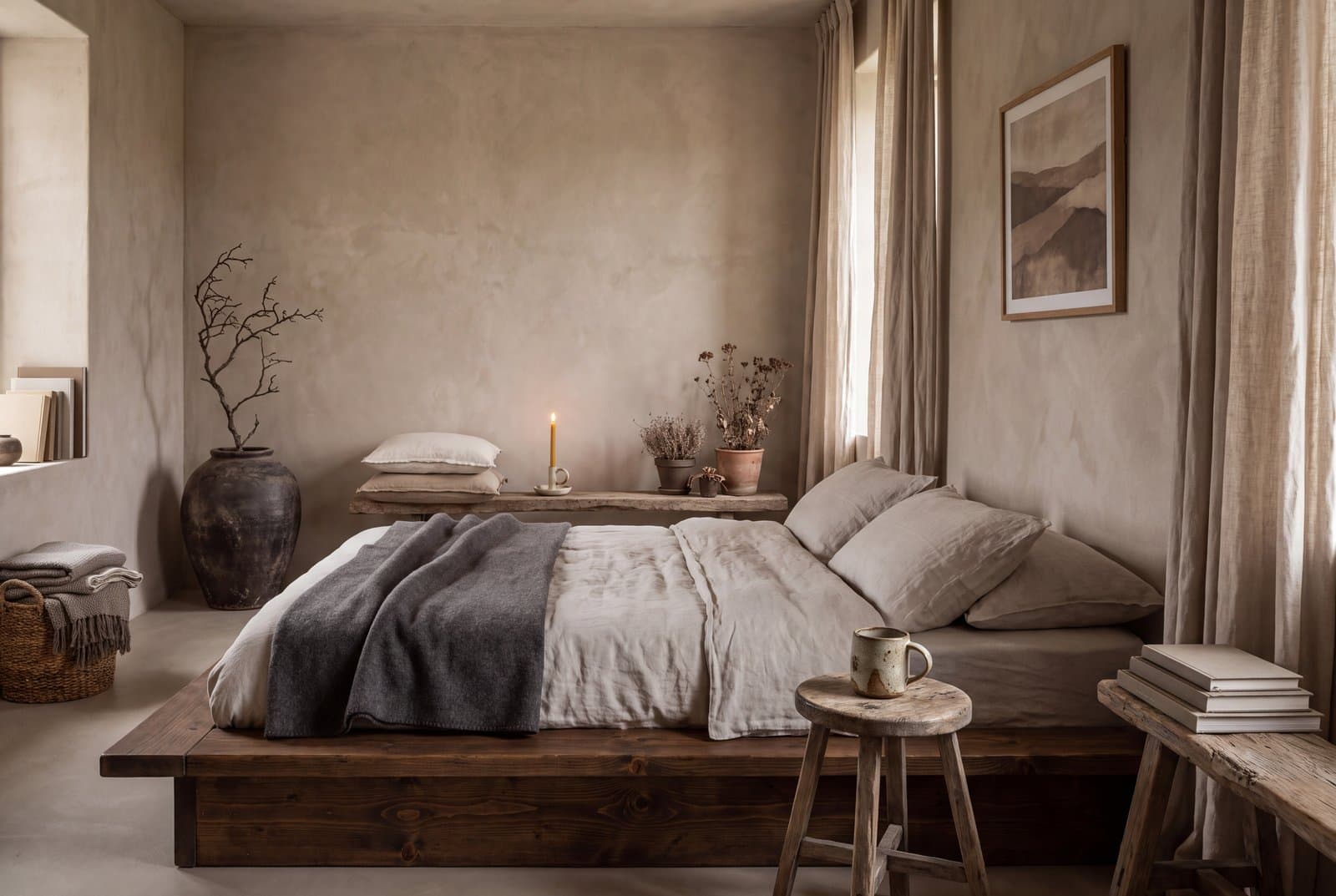
Wabi-sabi is a Japanese aesthetic that finds beauty in impermanence, imperfection and incompleteness. A cracked bowl, a weathered beam, a wall whose plaster has aged unevenly. Not despite the flaws, because of them.
It is also, for that exact reason, the interior style easiest to fake and hardest to do. Nothing about it can be bought new, and a great deal of what is sold under the name is distressed furniture manufactured last month. What follows is what the idea actually is, where it came from, and what it asks of a room you have to live in.
What Wabi-Sabi Means
Wabi-sabi is the acceptance of transience and imperfection as a source of beauty rather than a defect to be corrected.
The two halves originally meant different things. Wabi referred to the austerity and quiet of living simply, often alone, in nature. It carried a sense of deliberate poverty, of having less on purpose. Sabi referred to the qualities that come with age: the patina, the wear, the slow lean toward decay. Together they describe an appreciation for things that are modest, weathered, and visibly subject to time.
In practice it means three things about a room:
- Nothing is symmetrical or perfect. Handmade over machine-made, irregular over uniform, one of a kind over a matched set.
- Age is an asset. Marks, patina, repair and fading are all part of what an object is worth, not damage to it.
- Less, and quieter. Wabi-sabi is restrained. It is not maximalist about its imperfect objects; it gives a small number of them room to be looked at.
What wabi-sabi is not: shabby chic, which is decorative and cheerful about wear; industrial, which is about function and machinery; or minimalism, which is about reduction toward the clean and new.
Where Wabi-Sabi Comes From
The idea has roots in Zen Buddhism and its emphasis on impermanence, and it was formalized through the Japanese tea ceremony.
The tea master Sen no Rikyū, in the sixteenth century, is the figure most associated with pushing tea practice away from imported Chinese luxury and toward simple, locally made, irregular vessels: rough-glazed bowls, plain bamboo, a small unadorned room. That shift is the origin point most often cited for wabi-sabi as an applied aesthetic rather than a philosophical mood.
The related practice most people have seen is kintsugi: repairing broken pottery with lacquer mixed with gold, so the repair is highlighted rather than hidden. It is a compact statement of the whole idea. The object's history is part of the object, and a break is an event in that history rather than the end of it.
Knowing this matters practically, because it tells you what the style is for. Wabi-sabi rooms are built to be lived in slowly and to look better in ten years than they do on the day they are finished. If you want a room that peaks the day the last delivery arrives, choose something else.
How to Pronounce Wabi-Sabi
Wabi-sabi is pronounced WAH-bee SAH-bee, with even stress on both halves and short, clean vowels. No hidden difficulty in this one.
Wabi-Sabi Interior Design: What It Asks For
Four things carry a wabi-sabi interior, and they are all material decisions rather than furniture purchases.
Surfaces with depth and variation. Limewash or clay plaster on the walls rather than flat emulsion. Unpolished stone. Wood with the grain and knots visible. The defining quality is that the surface changes as light moves across it, which flat paint does not do.
A narrow, earthed palette. Clay, sand, bone, unbleached linen, charcoal, rust, moss. Nothing bright, nothing cool, nothing pure white. Wabi-sabi color comes from the material itself rather than being applied over it.
Handmade and irregular objects, sparingly. A few hand-thrown vessels with visible throwing marks and uneven glaze. One is worth more here than ten, because the style needs space around an object for its irregularity to register.
Asymmetry and negative space. Nothing centered, nothing paired. One tall vessel to the left of a long empty stretch of sideboard reads correctly. Two matching vessels flanking a centerpiece does not.
Wabi-sabi style differs from most contemporary interiors in that it wants fewer, larger, rougher gestures. A single long weathered bench beats a set of matching stools.
Wabi-Sabi Furniture
Wabi-sabi furniture is defined by material honesty and by having a past.
What reads correctly:
- Solid wood with live edges, visible knots, splits and old joinery. Unlacquered, oiled or waxed rather than sealed in gloss.
- Low, heavy, simple forms. Benches, plinths, slab tables, platform beds.
- Undyed and naturally dyed textiles: heavy linen, hemp, undyed wool, raw cotton. Fabric that creases and softens.
- Stone, clay, concrete and unglazed ceramic in structural roles rather than decorative ones.
- Rattan, cane, paper and bamboo for lightness against the heavy pieces.
Vintage wabi-sabi furniture is the honest route, and antique or reclaimed pieces will always do more than a new piece with a factory-applied distressed finish. The difference is legible even when people cannot articulate why: real wear happens where hands and feet go, and a manufacturer distresses evenly across the whole surface.
If you are buying new, buy plain and let it age. A simple unfinished oak table with no character at all will develop the character within a few years, whereas a new table pretending to have it never will.
Wabi-Sabi Living Room
The wabi-sabi living room runs on one large soft object, one heavy natural object, and a lot of restraint.
The sofa should be low, deep, and upholstered in a heavy natural fabric in oatmeal, clay or a faded rust. Slouchy rather than tailored; wabi-sabi has no interest in a crisp edge. If it creases when you sit on it, that is correct.
Ground it on a jute, hemp or undyed wool rug with an uneven weave. Then one heavy element: a stone or reclaimed timber coffee table, a low plinth, a wooden block.
Keep the walls textured and largely empty. One large piece of art or one hanging textile, positioned off-center. A dried branch in a tall floor vessel, which is the single most recognizable wabi-sabi gesture and is effective precisely because it is one large object doing all the work.
Lighting should be low, warm and indirect. Paper, linen and unglazed ceramic shades. Nothing chrome, nothing bright.
Wabi-Sabi Bedroom
A wabi-sabi bedroom is nearly bare, and gets its warmth from texture rather than from objects.
Low platform bed in solid wood, or a simple frame with no headboard at all. Heavy washed linen bedding in bone, clay or stone, deliberately unironed. A wool or hemp blanket folded across the end.
One or two irregular ceramic vessels on a wooden stool used as a nightstand. A textured wall behind the bed, limewash if you can, which does more for this room than anything you can put in it.
Curtains in unlined heavy linen, hung to the floor, allowed to pool slightly. Light filtering through linen rather than being blocked by it is very much the point.
Resist the urge to fill the remaining space. The empty half of a wabi-sabi bedroom is doing as much work as the furnished half.
Wabi-Sabi Kitchen
A wabi-sabi kitchen is the hardest room in the style, because kitchens are full of engineered surfaces and appliances that resist age.
Where the style can win: solid timber or honed unsealed stone countertops that will mark and patina. Plaster or limewash on the walls. Open shelving in reclaimed timber. Handmade ceramics and wooden utensils out on display. A stone or ceramic sink rather than stainless.
Where to concede: appliances. Integrate them behind timber fronts where budget allows, and where it does not, choose matte finishes and stop worrying about it. A wabi-sabi kitchen with a visible modern oven is a kitchen. A wabi-sabi kitchen that has been contorted to hide every functional object is a stage.
Avoid high gloss, avoid pure white, and avoid anything with a uniform printed pattern. If you have to choose one surface to get right, choose the countertop, because it is the largest continuous material in the room and the one your hands are on.
Wabi-Sabi Bathroom
The wabi-sabi bathroom is where the aesthetic and modern bathroom construction are most at odds, and where a small number of moves get you a long way.
Microcement, tadelakt or a plaster-effect wall finish instead of tile is the single decision that transforms the room. It gives continuous, subtly variable surface where tile gives a grid.
Then: a stone or unglazed ceramic basin, a timber vanity or a simple wooden plinth, aged brass or matte black fittings, and a large unframed mirror. Undyed linen or waffle-weave towels rather than plush white ones. A wooden stool. A stone dish.
Keep the palette entirely in sand, clay and stone. The most common mistake is a warm-toned wabi-sabi bathroom with cool white sanitaryware in it, which fights everything else in the room.
The Wabi-Sabi Dining Table
The wabi-sabi dining table is often the single most important object in the whole house, because it is large, it is wood, and it is the surface that will accumulate the most visible history.
Look for solid timber with real character: live edges, visible knots, filled splits, or reclaimed boards. A trestle, plinth or slab base rather than turned legs. Oiled or waxed rather than lacquered, so it can mark and be re-oiled rather than being ruined by the first hot dish.
Wabi-sabi dining chairs should not match the table and ideally should not match each other. Simple wooden chairs of different ages, or a mix of chairs on one side and a long bench on the other. Woven paper cord, rush and cane seats all work.
Leave the table bare, or with one linen runner and one low vessel. No centerpiece, nothing symmetrical.
Wabi-Sabi Decor
Wabi-sabi decor is a short list, deliberately.
- Hand-thrown ceramics with uneven glaze, visible marks, and irregular form. One large vessel outperforms a shelf of small ones.
- Dried branches, seed heads and grasses rather than fresh cut flowers.
- Stone, driftwood and found objects, used singly and given space.
- Textiles as wall decor. A hanging length of undyed linen, an old textile, a woven panel. Wabi-sabi wall decor is more often fabric or nothing than it is framed art.
- Objects with visible repair. Kintsugi ceramics, mended textiles, glued and re-joined wood.
What to leave out: sets, matched pairs, anything glossy, anything mass-produced with a distressed finish, and gallery walls. The style does not do accumulation.
Where Patina Ends and Neglect Begins
This needs saying because it is the practical failure mode.
Wabi-sabi is about age that has been cared for, not about things being left to fall apart. A worn oiled table that has been re-oiled every year is wabi-sabi. A table with a water ring and a sticky patch is a dirty table. A limewashed wall with soft tonal variation is wabi-sabi. A wall with damp in it is a building problem.
The distinguishing feature is intent and maintenance. Wabi-sabi objects are usually maintained more attentively than modern ones, because oiled wood, unsealed stone and natural fiber all demand upkeep that sealed surfaces do not. If you dislike maintenance, this is the wrong style, and that is worth knowing before you commit a kitchen countertop to it.
Wabi-Sabi and Japandi
The two overlap heavily and get confused constantly, so it is worth being precise.
Japandi is a hybrid of Japanese and Scandinavian design. It shares wabi-sabi's natural materials, restraint and warm neutral palette, but it is tidier, more finished, and more Scandinavian about comfort and function. A Japandi room looks resolved.
Wabi-sabi is the Japanese half on its own, taken further toward age and irregularity. It is rougher, more asymmetric, more comfortable with an unfinished edge. A wabi-sabi room looks lived through.
A wabi-sabi Japandi kitchen, which people do search for, is a real and coherent thing: Japandi cabinetry and layout, with wabi-sabi materials on the surfaces you touch. Flat-front light oak cabinets, an unsealed stone countertop, plaster walls and handmade ceramics on open shelves.
If you like the calm of Japandi but find it a little bloodless, wabi-sabi is the direction to move. If you like wabi-sabi but need the room to be practical and easy to keep, move toward Japandi.
Where to Start
Start with a wall finish and one large timber object. Limewash or plaster on the walls, and a table, bench or bed in solid wood with genuine character. Those two decisions establish the material logic of the room, and everything afterward is a matter of not adding too much.
Then buy slowly. Wabi-sabi is the one style where furnishing a room over three years produces a better result than furnishing it in a weekend, because the accumulation and the wear are both part of the outcome.
If you want a defined starting profile rather than a room-by-room approach, our style quiz takes about three minutes. Wabi-sabi sits closest to the Modern and Scandinavian profiles, pulled toward the rougher and more natural end of both. Organic modern is the adjacent style if you want the natural materials with a more sculptural, contemporary result.
Not sure where to start?
Take the style quiz and get a design profile you can actually furnish against. About three minutes.
Take the Style Quiz