
Bohemian Interior Design: Why It Cannot Be Bought in One Trip
Bohemian is the style most dependent on accumulation, which makes it the one least suited to being bought all at once. What holds a bohemian room together is not randomness but repetition, and knowing the difference is what stops a collected room from reading as a themed one.
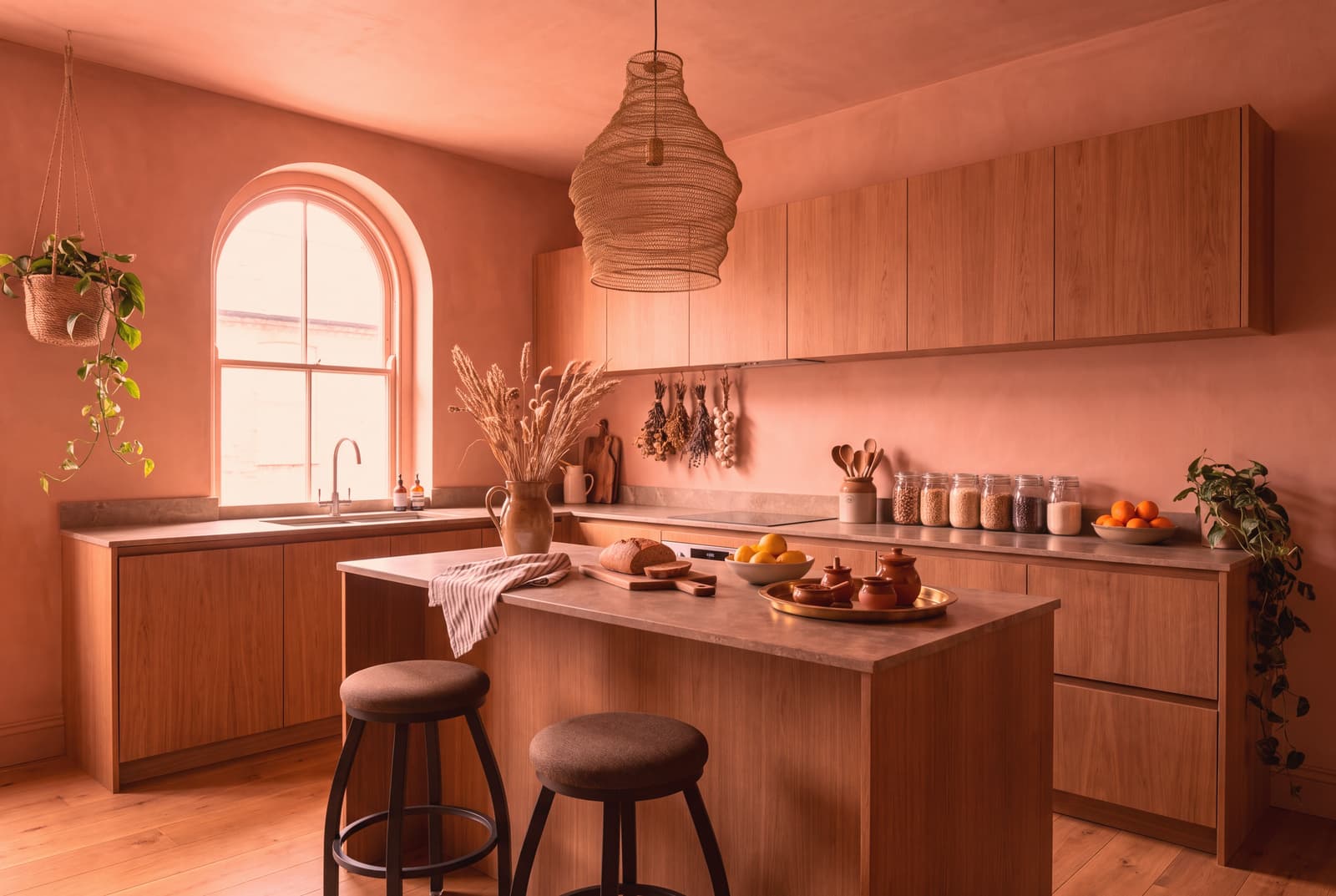
Hover or tap a dot to see what it is. See the full room, priced →
Bohemian is the style most dependent on accumulation, which makes it the one least suited to being furnished in a single order. Its coherence comes from objects that read as gathered from different places over time, and a room assembled all at once from one retailer tends to read as a themed display, no matter how good the individual pieces are.
What actually holds a bohemian room together is not randomness. It is repetition. A limited warm palette running through the textiles, the ceramics and the wood, with plenty of natural fiber and greenery, is what lets genuine variety read as a personality rather than as clutter. Get the repetition right and you can mix far more than a stricter style would ever allow.
That is also the practical trap in shopping for the style: buying a "boho set" defeats the thing that makes boho work. The goal is objects that clearly came from different places but agree with each other on color and material, not a single coordinated collection that only looks eclectic.
What Bohemian Interior Design Is
Bohemian interior design is a layered, collected style built from natural materials, global textile and craft traditions, and pattern used generously rather than sparingly, organized around a warm, earthy palette that keeps the variety from reading as chaos.
The characteristics that actually define it:
- Layering as the primary technique. Rugs over rugs, textiles over furniture, plants at multiple heights. Bohemian rooms are built up in visible layers rather than furnished flat.
- Natural, tactile materials. Rattan, jute, woven rush, unglazed ceramic, raw or lightly finished wood, favored over polished, machine-precise surfaces.
- Global pattern and craft. Textiles and objects that draw on Moroccan, Indian, West African and Latin American craft traditions, mixed rather than sourced from a single region.
- A repeated warm palette. Terracotta, rust, ochre, deep plum and warm neutrals recur across the room rather than each object carrying its own unrelated color.
- Visible plant life. Not one specimen plant as sculpture, but several, at different heights, genuinely part of the furnishing rather than an accent.
Bohemian, Maximalist and Eclectic Are Not the Same Thing
These three all describe "a lot going on," and the differences matter once you start buying.
Bohemian is specifically warm, earthy and natural-material-based, drawing on the global craft traditions above, with a fairly consistent, repeated color story running through it.
Maximalist is a broader appetite for density and saturation that is not tied to any one palette or material tradition. A maximalist room can run on jewel tones, black and gold, or bright primary color, and it favors pattern for its own visual effect rather than because it is tied to a natural-fiber, hand-crafted material story. Maximalism asks the walls, the floor and the surfaces to all speak at once; bohemian is quieter about its architecture and puts the density into the furnishings instead.
Eclectic simply means mixing styles and eras without one dominant vocabulary. A room can be eclectic and cold, eclectic and modern, or eclectic and bohemian; eclectic describes the mixing itself, not a particular palette or material story. Bohemian is one specific, warm, natural-material flavor of eclectic, not a synonym for it.
If you want the warm, natural-fiber, globally-influenced version specifically, shop bohemian. If you want density and pattern without that particular palette, look at maximalist pieces instead.
The Bohemian Color Palette
- The base. Warm white, sand or a soft terracotta wall color, paired with a natural wood or woven-look floor covering.
- The recurring warm tones. Terracotta, rust, ochre, deep plum and olive, chosen so that at least three or four objects in the room repeat each color rather than each object introducing a new one.
- The neutrals. Undyed jute, raw linen and natural rattan, which let the saturated colors above stand out without competing.
- The metal accent. Warm brass or aged bronze, used on lighting and small hardware rather than a cool-toned metal.
Bohemian Living Room
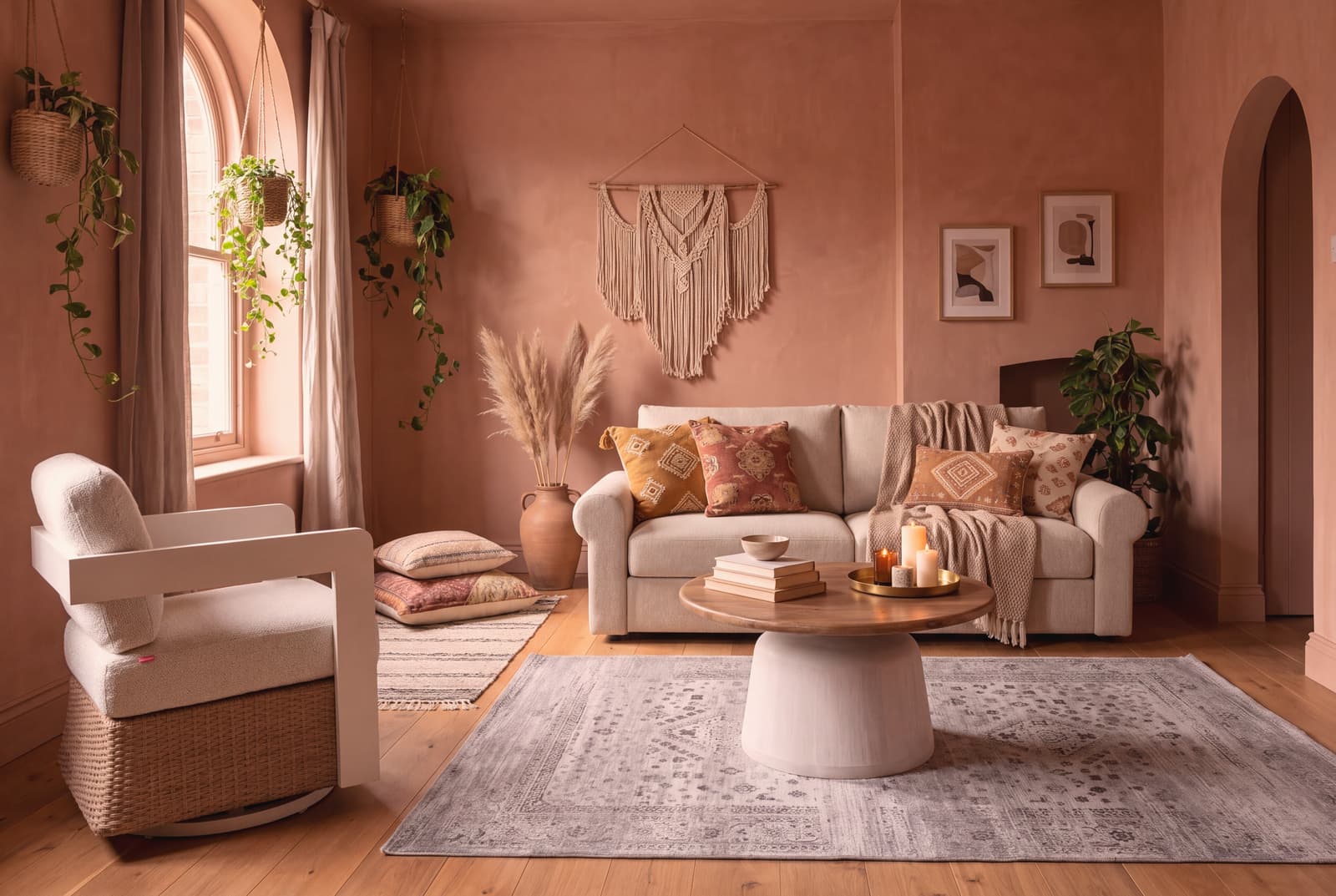
Layer a patterned rug over a larger plain natural-fiber one, and build the seating from mixed but color-related pieces, a rattan chair beside an upholstered sofa in a related warm tone. Add plants at more than one height and let textiles, a throw, floor cushions, wall hangings, do more of the pattern work than the furniture itself.
Bohemian Bedroom
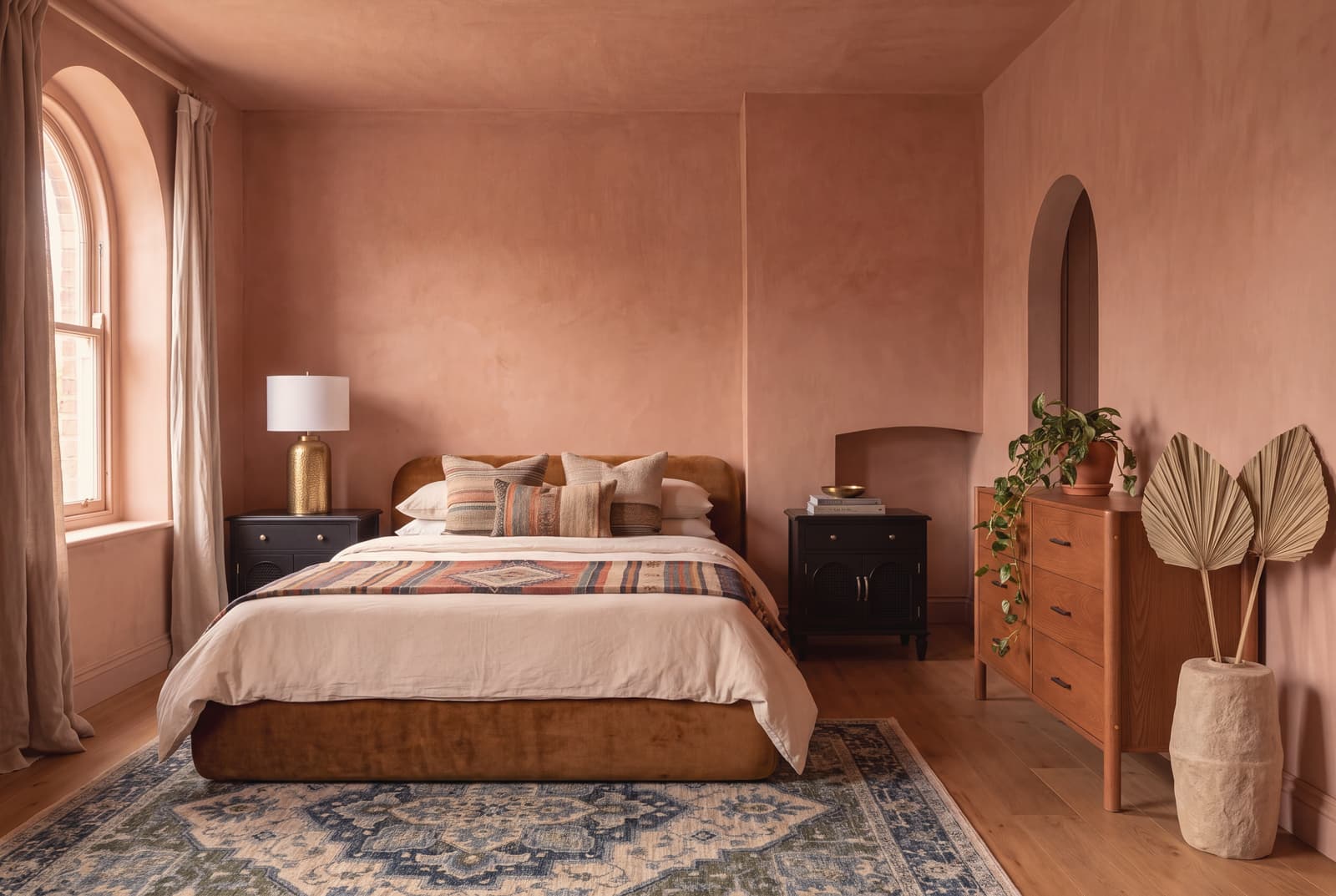
A warm-toned upholstered or wood bed frame, layered bedding that mixes texture rather than pattern for pattern's sake, and a wall treated as a surface for hanging textiles or art rather than left bare. Choose lighting with a warm, low glow, a woven pendant or a ceramic table lamp, over anything cool or clinical.
Bohemian Dining Room
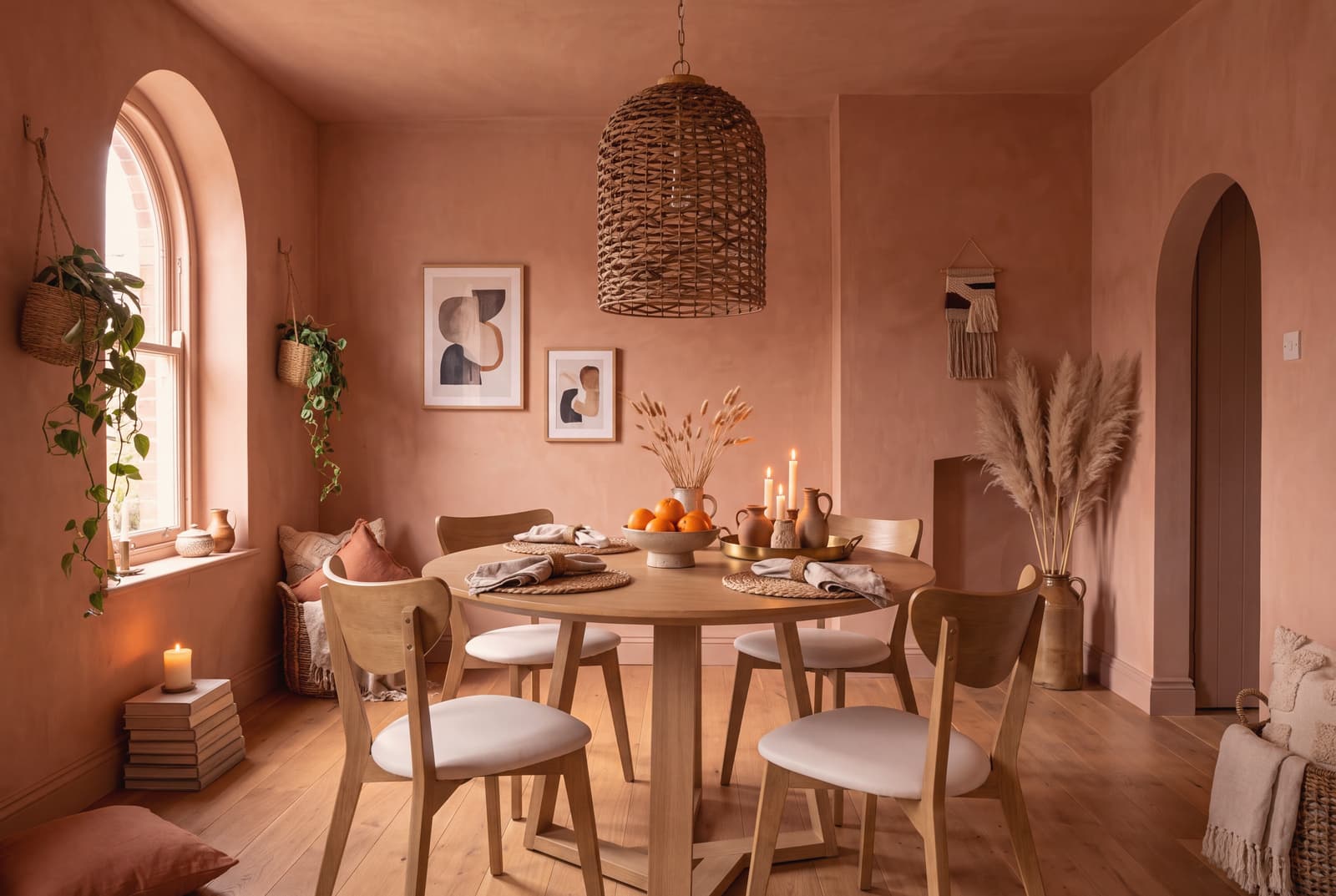
Mismatch deliberately: a set of chairs that share a wood tone but not an identical silhouette, paired with a table in a warm, honest wood. A woven pendant hung low over the table and a runner rather than a full tablecloth keep the room feeling gathered rather than staged.
Bohemian Outdoor
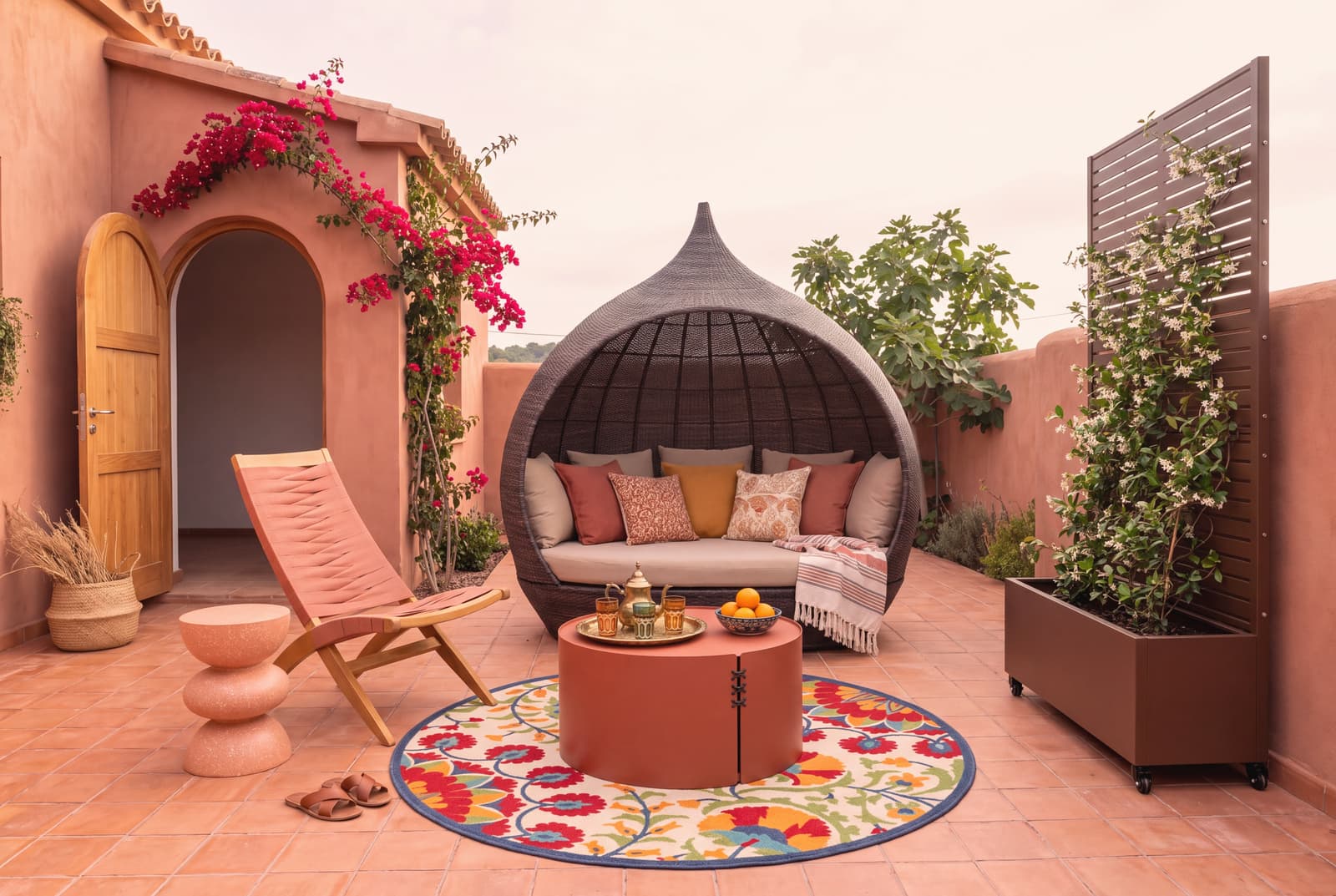
Bohemian style extends naturally outdoors: a woven daybed or hanging chair, a low round table, and cushions in the same recurring warm palette as the interior turn a porch or terrace into a genuine extension of the room rather than a separate afterthought. Let the furniture tones echo whatever the exterior walls or paving already are, rather than fighting them.
How Much Pattern Is Too Much
The honest answer is that bohemian tolerates more pattern per room than almost any other style, which is exactly why the repetition rule above matters so much. Three unrelated patterns in three unrelated colors read as chaotic in any style. Three unrelated patterns that all draw from the same four-color story, a striped rug, a block-print cushion, an embroidered throw, all pulling from terracotta, rust, cream and olive, read as gathered rather than random.
A useful check before adding a new patterned piece is to hold it against two objects already in the room. If it shares a color with each of them, even a small amount, it will sit inside the existing story. If it shares nothing with anything already there, it is likely to read as an interruption rather than an addition, however good it looks on its own.
Materials and Furniture
Favor rattan, cane and woven rush over polished wood or metal frames, unglazed or hand-finished ceramic over uniform factory glaze, and natural-fiber textiles, jute, wool, cotton, linen, over synthetic weaves. Buying secondhand or from a range of sources is not a compromise here; it is closer to the point, since a room assembled slowly from different places is what the style is actually describing.
Vintage and handmade pieces also solve a problem specific to this style: a factory run of identical rattan chairs undercuts the "gathered over time" quality the whole look depends on, even when the shape and color are correct. A single chair with slightly uneven weaving, or a rug with a visible irregularity in its pattern, reads as more genuinely bohemian than a perfectly uniform version of the same object.
Bohemian in a Rental
Because so much of the style lives in textiles, rugs, cushions, wall hangings, and freestanding furniture rather than built-ins, bohemian is one of the easier styles to fully execute in a rental. Layer rugs directly over an existing floor, hang textiles instead of painting a feature wall, and let plants do the work that a structural change would do in a house you own.
Where to Start
- Fix a warm palette of four or five colors and make sure each one appears in the room at least three times.
- Layer a patterned rug over a larger, plainer natural-fiber one rather than choosing a single rug.
- Buy slowly and from more than one source, and let the room fill in over months rather than a single order.
- Add plants at more than one height before adding another piece of furniture.
If you would rather start from a finished room than a checklist, we have put one together: a bohemian living room with every piece in it listed and priced, so you can see what the whole thing costs before committing to any of it.
See every room in the Bohemian hub.
Not sure where to start?
Quick choices between rooms, a few questions about your home, and a finished room for each room you want to furnish, every piece priced. A few minutes.
Start your home profile