
Traditional Interior Design: Symmetry, Wood and Where to Start
Traditional design is the only major style built on symmetry as an organizing rule. That structure is why traditional rooms feel settled, and losing it is why most attempts at the style read as merely old-fashioned instead.
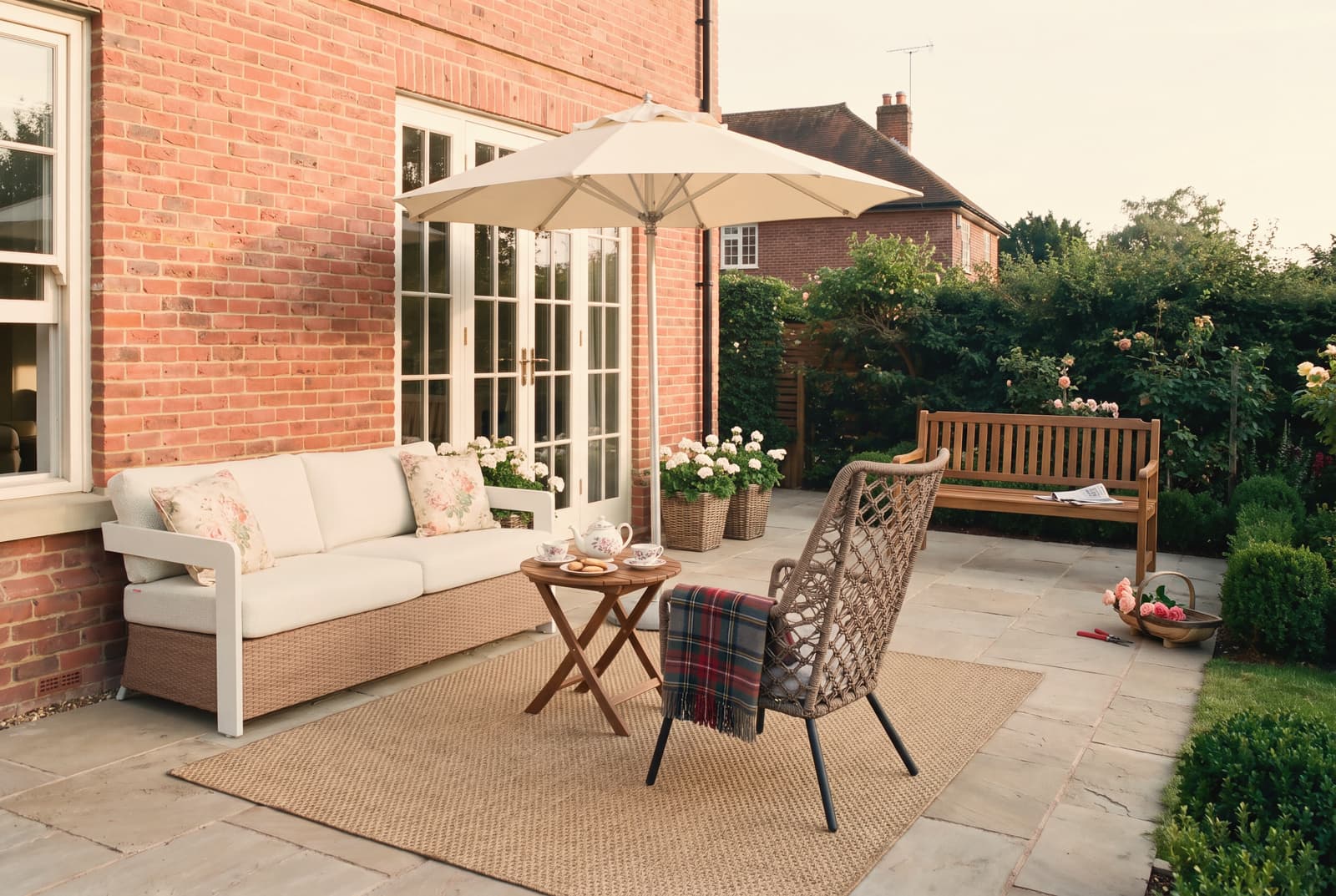
Hover or tap a dot to see what it is. See the full room, priced →
Traditional design is the only one of the major interior styles built on symmetry as an organizing rule. A pair of chairs facing a sofa, matching lamps on either side of a bed, a mantel centered on a wall with the furniture arranged square to it. That structure, more than any single object, is what makes a traditional room feel settled rather than merely old.
It is also the reason most attempts at the style fall short. A room furnished in traditional-looking pieces but arranged without symmetry, floated at angles, mismatched in pairs, reads as dated instead of composed, because the organizing logic that makes traditional furniture make sense is missing.
Traditional is also, of the major styles, the most forgiving to furnish secondhand. The forms it wants, turned legs, wood case goods, upholstered wing chairs, have been made continuously for two centuries, and the used and antique markets for them are deep. Age is a feature of this style rather than a defect to work around.
What Traditional Interior Design Is
Traditional interior design draws on 18th and 19th century European and early American furniture forms: dark or richly stained wood, curved and turned legs, upholstery with pattern or texture, and a formal, symmetrical arrangement of the room.
The characteristics that actually define it:
- Symmetry as the organizing principle. Furniture is arranged in pairs and squared to a focal point, rather than floated at angles or clustered informally.
- Dark or richly stained wood. Mahogany, cherry and walnut, often with visible turning, carving or molding on the legs and frames.
- A clear focal point. A fireplace, a large window, or a piece of case furniture that the rest of the room is arranged to face or flank.
- Layered, coordinated textiles. Drapery, upholstery and rugs in florals, damasks, plaids or stripes, chosen to relate to each other rather than to stand alone.
- Comfort over display. Despite the formality, traditional rooms are built to be sat in and used daily. The formality is in the arrangement, not in a rule against actually using the furniture.
Traditional, Transitional and Classic Are Not the Same Thing
These terms overlap in casual use and mean genuinely different things when you are shopping.
Traditional is the specific historical vocabulary described above: carved or turned wood, formal symmetry, pattern.
Transitional is a deliberate blend of traditional and modern, developed specifically because a fully traditional room reads as too formal for a lot of contemporary households. It keeps traditional's comfort and some of its curved forms while adopting modern's cleaner lines, simpler silhouettes and quieter palette. A transitional sofa might have a traditional roll arm on a much plainer, unskirted frame.
Classic is used loosely to mean "will not look dated in ten years" and does not name a specific style at all. A classic piece can be traditional, modern or anything in between; the word describes durability of taste rather than a form.
If the formal, patterned, symmetrical version is what you want, shop traditional directly. If you want its comfort with a calmer, more contemporary silhouette, look at transitional pieces instead.
The Traditional Color Palette
Traditional rooms run darker and richer than most contemporary styles, and the palette is built to support pattern rather than avoid it.
- The wall color. Deep neutrals, navy, hunter green, burgundy or a warm cream, often carried up over the crown molding rather than stopping at a picture rail.
- The wood. Dark, warm-toned stains: mahogany, cherry, dark walnut. Wood tone is one of the most consistent threads running through a traditional room.
- The upholstery. Saturated jewel tones, warm neutrals, or classic patterns, florals, stripes, damask, chosen with enough restraint that no two patterns in the room compete for the same attention.
- The metals. Brass and gold-toned hardware, used on lamps, mirror frames and drawer pulls throughout the room rather than mixed with a cooler metal.
Traditional Living Room
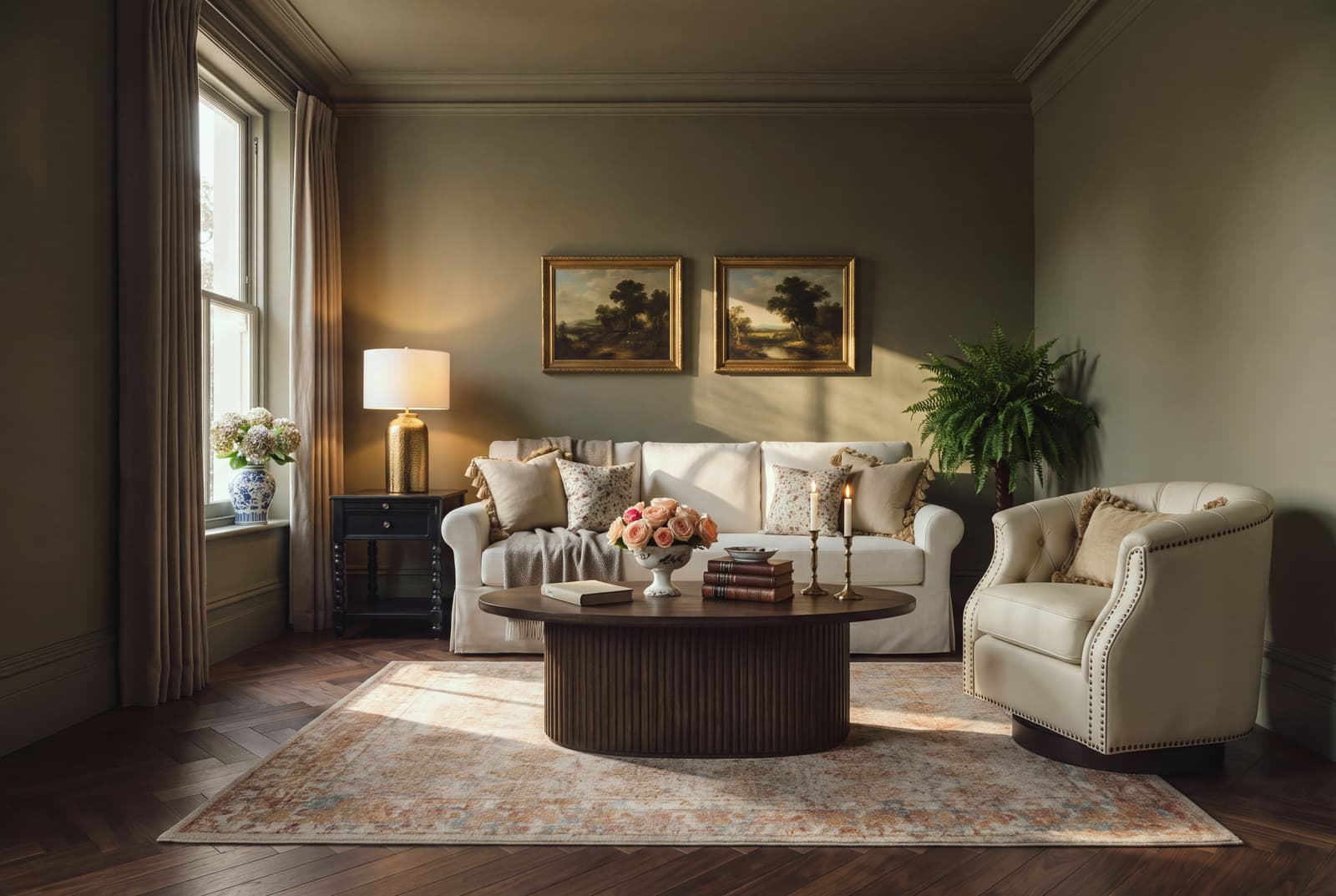
Establish the focal point, a fireplace or a large window, and arrange the seating square to it rather than at an angle. A pair of matching chairs facing a sofa across a wood or stone-topped coffee table is the base arrangement; add a single patterned rug that relates to, but does not match, the upholstery.
Traditional Dining Room
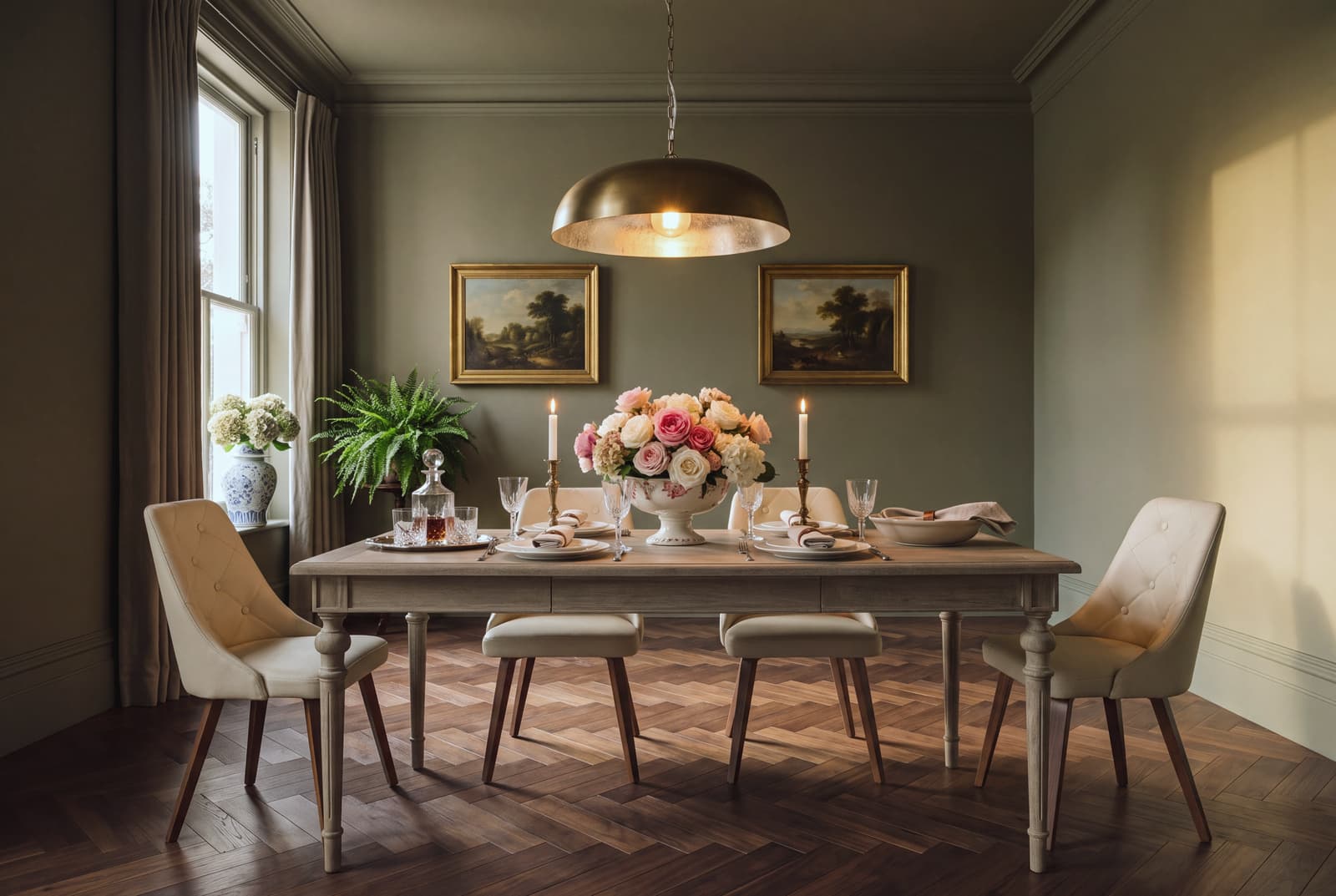
The traditional dining room is built for the extended gathering: a substantial wood table, upholstered or wood chairs in a matching set, and a chandelier or pendant centered directly above the table. Dark wood and a formal table setting carry the room; keep the walls simpler than the table so the meal stays the focal point.
Traditional Bedroom
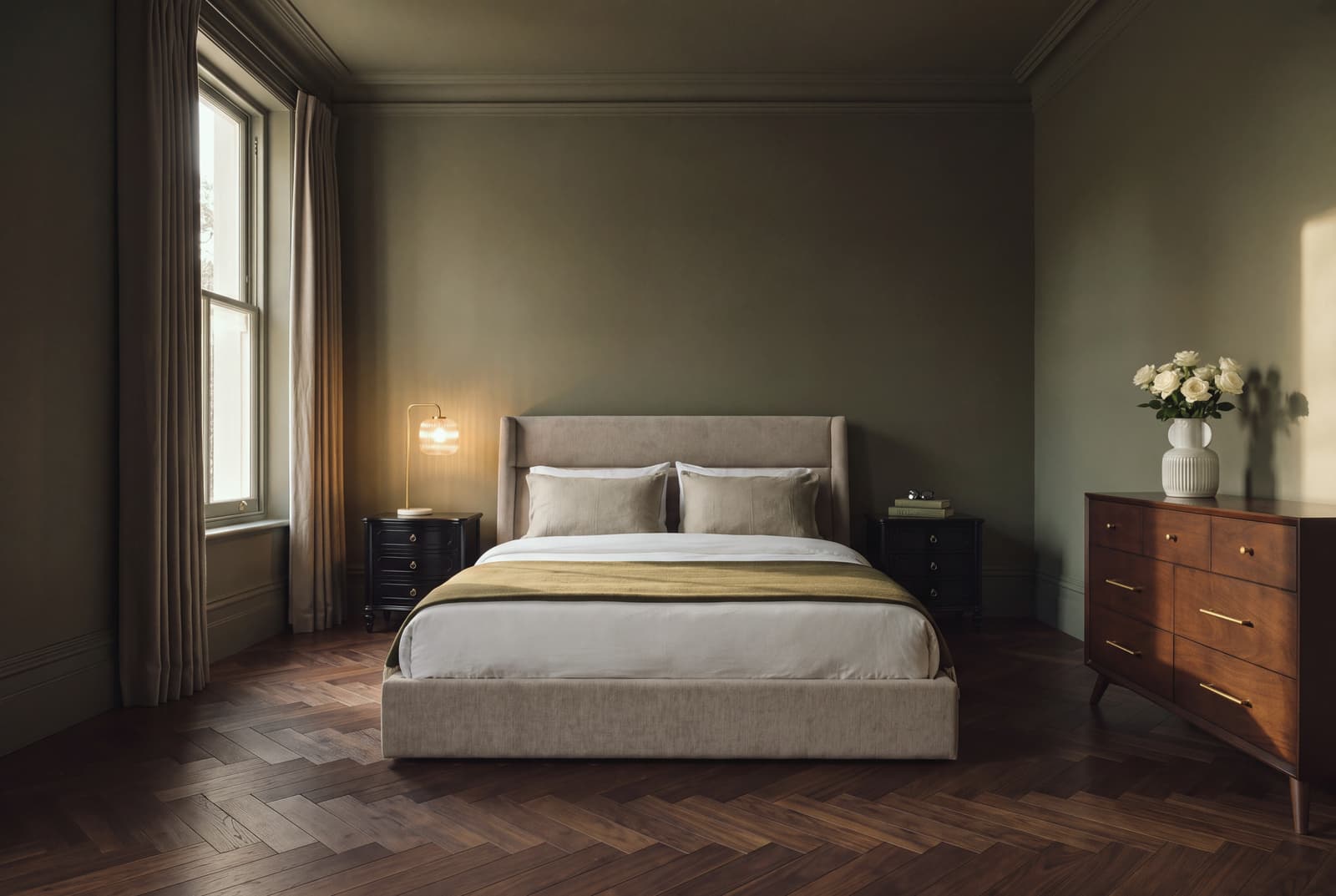
A tall upholstered or wood headboard, flanked by a genuinely matching pair of nightstands and lamps, is the traditional bedroom's core structure. Rich, layered bedding, a quilted coverlet under a folded throw, does the textural work that a plainer style would leave to the wall.
Traditional Home Office
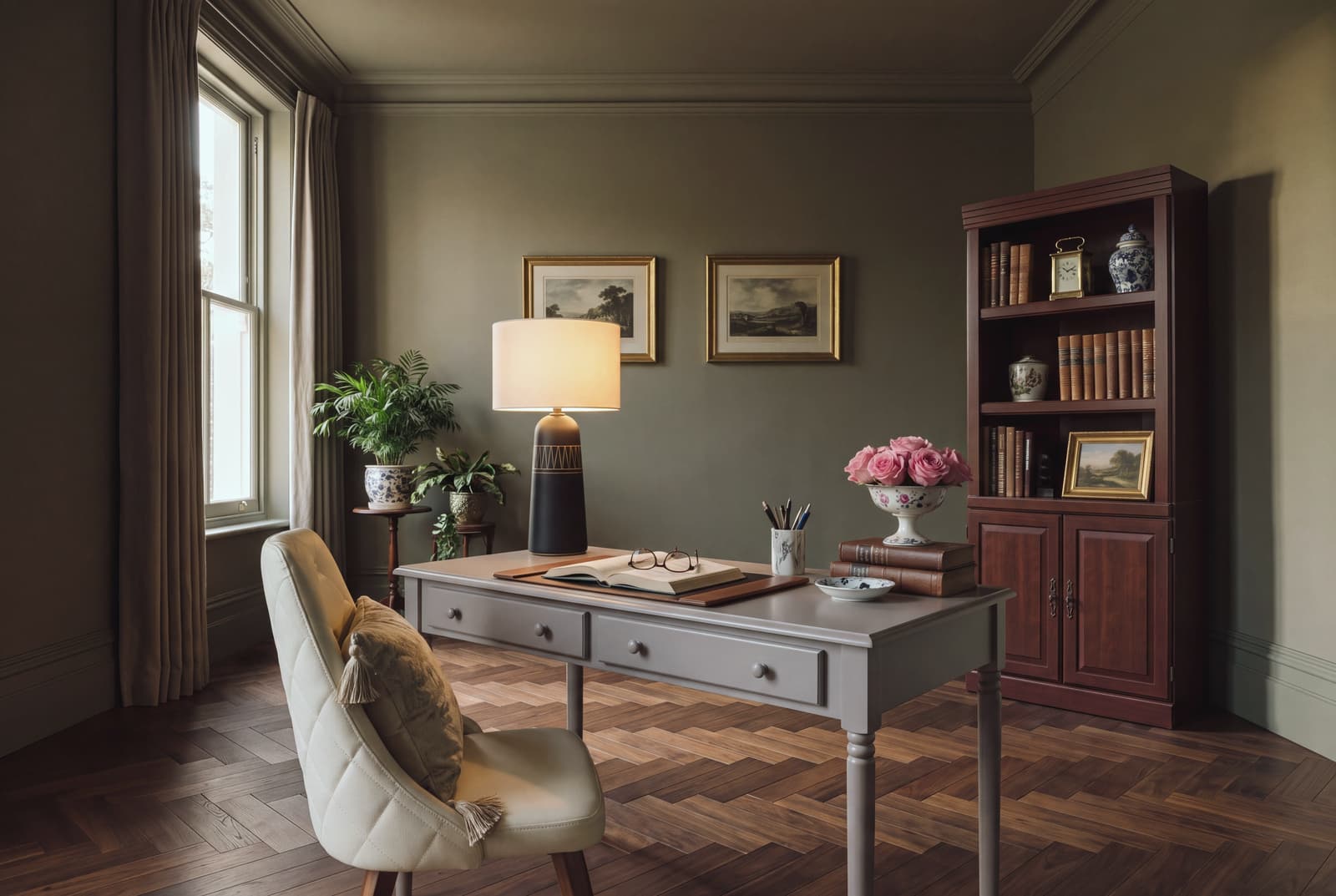
Traditional studies favor weight and enclosure: a substantial wood desk, a leather or upholstered chair, and built-in or freestanding wood shelving that reads as furniture rather than storage. A single well-chosen lamp with a fabric shade replaces overhead light for most of the room's use.
Avoiding Stuffiness
The risk with traditional is stuffiness, a room that feels like a museum rather than a house. The version that works keeps the bones, symmetry, dark wood, a clear focal point, and thins the ornament: fewer patterned surfaces than a period room would have carried, one bold textile rather than three competing ones, and noticeably less on the walls.
Mixing in one or two pieces from a plainer style, a simple modern lamp, an unadorned linen chair, also keeps a traditional room from reading as a set piece rather than a home that happens to be furnished formally.
Materials and Furniture
Traditional furniture is built to be bought once and kept: solid wood case goods rather than veneer over particleboard, genuinely upholstered frames rather than a stapled cover, brass or bronze hardware rather than plated pot metal. Because the forms have been made for two centuries with little variation, this is the one style where a well-chosen secondhand or antique piece will often outlast anything sold new at the same price. Buy the case goods, dressers, tables, cabinets, secondhand where you can, and spend the new-furniture budget on upholstery instead.
Traditional in a Rental
A rental's plain walls and standard trim are not a barrier to traditional style; the furniture and the arrangement do almost all of the work. A pair of chairs, a patterned rug and layered lamps read as traditional even against a builder-white wall. Where you can, a removable wallpaper border at the ceiling line or a stick-on picture rail moulding recreates the room's usual sense of enclosure without touching the lease.
Where to Start
- Establish a focal point and square the seating to it, rather than floating furniture at angles.
- Buy the case goods secondhand and put the new-furniture budget into upholstery instead.
- Use pairs deliberately: two lamps, two chairs, two matching sconces.
- Choose one bold pattern for the room and keep everything else around it a supporting neutral.
If you would rather start from a finished room than a checklist, we have put one together: a traditional living room with every piece in it listed and priced, so you can see what the whole thing costs before committing to any of it.
See every room in the Traditional hub.
Not sure where to start?
Quick choices between rooms, a few questions about your home, and a finished room for each room you want to furnish, every piece priced. A few minutes.
Start your home profile