
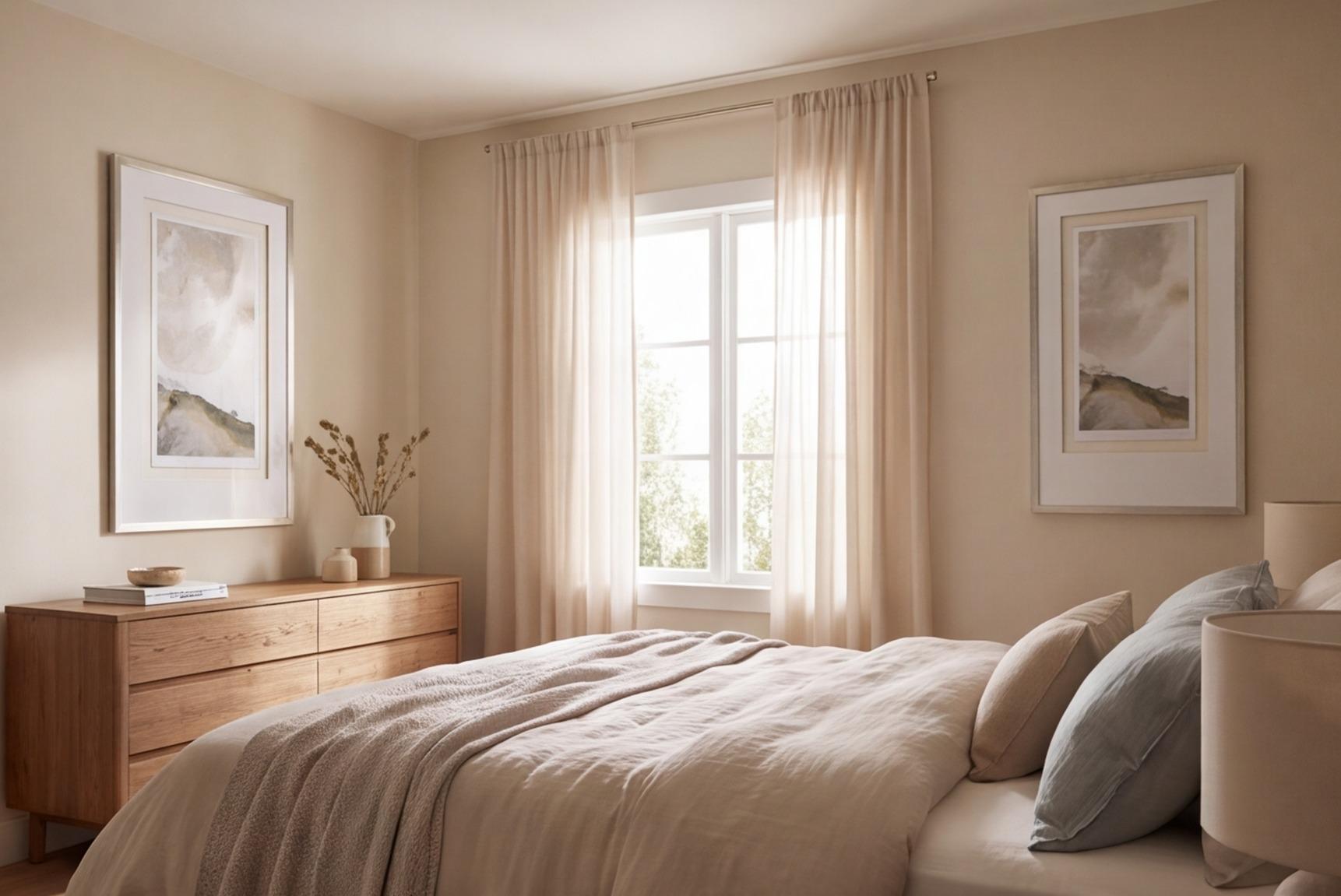
Coastal bedroom ideas work best when they start with where the bed sits, not with a color. This guide matches six ideas to six conditions: humidity, beach-house exposure, direct sun, bright light, allergies and earthquake risk. Each one names what the furnishing is made of and why that matters.
Start With Your Bedroom's Conditions, Then Choose the Coastal Look
Coastal style is a set of material choices, and the right ones depend on your room's humidity, sunlight, allergies and regional risk. Pick the conditions that apply to you, solve those first, and the look follows. That order also keeps a room from feeling like a theme.
Furnishing a whole house at once makes every decision feel equally urgent. The bedroom is a good place to slow down, because it is one room with a short list of real constraints. We would rather you buy three pieces that suit your conditions than ten that suit a photo.
The Six Ideas at a Glance
- Humid climates: a synthetic rug with a natural-fiber look in place of jute, sisal or seagrass.
- Beach houses: performance or solution-dyed acrylic fabric in place of standard cotton.
- Sun-facing windows: lined curtains or UV-filtering shades, with solution-dyed fabric on the bed and chairs.
- Bright rooms: mid-tone or light fabrics, which show fade less than dark, saturated colors.
- Allergies: washable curtains in place of heavy drapes.
- Earthquake regions: low pieces beside the bed, with tall storage and heavy art on another wall.
Keeping the Room From Feeling Themed
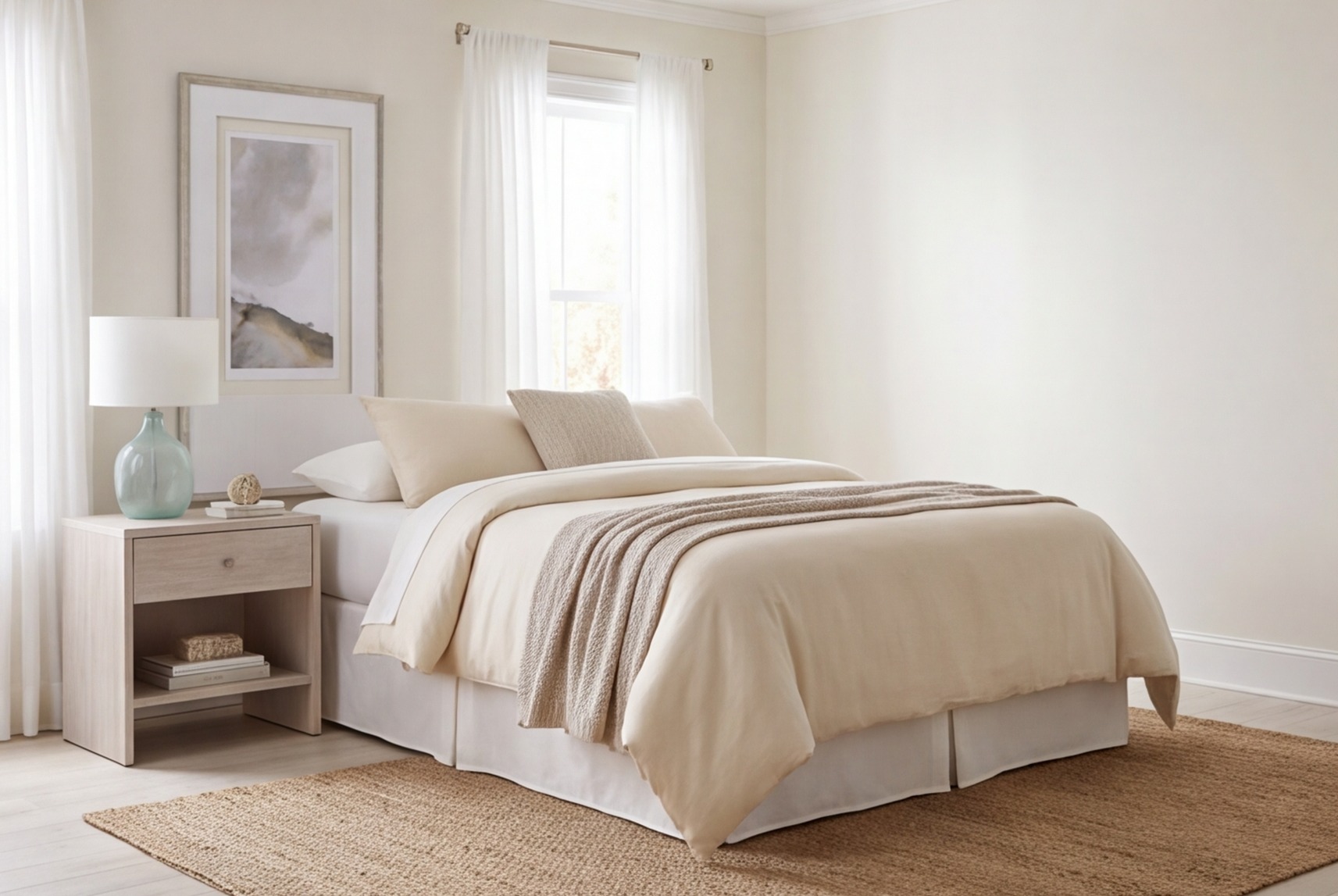
A quiet coastal bedroom leans on warm cream linen, weathered or whitewashed oak, a single sea-glass accent and airy curtains, according to Houex Inspiration. Anchors, rope borders and seashell dishes are optional. In a small room, fewer surfaces and one accent color do more than a collection of beach objects.
Coastal Bedroom Ideas for Humid Climates and Beach Houses
In humid rooms, swap natural-fiber rugs for a synthetic rug woven to look like them, and in beach houses choose solution-dyed acrylic over standard cotton. Both choices keep the relaxed, textured look while handling moisture and salt air better.
A Synthetic Rug With a Natural-Fiber Look
Jute, sisal and seagrass are plant fibers, and they absorb moisture. Small amounts of water can brown or weaken jute and encourage mildew, which is why these fibers struggle in damp bedrooms. The EPA advises keeping indoor humidity ideally between 30 and 50%, and many rooms near the water sit well above that in summer.
A synthetic rug, usually polypropylene or polyester, is made from plastic yarn woven or tufted into a chunky, slubby pattern that reads as jute from a few feet away. It will not rot from damp air. The tradeoff is feel: underfoot it is smoother and less earthy than the real fiber. If you love the texture of sisal, keep it in a dry, air-conditioned room and use the synthetic version where humidity runs high.
Solution-Dyed Acrylic in Place of Standard Cotton
Standard cotton is dyed after the fiber is spun, so color sits on the surface, and cotton also holds moisture. Solution-dyed acrylic is different. Pigment is added to the acrylic before the fiber is spun, so the color runs through the whole strand.
Color that runs through the whole fiber outlasts color that only sits on the surface, which is why solution-dyed acrylic suits salty, humid rooms.
Check the spec sheet on whatever you buy for its UV and mildew ratings, since they vary by maker. Acrylic suits a bench at the foot of the bed, an accent chair or a headboard in a beach house. It can feel slightly less soft than washed cotton, so keep sheets and a throw in natural cotton or linen.
Sun-Facing Windows: Lined Curtains, UV-Filtering Shades and Fade-Resistant Fabric
Direct sun fades fabric, so protect the window first and the furniture second. Lined curtains or UV-filtering shades cut the light that reaches the room, and solution-dyed fabric on the bed and chairs handles whatever still gets through.
Window Treatments That Keep the Light
A lined curtain has a second layer of fabric sewn behind the face fabric, and that extra layer blocks more sun than a single sheer panel. A UV-filtering shade is a woven or coated shade that screens ultraviolet rays but still lets daylight in. A good pairing is a UV-filtering shade for daytime and a lined linen-blend curtain you can close in the afternoon.
Shades also help with heat. The U.S. Department of Energy reports that tested cellular shades saved up to 20% on heating energy and up to 15% on total heating-and-cooling energy compared with no shades. A cellular shade is built with honeycomb-shaped air pockets, and that structure is what slows heat transfer.
What the ACT Lightfastness Numbers Mean
The Association for Contract Textiles, or ACT, publishes performance guidelines for fabric. Its indoor colorfastness guideline says Grade 4 means slight fading, and that the indoor upholstery minimum is Grade 4 after 40 hours, while drapery is listed at Grade 4 after 60 hours. When you shop, look for those numbers on the fabric's spec sheet.
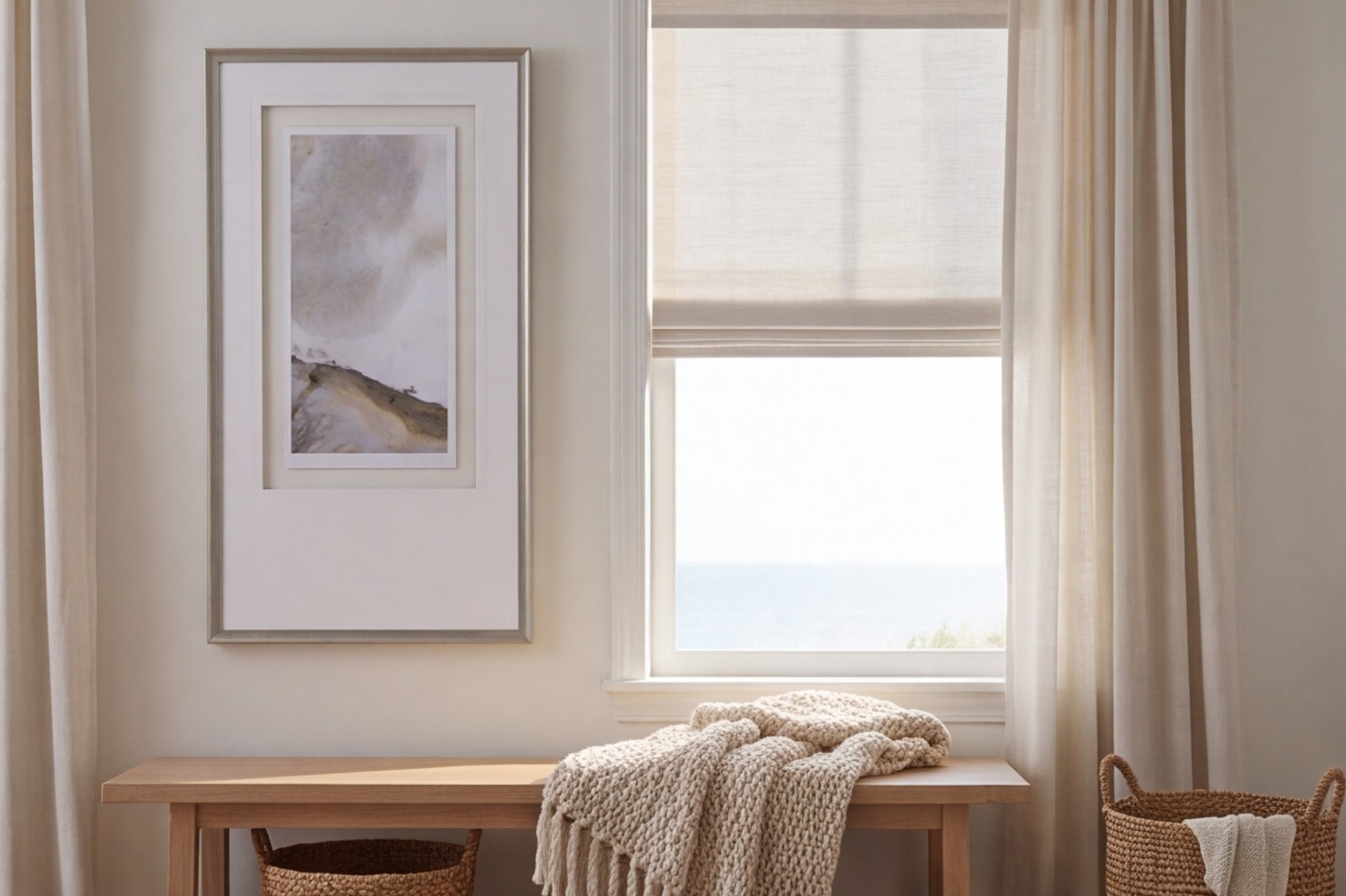
For a bed bench, an upholstered headboard or a reading chair by a sunny window, aim for solution-dyed fabric that meets or beats the 40-hour mark. For curtains, the 60-hour drapery figure is the one to check. A fabric with no lightfastness rating is not necessarily poor, but you have no way to compare it.
A Color Palette That Shows Less Fade in Bright Rooms
Mid-tone and light fabrics show fade less than dark, saturated colors, because a small loss of pigment is easier to see against deep navy or rich teal than against sand or pale blue. A sea-salt, sand and misty blue palette is both calm and practical in a bright room.
Building the Palette
Start with a warm white or sea-salt green-gray on the walls. Add sand or oatmeal on the bed and a misty blue in one or two places, such as a throw or a pair of lampshades. Weathered oak or whitewashed wood brings in warmth so the room does not feel cold in winter.
Soft, low-contrast colors with a gray or green undertone tend to read as restful, and they are forgiving when the sun shifts.
How Light Direction Changes Color
A north-facing room gives cool, even light, and misty blue can turn gray and flat. Warm it with cream and sand. A south or west-facing room gets strong, warm light in the afternoon, so the same blue looks brighter and sandy tones turn golden. Look at your paint swatch or fabric sample in the morning, at noon and in the evening before you commit.
Mistakes That Make the Room Feel Themed
- Too much blue. Use it as one accent against neutrals.
- Over-nautical decor. One sea-glass accent says more than a row of ship wheels.
- Matching everything. Vary texture, such as linen, oak and ceramic, so the room has depth.
Allergy-Friendly Coastal Bedrooms: Washable Curtains and Simple Layers
For allergy-prone households, washable curtains replace heavy drapes, and the rest of the room stays simple enough to clean quickly.
Washable Curtains in Place of Heavy Drapes
Washable curtains or roll-down shades work better than heavy drapes here, because dust and allergens collect in thick fabric that is hard to launder. The Asthma and Allergy Foundation of America recommends vacuuming curtains weekly with an upholstery attachment, and a light cotton or linen panel can also go in the washing machine, while a roll-down shade can be wiped. Choose an unlined or lightly lined panel in a hemmed length that skims the floor so there is no deep fold to trap dust.
If the same window also faces strong sun, combine a washable panel with a roll-down UV-filtering shade behind it, so the part that fades is the part you can wipe or replace.
Washable Bedding and a Calm Nightstand
Linen and cotton bedding both tolerate frequent hot washes. Linen is made from flax fiber, dries fast and softens with every wash, which gives you the rumpled coastal look. Cotton percale is crisp and cool. Both work without anything that needs dry cleaning.

Keep each nightstand to a lamp, a book and a small dish. Closed storage, such as a chest with doors or drawers, hides the rest. Fewer objects on open surfaces means less dust to move when you clean, and it is the simplest way to a serene, low-clutter room.
Earthquake Regions: Low Pieces by the Bed, Tall Storage and Heavy Art Elsewhere
In earthquake regions, place low pieces beside the bed and put tall storage and heavy art on a different wall. That layout looks calm and keeps heavy objects farther from where you sleep.
Where Tall Pieces Go
The Earthquake Country Alliance advises moving tall furniture away from beds. Applied to a bedroom, that means a bed with a low profile, a short nightstand or a bench on each side, and a tall dresser or bookcase on the far wall, anchored to the wall studs with furniture straps.
Placing the Headboard, Storage and Seascapes
A low, upholstered headboard or a simple wood frame keeps the wall behind the bed open. Skip a heavy framed mirror or a large, glass-fronted seascape above the pillow. Hang that piece on the opposite wall, lower than eye level if you can, using hardware rated for its weight.
Above the bed, keep the wall clear or hang something soft, such as a woven wall hanging fixed securely, and skip shelves, glass and anything breakable. You still get the quiet, layered look, and the heavy objects sit across the room.
If you want to see these choices assembled in one room, the coastal bedroom room page shows pale oak, washed linen and reeded ceramic put together.