
Furnishing a first home room by room works best in two waves. Wave one covers what you need on day one. Wave two adds comfort after a month of real life. This guide covers that sequence, then room budgets, a priority order, a spend-or-save rule and a style direction that ties it together.
The two-wave rule works as a regret filter. Wave one is sleep, food, the bathroom, light and basics. Wave two comes after the first month, when you add comfort and rhythm based on how you actually live. Whatever still feels missing after that is probably worth buying, and whatever you never missed is money you kept.
What to Buy First When You Move Into an Empty House
Buy a place to sleep, a place to eat, a place to sit, working light and bathroom basics first. Everything else waits. Decor can come later because a house with a bed and a lamp is livable, while a house with only art is not.
The Day-One Sequence
Wave one is short on purpose. It answers the question of what to buy first when moving into a new home with a list of items you will use within the first 24 hours:
- A bed and mattress, with sheets and a pillow
- Somewhere to eat, even a small table and two chairs
- Somewhere to sit, which can be one comfortable chair
- Lamps or bulbs for every room you use at night
- Bathroom and kitchen basics, such as a shower curtain, towels and a few pans
Keep what already works. One interior designer advises photographing and measuring each piece you plan to keep, and holding on to beds, dining tables and main seating while new furniture is on order, according to Marker Girl. Ordering the right pieces takes time, and an empty room in the meantime is harder than a mismatched one.
Why Wave Two Waits a Few Weeks
Rooms change once you live in them. Walls look different in morning light, and the walk from the door to the kitchen shows where you need a surface for keys. One designer's warning, per Marker Girl, is that people often find the wall color they assumed was grey made their new sofa clash, and that living a few extra months with old, mismatched furniture beats living with a purchase you regret.
Large pieces also take a while to arrive. According to West Village Interior, major pieces can have lead times of 8-20 weeks, and the biggest delays come from decision paralysis and coordination rather than shipping. A calm first month gives you time to decide, and waiting filters out regret purchases. At the end of month one, list what you actually reached for and could not find. Buy those things first in wave two.
Set a Budget for Each Room Before You Buy Anything
Split one total budget across rooms by how much each room is used, with the primary bedroom and main seating area weighted highest. Decide the split before shopping, because a single overspend on a low-use room quietly takes money from the rooms you live in every day.
Weight Rooms by Daily Use
Costs concentrate in two places. According to OpenDoor, the living room and primary bedroom typically account for 40% to 60% of total furnishing costs because they need the largest and most-used pieces. Another source puts the living room alone at 30-40% of a total furnishing budget, per Mynido.
New buyers' spending follows the same pattern. NAHB (National Association of Home Builders) reports that sofas and bedroom furnishings are the two biggest-ticket items, with new home buyers spending close to $860 on sofas and $718 on bedroom furnishings in the first year after moving.
For a personal version, rank each room by the hours per week you will spend in it. Bedrooms and living rooms usually top the list. Guest rooms and formal dining rooms land near the bottom, which tells you where to spend less.
Know the Range Before You Set Your Number
Published ranges are wide, so treat them as context and not a target. GoMortgage gives 2025 room-by-room estimates of $2,000 to $10,000 for a living room, $1,000 to $7,000 for a dining room and $1,500 to $8,000 for a primary bedroom. Fully furnishing a new home typically costs $10,000 to $30,000, according to Open Door, which also notes that hidden costs add 15% to 30% on top of sticker price.
Budget by hours lived in each room, not by room size, so spending follows how you actually use your home.
Your own total matters more than any average. Take it, set aside 15% to 30% for delivery, assembly and the things you forgot, then divide what remains using the weighting above.
Stage the Purchases on a Timeline
A budget needs a calendar. Furnishing an entire home typically takes 6-18 months when done piece by piece, according to West Village Interior, so plan for a long timeline and not a single weekend. One workable pattern runs bedroom first, then living room, then kitchen and dining, then entry and bathrooms, then an office, with art and extras arriving last.
Furnishing a First Home Room by Room, in Priority Order
The usual priority order is bedroom, living room, kitchen and dining, then secondary spaces. Each room below has a must-have, a can-wait and a buy-with-care item, so you can act on one room at a time without thinking about the whole house.
|
Room |
Must-have |
Can wait |
Buy with care |
|---|---|---|---|
|
Bedroom |
Bed, mattress, bedding, bedside light |
Dresser, rug, art |
Mattress and bed frame |
|
Living room |
Sofa or comfortable chair, a lamp, a surface for drinks |
Coffee table, shelving, throw pillows |
Sofa |
|
Kitchen and dining |
Table, seating, basic cookware and dishes |
Sideboard, bar stools, serving pieces |
Dining table and chairs |
|
Secondary spaces |
Storage near the entry, working light |
Guest bed, desk setup, decor |
Desk chair, if you work at home |
Bedroom and Living Room
Start with the bedroom because sleep affects everything else. Get the mattress right first, then the bed frame, then bedding and a bedside light. A dresser and rug can wait until you know how much storage the room really needs.
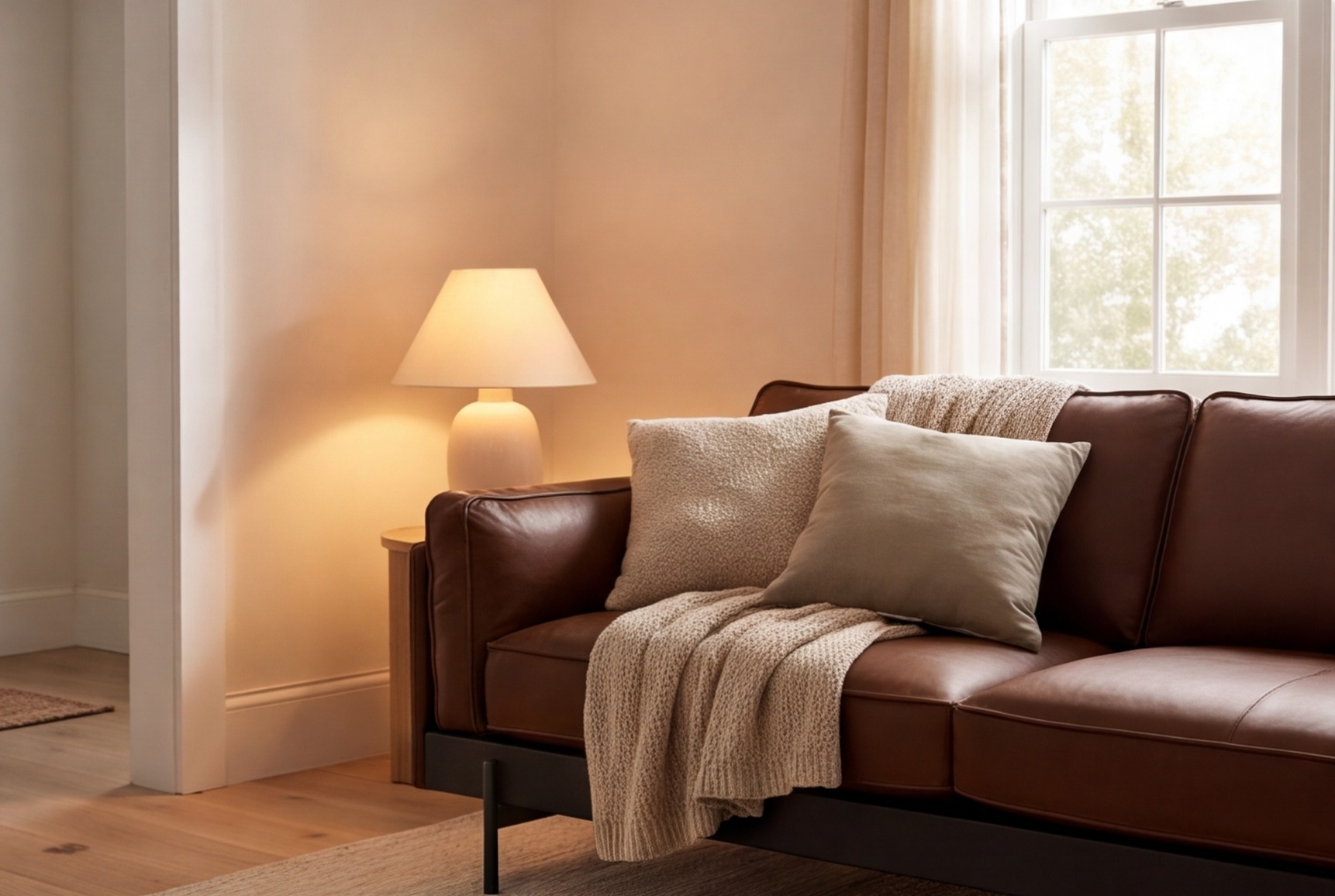
The living room comes next. One good sofa and one lamp make the room usable. Wait on the coffee table, shelving and pillows until you have lived with the layout. This is also the room most new owners want design help with: according to Home News Now, 60% of new homeowners wanting to work with a designer named the living room as their top priority, and nearly 50% named the bedroom.
Kitchen, Dining and Everything Else
Kitchen and dining need a table that fits the room, seats you comfortably and takes daily use. Buy the table and chairs together or choose chairs that suit its height. Cookware can be basic at first and added to as you cook.
Secondary spaces such as the entry, a home office and a guest room come last. An entry bench or hooks earn their place early because you use them daily, but a guest bed is the easiest purchase to delay for months. Across every room, pick wood tones, metals and colors that will also work in the next room, so pieces bought months apart still look related.
Where to Spend More and What to Buy Used or Inexpensive
Spend more on what your body touches every day and on pieces that take heavy wear. Save on accents and items that rarely get used. A repeatable way to decide is to score each piece on three filters: how often you use it, how much physical wear it takes, and how visible it is.
The Three-Filter Rule
A piece that scores high on daily use and physical wear, like a sofa or mattress, gets the largest share of the room budget even when it is not very visible. A piece that scores low on both use and wear, like a side table or a decorative lamp, can be bought cheaply or secondhand, and visibility then tells you how much the look matters. This is more precise than the usual advice to splurge on the sofa and save on accent chairs, because it works for any item you are unsure about.
Cost per year helps too. According to Livingetc, a well-built sofa with a solid wood frame can last from seven to 15 years, with an average expected lifespan around 10 years. Spread over a decade or more, a higher upfront price often works out cheaper per year than replacing a cheaper sofa. If the budget is tight, put 80% toward the anchor pieces in each room and 20% toward accents you can swap later.
What to Buy New and What to Buy Used
Buy new where hygiene or hidden wear matters most. Mattresses and upholstered seating are the main examples, because their condition is hard to judge from a photo. Solid wood tables, dressers, bookshelves and desks do very well secondhand because their quality is visible and they are often better built than new budget equivalents.
Pay more for what you touch daily and what takes the most wear; save on pieces you rarely notice.
Secondhand furniture is common and getting more so. According to PYMNTS, among US consumers who used secondhand channels, 1 in 5 (20%) bought furniture, rising to 34% for millennials. Furniture Today reports that 74% of consumers who bought more secondhand items cited lower costs as the key motivator, though quality concerns (46%) were the top barrier.
Finding Affordable Furniture Without Gambling
Affordable furniture is easiest to find in places where you can inspect the piece: local resale shops, community listings where you collect in person, and estate sales. Check that drawers slide, joints are tight and there is no smell. Measure the piece and your doorways before you agree to buy. Pieces from friends and family are also worth asking about, since condition is known.
Choose a Style Direction So Every Room Goes Together
A style direction is a short description of the look you want across the whole house, such as warm and minimal or relaxed and traditional. Settling on it early keeps a staged plan cohesive, so a lamp bought in month one still suits the sofa bought in month four.
Find Your Style Before You Buy the Big Pieces
Most people have a style they cannot yet name. A short interior style quiz gives it a name and a set of colors and materials to work from. Cradle & Hearth has a free three-minute quiz that needs no account and returns a personalized style profile, which can guide your room priorities and budget.
You are not alone in wanting a direction. In one survey reported by Home News Now, 46% of consumers favored minimalist styles, followed by modern farmhouse (22%), coastal (19%) and midcentury modern (18%), and 57% said they planned to design their spaces on their own. Popularity is only a reference point. Choose what you will still like in ten years.
Build a Simple Moodboard
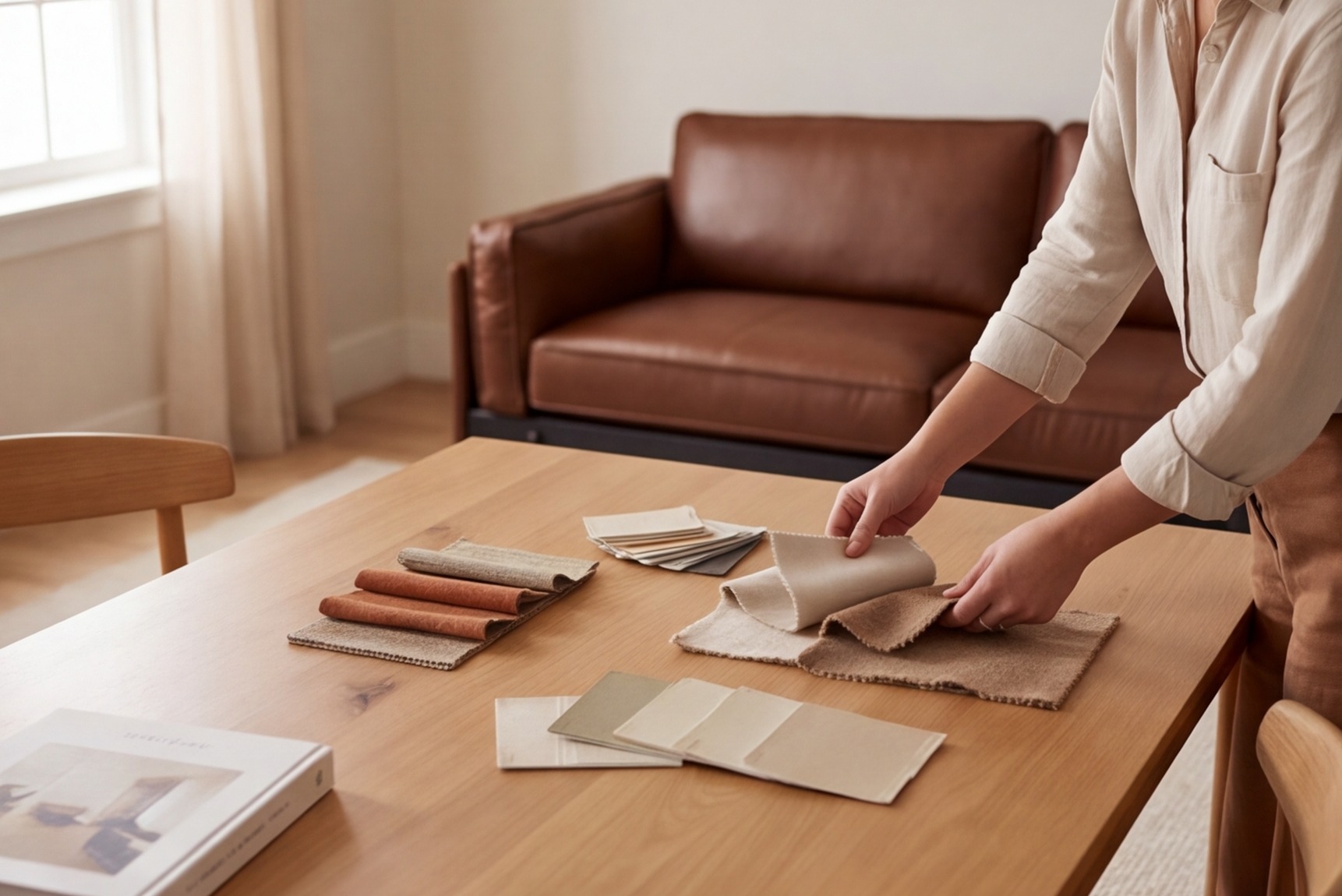
A moodboard is a small collection of images, colors and material samples that shows the look you are aiming for. Keep it to a dozen images at most. Look for repeats: the same wood tone, the same metal finish, the same two or three colors. Those repeats are your rules.
Carry Shared Colors and Materials Through Every Room
Pick a base palette of two or three colors, one or two wood tones and one metal finish. Use them in every room, in different amounts. A staged plan then ends in one coherent home because every purchase passes the same quick test: does it match the board? Art and extras arrive last, and by then the rules are clear enough that choosing them is easy.