
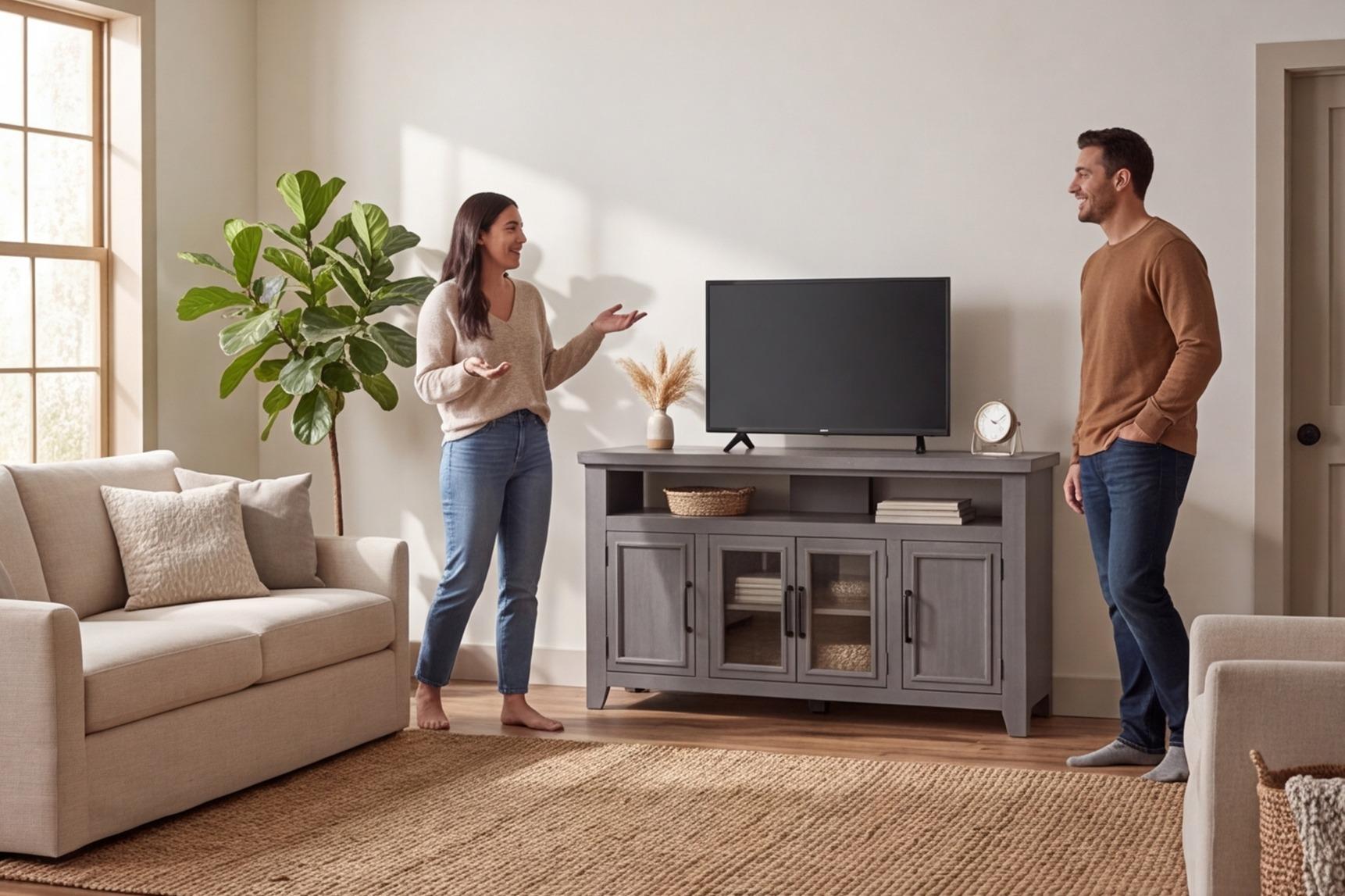
In a rental where you cannot drill, most of the safety comes from what you buy and where you put it. This page covers how to anchor furniture without drilling in a rental, in shopping order: storage, TV, lighting, then walls.
Why no-tool anchors are not a substitute for a stud
A wall stud is the vertical wood or metal framing member behind drywall, and it is the one place a furniture anchor can hold against a real pull. Adhesive straps, tension kits and drywall anchors can add friction to a setup, but they do not replace a screw into a stud.
What the testing and the numbers say
According to Consumer Reports, recent testing found one plastic-strap and drywall-anchor combination popped out after only 23 pounds, and Consumer Reports advised using a wood stud whenever possible. A child pulling on a drawer or climbing a shelf can exceed that.
The reason is direction. A picture hook carries weight straight down. A furniture anchor has to resist a pull straight out from the wall, and Consumer Reports states that drywall anchors and toggles should never be used for it, with attachment to a stud as the best practice.
The stakes are real. CPSC reports that tip-overs caused an estimated annual average of 17,800 emergency-department-treated injuries in 2020 to 2022. The same report found that children under 18 account for 44 percent of those injuries while making up only 22 percent of the U.S. population.
Keep hardware under inspection
A strap or bracket is something you check, not something you install and forget. Consumer Reports advises testing each screw by hand with a screwdriver, because a cordless drill can give a false positive. Look at plastic parts for cracks and at fabric straps for fraying, replace anything that looks tired, and treat flimsy included hardware with some skepticism.
Which pieces need a real anchor
Tall bookcases, dressers, wardrobes and any drawer unit are the pieces that call for a stud connection. For these, a commissioner at CPSC said furniture that only meets the voluntary furniture stability standard is not sufficiently stable for a home with children unless anchored to a stud in the wall. That is why the next section starts with what you buy, and with a conversation with your landlord.
Straps and tension kits add friction, but only a screw into a stud holds against a real outward pull.
Choose low, wide storage and ask your landlord before anything tall
Low, wide storage lowers the tip-over risk before any anchor enters the picture. Choose pieces with a deep base and a low center of gravity, and save any tall piece for a landlord conversation about a single stud anchor.
What to check on a low, wide piece
Construction matters more than the photo. These checks work with a tape measure and the product page:
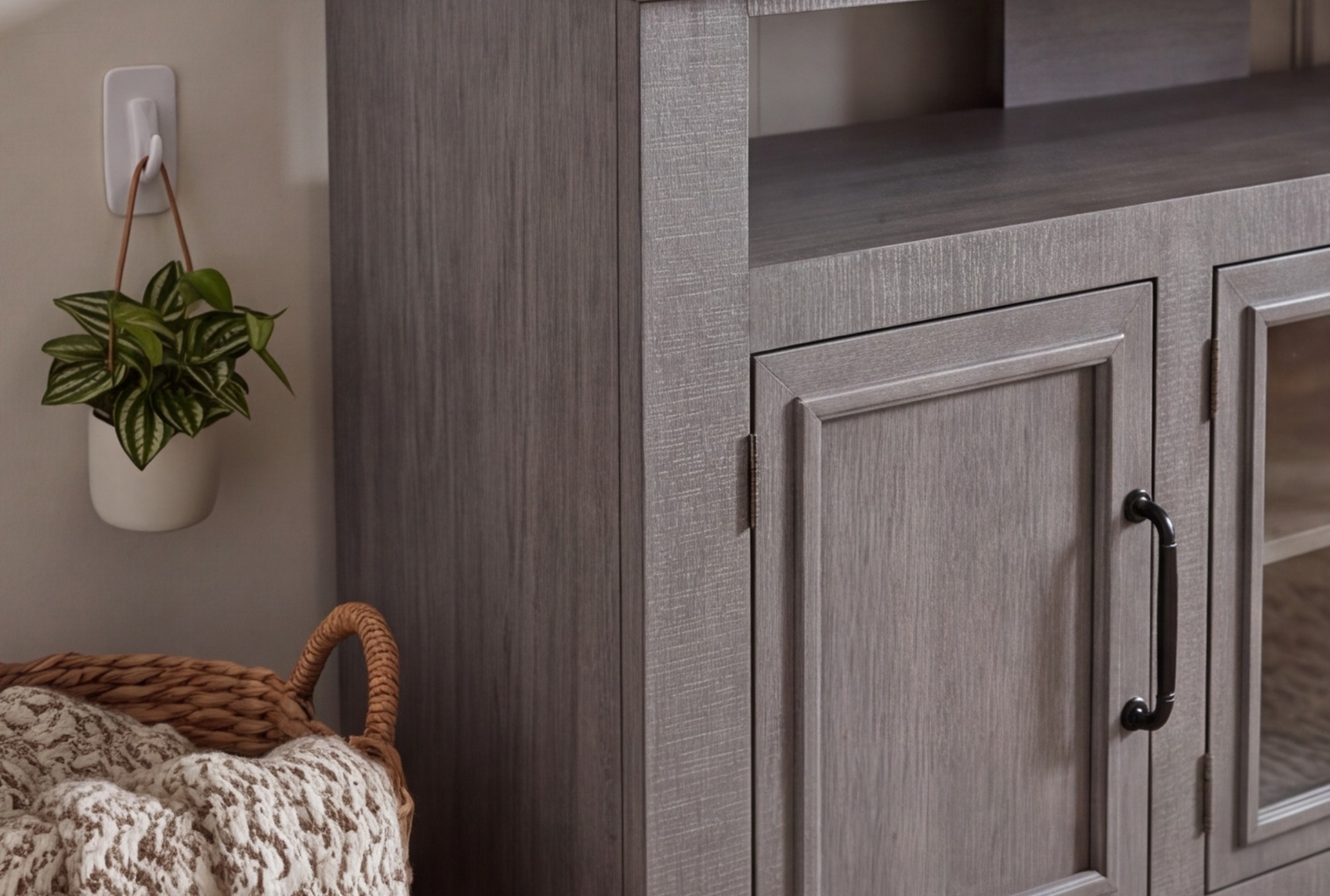
- Low enough that the top sits at hip or waist level.
- Depth of at least 15 to 18 inches, with the base at least as deep as the upper body.
- Solid wood, plywood or thick engineered-wood panels, and a back panel that is fastened, not floating.
- Drawer stops, so only one drawer opens at a time or drawers cannot pull fully out.
Weight distribution counts too. Keep heavy items such as books and ceramics in the lower drawers or on the lowest shelf. Put lighter baskets higher up.
Low-set furniture with a sturdy, deep base lowers the tip-over risk, so treat furniture choice and landlord permission as one decision. The shape of what you buy decides how much you need to ask.
How to ask your landlord
Ask before you buy anything tall. Get written approval before installing a strap, brace or wall anchor, agree on repairs at move-out, and check your lease and local law.
- Name the piece and where it will stand, and say it needs one screw into a stud.
- Offer to patch and touch up the hole at move-out, using spackle and matching paint.
- Ask that the approval be in an email or a signed note, and keep a photo of the wall before you start.
If your landlord says no, choose a lower piece. A wide, low sideboard with books laid flat along the top does the job of a tall bookcase with far less to worry about. For a corner where you wanted a small shelving unit, a short, deep cube unit sitting on the floor makes a similar statement without any wall contact. A low piece lowers the risk but does not remove it, so in a home with young children, keep asking for the one stud anchor.
Households matter here. In a home with a toddler, skip the open ladder-style shelf, since it invites climbing. In a home with cats, a closed-front cabinet in painted wood or laminate is easier to live with than open shelves of breakable objects.
Placing a TV when you cannot anchor it to the wall
When a TV cannot be anchored, the fallback is a sturdy, low base with the TV pushed as far back as it will go. This reduces risk but does not remove it, so treat it as the second-best option.
What CPSC advises
CPSC advises placing a television on a sturdy, low base, pushing it back as far as possible, and keeping cords out of reach. The numbers explain why this deserves attention. According to CPSC, among 217 reported tip-over fatalities from 2013 through July 2023, 47% involved a television and 55% involved children ages 1 to 3.
When a TV can't be anchored, the stand is your safeguard: keep it low, deep, and pushed back.
The gap between knowing and doing is wide. CPSC reports that 91% of consumers in CPSC's review had not anchored the furniture holding their television. Renters are often in that group by necessity, not neglect, which is why the stand itself carries so much weight.
What to check on a media console
A low, deep media console rated for your TV's weight is the practical answer. Look for these details before buying:
- A stated weight capacity above your TV's weight, which you can find in the TV's manual.
- Depth of about 16 to 20 inches as a rule of thumb, so the TV can sit with its back edge close to the wall and the console's feet reach well past the TV's own base.
- Height of about 18 to 24 inches, a rule of thumb that keeps the TV's center of gravity low.
- A top surface wider than the TV's base, with a solid top panel and not a thin shelf bowing in the middle.
Push the console flat to the wall and the TV to the back edge, leaving a few inches for ventilation. Run cables along the back and keep any slack tied up and out of reach, since a dangling cord is a pulling point for a toddler.
Some households need a different approach. With a toddler at home, avoid a console that sits on narrow legs or has glass shelves. With a cat, a smooth wood or laminate top is easy to wipe, and a slightly open back keeps cords tidy and out of reach of paws.
Plug-in sconces and lamps in place of hardwired fixtures
Plug-in wall sconces, floor lamps and table lamps give you layered light without touching the electrical system. They are lighting that moves with you, and they need no drilling. A sconce can hang from a lightweight hook set with adhesive hardware or placed in a small existing nail hole.
Build light in layers
Plug-in and battery-operated sconces work alongside floor and table lamps, and a slim, paintable cord cover hides the wiring so it blends into the wall. A few lamps at different heights make a room feel finished without a ceiling fixture.
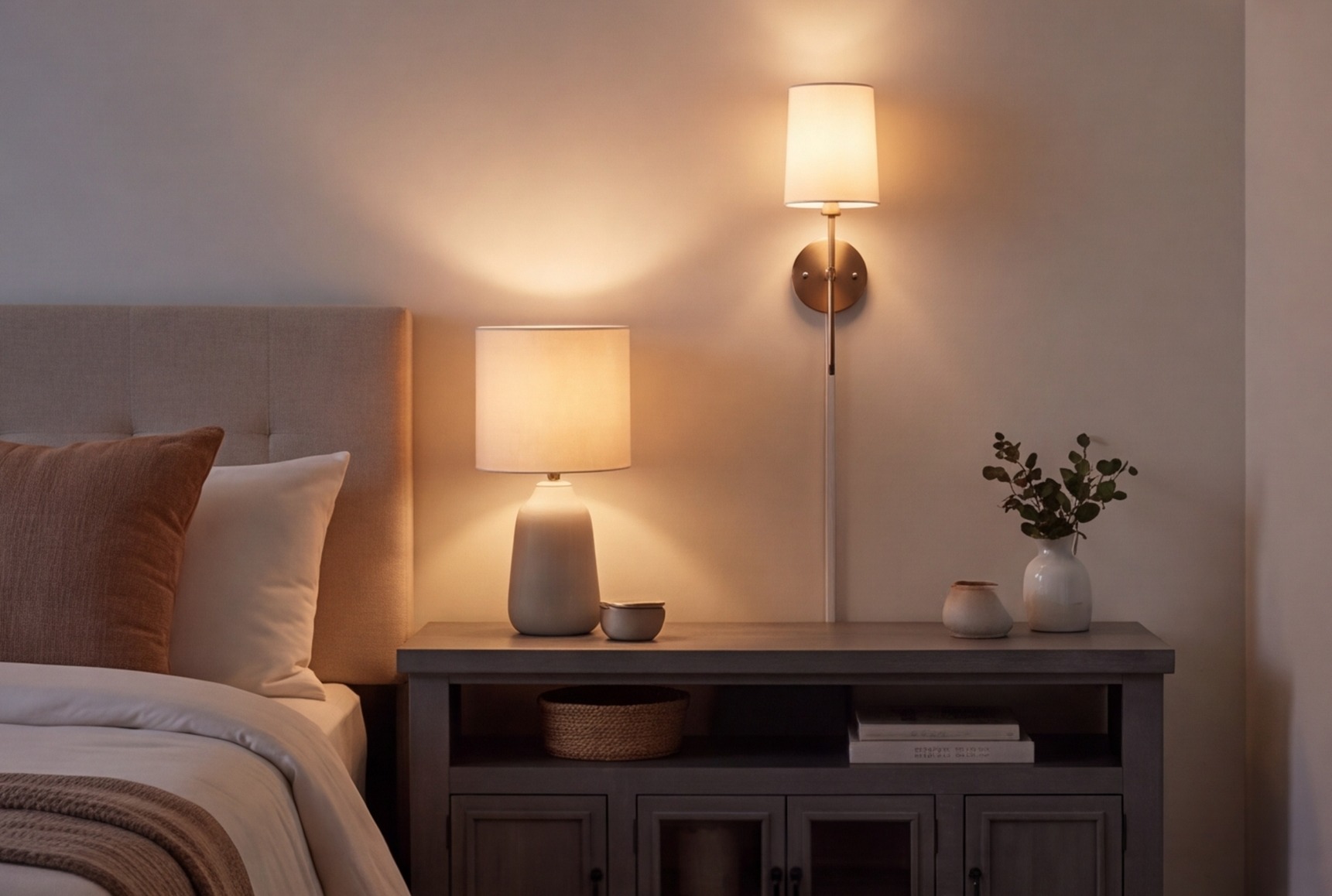
A workable layering by room:
- Living room: a floor lamp by the sofa for reading, a table lamp on the sideboard, and a plug-in sconce pair flanking a chair.
- Bedroom: a table lamp on each nightstand, or a plug-in sconce above the bed if the cord can run behind the headboard.
- Entry and hall: one plug-in sconce near the door, in place of a harsh overhead bulb.
Cords, bases and shades
Cord management is the part that makes it look intentional. Use a slim, paintable cord cover in the wall color, and route cords behind furniture to a power strip with a surge protector.
Choose lamps by how they are built. A wide, heavy base of ceramic, metal or solid wood holds steady, while a thin, narrow base on a tall floor lamp tips more easily. A fabric or paper shade diffuses light softly, and a metal shade directs it downward for reading. In homes with toddlers or cats, favor a floor lamp with a weighted, wide base and a short cord, and keep table lamps toward the back of surfaces.
Mirrors and art on rental walls, and a strapped floor mirror for homes with children
Lighter mirrors and art with hanging hardware included are the easiest wall items for a rental, and leaning a lightweight piece of art on a low surface works too. A heavy floor mirror in a home with children is different, and calls for a wall strap fastened to a stud.
Lighter pieces on the wall
You can often hang things on walls when renting, but check your lease first, since many leases allow small nail holes and others ask for none. Look for frames that include their own hanging hardware and state a weight limit, and favor lightweight frames of thin wood or metal with acrylic fronts in place of glass in rooms where children play.
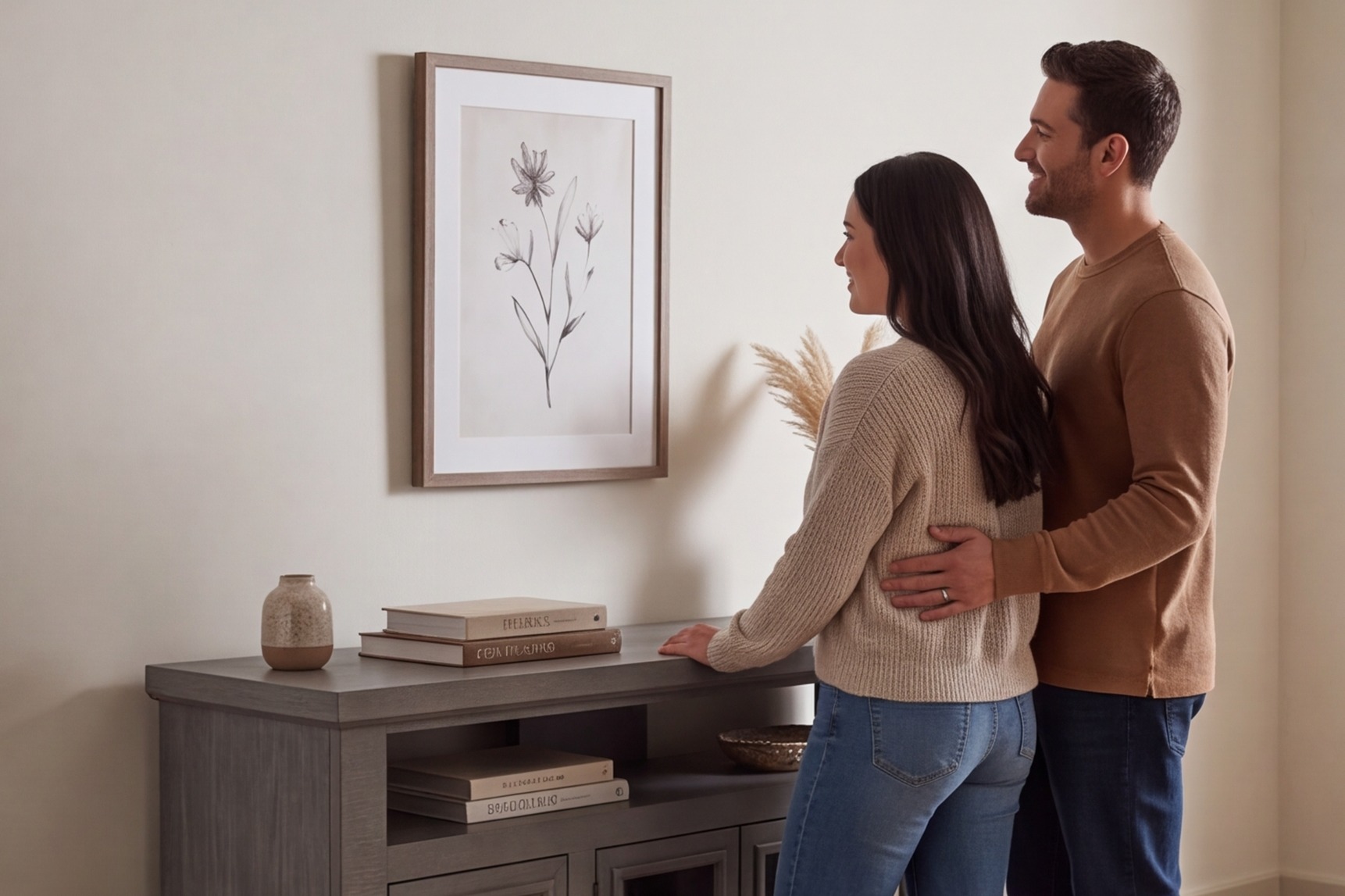
Where holes are not allowed, lean lightweight art on a low sideboard or shelf, and layer a few pieces at different heights. A large piece leaning on a wide, low console looks deliberate and needs nothing from the wall.
Floor mirrors when children live in the home
A tall floor mirror behaves like tall furniture. In a home with children, secure it with a wall strap connected to a stud, and ask your landlord first, using the same written request and patch-at-move-out offer from the storage section. Check the strap and screws from time to time, as with any anchor.
If a stud connection is not approved, hang a smaller, lighter mirror at adult eye level with approved hanging hardware.
A worked example
Seeing it all together helps. Our Scandinavian living room page shows a low, wide, drill-free approach: a long, low sideboard with the TV set well back, floor and table lamps for layered light, and art leaned along a ledge. It is a useful reference for how these pieces sit together in one room.