

A furniture budget splits cleanly once you count how your household actually lives: nights slept, meals eaten, hours worked, hours kids play, and how often people visit. This page sets a total and a reserve, weights rooms by those habits, tests splurges with cost per use, phases the buying, and runs one worked example.
Set the Total First, Then Hold Back a Reserve for the Costs Nobody Lists
Start with a ceiling you can pay without strain, then subtract a reserve before dividing anything by room. Hidden costs can add 15%–30% above sticker prices, according to OpenDoor, so a budget built on shelf prices alone runs short.
How Much to Have Before You Start
There is no single right number. GoMortgage puts the national average cost to furnish a home between $10,000 and $50,000, and says most homeowners spend 10% to 50% of their home's value over time furnishing and decorating. OpenDoor gives a tighter rule of thumb of 10% to 25% of the purchase price if you are furnishing from zero.
Those ranges are wide because houses differ. In a data set of 3,487 furnishing projects, Bee Setups reports a median of $15,940 per property, three-bedroom homes averaging $27,300, and roughly $7,500 added for each extra bedroom. Use these as sanity checks, then set your ceiling from savings and the date you need the house comfortable.
A ceiling of $10,000 can furnish a house, but only if you accept used pieces, fewer rooms at first, and slower filling-in. That is a tradeoff that comes with a tight budget.
What Goes Into the Reserve
Build your reserve from a list of real line items. Sales tax, delivery, assembly, returns and restocking fees are the obvious ones. Rugs, lighting and window treatments are the quiet ones, because they rarely appear on a room list until the room feels unfinished.

Assembly alone typically costs $90 to $150, with a national average of $110, and complex or oversized items can reach $450, according to Bob Vila. Bee Setups found that labor and logistics made up about 15% of total cost on average.
A practical starting reserve is 20% of your total. If you buy mostly used pieces, raise it. Secondhand savings often shrink once you add a truck, help carrying, cleaning and a repair or two.
Weight Each Room by How Your Household Lives
Room shares should follow use, not square footage alone. Count the hours people spend in each space, then give the heaviest-used rooms the largest slice. The living room and primary bedroom typically account for 40%–60% of total furnishing costs, according to OpenDoor, because they hold the sofas, beds and mattresses.
Turn Habits Into Percentages
A published model from FurnishIQ.AI suggests roughly 30%–35% to living, 20%–25% to the principal bedroom, 15%–20% to a separate dining area and 10%–15% to secondary bedrooms. The balance covers the hall, lighting, window treatments and artwork. Treat that as a neutral starting point, then shift it with the questions below.
- Nights slept: every regularly used bed earns a share, and the primary mattress earns the largest.
- Meals eaten at a table: if dinner happens there most nights, dining moves up.
- Work hours at home: a desk and chair that serve 40 hours a week outrank a guest room.
- Child hours: durable seating and closed storage take weight from decor.
- Hosting frequency: entertainers add to living and dining and take from secondary bedrooms.
How Household Type Shifts the Shares
These adjustments are our own illustrative starting points, not published benchmarks. Check them against your own habits.
Let the hours a room is actually used decide its slice of the budget, not how big it looks on paper.
|
Household |
Living |
Primary bedroom |
Dining |
Other bedrooms |
Office, hall, extras |
|---|---|---|---|---|---|
|
Single |
30% |
30% |
10% |
10% |
20% |
|
Couple |
35% |
25% |
15% |
10% |
15% |
|
Family with kids |
35% |
20% |
15% |
15% |
15% |
|
Frequent entertainers |
35% |
20% |
20% |
10% |
15% |
Adjust for Size and Room Count
A larger living room needs more seating and rug area, so its share grows. More bedrooms dilute the percentage each one gets, even though the dollars rise. Since each added bedroom raised total cost by about $7,500 in the data from Bee Setups, plan secondary bedrooms as a group and keep them lean until the main spaces are done.
Decide Where to Splurge and Where to Save With Cost Per Use
Cost per use is the price of a piece, plus delivery and assembly, minus any resale value, divided by the years or uses you expect. It lets a sofa and a lamp compete for the same dollars. Spend more where use is daily and lifespan is long, and spend less where use is occasional.
The Math on Sofas and Mattresses
According to The Wealthy Thinker, a quality sofa lasting 18 years costs $139 a year ($2,500 divided by 18), while a $600 sofa replaced every 3 years costs $200 a year. The same source puts a $1,200 mattress used for 10 years at $120 a year, or about 33 cents a night.
Those lifespans are assumptions, so test them against reviews, warranties and your own household. Kids, pets and heavy daily use shorten any piece's life. The method still works because it forces you to state the assumption instead of trusting a price tag.
Touch-and-Test the Pieces That Matter
Comfort cannot be judged from a photo. In a 2024 report from Provoke Insights, only 35% of sofas and loveseats were bought online versus 65% through retailers, while 63% of lamps were bought online. Sit on sofas and lie on mattresses in person. Buy lamps, mirrors and baskets wherever the price is right.
When Used Furniture Fits
Used furniture suits solid, inspectable pieces: dressers, dining tables, bookcases, side tables and desks. It fits poorly for mattresses and for upholstery you cannot check for wear or odor. Subtract transport, cleaning and repair from the savings before calling it a bargain. L.E.K. Consulting notes that inflation has pushed shoppers toward value-tier products even on high-ticket furniture, so buying less expensive new is a reasonable middle path for pieces you cannot buy used.
Phase the Purchases Across Months 0-3, 3-12 and Year Two
Buy in phases, not all at once and not strictly one room at a time. Get sleeping and sitting sorted first, live in the house, then fill gaps with what you learned. Furnishing over 6 to 12 months is typically 15% to 30% cheaper than one big wave, according to OpenDoor.
Months 0-3: Sleep, Sit, Eat
Beds and mattresses come first, with basic bedding and window coverings for privacy. Seating and a place to eat follow. Remember that custom sofas, dining tables and beds typically carry 8 to 16 week lead times, per OpenDoor, so order them early.
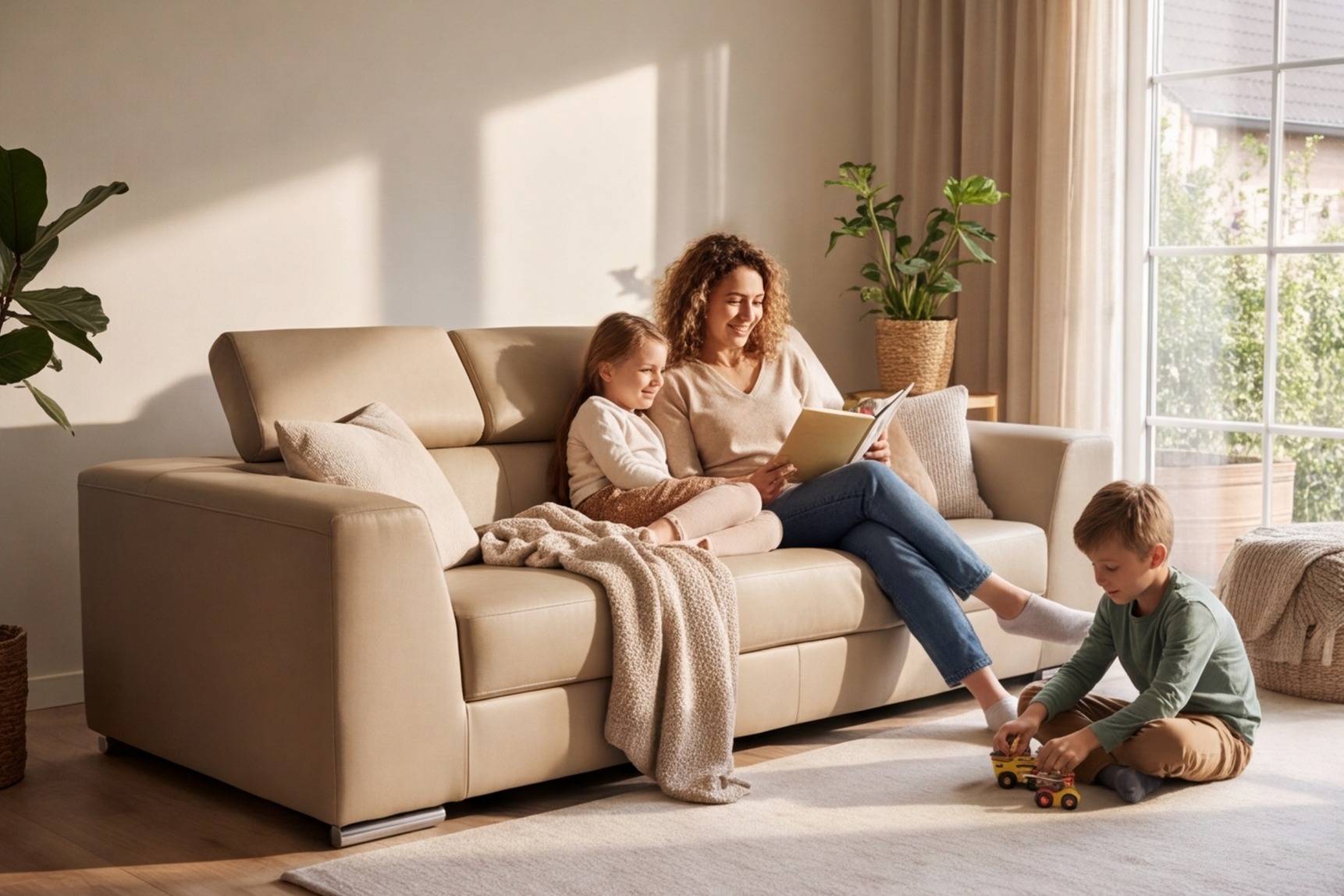
Resist fillers here. A cheap stand-in you will replace in six months is money taken from the piece you actually want.
Months 3-12: Finish the Main Rooms
With a few months of living behind you, the gaps are obvious. This is when the rest of the living and dining pieces, lighting, storage and the second bedroom arrive. AI Room Styler suggests holding 20% back for rugs, lighting and the inevitable thing you forgot, and the same source advises observing the house for a few weeks before committing to the anchor room.
Year Two: Layer and Replace
Year two is for secondary bedrooms, artwork, extra seating and any starter piece that proved wrong. Keep a small amount unspent here on purpose. Living in a house teaches you where light falls, where bags land and which chair nobody sits in.
How to Split a Whole-House Furniture Budget Without Guessing: A Worked Example
This example walks one three-bedroom, two-bath house through every step. All numbers are illustrative sample figures, so check current prices before you buy. The household is a family with two kids that eats dinner together most nights and hosts occasionally.
Steps One and Two: Total and Reserve
The household's total is $20,000. Hold back 20% for tax, delivery, assembly, rugs, lighting, window treatments and returns. That leaves $16,000 for rooms.
Subtract the cushion for hidden costs before dividing anything by room, and the rest of the plan stops running short.
Step Three: Room Weights
Using the family row from the table above, the $16,000 divides like this.
|
Room |
Share |
Amount |
|---|---|---|
|
Living room |
35% |
$5,600 |
|
Primary bedroom |
20% |
$3,200 |
|
Dining |
15% |
$2,400 |
|
Two kids' bedrooms |
15% |
$2,400 |
|
Office, hall, extras |
15% |
$2,400 |
Step Four: Splurge Picks
Cost per use points to the family sofa and the primary mattress, since both are used daily. Put roughly $2,500 into the sofa and $1,200 into the mattress, the figures used in The Wealthy Thinker. Save on kids' dressers and bed frames, where used pieces are a sensible choice, and on lamps and decor.
Step Five: Phasing
- Months 0-3: three beds and mattresses, bedding, curtains, sofa order, a dining table. Roughly half the room budget.
- Months 3-12: remaining living and dining pieces, storage, lighting, the office.
- Year two: decor, extra seating, replacements, plus whatever reserve remains.
A Template You Can Copy
- Total: ____ (from savings and timeline)
- Reserve: ____ (start at 20%)
- Room budget: total minus reserve
- Room shares: start with the household row, then adjust for hours of use, size and room count
- Splurges: price plus delivery and assembly, divided by expected years
- Phases: months 0-3, months 3-12, year two, each with a dollar cap
If you would rather not build the weights by hand, Cradle & Hearth's free style quiz and home profile fold room priorities, budget and timeline into one plan, with no account needed.