
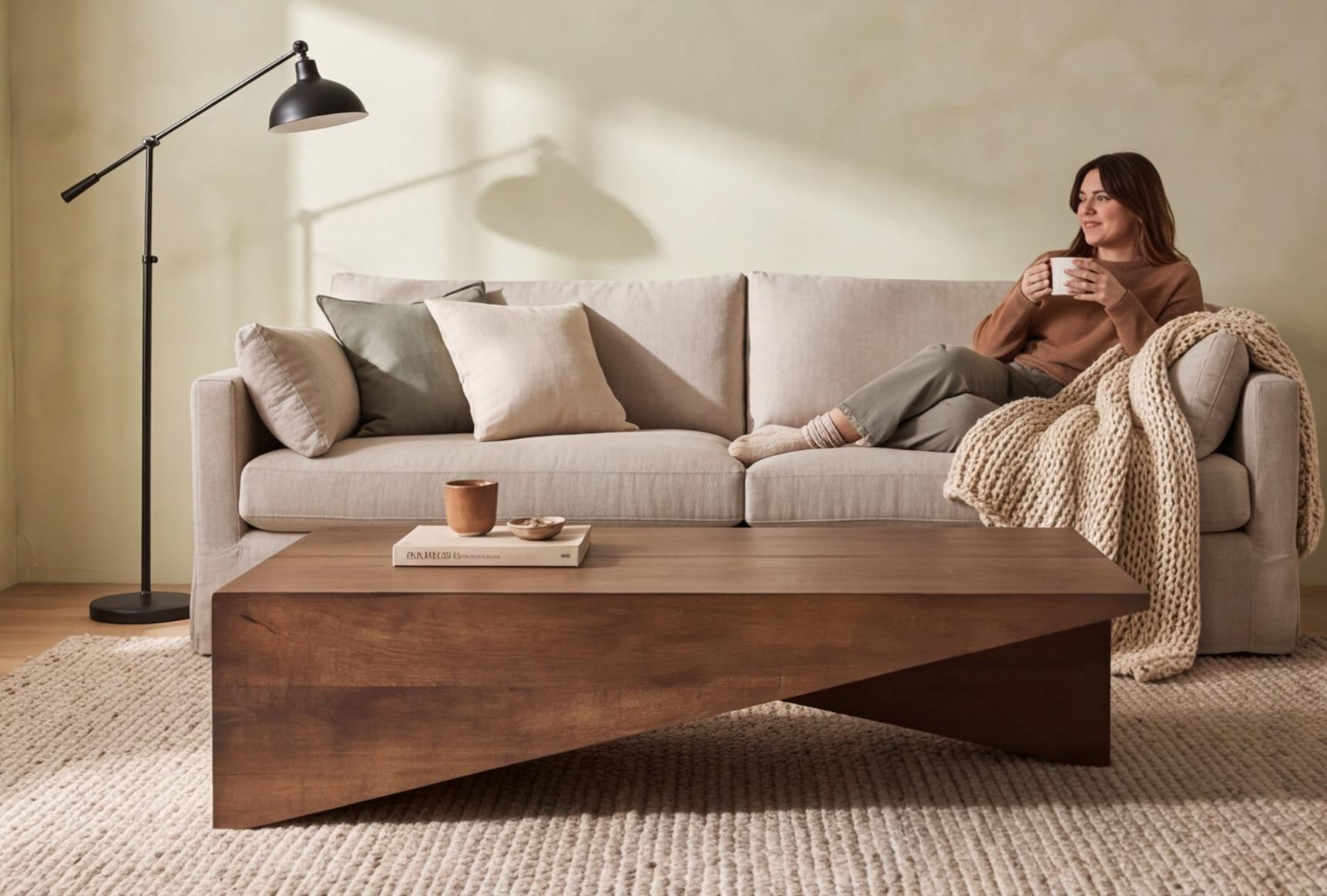
Rustic style has changed. The bright white shiplap and chalk-painted furniture of the last decade are giving way to deeper walls, natural plaster and hand-forged metal. This page gives you a quick test for old versus new rustic, then covers materials, blending with modern pieces, lighting, and a room-by-room order of work.
What Counts as Rustic, and How It Differs From Farmhouse, Cabin and Industrial Styles
Rustic is a style built on natural, unrefined materials and an imperfect, lived-in character. Wood with visible grain, rough stone, aged metal and woven fibers do most of the work. Farmhouse, cabin and industrial are related to rustic but each is narrower, and naming the difference helps you shop with a clear target.
Old Rustic or New Rustic: A Quick Diagnostic
The easiest way to place your own space is to compare it against two checklists. According to Rustic Dream Life, the 2026 direction replaces flat paint with limewash and textured plaster, moves from distressed finishes to natural patina, and favors deeper wall colors like taupe, charcoal and deep green, with wood left in its visible grain.
- Old rustic: bright white shiplap, chalk-painted furniture, factory-distressed finishes, themed signs and slogans.
- New rustic: deeper or plaster-textured walls, hand-forged or aged metal, wood with real grain, fewer but more tactile objects.
If your room leans old, nothing is wrong with it. The comparison simply shows which two or three swaps would move it forward. Designers quoted by KIRO 7 News Seattle describe the current look as more polished than past versions, airy, calm and layered instead of dark, bulky or overly themed. So the style is not dated. It has been edited.
Rustic Beside Its Closest Neighbors
Rustic is the broader term and describes materials. Farmhouse is a more specific style with its own signatures. Keeping the two apart makes shopping simpler.
|
Style |
Defining traits |
Typical feel |
|---|---|---|
|
Rustic |
Raw wood, stone, leather, natural fibers, visible imperfection |
Earthy, grounded, lived-in |
|
Farmhouse |
Practical country pieces, apron sinks, painted cabinets, shiplap |
Light, homey, cheerful |
|
Modern rustic |
Rustic textures with clean-lined furniture and a limited palette |
Calm, edited, warm |
|
Industrial rustic |
Aged metal, exposed fixtures and beams, plain surfaces |
Raw, cool-leaning, utilitarian |
Cabin style is rustic with a stronger north-woods accent, such as log walls, plaid and a stone fireplace. Scandinavian rustic keeps the natural wood but lightens everything around it.
Popularity is real but modest. The Fox Magazine reports rustic drew 742,840 U.S. searches, ranking 6th among interior styles, just behind farmhouse at 845,750. In a separate survey of 1,818 consumers, Home News Now found 14% favor rustic, which makes it a focused taste.
Choosing Rustic Materials That Look Right and Fit Your Budget
Spend on the materials people touch and see first: a dining table, a mantel, a leather chair. Save on large surfaces where a good imitation reads well from across the room. Each material below ages differently, so upkeep belongs in the decision alongside price.
What Each Material Adds and How It Ages
- Wood: warmth and grain. It dents and darkens, which most people find part of the appeal. Oil or wax it occasionally.
- Stone: weight and permanence. It needs little care, though some types should be sealed near water or food.
- Leather: depth and softness. Full-grain develops patina, and a wipe now and then is enough.
- Natural fibers such as jute, wool and linen: texture and quiet. They hold dust and wear faster underfoot, so use them where traffic is lighter.
Leather has a price curve worth knowing. StitchDesk puts top-grain at $8-18 per square foot wholesale and full-grain at $12-25, with a standard sofa needing 18-22 square feet plus a 20-30% waste allowance for hide irregularities.
Reclaimed Versus New Wood
This Old House lists reclaimed wood at $10-$20 per board foot against $5-$10 for new lumber, roughly double upfront, with long-term value in durability and timeless appeal. That gap argues for using reclaimed boards in one visible place, not across the whole house. A reclaimed tabletop or open shelf shows the character where it counts.
Splurge on reclaimed wood in one visible spot, like a tabletop or shelf, and let simpler materials carry the rest.
The pattern for spending is simple: furniture you use daily first, lighting second, textiles and wall color third, and larger fixed features last.
How to Blend Rustic and Modern Without Mismatched Rooms
Modern rustic works when one style leads and the other supports. Choose a dominant style, set clean-lined furniture against textured surfaces, and hold the palette to a few colors. A rustic antique table and contemporary chairs can go together comfortably, as designer Robin Burrill notes in Signature Home Services, when both feel relaxed.
A Three-Step Method
- Pick the lead. If roughly two thirds of what you own is rustic, let modern pieces be the accents, and the other way around.
- Pair texture with simplicity. A rough stone fireplace or plaster wall looks best against a sofa with plain lines. Detail against detail gets busy fast.
- Limit the palette. Earthy tones were named most popular by 46% of design experts, with warm neutrals at 41%, according to AweDeco. Two or three colors from that family is plenty.
Coordinating Several Wood Tones
Matching every wood is unnecessary and usually looks flat. Three habits make different woods read as collected:
- Undertone: group woods by warm (red, orange, honey) or cool (gray, ash). Keep to one family, or let a single mixed piece bridge both.
- Finish: keep sheen consistent. Mostly matte or oiled pieces sit well together, and one glossy outlier stands out.
- Repetition: repeat each tone at least twice in a room, such as a side table that echoes the floor, so no piece looks like an accident.
Metal and fabric can do the bridging too. Aged black or bronze hardware, repeated across a room, ties unlike woods together.
Keeping Rustic Rooms Warm and Light Instead of Dark or Cluttered
Rustic rooms feel heavy when dark color and clutter pile up without a plan. Layer lighting at several heights, keep the palette warm and mostly light, and edit accessories hard. The newer version of the style aims to be airy and layered, not dark or overly themed, per KIRO 7 News Seattle.
Lighting That Does the Heavy Lifting
Use three layers: overhead, lamps at table height, and an accent such as a picture light or a floor lamp. Skala8 recommends warm 2700K bulbs for living rooms and bedrooms. It also puts a one-room lighting refresh at $300 to $1,200, and that refresh is often the best-value change in a dim room.
Layer light at three heights, and let it skim across textured walls so plaster and grain read as dimensional.
Aim a lamp or sconce across a textured wall instead of straight at it. The grazing light picks out plaster and grain, and the surface looks dimensional instead of flat.
Palette and Balance
A simple balance keeps color in check: let the lightest tone dominate, use a mid-range earthy color in support, and keep a dark accent small. A warm cream or oatmeal dominates, tobacco or moss supports, and near-black metal or dark wood finishes it. Deep walls are fine, but then raise the light level and keep the floor and big furniture lighter.
Choosing Moody on Purpose
Some people want a cottage-rustic living room that is dark and enveloping, and that is a valid choice. Trends like the one described in Homes and Gardens favor smoky, warmer woods layered against soft upholstery and raw stone. Keep it intentional by committing to one wall color, adding plenty of lamps, and allowing only a few objects with real meaning.
Restraint stops the theme from taking over. The pull toward imperfection described in Homes and Gardens is about handcrafted, personal pieces, so display fewer things and choose ones with a story.
Interior Design Rustic Room by Room: Where to Start, Including Small Spaces and Rentals
Start in the living room, where you spend the most hours and where a rustic base sets the tone for the rest. Move to the kitchen and then the bedroom, spending on the pieces you use daily before the finishing touches. That order protects a new homeowner's budget from the common trap of decorating the wrong rooms first.
A Sensible Order of Work
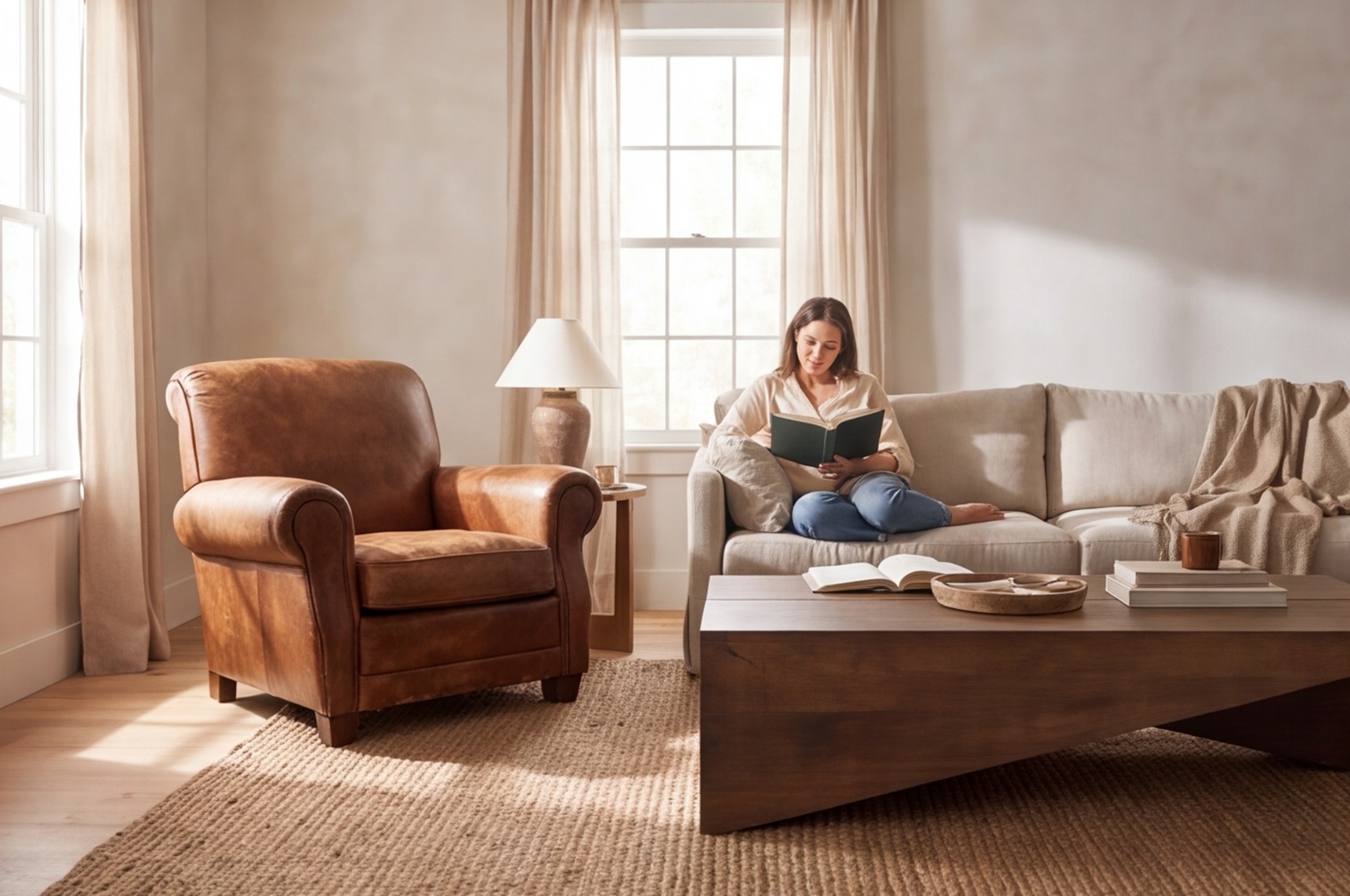
- Living room: a sofa with simple lines, a solid wood coffee or side table, a rug and layered lamps. According to Rently, 46% of renters focus on refreshing the living room first and 44% the bedroom.
- Kitchen: swap hardware and lighting first, using aged metal pulls. Paint or refinish cabinets next. Counters and structural changes come later.
- Bedroom: bedding in natural linen or wool, a wood bed or nightstand, warm 2700K bulbs and heavier curtains.
A Rough Budget Ladder
Under $500, limewash a single wall, add a jute rug, new light fixtures, plants and cabinet hardware. From $500 to $3,000, paint cabinets, add solid wood furniture and replace key fixtures. Beyond $3,000, consider a reclaimed wood dining table, a full-grain leather chair or sofa, and a larger wool rug. Treat these as planning ranges, since local prices vary.

Small Spaces and Rentals
Nothing here needs construction. Renters surveyed in Rently most often use pillows and blankets (55%), rugs (56%), curtains (50%) and decorative lighting (34%), and 45% simply rearrange furniture. Those same tools build a rustic room:
- One movable wood piece, such as a bench, table or shelf, in place of a built-in feature.
- Wool, linen and jute textiles in earthy colors.
- Plug-in sconces and table lamps with warm bulbs in place of overhead glare.
- Peel-and-stick or removable hardware swaps you can reverse at move-out.
Interest keeps growing among younger shoppers. Midwest Design Magazine reports Pinterest searches for thrifted home up 488% and rustic retreats up 172%. Thrifting suits renters well, because secondhand wood furniture is both affordable and already full of character.
If seeing a finished room helps, our rustic bathroom design is an example of a completed rustic room built around what a house already has.