
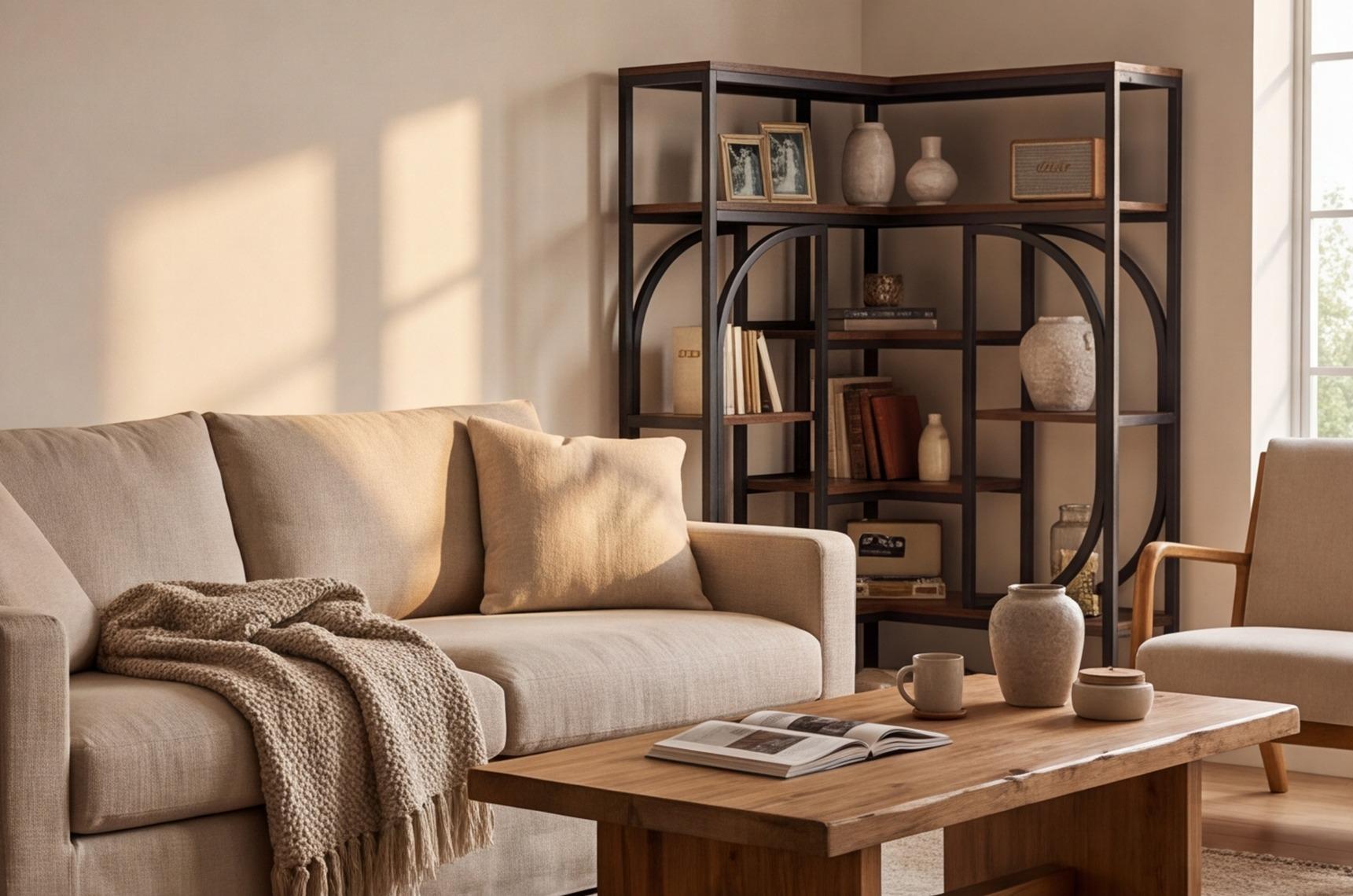
A house that feels finished on move-in day usually feels flat a year later. The sofa, rug, lamps, and art all arrived together, so nothing in the room has a story, and nothing can be swapped without unraveling the set. Leaving a room partly empty is the cheaper, smarter alternative, and it is a deliberate choice.
The numbers explain why. American Home Shield's 2025 report puts average first-year furnishing spend at $8,358, and Aldermore's 2024 index found roughly 21% of UK first-time buyers lived in a bare home for months because furnishing cost too much. Money spent fast on pieces you only half like is the real waste. Lived-in home decor is the style that rewards waiting, and this guide covers the styles, the build order, and the budget logic behind it.
What Lived-In Home Decor Really Means (and Why It Beats Showroom Perfection)
Lived-in home decor is a style rooted in comfort, personality, and gentle imperfection. Throws get draped, books stay out, and chairs face the way people actually sit. The room looks used because it is used, and it still reads as tidy.
Why It Resonates
People respond to rooms that show a life. Research in The Journal of Positive Psychology (2024) across four studies linked perceived hominess to well-being.
What to Expect in Real Rooms
Expect a sofa with a soft dent, a lamp pooling light in a corner, and a shelf holding a few things you love. Expect patina (the gentle wear that wood, leather, and brass gain with age) to count as a feature. A lived-in room is not messy. It has a limit on competing focal points and a clear home for everyday objects.

Lived-In Home Decor Styles: Organic Modern, Japandi, and Coastal Grandmother Warmth
Organic modern, Japandi, and coastal grandmother are the three styles that most naturally produce a relaxed room. Each leans on soft materials and calm color, so a lived-in feel comes with less effort. Pick the one that matches how you already like to live.
|
Style |
Palette |
Signature materials |
Best for |
|---|---|---|---|
|
Organic modern |
Warm whites, sand, clay |
Raw wood, boucle, stone |
Minimalist rooms that need warmth |
|
Japandi |
Soft neutrals, charcoal accents |
Light oak, linen, ceramics |
Small rooms and calm routines |
|
Coastal grandmother |
Cream, pale blue, faded stripe |
Washed linen, wicker, slipcovers |
Casual, family-friendly living rooms |
Warm Minimalism Is a Real Option
Japandi blends Japanese restraint with Scandinavian comfort, and it answers the question of how to make a minimalist home feel lived in. Keep the clean lines, then add a wool throw, a handmade bowl, and a lamp with a warm bulb. Design News Now found minimalism among the two most popular styles with furniture shoppers in 2023, so the warm version suits a large audience.
Dark Academia and Maximalist Charm: Layering Books, Art, and Collected Treasures
Dark academia and maximalism use deep color and abundance to make a room feel personal. The trick is repetition: a limited palette and repeated materials let many objects read as one collection rather than as noise.
Moody Color Without the Gloom
Forest green, oxblood, and walnut brown make a room feel enclosed and warm, especially with layered lighting. Anchor the color on the walls or a large upholstered piece, then keep other tones within the same family. Brass and aged wood add glow.
Making Abundance Look Intentional
Group books by color or height, and leave one shelf in five partly bare. Stack art against the wall before hanging it. Home News Now found 16% of consumers prefer maximalism. Abundance has a real following, but it still needs edges.
Abundance reads as intentional when a shared palette and clear edges turn many objects into one collection.
Start with a Home Assessment: Planning Around How You Actually Live
A home assessment is a short audit of your real habits before you buy anything. Note where you sit, where bags land, where guests gather, and which spots go unused. Furniture chosen from those answers earns its place.
Four Questions to Answer First
- Where do you sit most evenings, and what do you do there?
- How many people use the room on a busy day?
- Which surfaces collect clutter, and what lives on them?
- Which rooms matter most to finish first?
Finish the room you use daily before the one you only imagine hosting in. Measure doorways, stairs, and walls before ordering anything large, because large pieces are harder to return. The 2/3 rule is a handy sizing check: a sofa or main furniture group should fill roughly two-thirds of the wall it sits against, leaving breathing room at the ends.
Choose Furniture with Honest Proportions: Sofas, Tables, and Seating Built for Comfort
Honest proportions mean furniture scaled to the room and the people in it. A sofa deep enough to sprawl on, a coffee table you can reach, and side tables that actually hold a drink are the foundation of a lived-in room.
Spend Where You Sit
Quality matters most for the piece you use daily. Home News Now found 56% of consumers will pay more for a primary sofa. Look for a solid frame, replaceable cushions, and fabric or leather that softens with wear.
Tables That Let the Room Breathe
Choose a coffee table with open legs or a lower profile so the floor stays visible. Round edges help in tight traffic paths. Two small side tables beat one large one because they can move between rooms as life changes.
Keep the sofa the quiet star. A neutral base lets everything you collect later look deliberate rather than matched.
Layer Texture and Warmth: Rugs, Cushions, Throws, and Natural Materials
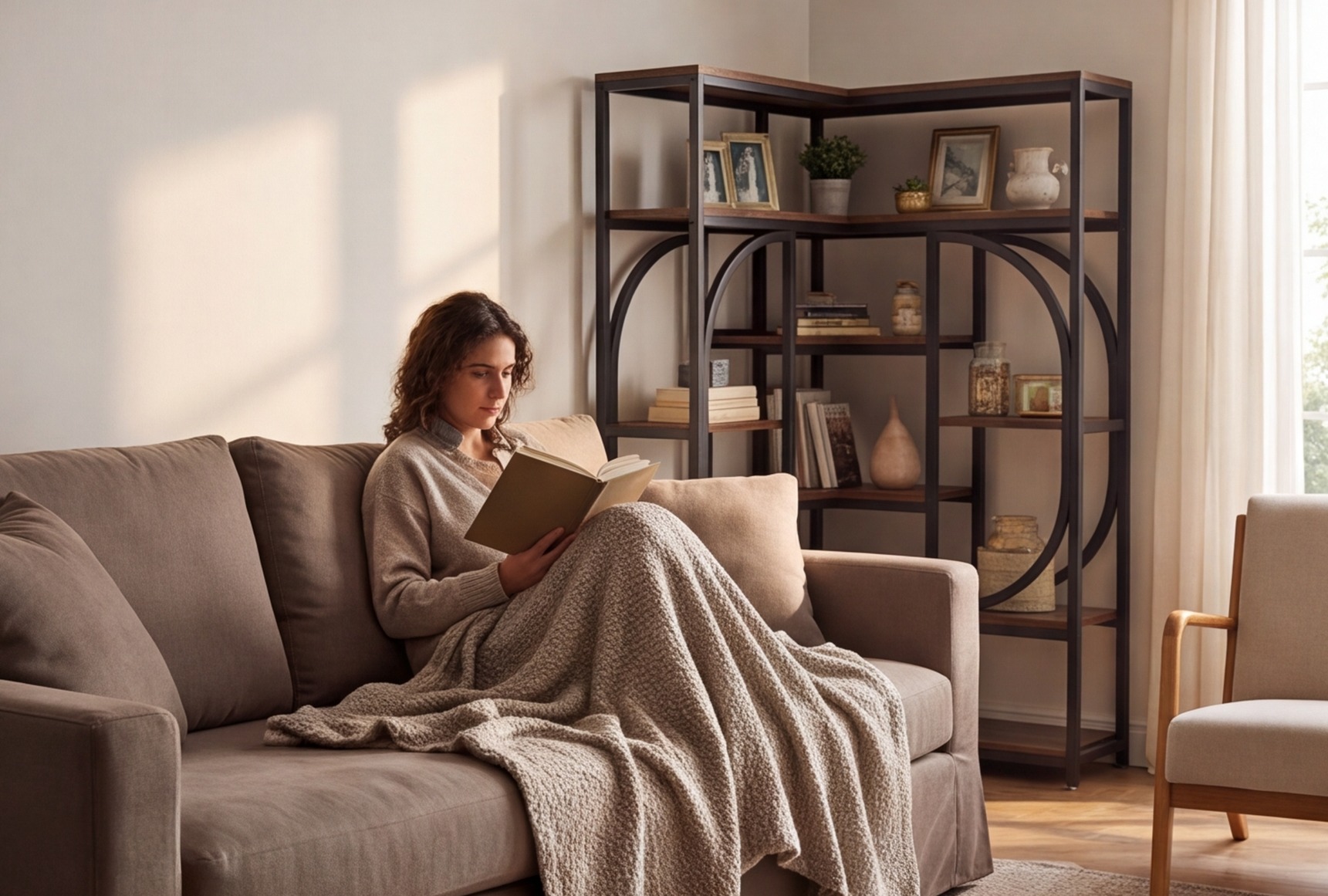
Texture is what turns a flat room into a cozy one. Mixing a rug, textural cushions, a throw, and natural materials like wood, linen, and wool adds depth without adding objects, which keeps the room calm.
The 3-5-7 Rule, Applied to Cushions
The 3-5-7 rule is a styling guide that groups decor in odd numbers. On a sofa, three to five cushions in varied sizes and textures look relaxed, and odd counts feel less staged than pairs. Mix one smooth, one nubby, and one patterned piece in the same color family.
Build From the Floor Up
Start with a rug large enough that the front legs of every seat sit on it. Layer a smaller jute or vintage rug on top if the room needs more character. Add a washed linen throw, a wool blanket in a basket, and one wood piece with visible grain.
Warm colors help too. Cream, clay, olive, and caramel read as lived-in because they hide small marks and glow under lamplight. Washed linen and slipcovers have a creased, easy look that never fights wear.
Bring in Biophilic Touches: Plants, Natural Light, and Soft Lighting Strategies
Biophilic design brings living and natural elements indoors. One statement plant, daylight you actually use, and lamps at several heights make a room feel warm from morning to night.
Plants With Presence
A single large plant, such as a fiddle-leaf fig or olive tree, anchors a corner better than five small pots. Add trailing greenery on a shelf for softness. Choose what your light can support so the plants stay healthy.
Lighting That Layers
Replace the harsh overhead with lamps at three heights: a floor lamp, a table lamp, and a small accent light. Warm bulbs around 2700K feel cozy. Rently's 2025 study found 79% of renters use layered lighting for a cozy mood. Keep curtains light so daylight reaches deep into the room.
Add Personal Touches: Display Art, Heirlooms, and Everyday Objects with Intention
Personal objects make a room yours, and display rules keep them from becoming clutter. Group items by theme, leave empty space around them, and rotate pieces rather than showing everything at once.
Gallery Wall or Single Statement
A gallery wall suits a collection of small, mixed pieces; a single large piece suits a quiet wall that needs one anchor. Use consistent spacing, about two inches between frames. Mix frames, but keep one repeated material such as black or oak.
Shelves That Tell a Story
Style shelves in odd groupings: a few books stacked flat, a small object on top, a plant behind. Leave a third of the shelf open. Designer Sarah Peake told House & Garden that homes should reflect the lives lived in them, down to a child's drawing on the fridge.
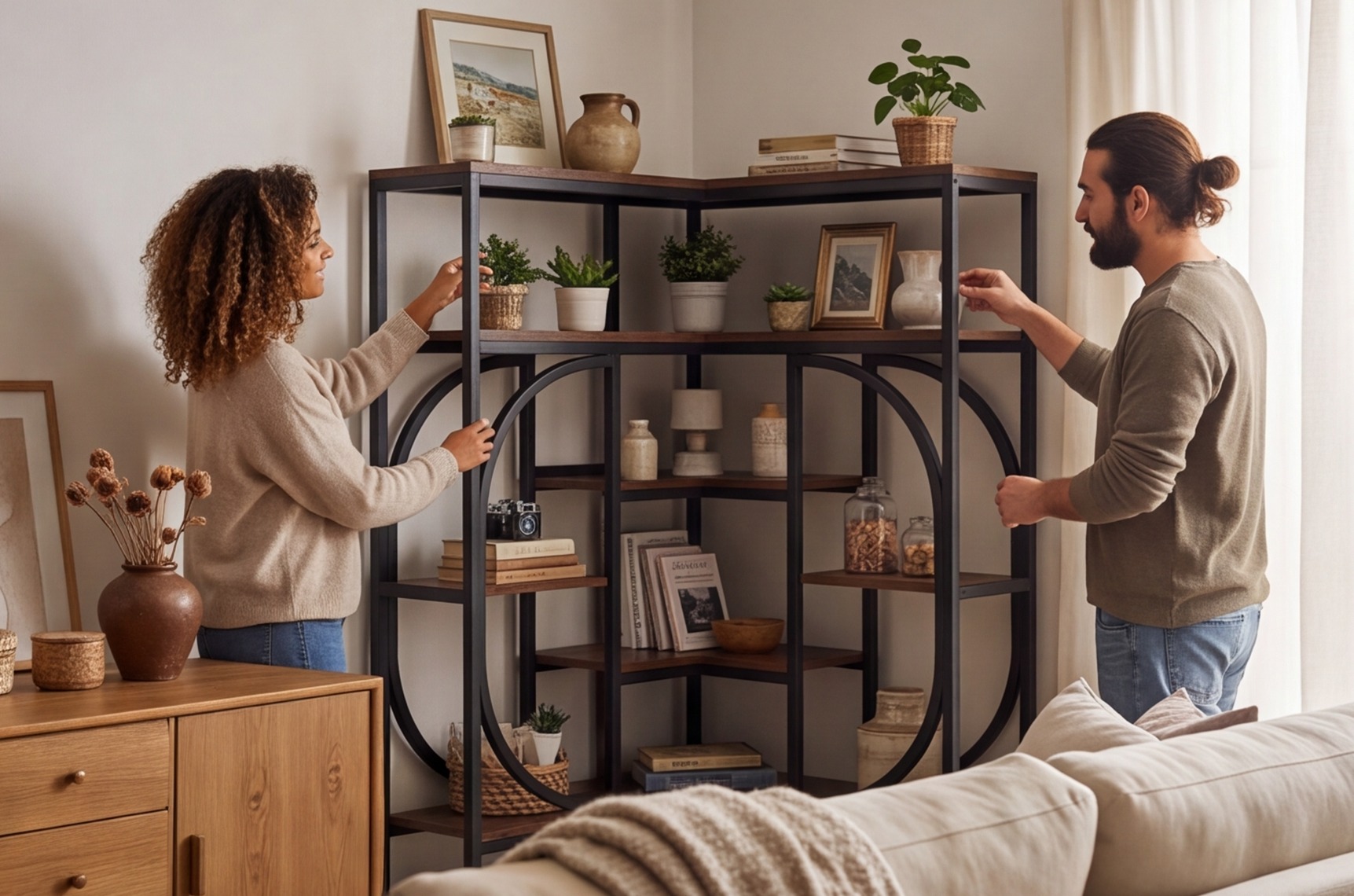
Three rules separate layered from cluttered: a limit on items per surface, repeated materials, and one focal point per wall.
Mixing Styles and Keeping It Fresh: How to Evolve Your Lived-In Home Decor Over Time
Mixing styles works when one thread, usually color or material, runs through every piece. A mid-century credenza beside a modern farmhouse table looks cohesive if both share warm wood tones.
What Is Most Popular Right Now
No single style rules. A 2023 Design News Now survey of furniture shoppers found minimalist and modern farmhouse the most popular, with rustic, industrial and mid-century modern behind them. Multiple styles coexist, which is permission to mix.
Five Timeless Living Room Additions
- A quality sofa in a forgiving neutral
- A natural-fiber rug
- Layered lamps at floor, table, and accent heights
- One vintage or antique piece
- A statement plant
Refresh One Piece at a Time
Swap throws and cushions seasonally, and rearrange a shelf when it feels stale. Replace one piece at a time rather than redoing the room. A lived-in home is allowed to be a little imperfect; tidy surfaces and clear paths are enough.
Why Bare Rooms Stopped Feeling Like Home
Hyper-minimal rooms looked calm in photographs and felt cold in daily life. Once people lived in them, the missing pieces were memory, identity, and a sense of belonging, none of which come from white walls and empty shelves.
The pull toward lived-in interiors is a correction toward comfort, one that is here to stay. A sterile room tires quickly because nothing in it is personal.
Designer Kelly Wearstler said in 2025 that "you need history in a home" and that having everything new is the quickest way to date it. That fits what the research on hominess suggests: a house feels like home when it holds traces of the people in it. A room people linger in has a worn leather chair, a favorite lamp, and a shelf of things that mean something.
A Collected Home Is Built in Order, Not by Accident
A collected home is a deliberate sequence: foundation pieces first, personal objects over time, and open space kept on purpose. The order is what separates it from clutter and from full maximalism.
The Three-Stage Build
- Foundation: the sofa, rug, main lighting, and key storage. Buy these from makers whose construction you trust.
- Personal layer: art, books, heirlooms, thrifted finds, and objects with a story. These arrive slowly.
- Open space: a bare wall, a clear corner, or an empty shelf left unfinished on purpose.
Showroom Versus Lived-In, Same Empty Room
|
Approach |
Showroom |
Lived-in |
|---|---|---|
|
Purchasing |
Whole set at once |
Foundation first, rest over months |
|
Walls |
Matching art from one source |
One anchor piece, space for finds |
|
Result |
Flat, hard to change |
Layered, easy to adjust |
Our room-by-room collections follow the same logic: furnish the base well, then leave room to grow.
Patience Is a Design Decision, and a Budget Strategy
An empty house does not need to be fully furnished at once. Leaving room for inherited, thrifted, and gifted pieces protects the budget, reduces regret, and lets a personal style emerge instead of copying a feed.
Waiting to fill a room is a design choice that protects both your taste and your budget.
The cost pressure is real. Opendoor found 33% of homeowners feel intimidated by decorating costs. Buying in a rush adds to the bill. Designer Nate Berkus has said the most common mistake is buying things you do not feel connected to, then tiring of them within months.
Secondhand Is Mainstream
Design News Now found in 2023 that 55% of consumers own secondhand furniture. Research in Sustainability Science found inherited and second-hand pieces carry emotional ties and durability value.
A practical plan: set aside a third of your furnishing budget for finds. Spend the rest on foundation pieces. Empty corners are budget waiting for the right object. They show a home that is still growing.
Keeping Your Own Taste at the Center of the Layering
A named personal style keeps a lived-in home coherent. When one point of view guides every choice, old and new pieces sit together naturally, and any style can read as warm and collected rather than theme-park decor.
Without that point of view, layering turns into a pile of unrelated purchases. A short style profile fixes this: pick two or three materials, a color family, and a mood, then test every new piece against them. Our free 3-minute style quiz does this work and gives you a named profile.
Any style can feel lived-in if you keep three habits: repeat materials, limit focal points, and edit twice a year. Designer Kelly Wearstler also warns against buying everything in one place, since it makes a space look one-note. A collected room should read as a person, not a catalog.
Build the Room You Will Keep
Start with the foundation, live in the room for a few weeks, and let the next piece come from a real need or a real find. Leave an open wall and a bare shelf on purpose. Those gaps hold the budget for objects that mean something, and they make a home that keeps getting better instead of one that peaked on move-in day.
When you are ready to furnish the base, take the free style quiz and start with the room that matters most.