
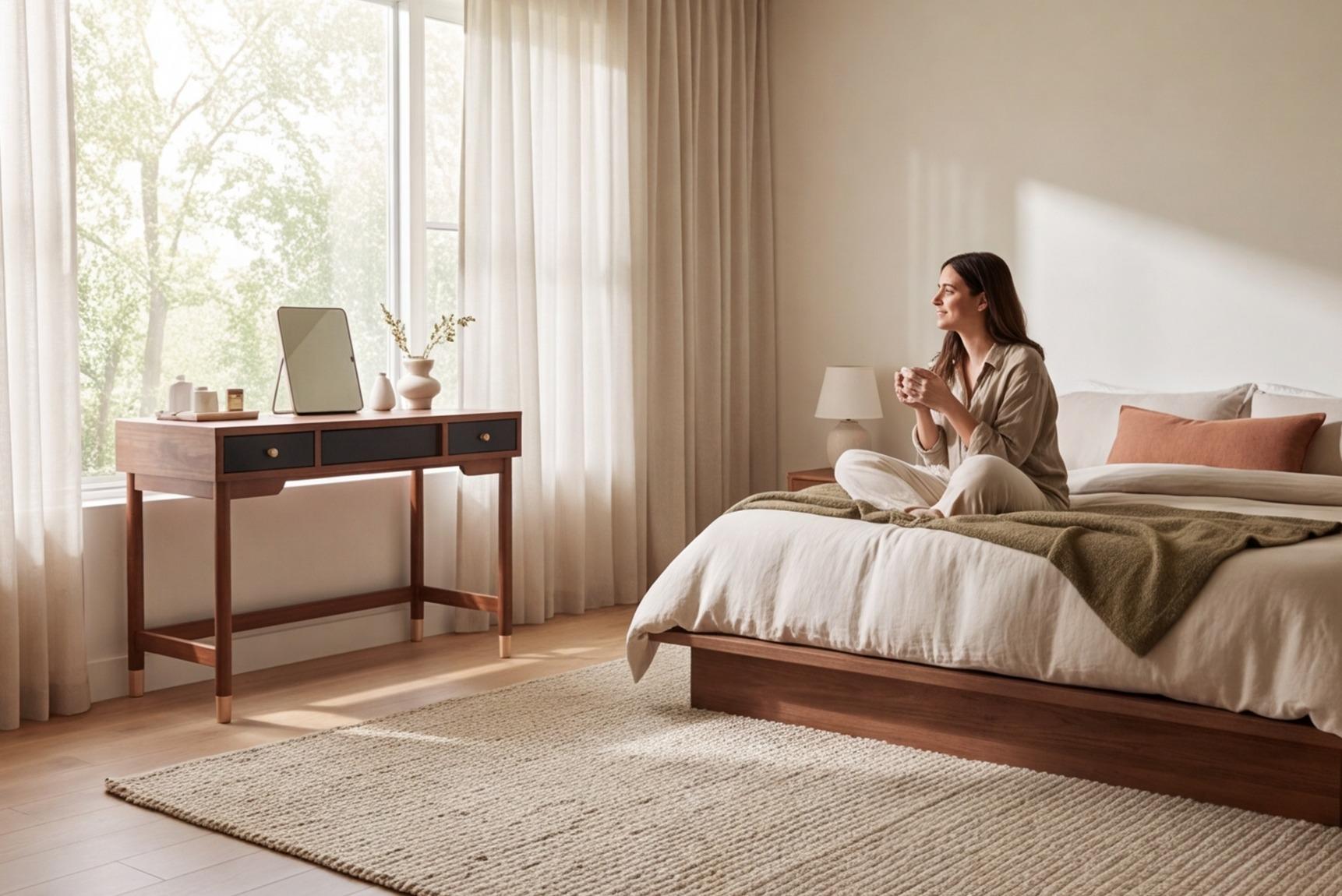
This guide gives modern bedroom ideas sorted by household, because the right look depends on who sleeps in the room. Each section starts with a furniture fact, such as a label, a standard or a measurement, and then shows how to build a calm, low-profile modern room around it.
Modern Bedroom Ideas Start With Who Sleeps There
A modern bedroom is a style decision: clean lines, a quiet palette, a low bed, very little on the surfaces. The materials, heights and construction behind that look are household decisions, and they change depending on whether the room has allergies, toddlers, earthquake exposure, an older sleeper or only a few square feet.
If you have just moved in and the whole house is empty, this is a good place to narrow things down. Pick the one or two households below that sound like yours and read those sections first. Everything else can wait.
How to find your situation fast
Six situations are covered across four sections. Allergies come first, then composite wood labels, which apply to nearly any flat-pack or budget-friendly furniture. After that come young children, and the last section covers earthquake regions, getting older, and studios or small bedrooms.
|
Household |
The furniture fact that decides the choice |
Modern look that fits |
|---|---|---|
|
Allergies |
Hard, wipeable surfaces and washable layers |
Wood or metal headboard, low-pile rug, roll-down shades |
|
Composite wood furniture |
TSCA Title VI label on plywood, MDF and particleboard |
Any flat-panel case piece with the label |
|
Young children |
Dresser tested to 16 CFR 1261 (ASTM F2057-23), anchored into a stud |
Low, tightly woven, flat-weave textiles |
|
Earthquake regions |
Low furniture by the bed, tall pieces on another wall |
Low nightstands, a clear wall above the bed |
|
Getting older |
A bed that is easy to get in and out of, lamp within reach |
Clear floor, a sturdy nightstand with room for a lamp |
|
Studios and small rooms |
Drawers or lift-up storage under the mattress |
Storage bed in a single pale palette |
A note on color and cozy
Across every household, the same modern palette works: warm whites, oatmeal, soft gray, wood tones, and one deeper accent in a pillow or throw. A simple 60-30-10 split keeps it tidy, with about 60 percent wall and large-surface color, 30 percent bed linens and rug, and 10 percent accent. Warmth comes from texture and wood grain, and the sections below show which textures suit which household.
Modern Bedroom Ideas for Allergies: Hard Surfaces, Washable Layers, Closed Storage
For dust mite allergies, the build of each piece matters more than its style. A modern room already leans this way.
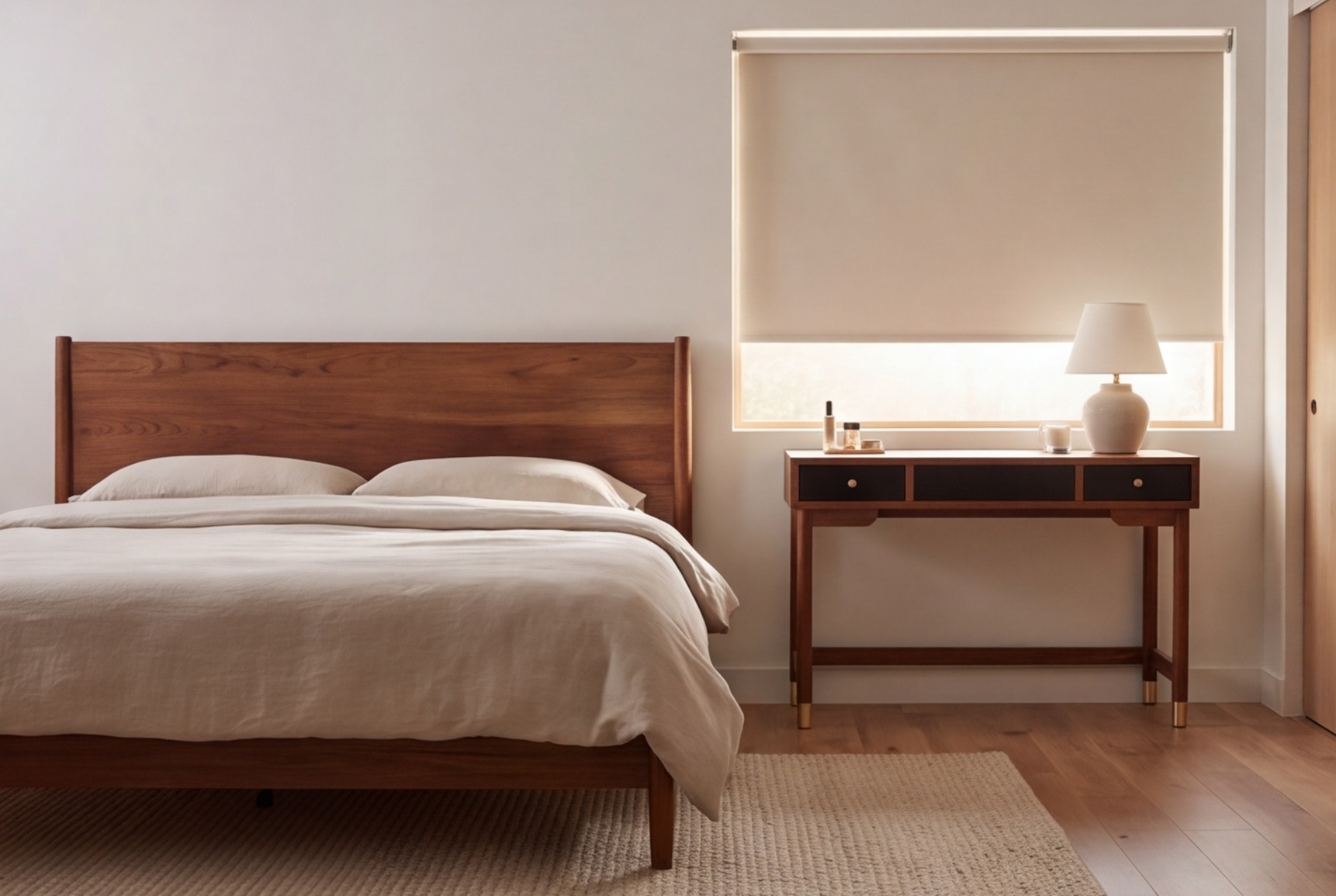
The scale of the issue is real. According to AAFA, approximately 20 million people in the United States have a dust mite allergy, and AAFA Ask the Allergist says its 2025 guidance recommends keeping indoor humidity between 35% and 50% for dust-mite allergy control.
Headboard: wood or metal in place of tufted
A tufted headboard has buttons, folds and padding that hold dust. A solid wood or powder-coated metal headboard has a flat face that wipes clean in seconds. It is also the more modern shape, so there is no tradeoff in looks, only a small one in softness. If you like to sit up in bed and read, add a washable pillow behind your back.
Rugs and window coverings
On a hard floor, a low-pile rug (short, flat fibers with little for dust to settle into) or a washable rug keeps the room soft underfoot. Choose flat-weave cotton or a machine-washable style, and skip deep-pile shag. Roll-down shades wipe clean, and washable curtains go in the machine along with your bedding. Sheets and blankets should be washed weekly in water at least 130°F, according to Mayo Clinic.
Mattress and pillow covers
Zippered covers fully enclose the mattress, pillows and box spring, so dust mites cannot settle into the filling. AAFA also advises replacing pillows every 2 years and mattresses every 10 years because they accumulate skin cells, dust mites and debris. A covered mattress on a simple platform base keeps the look uncluttered.
Closed storage over open shelves
Open shelves of small decor collect dust, and every ceramic and picture frame has to be wiped. Closed storage, such as a dresser with doors or drawers, a storage bed or a wardrobe with panel fronts, keeps surfaces clear. A single lamp and one plant on a nightstand is plenty for a modern look.
In an allergy-friendly bedroom, wipeable surfaces and closed storage do the work, so the clean modern look comes without compromise.
Reading the Label on Composite Wood Furniture
Composite wood is made from wood fibers, chips or thin layers pressed together with adhesive, and it is used in most flat-pack and budget bedroom furniture. The TSCA Title VI label tells you the piece was made to the EPA's formaldehyde emission standard for these materials.
Plywood, MDF and particleboard in plain terms
Plywood is thin sheets of wood veneer glued in layers, with the grain alternating. Medium-density fiberboard (MDF) is fine wood fibers pressed into a smooth, dense panel that takes paint well. Particleboard is wood chips and sawdust pressed into a board, and it is the lightest and most common core under laminate and veneer in dressers and nightstands.
Formaldehyde is a compound found in some of the adhesives used to bind these panels. The EPA sets limits on how much those panels can release.
What the TSCA Title VI label means
The EPA's Title VI of the Toxic Substances Control Act covers hardwood plywood, medium-density fiberboard and particleboard, and regulated products must be certified and labeled as TSCA Title VI compliant. According to EPA, the formaldehyde emission limit is 0.05 ppm for hardwood plywood, 0.09 ppm for particleboard and 0.11 ppm for medium-density fiberboard.
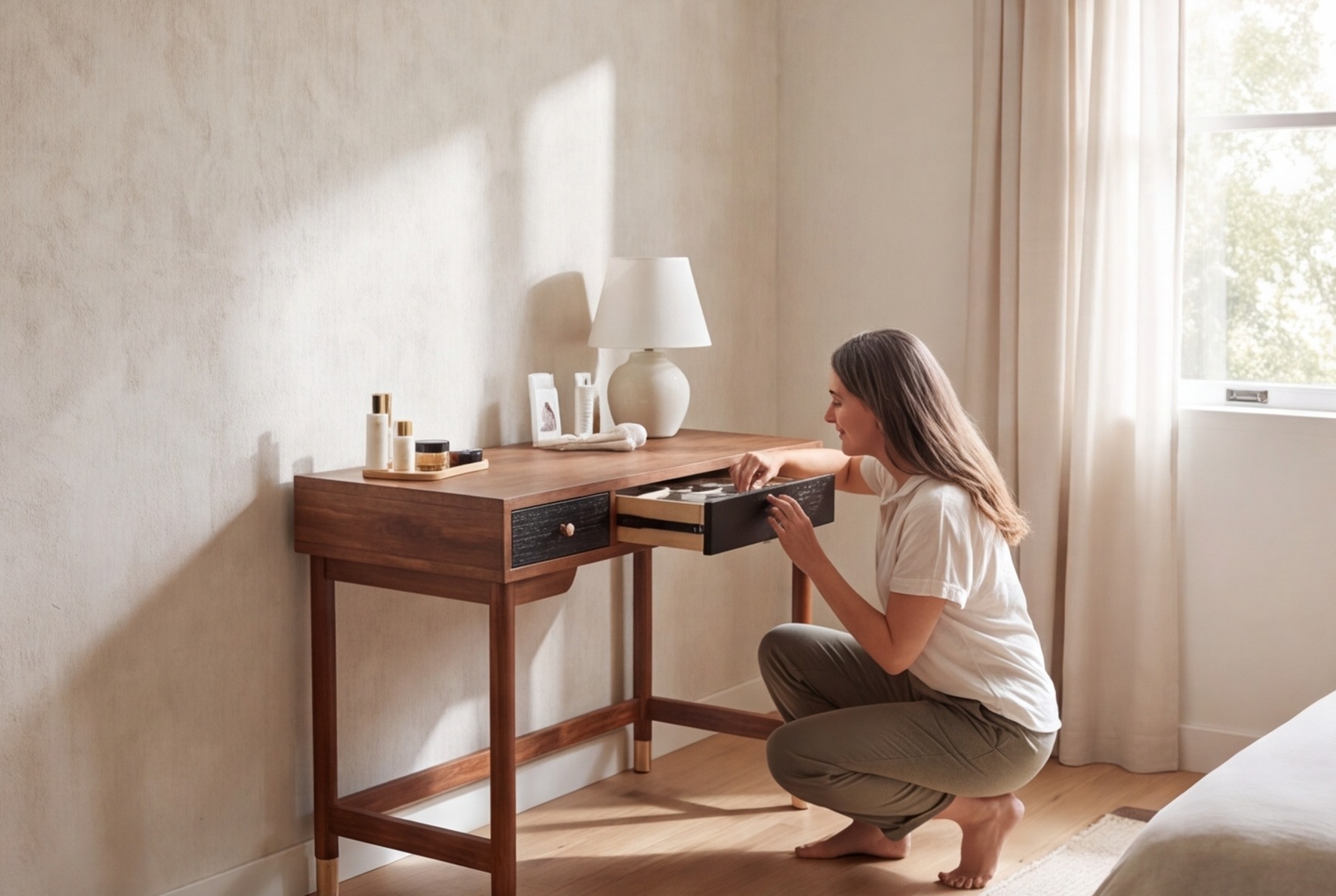
The label also carries information such as the producer, date and certifier, depending on the product. We read it as a construction fact: it says the panels were made to a federal emission limit. It does not say anything about how a piece performs in your particular room.
Where to look
- On a sticker or tag on the back panel or inside a drawer.
- On the product page or care sheet, where the maker may note the compliance statement.
- On the box or assembly instructions for flat-pack pieces.
If you cannot find a label on a composite piece, ask the seller whether it is TSCA Title VI compliant before you buy. Solid wood and metal frames are not in this category at all, which is one reason they appear in the allergy section above.
Modern Bedroom Ideas for Households With Toddlers and Young Children
The furniture fact for a house with young children is a dresser tested to the federal stability standard, 16 CFR part 1261, which incorporates ASTM F2057-23. The U.S. Consumer Product Safety Commission (CPSC) adopted it as a mandatory standard for clothing storage units manufactured after September 1, 2023.
What the standard covers
Under ASTM F2057-23, as the CPSC describes it, a clothing storage unit is generally free-standing, at least 27 inches tall, at least 30 pounds, and has at least 3.2 cubic feet of enclosed storage. The testing includes stability checks on carpeting, with loaded drawers and with multiple drawers open, and it simulates child interaction with children up to 60 pounds, according to the CPSC's announcement of the rule.
That describes how a dresser is tested: the stability tests are run without the wall anchor installed. No piece is tip-proof, so anchor it anyway.
The wall anchor goes into a stud
A dresser that meets the standard comes with a wall anchor kit. Drive the anchor into a wall stud, the vertical wood framing behind the drywall, and not into drywall alone. A stud finder costs little and takes a minute. Do this when the dresser is empty and before you load the drawers.
A tested dresser still needs to be anchored to a stud, and the flat modern back panel makes that easy to hide.
Anchoring suits a modern room well, because a flat-front dresser sits flush against the wall and the strap or bracket can sit behind it, out of sight.
A low, tightly woven room
For toddlers, keep the look low and simple. Choose a flat-weave cotton or polyester rug that lies flat and can go in the wash, and avoid wool or shag, which sheds fibers and holds on to spills. Pick a low bed frame with rounded or softened edges, closed storage for toys and a tightly woven bedspread without long fringe or loose trim.
Keep cords from lamps and monitors short and routed behind furniture, and keep the nightstand clear of small objects. A clean modern room is a good starting point for a house with young children, because there is less on the surfaces to begin with.
Modern Bedroom Ideas for Earthquake Regions, Aging in Place, and Small Rooms
These three setups share one idea: where each piece sits and how high it is matters as much as its style. Each one gets a short, specific arrangement that stays modern and uncluttered.
Earthquake regions: low by the bed, tall on another wall
AARP HomeFit recommends keeping heavy or tall items away from the bed. Arrange the room so that low nightstands and a low dresser stand beside the bed, and put tall storage and heavy framed art on a different wall. If something shifts in a quake, it is less likely to land where you sleep.
A low-slung modern look makes this easy. Use a platform bed, two low nightstands and a long, low dresser on the wall by the bed. Keep the wall above the bed clear, or hang a soft textile there, and keep a bookcase or wardrobe on the far wall, anchored to a stud.
Getting older: reach and height
One in four Americans over the age of 65 fall each year, according to AARP. The CDC's STEADI home fall-prevention checklist says that when bedroom lighting is difficult to reach, a lamp should be placed close to the bed where it is easy to reach. Choose a nightstand with a top deep enough for a lamp, and use a switch or touch lamp you can find in the dark.
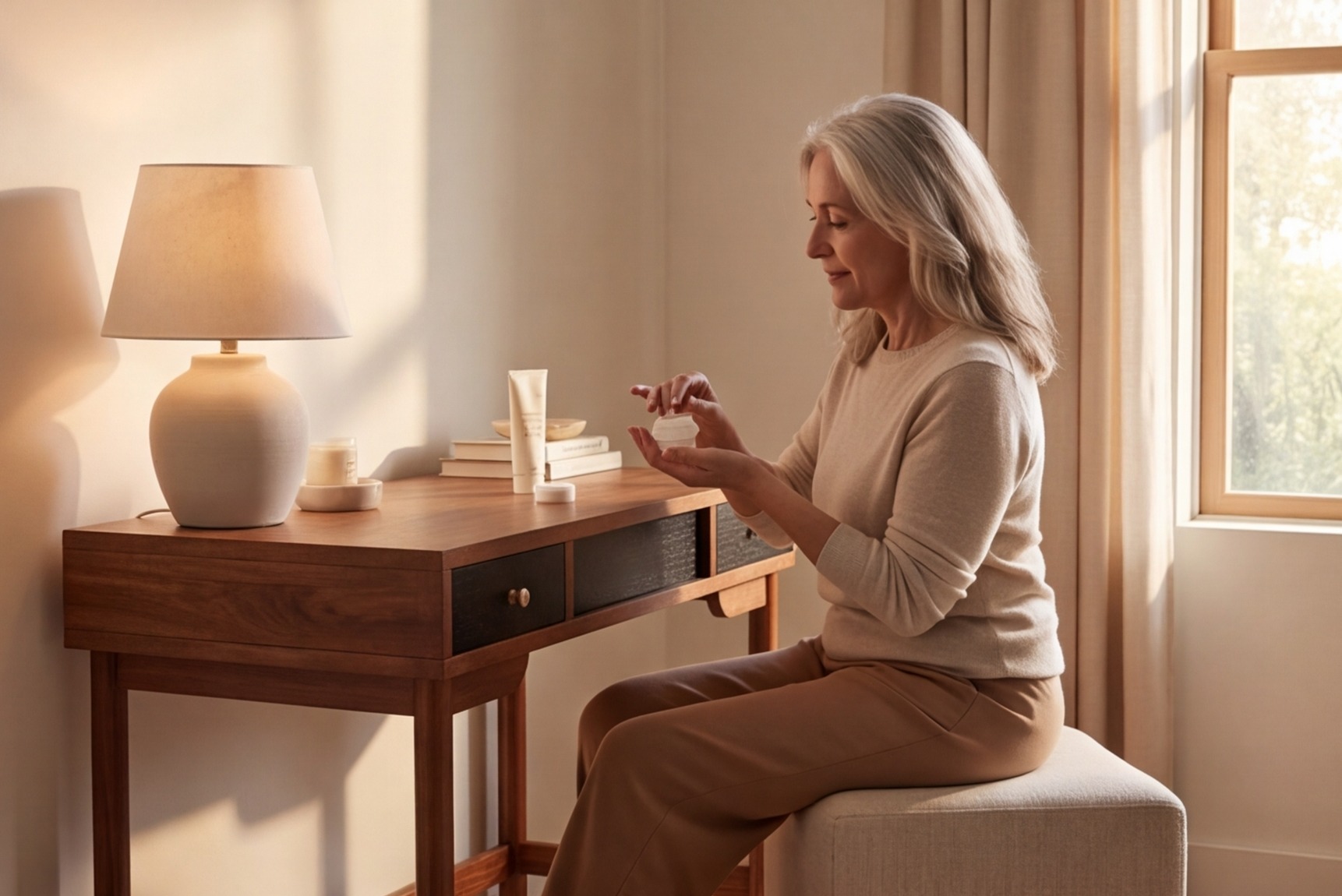
Bed height matters too. AARP's aging-in-place checklist recommends making the bed easy to get in and out of, using bed risers if needed, and decluttering extra furniture. A modern room with a clear floor is a good fit.
Studios and small bedrooms: storage under the mattress
In a small room, the bed is the biggest piece, so make it do double duty. A storage bed with drawers gives you the equivalent of a dresser under the mattress. A lift-up platform bed raises the mattress on gas lifts to reveal one large compartment, which suits bulky bedding and off-season clothing.
Drawers are easier to reach, but need floor space to open. A lift-up bed needs clearance at the head or the foot. According to Home News Now, 41% of consumers planned to buy a bed without storage and 38% planned to buy one with storage, so it is a close call, and small rooms tip it toward storage. Keep the palette to one pale color family so the room reads as larger, and use sconces or wall-mounted lamps in place of nightstand lamps if floor space is tight.
When you have picked the setup that fits your household, you can see how a modern look comes together in one room on our modern bedroom room page.