
Coastal Decor: How to Get the Light Without the Seashells
Coastal is the most misunderstood style on this list, because the version sold in shops is a theme and the version that works is a set of conditions. One is about objects shaped like boats. The other is about light, air and materials that survive damp. Here is the second one, room by room.
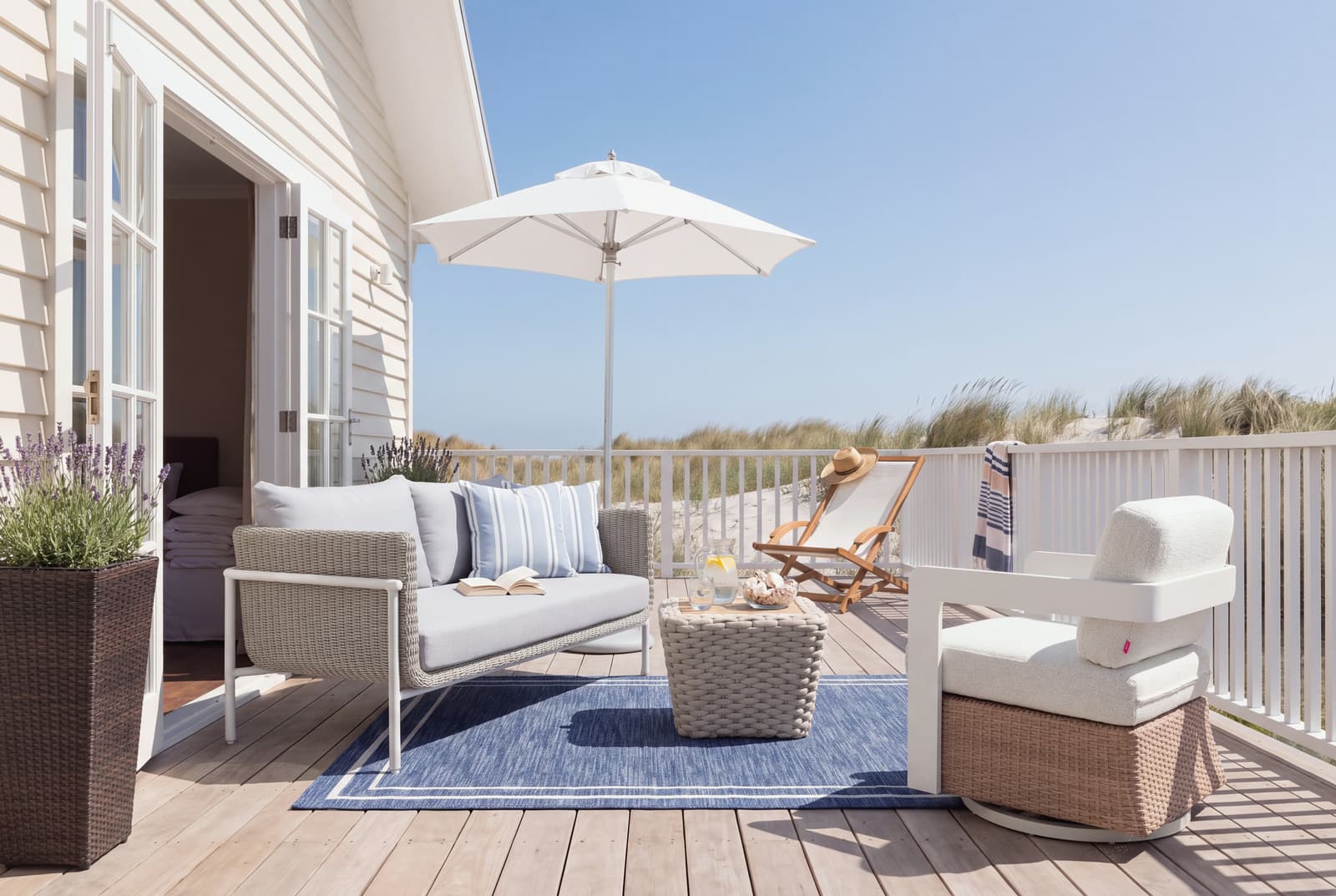
Hover or tap a dot to see what it is. See the full room, priced →
Coastal is a set of conditions rather than a theme, and almost every failed attempt at it fails on that distinction. The theme version is a checklist of objects: a rope-wrapped lamp, a sign reading BEACH, a bowl of shells, a painting of a sailboat. The condition version is about how much light reaches the room, how the air moves through it, and whether the materials in it would survive a damp summer. The first is decoration applied to a room. The second is a way of building one, and it works in a terraced house four hundred miles from the sea.
That is worth saying plainly, because the objects are what shops sell and they are also the part you can skip entirely.
What Coastal Decor Actually Is
Coastal is the interior style of houses that get a lot of light, take a lot of moisture, and are lived in with the doors open. Every characteristic element follows from one of those three facts.
Light comes first. Coastal palettes are pale because pale surfaces bounce light around a room rather than absorbing it, and a house with big windows is worth designing around. The whites used are warm and slightly off, not the bluish white of a gallery, because full sun makes a cool white read cold and clinical by mid afternoon.
Moisture comes second, and it explains the materials. Slipcovers exist so they can be pulled off and washed. Painted wood exists because paint tolerates humidity better than a French polish. Rattan, jute, seagrass and cane are all fibers that were used near water long before they were fashionable, because they dry out rather than rot. None of that is decorative in origin.
Air comes third, and it is the one people leave out. Coastal rooms have visible floor, visible wall, and furniture on legs. That is not minimalism. It is a room arranged so that you can see through it and move through it in bare feet with sand on them.
Three tests will tell you whether a room is doing coastal or doing beach theme:
- Is the window actually clear? Coastal is a light style, and a heavy curtain rail covering a foot of glass on each side undoes more than any purchase can add back.
- Do the materials vary within themselves? Real jute shifts color along its own weave. Real rattan has irregular nodes. Printed versions of both repeat, and repetition is what the eye reads as fake.
- Could the room survive a wet swimsuit? If the answer is no, the room is a photograph of a coastal room rather than one.
The Rules Coastal Runs On
Four constraints do most of the work.
A palette of warm whites, one blue and a lot of natural fiber. Warm white or oyster on the walls. A single blue, chosen and repeated, rather than five blues fighting. Then the fiber tones, which are not neutrals so much as a color in their own right: jute, rattan, oak, rope, unbleached linen. The blue should be the smallest quantity in the room, which is the reverse of what most people expect.
Legs on everything. Sofas, chairs, cabinets and beds all sit up off the floor where possible. Visible floor under furniture is the single most reliable way to make a room read as airy, and it costs nothing because it is a choice between two pieces at the same price.
Texture instead of pattern. Coastal takes almost all its interest from surface: a loose linen weave against a jute pile against a cane door against painted board. When pattern does appear it is usually a stripe, and one stripe is plenty.
Nothing that needs babying. This is the rule that keeps the style honest. A coastal room is meant to be sat in wet, walked on with sand, and left in full sun. Choose the washable slipcover, the painted finish, the fiber that dries. A style built around open doors cannot be built out of precious things.
Coastal, Nautical and Hamptons Are Three Different Things
These get used interchangeably in shops and they produce very different rooms.
Nautical is the theme version: navy and white, rope, brass, anchors, signal flags, boats as motif. It is a decorative scheme borrowed from boats, and it is legitimate on its own terms, but it is applied rather than structural. If you take the objects out of a nautical room, nothing is left.
Hamptons is coastal crossed with traditional American formality: shingle, wainscot, symmetry, a lot of white, and considerably more furniture than coastal wants. It is grander, more arranged, and it survives being photographed empty because the architecture is doing the work.
Coastal is what this guide describes: light, air, natural fiber, washable surfaces, and objects only where they are useful. If you take the objects out of a coastal room, the room is still coastal, because the style lives in the shell and the materials.
The practical consequence is that coastal is the cheapest of the three to get right, and the easiest to get wrong by shopping for it.
Coastal Living Room
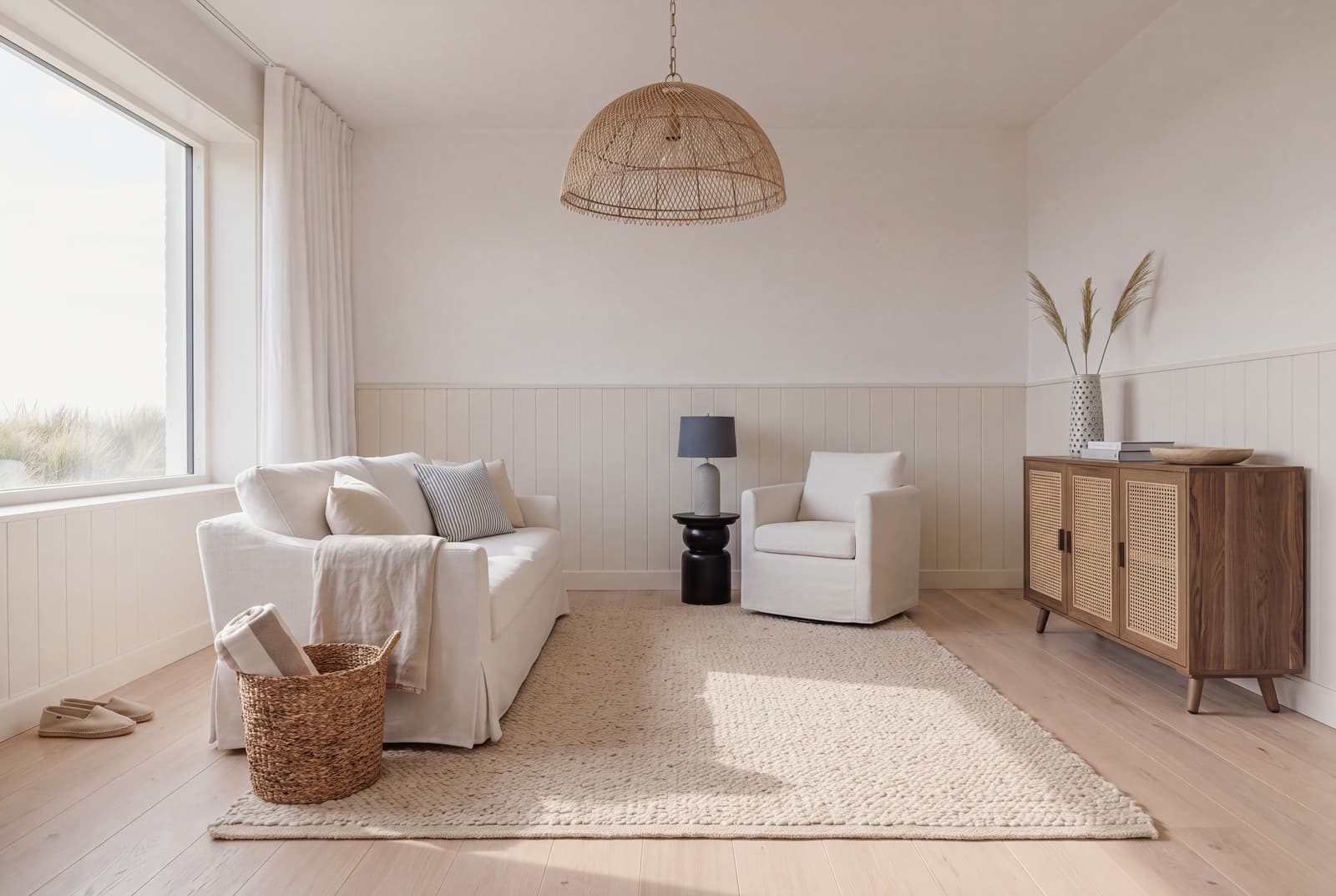
Ground the room on a natural fiber rug sized so a margin of floor shows on every side of the slipcovered cotton or linen sofa. Feature exactly one piece in rattan or cane, since one woven piece against painted wood and linen is the correct ratio.
Coastal Bedroom
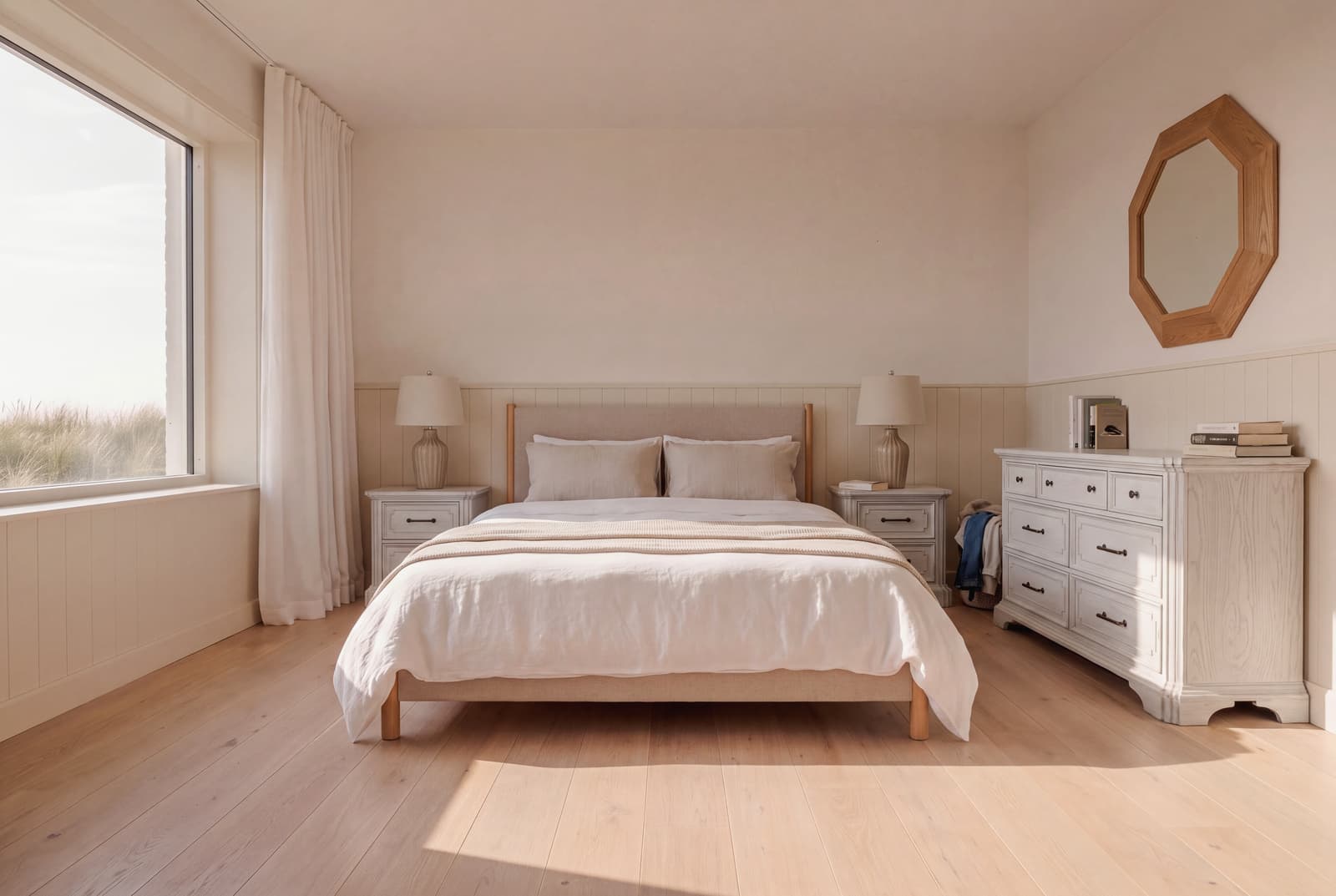
A coastal bedroom is the easiest room in the style, depending entirely on air and genuinely clear surfaces. Anchor the space with a jute or wool rug that runs under the bed and out past it on both sides. Layer washed linen bedding in white or oyster on a slim frame.
Coastal Kitchen
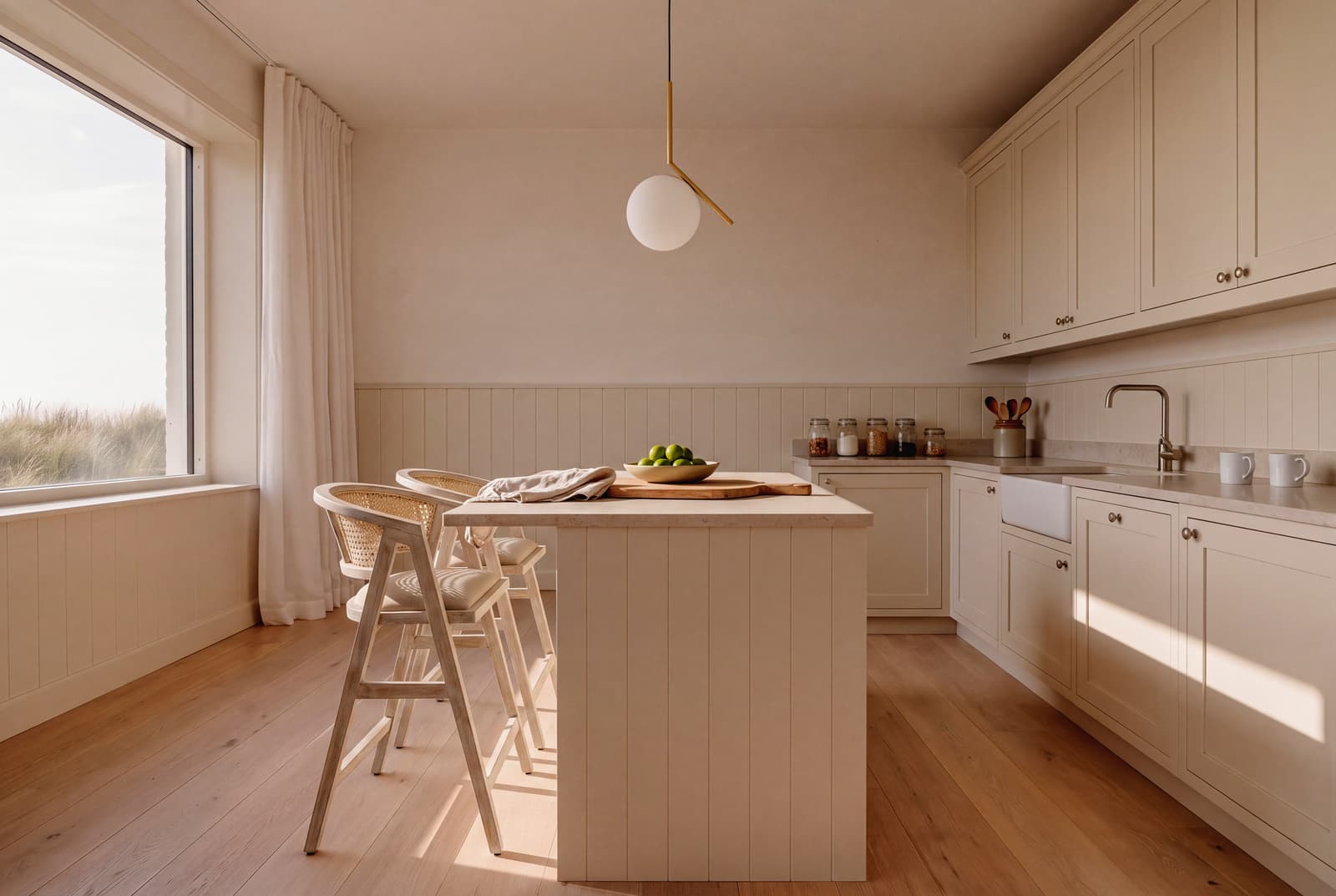
Here, painted shaker fronts and honed stone worktops meet open shelving displaying plain white china and wooden boards. The one thing worth spending on is the floor, because a coastal kitchen floor gets wet. Select painted board, tile, or engineered timber that will tolerate a mop.
Coastal Bathroom
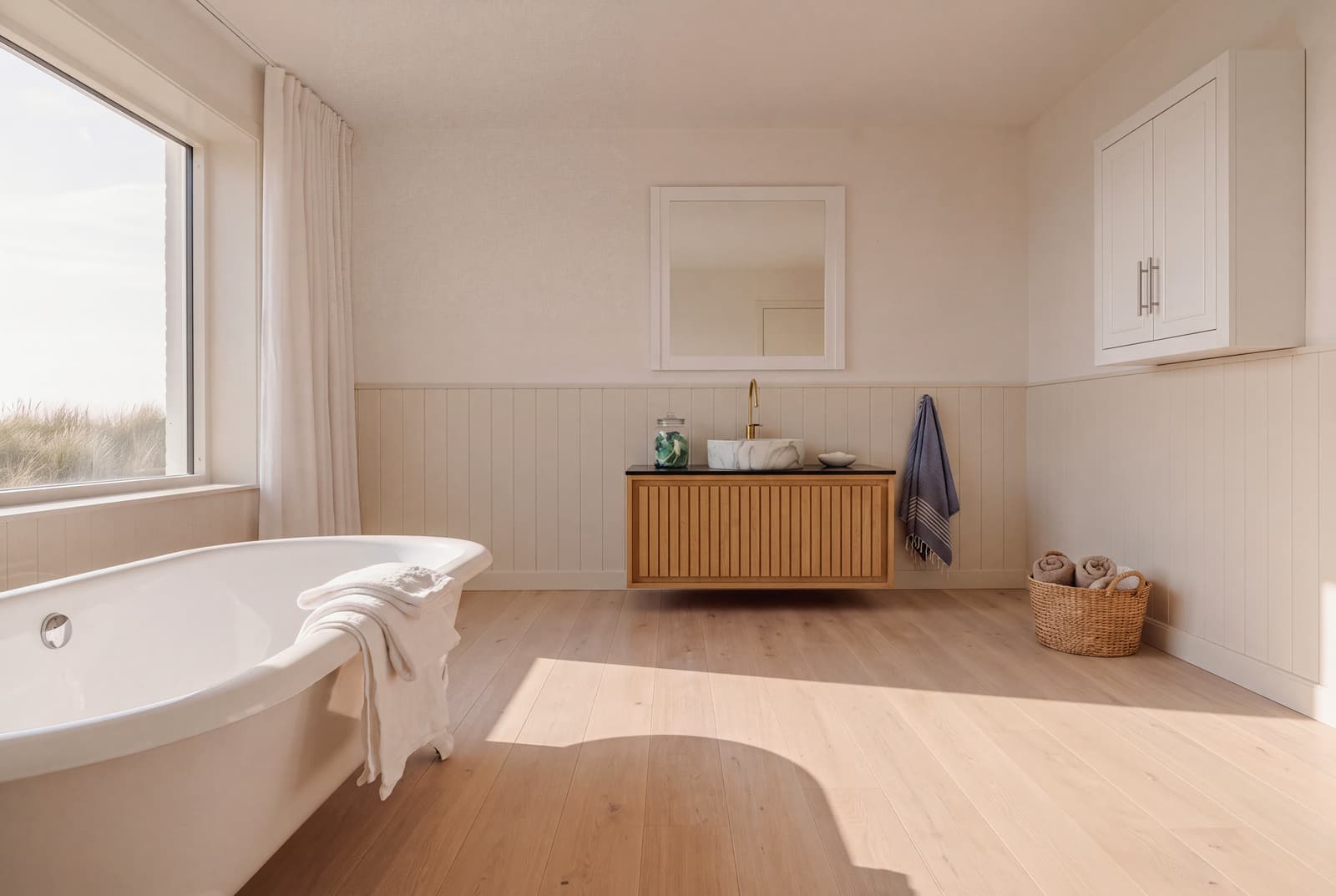
The coastal bathroom applies moisture logic through large-format tile or painted tongue-and-groove in warm white. Pair a properly sealed timber vanity with fittings in brushed brass or black, over a teak duckboard. If the room has a window, leave it as clear as privacy allows with a frosted lower pane.
Coastal Dining Room
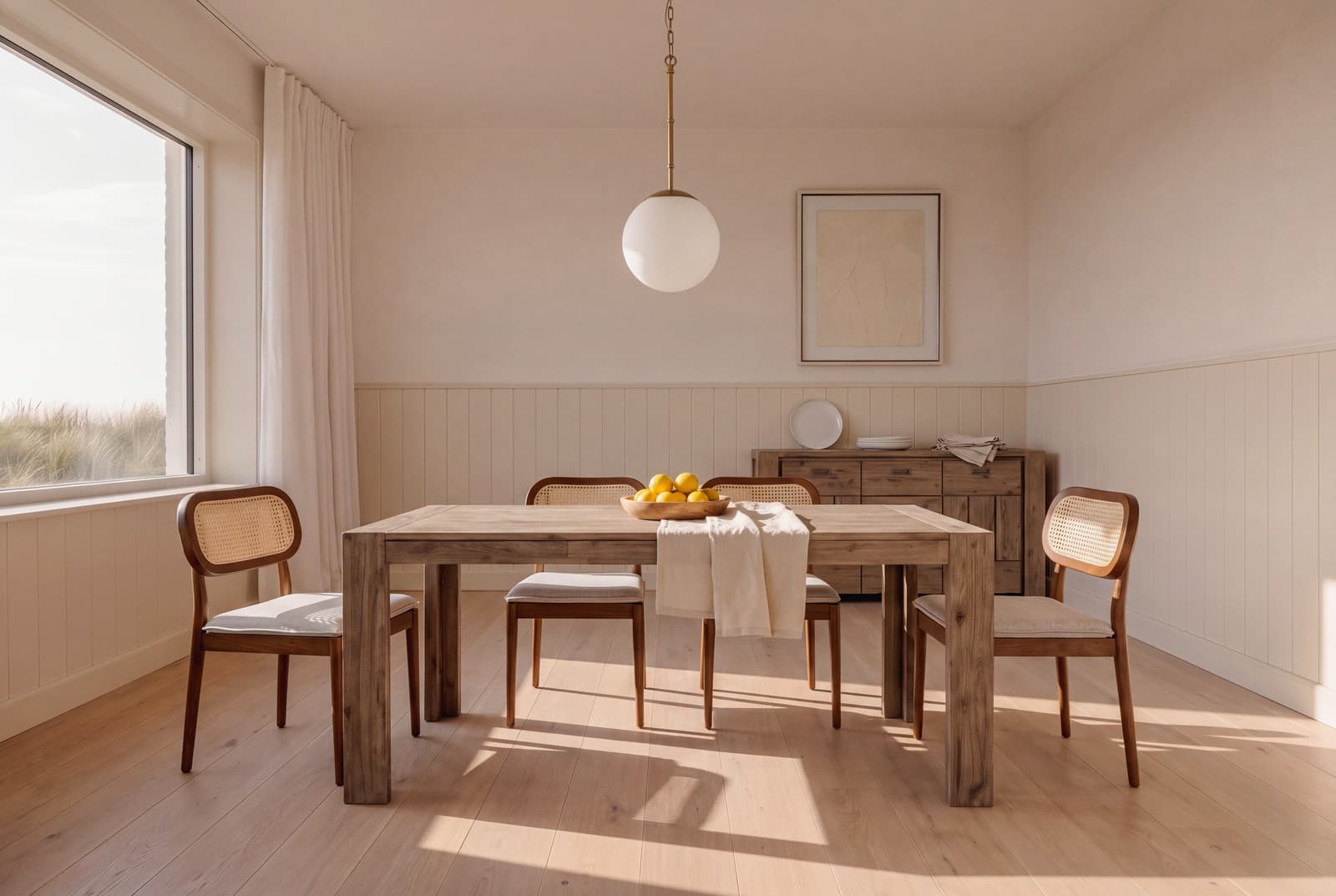
A round timber table works better than rectangular in small coastal rooms because it keeps the floor reading as continuous. The style shows in cane or rattan seats on a light timber frame, where a slight mismatch reads as considered. Over the table, one pendant in a woven natural fiber hangs low.
Modern Coastal
Modern coastal is the variant most people are actually searching for, and it is a real thing rather than a marketing term. It keeps coastal's palette and materials and drops its cottage-ness.
The differences are specific. Lines are straighter and lower. The blue is often dropped entirely in favor of warm white, oatmeal and black. Rattan appears once rather than throughout. Architecture leans on large glazing and plain plaster rather than tongue-and-groove and beams. Where classic coastal is soft and layered, modern coastal is edited.
If your house is a new build with square rooms and big windows, modern coastal will sit on it far more naturally than the cottage version, which needs a bit of age in the shell to lean on.
Buying Coastal Furniture
There is no coastal label to shop by, which is the same problem every style on this site has. What you are looking for is a set of attributes.
What to look for:
- Slipcovers you can actually remove, in washed cotton or linen.
- Visible legs, in painted or light timber.
- Real cane, rattan or seagrass, with irregular nodes and a visible weave.
- Painted finishes rather than high-gloss lacquer.
- Jute, wool or seagrass underfoot.
What to avoid: printed woodgrain, chrome, anything glossy, dark heavy timber, and every object whose only job is to say beach. The seashells are the part you skip.
Coastal is forgiving about mixed price points because it is strict about material. A cheap jute rug of the right fiber disappears into the scheme. An expensive rug in the wrong one does not.
Coastal in a Rental or a Small Space
Coastal suits a small space better than most styles, because its two main devices, visible floor and visible wall, both make a room read larger.
In a rental, the moves that matter are the ones you can take with you. Rehang the curtain rail wider than the window, which is two screw holes and transforms the light. Slipcover the sofa you already have. Put down a jute rug. Swap the shade on the ceiling fitting for a woven one. None of that touches the fabric of the building and all of it is structural to the style rather than decorative.
In a small coastal living room, choose one large woven piece rather than three small ones, and keep the palette to two tones plus fiber. Small rooms punish variety more than they punish scale.
Where to Start
If you are doing a whole room, the order that works is: clear the window, choose the white, then buy the rug and the sofa, then add exactly one woven piece. Everything after that is optional and most of it should stay optional.
If you would rather start from a finished room than a palette, we have put one together: a coastal living room with every piece in it listed and priced, so you can see what the whole thing costs before committing to any of it.
If you are not certain coastal is the right direction, our consultation is quick choices between rooms and a few questions about your home, a few minutes in all; it ends with a finished room for each room you want to furnish, every piece priced. Coastal has eight rooms of its own here, shown complete and priced, which is concrete enough to judge a real piece of furniture against. It sits closest to Scandinavian and biophilic, and both are worth reading beside it.
See every room in the Coastal hub.
Not sure where to start?
Quick choices between rooms, a few questions about your home, and a finished room for each room you want to furnish, every piece priced. A few minutes.
Start your home profile