
Biophilic Design at Home: The Principles, and What They Look Like in a Room
Biophilic design is not a houseplant strategy. It is a framework about light, materials, airflow, prospect and refuge, and most of it costs nothing. Here is the theory, then room by room.
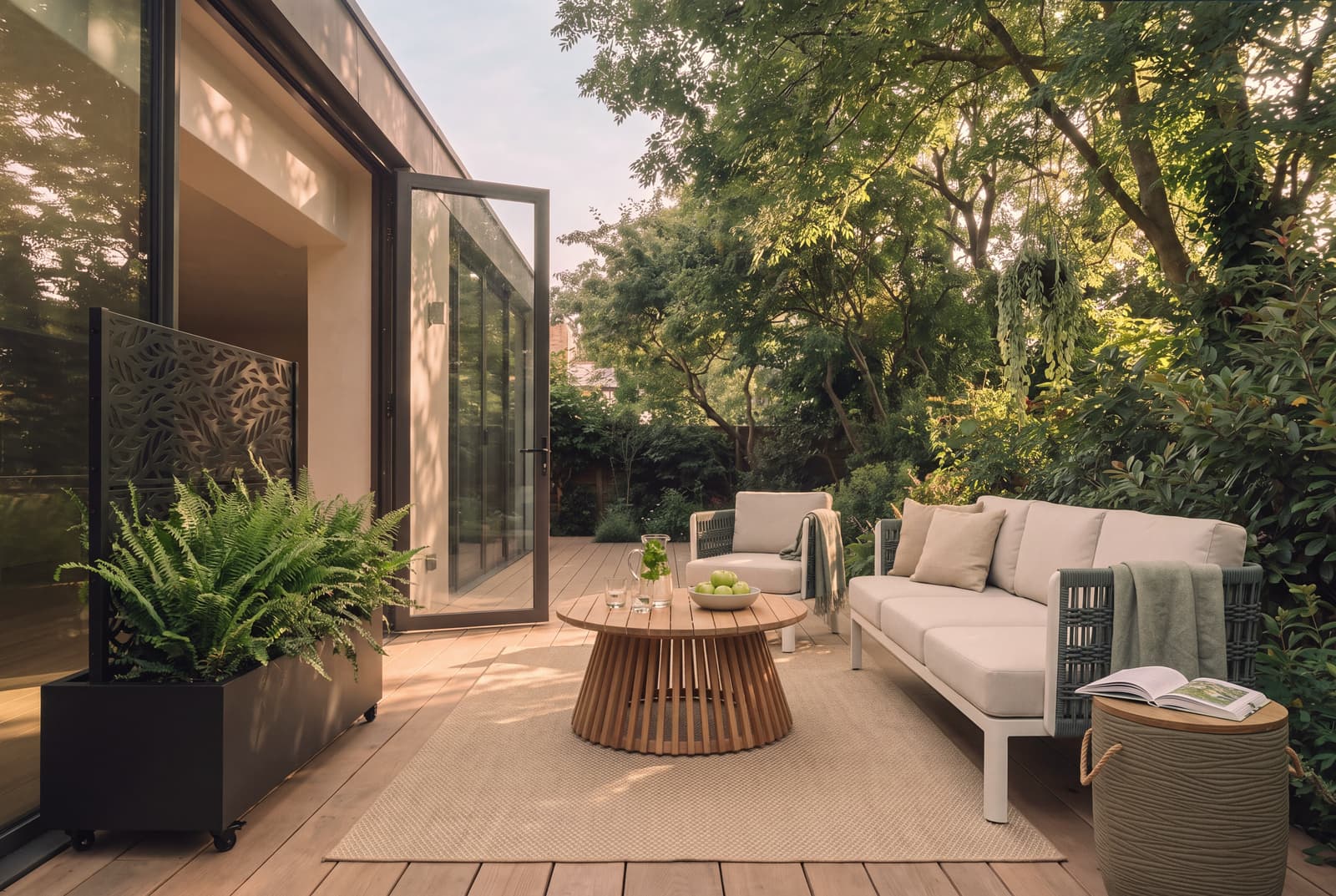
Hover or tap a dot to see what it is. See the full room, priced →
Biophilic design is not a houseplant strategy, though that is almost entirely how it gets sold.
It is a design framework built on the observation that people respond measurably to environments that resemble the ones humans evolved in: daylight that changes through the day, natural materials, airflow, a view out, and somewhere sheltered to sit while you have that view. Plants are one small part of it, and the least important part.
That distinction is worth holding onto, because the plant-heavy version is expensive, high-maintenance and easy to get wrong, while most of the framework costs nothing and works in a rental.
What Biophilic Design Is
Biophilic design is the practice of building a connection to nature into a space through its light, materials, forms, air, views and spatial arrangement, rather than through decoration.
The word comes from biophilia, meaning love of living things. The definition that matters practically is: a biophilic room is one that gives your senses the kind of input a natural environment would. Varying light rather than flat light. Materials with irregular grain rather than uniform surfaces. Fresh moving air rather than still air. A long view and a sheltered place to sit.
Notice what is absent from that list. Nothing about plants, and nothing about a specific style. Biophilic design is a set of criteria you can apply to a modern room, a traditional room or a japandi room. It is closer to a checklist than to an aesthetic.
Where the Idea Came From
The term biophilia was used by the psychologist Erich Fromm and later popularized by the biologist E. O. Wilson, whose 1984 book *Biophilia* argued that humans have an innate affinity for the natural world.
The translation from biology into architecture is most associated with Stephen Kellert, a social ecologist at Yale, who co-edited *Biophilic Design: The Theory, Science and Practice of Bringing Buildings to Life* in 2008 and did more than anyone to give the idea a usable structure for designers.
Running alongside that is a body of environmental psychology research, of which the most frequently cited example is Roger Ulrich's work in the 1980s on hospital patients whose rooms looked out onto trees rather than onto a brick wall. That study is the reason the idea traveled beyond architecture into healthcare, offices and schools.
The framework most people actually use in practice is the 14 Patterns of Biophilic Design, published by Terrapin Bright Green in 2014, which turned the theory into a list you can design against.
The 14 Patterns of Biophilic Design
The patterns sit in three groups. This is the version to know, because it is the one that makes the principles actionable.
Nature in the Space. Direct presence of natural elements.
- Visual connection with nature. A view of plants, water, sky or landscape.
- Non-visual connection with nature. Sound, smell, touch and taste of nature. Birdsong, a breeze, the smell of wood.
- Non-rhythmic sensory stimuli. Movement that is irregular and unpredictable. Leaves shifting, shadows moving, a flame.
- Thermal and airflow variability. Subtle changes in temperature and air movement rather than a single held setting.
- Presence of water. Seeing or hearing it.
- Dynamic and diffuse light. Light that changes in intensity and direction through the day, with soft shadow.
- Connection with natural systems. Awareness of seasons, weather and time passing.
Natural Analogues. Nature referenced rather than present.
- Biomorphic forms and patterns. Curves, branching structures, organic shapes.
- Material connection with nature. Real wood, stone, wool, leather, clay, with visible grain and variation.
- Complexity and order. Rich detail arranged in an underlying structure, the way a leaf or a shell is.
Nature of the Space. Spatial arrangement drawn from how humans read landscape.
- Prospect. A long view, an unobstructed outlook.
- Refuge. A protected place to be, with your back covered.
- Mystery. A partial view that suggests more beyond it.
- Risk and peril. A safe encounter with something that reads as hazardous. A balcony, a cantilever, a height.
Not every room needs all fourteen, and no house has them all. Three or four applied properly change a room more than a dozen applied thinly. Prospect and refuge together, a sheltered seat with a long view from it, is the single highest-value pair, and it is also, not coincidentally, the exact specification of a good reading nook.
What Biophilic Design Is Not
Worth saying plainly, because the commercial version of this idea has drifted a long way from the framework.
It is not a shelf of houseplants. Plants deliver pattern 1 and part of pattern 2. They do nothing for light, airflow, material, prospect or refuge. A room with forty plants and flat overhead lighting is less biophilic than a bare room with a good window and a wooden floor.
It is not a green wall. Preserved moss panels, which are the most commonly sold biophilic product, are dead plant material behind glass. They reference nature visually and that is the whole of their contribution.
It is not printed leaf wallpaper. Pattern 10, complexity and order, is about structural richness rather than pictures of foliage.
It is not a style. There is no biophilic sofa. There are materials, forms and spatial arrangements that satisfy the patterns, and they appear across many styles.
The useful test on any product sold as biophilic: which of the fourteen patterns does it actually deliver, and could you get the same pattern more cheaply by opening a window or moving a chair?
Biophilic Living Room
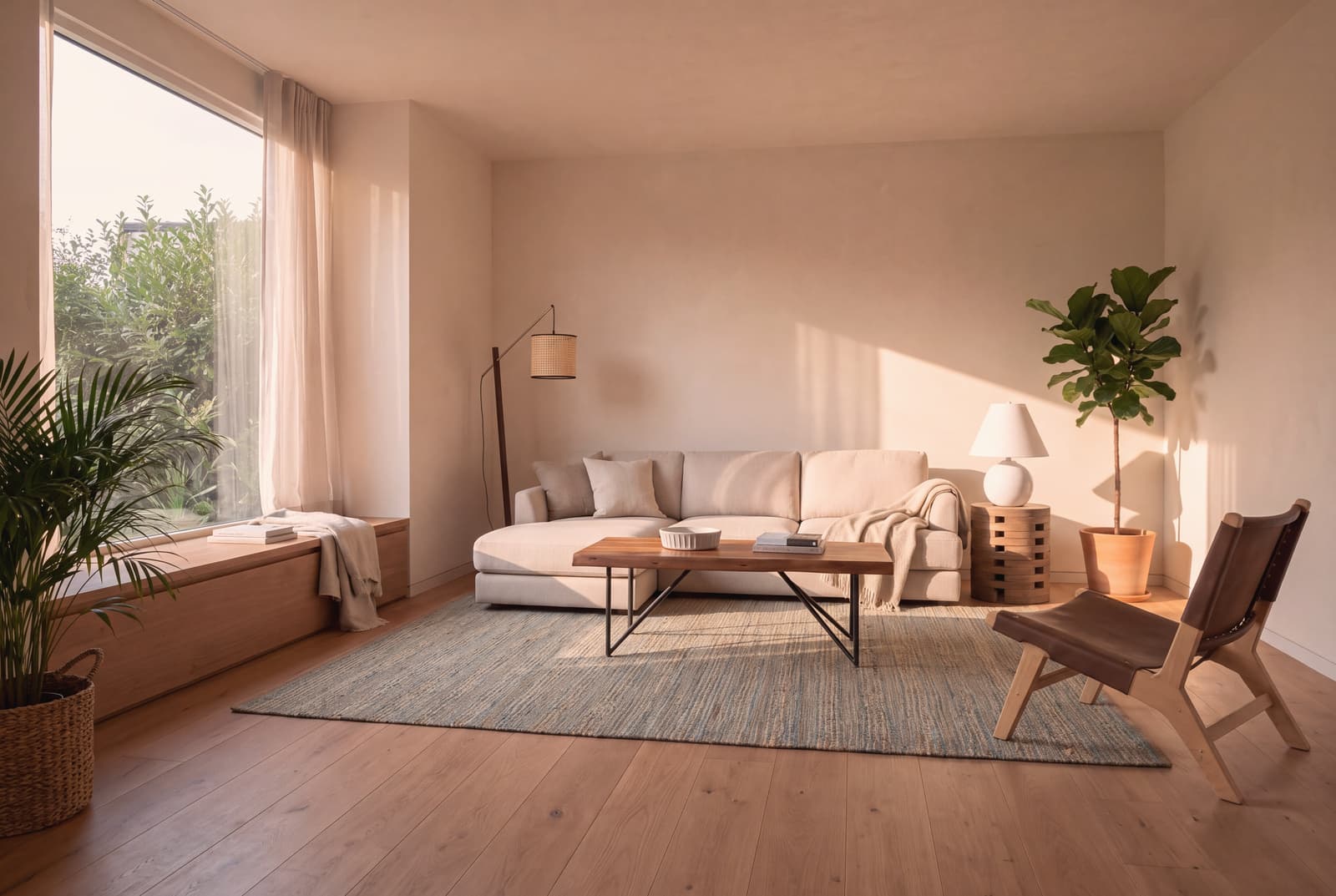
A biophilic living room focuses on lighting and layout first. Hang curtains wide enough to leave the glass fully exposed when open, arranging furniture so the main seat can see out. Add multiple warm light sources at different heights over solid timber, stone, and wool.
Biophilic Bedroom
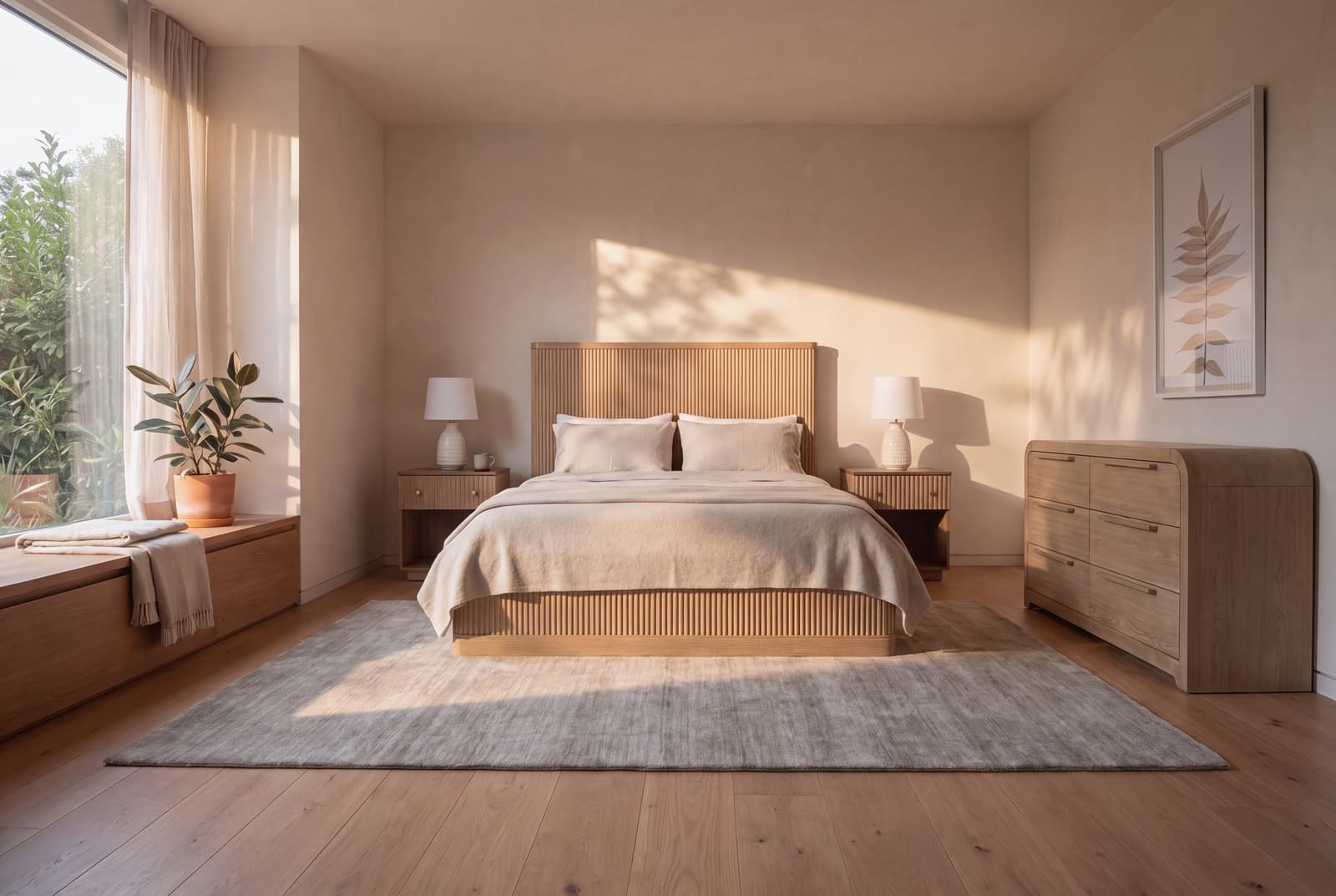
Morning daylight reaching the bed matters more than any other single element, allowing your body to know what time it is. Furnish with natural linen or cotton bedding and a timber frame with visible grain. If the room has a view, position the bed to see it from sitting up.
Biophilic Bathroom
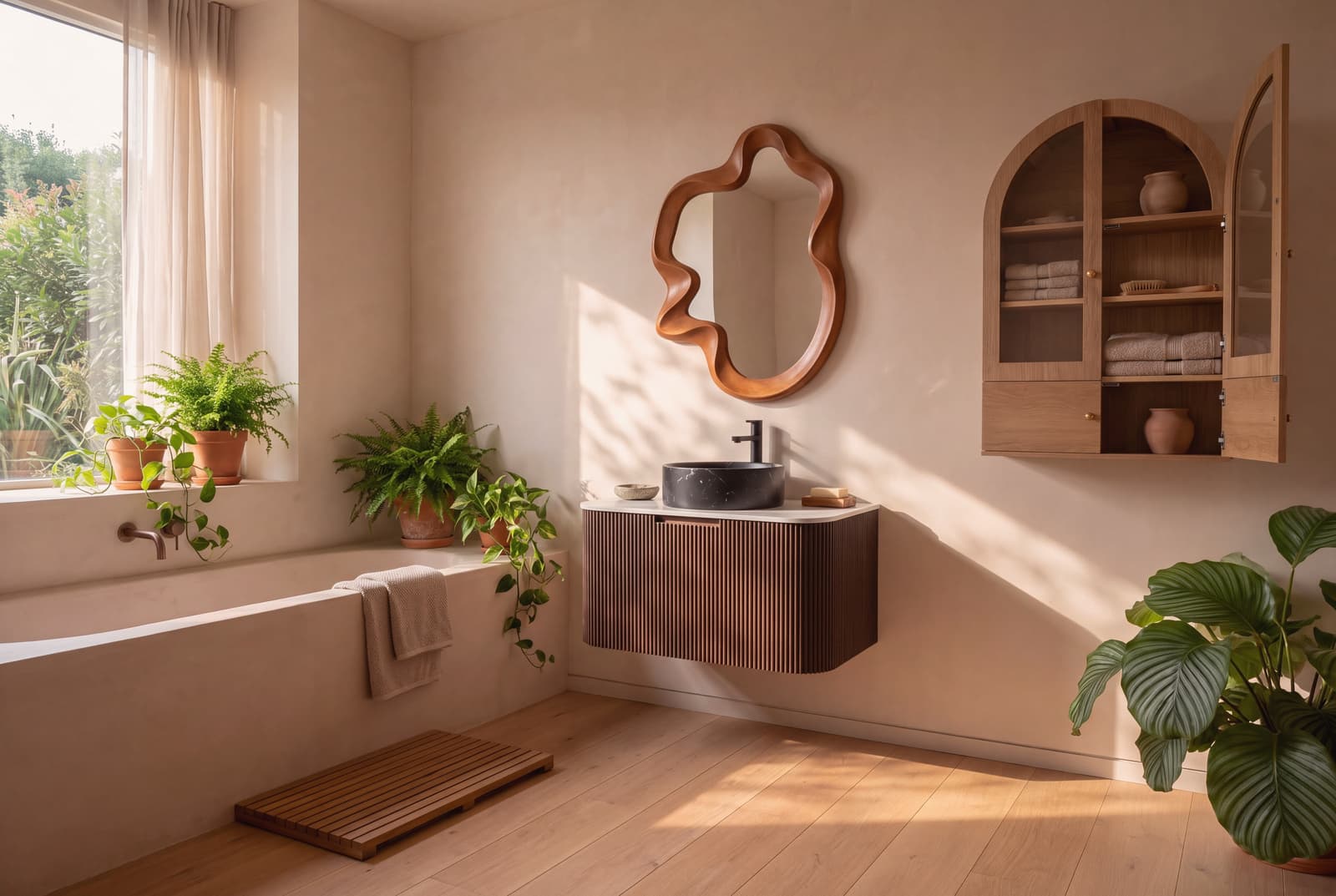
Biophilic bathroom design is the easiest of the rooms, because bathrooms already involve water, and their small size makes material changes cheap. What you can add is the sense of water through a stone basin that changes color when wet.
Biophilic Kitchen
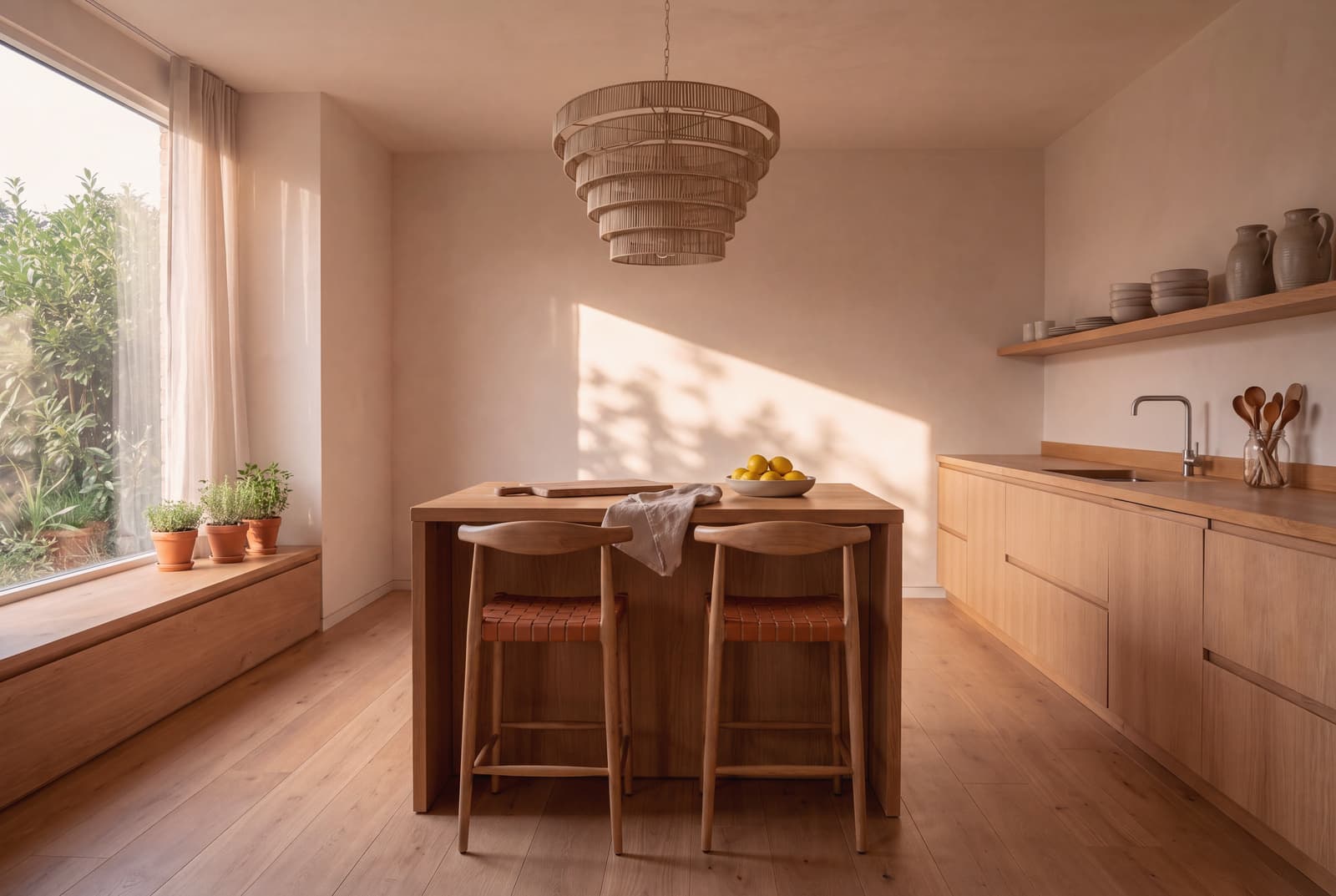
Timber countertops put a large natural surface where your hands are. Keep the window over the sink clear, since that is where people stand still. A single matte natural material in a kitchen otherwise made of engineered ones is worth more than the same amount of material spread thin.
Biophilic Home Office
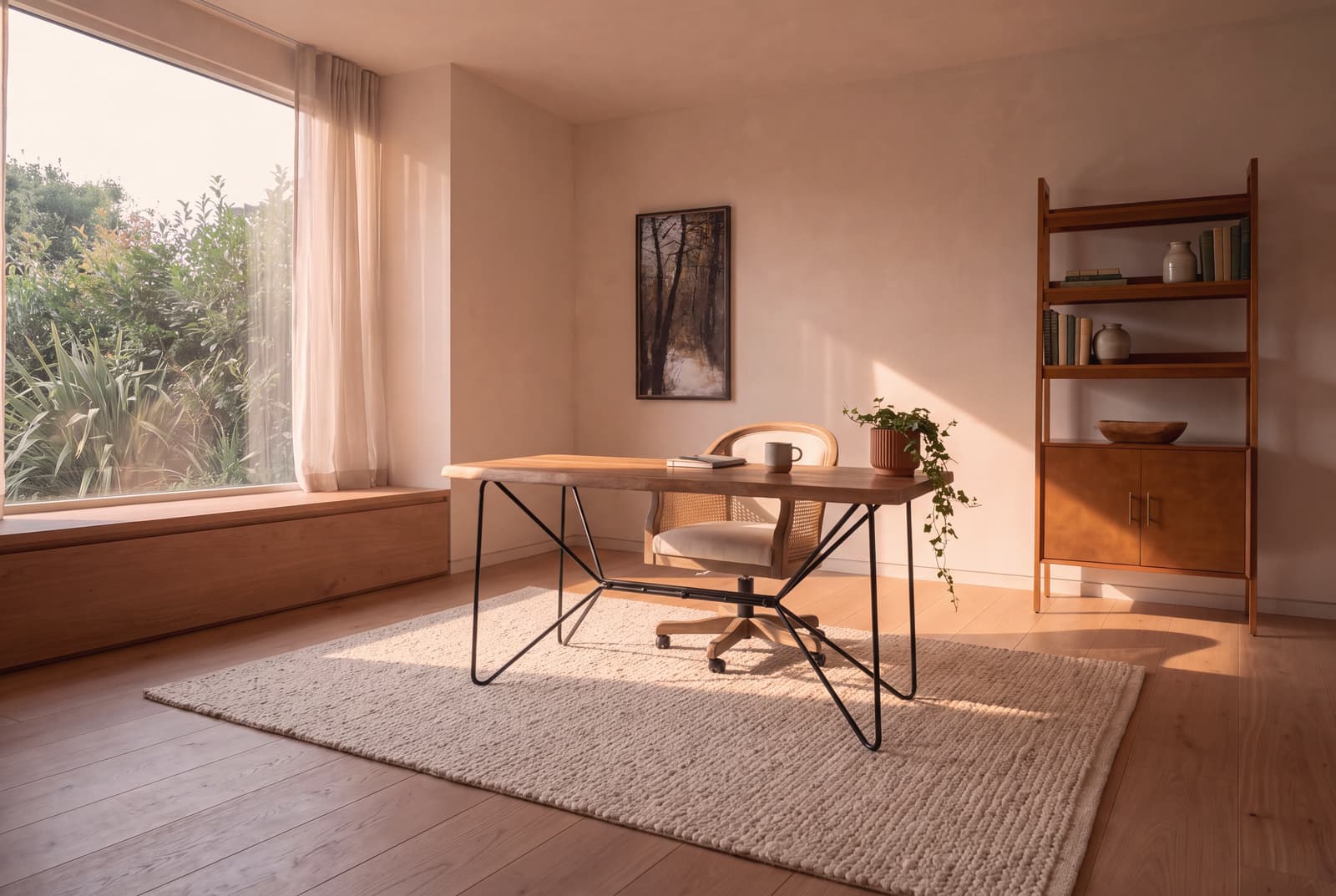
A biophilic home office is where the framework has the most measurable effect. Position the desk perpendicular to the window, which gives you daylight on the work surface and a view when you look up. It is the highest-value single decision in the room.
Biophilic Design Furniture and Materials
There is no biophilic furniture category, but there is a reliable material specification.
- Solid wood with visible grain, knots and variation. Not veneer over MDF with a printed pattern, and not anything so heavily lacquered the surface reads as plastic.
- Stone with real veining. Limestone, travertine, honed granite, unfilled marble.
- Natural fiber textiles. Wool, linen, cotton, hemp, jute, leather. These also satisfy pattern 4, because natural fibers regulate temperature and synthetics do not.
- Clay, plaster and lime finishes on walls, which give soft irregular light response.
- Biomorphic forms. Curved arms, organic tabletops, branching light fittings. This is pattern 8, and it is where biophilic design overlaps almost completely with organic modern.
- Rattan, cane, bamboo and paper for lightness.
Biophilic design home decor, as sold, is mostly pattern 1 in decorative form. The higher-value spend is on the surfaces you touch and the light you sit under.
Offices, Architects and Commercial Buildings
A large share of the interest in biophilic design is commercial rather than domestic, and it is worth being clear about the boundary.
Biophilic office design at building scale involves atria, daylight modeling, ventilation strategy, planting systems with irrigation, and acoustic design. That is an architect's and a specialist consultant's territory, and it is where most of the published research and case studies come from, because the payback is measured in staff outcomes.
Very little of that transfers directly to a house. What does transfer is the pattern framework itself, which was written to be scale-independent. If you are working on a commercial project, the Terrapin patterns document and Kellert's book are the standard references and both are worth reading in full.
If you are working on your own home, the rest of this page is the useful version, and you do not need an architect for any of it.
Biophilic Design in a Rental or on a Budget
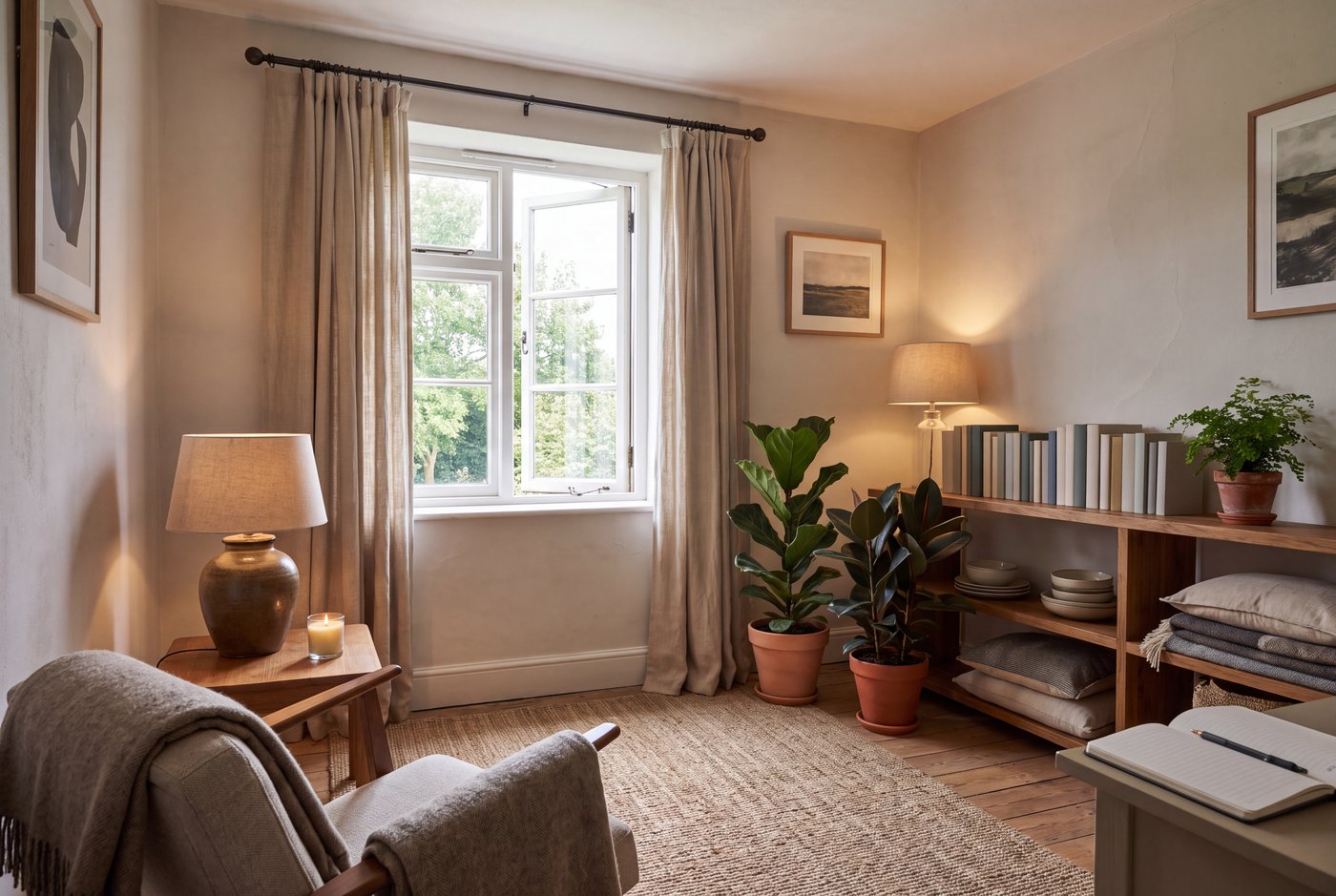
Most of the fourteen patterns cost nothing, which is the genuinely good news here.
Free. Move the desk perpendicular to the window. Move the main chair so it has a wall behind it and a view in front. Open the windows more. Take everything off the windowsill. Stop closing blinds during the day.
Under a hundred. Longer curtain rods so curtains clear the glass. Warm bulbs. Two extra lamps. A couple of large plants. A wool throw and linen bedding.
Under a few hundred. A wool or jute rug. A timber side table or a solid wood shelf. A stone or ceramic object with real weight. A matte paint finish on the walls in place of a sheen.
The expensive ones, in order of value. A real wood floor. A timber countertop. A stone surface. New glazing or a larger opening, which is the only genuinely architectural item on this list.
Prospect, refuge, dynamic light, material connection and airflow are five of the most powerful patterns, and none of them requires permission from a landlord.
Where to Start
Pick one room and audit it against four patterns rather than fourteen: can you see out, is there somewhere sheltered to sit, does the light change through the day, and is anything you touch a real material?
Fixing those four in one room will do more than applying all fourteen thinly across a house. In most homes the fix is furniture placement and a curtain rod rather than a purchase.
If you are furnishing from scratch and want a style that already satisfies most of the material patterns by default, our consultation is quick choices between rooms and a few questions about your home, a few minutes in all; it ends with a finished room for each room you want to furnish, every piece priced. Biophilic has eight rooms of its own here, and Scandinavian and Bohemian carry the most natural material and the most daylight orientation of the other styles.
See every room in the Biophilic hub.
Not sure where to start?
Quick choices between rooms, a few questions about your home, and a finished room for each room you want to furnish, every piece priced. A few minutes.
Start your home profile