
Farmhouse Interior Design: What It Actually Is, and How to Avoid the Kit-House Version
Farmhouse is a functional tradition before it is a decorative one. The forms it borrows all come from rooms organized around work, and keeping that logic is what separates real farmhouse style from the version sold as decorative signage.
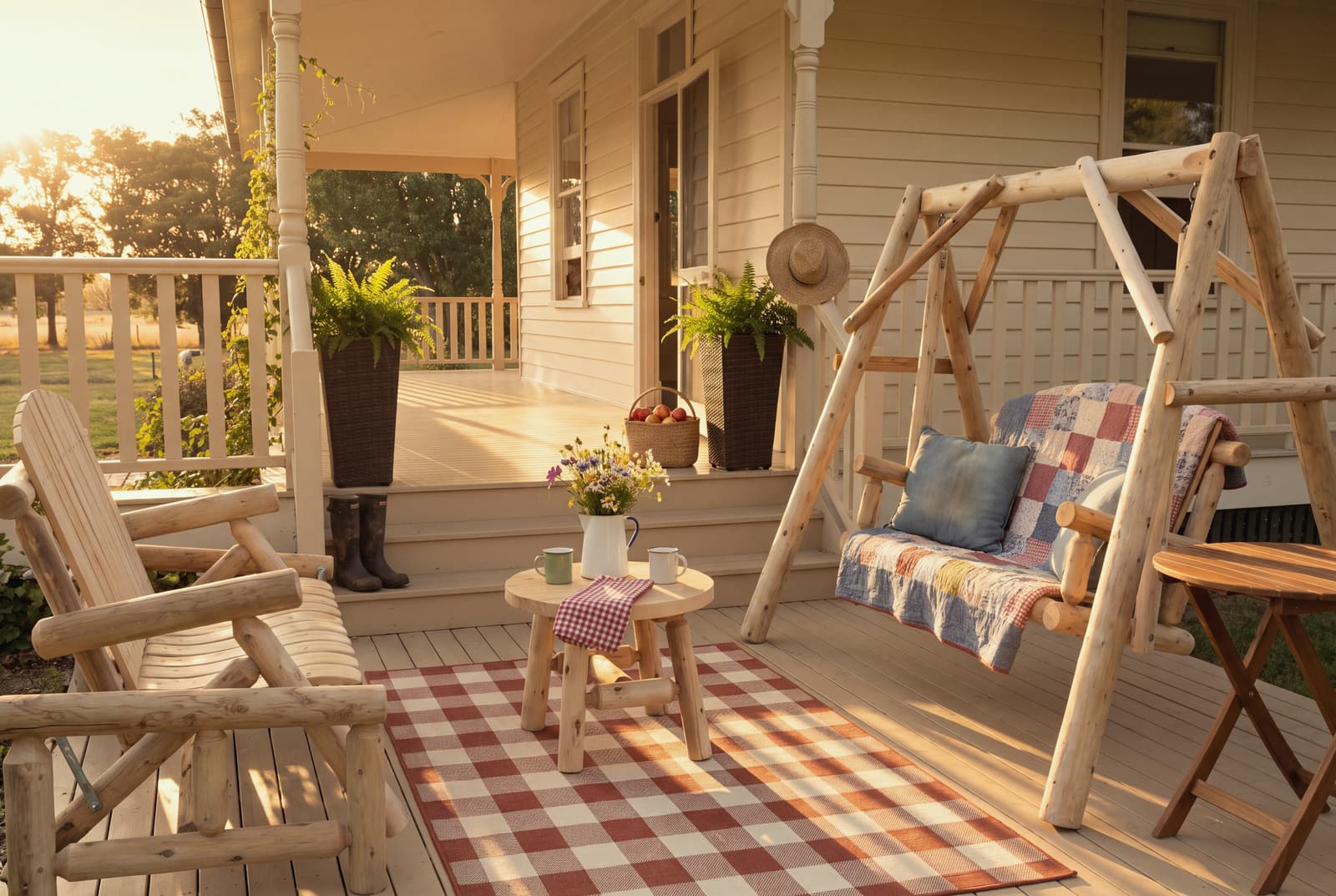
Hover or tap a dot to see what it is. See the full room, priced →
Farmhouse is a functional tradition before it is a decorative one. The long table, the open shelf, the deep apron sink, the plain painted cabinet, all come from rooms that were organized around work rather than display. Keeping that working logic is what separates a real farmhouse kitchen from a farmhouse-themed one.
The trap is signage and props. Because the style photographs well and sells easily, a large amount of what is marketed as farmhouse decor is decorative shorthand, a stenciled sign, a distressed-on-purpose finish, a galvanized bucket with nothing in it, standing in for the working objects the style actually describes. Those shortcuts are the single most common way a room tips from farmhouse into farmhouse-themed pastiche.
The fix is simple to state and easy to forget while shopping: let the working objects be the decoration. A crock that holds actual utensils, a shelf that holds dishes you use, a bench built to be sat on, does more for the style than a shelf of objects bought purely to look farmhouse.
What Farmhouse Interior Design Is
Farmhouse interior design borrows its forms from working rural houses: a long communal table, open shelving instead of upper cabinets, a deep single-basin sink, painted or plain wood cabinetry, and furniture built from solid, visibly worked wood.
The characteristics that actually define it:
- Painted or plain wood, not polished. Cabinets and case goods in a matte painted finish or an unfussy stained wood, never a high-gloss lacquer.
- Open storage. Shelving, plate racks and hooks that put daily objects on display because they are actually used, not because the arrangement is decorative.
- A deep, single-basin sink. The apron-front farmhouse sink is close to a defining fixture of the style, descended from the large basins working kitchens needed for washing produce and dishes at scale.
- Honest, worn materials. Reclaimed or visibly grained wood, galvanized metal, and woven natural fibers, allowed to show genuine wear rather than a manufactured distressed finish.
- A long communal table. In the kitchen or dining room, a substantial table built for a full household and for guests, rather than a compact four-top.
Farmhouse, Modern Farmhouse and Cottagecore Are Not the Same Thing
These three get lumped together constantly, and shopping the wrong one is an easy, expensive mistake.
Farmhouse, on its own, describes the older, plainer, more purely functional version above: painted wood, open shelving, worn materials, minimal color.
Modern farmhouse pairs that same vocabulary with a much colder, more graphic overlay: black metal window frames and light fixtures, white shiplap walls, a strong black-and-white contrast, and often a more polished, less worn finish on the wood. It is the version most associated with home renovation television, and it reads noticeably crisper and less lived-in than plain farmhouse.
Cottagecore shares farmhouse's love of worn wood and open shelving but adds a softer, more romantic, more floral layer, dried herbs, mismatched florals, a rural fantasy aesthetic rather than a working-house one. Where farmhouse is plain and functional, cottagecore is decorative and a little wistful.
If you want the working-house version, shop farmhouse directly. If you want the black-and-white, more polished look from renovation shows, look for modern farmhouse specifically. If you want the softer, more floral, more romantic version, cottagecore is the better search term.
The Farmhouse Color Palette
Farmhouse rooms run on a restrained, warm-neutral palette that lets the material do the visual work.
- The walls. White, off-white, warm cream, or a muted sage or clay, almost always matte rather than glossy.
- The wood. Warm, visibly grained tones: pine, oak, reclaimed barn wood. Painted finishes run to soft whites, sage greens and dusty blues rather than saturated color.
- The metal. Black or aged bronze hardware, galvanized steel accents, used sparingly against the wood rather than as a competing finish.
- The textiles. Plain linen, ticking stripe, gingham and burlap, in muted, washed-out tones rather than bright or heavily patterned fabric.
Farmhouse Kitchen
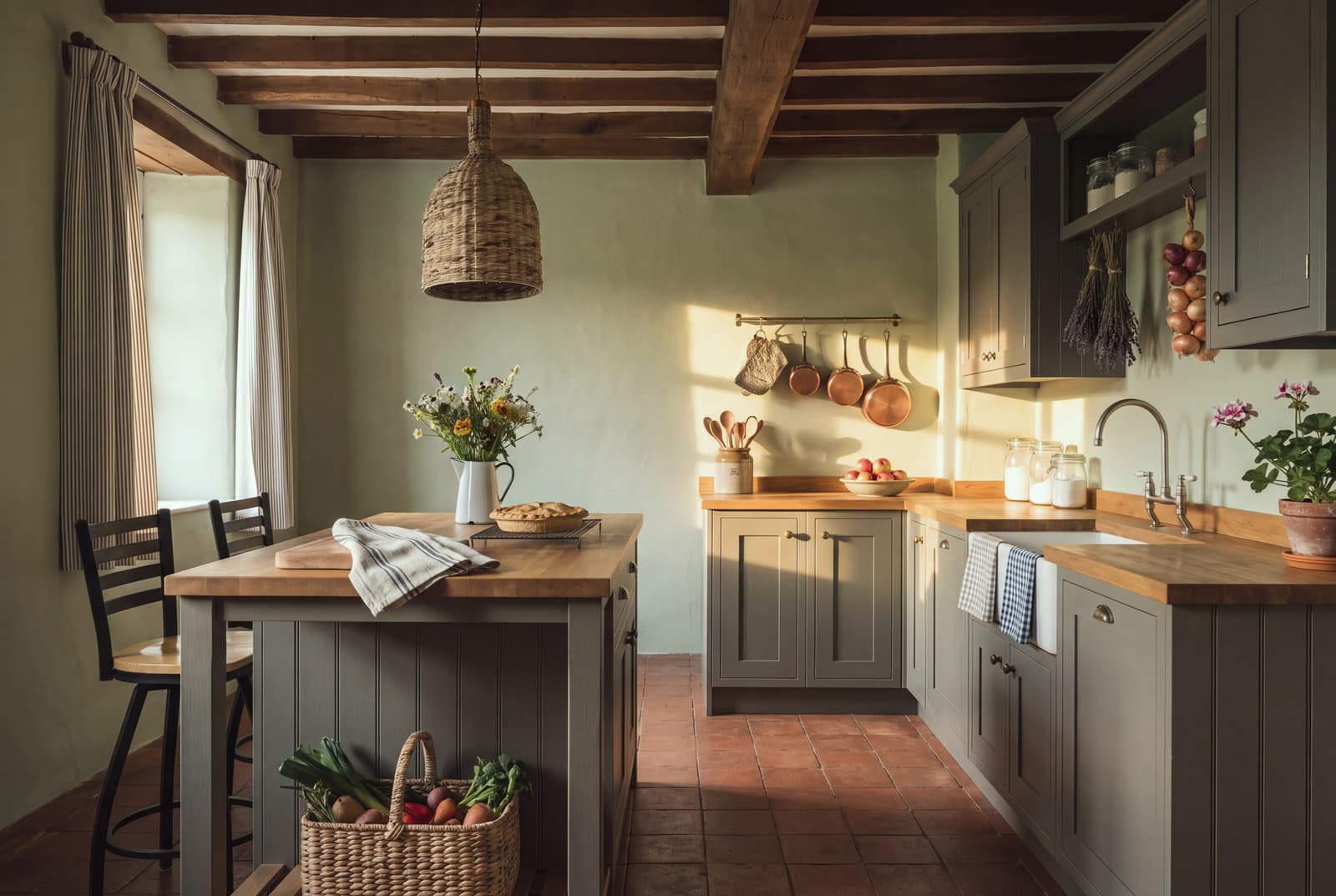
The kitchen is the style's center of gravity. A wide butcher-block or wood countertop section, an apron-front sink, and open shelving holding stoneware and everyday glassware do most of the work. Keep the upper cabinets to a minimum, or skip them entirely on at least one wall, and let a plate rack or a run of hooks carry what would otherwise be hidden storage.
Farmhouse Dining Room
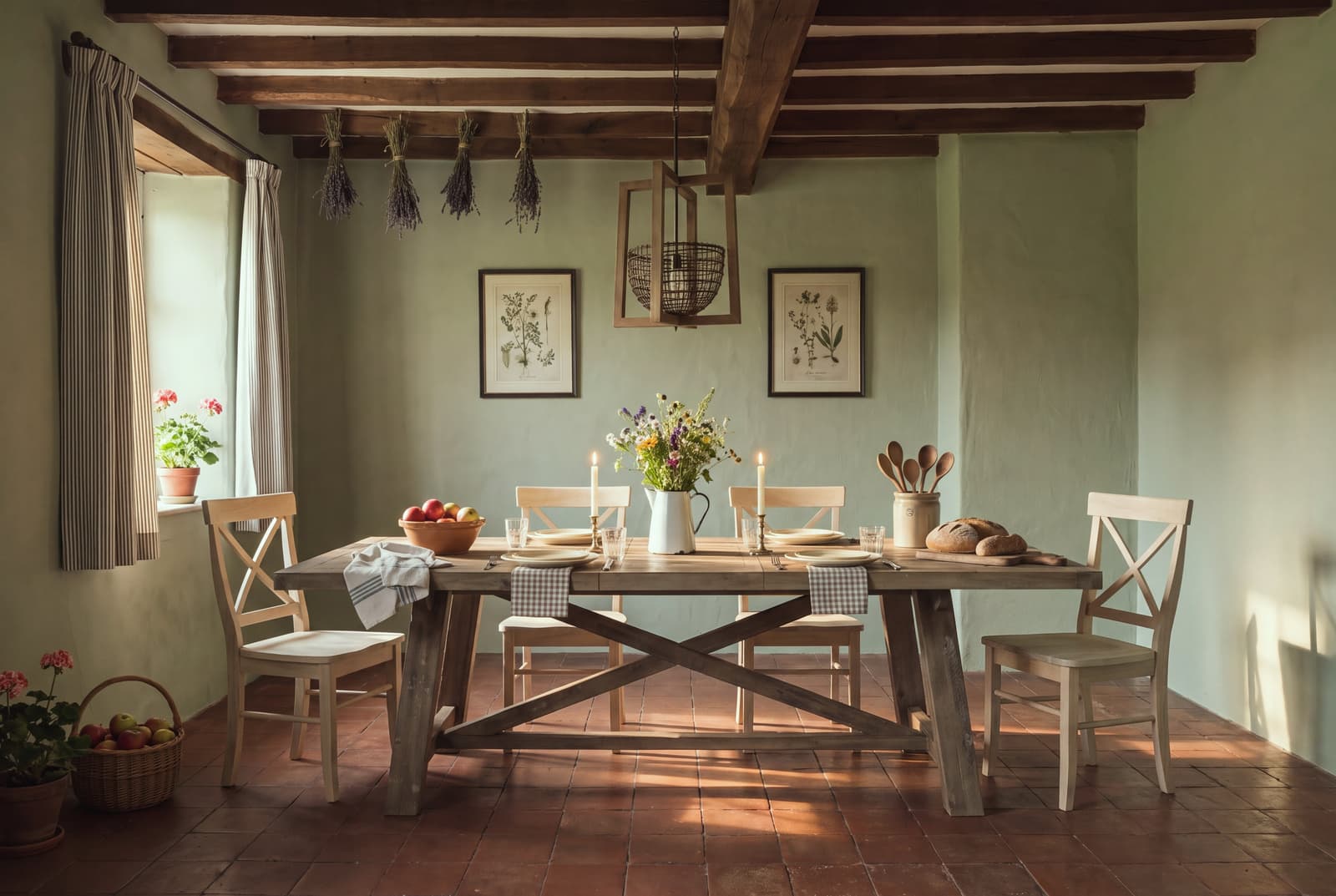
A long, substantial wood table anchors the room, ideally with benches on at least one side, since a bench seats more people and reads more communal than a full set of chairs. A low-hanging woven or metal pendant over the table, rather than a formal chandelier, keeps the room's register plain rather than dressy.
Farmhouse Living Room
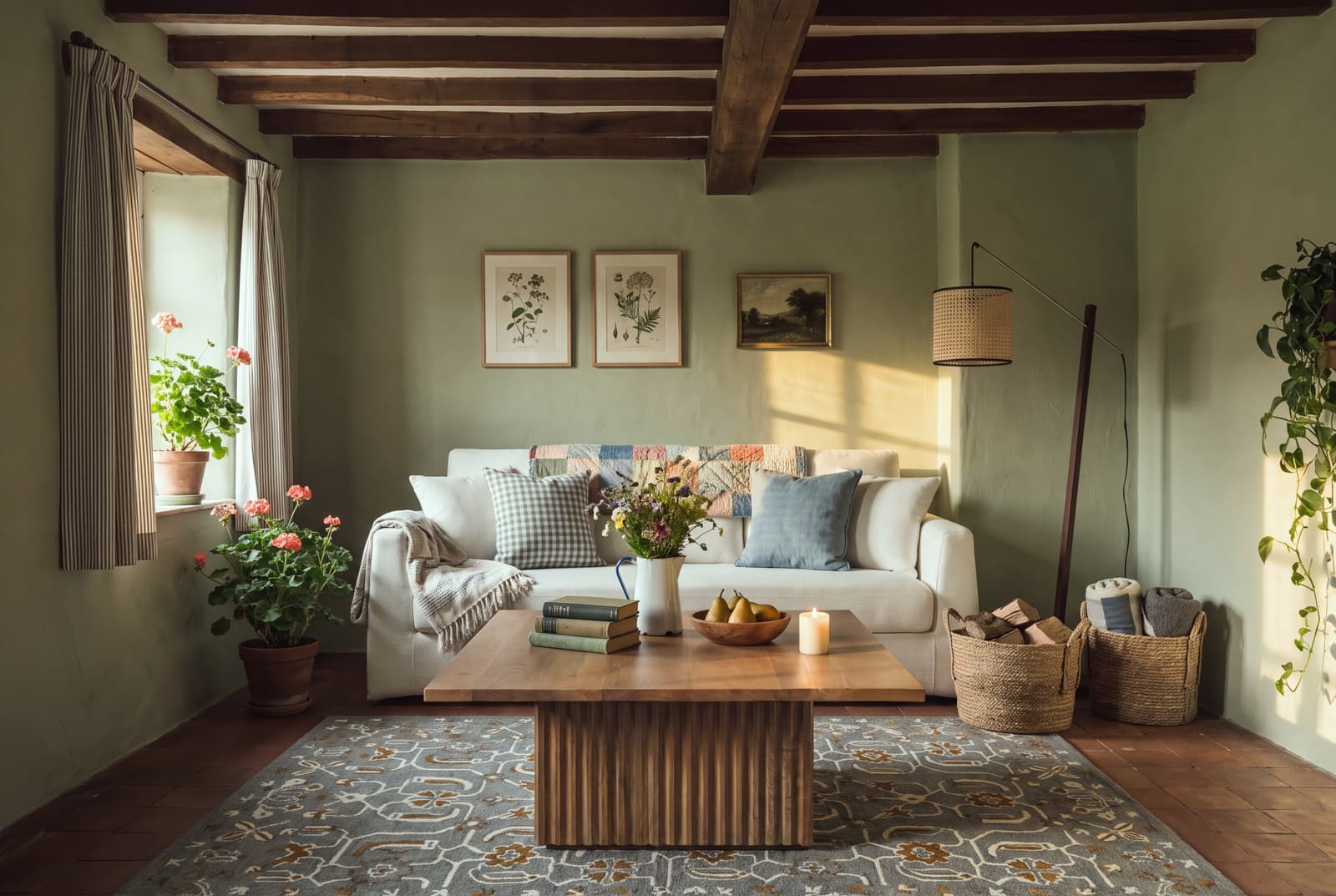
Deep, comfortable upholstery in a plain neutral fabric, paired with visibly solid wood furniture, coffee tables and consoles with real joinery rather than a laminate veneer, sets the tone. A woven natural-fiber rug and a mix of worn and new textiles keep the room from reading as too tidy for a working house.
Farmhouse Bedroom
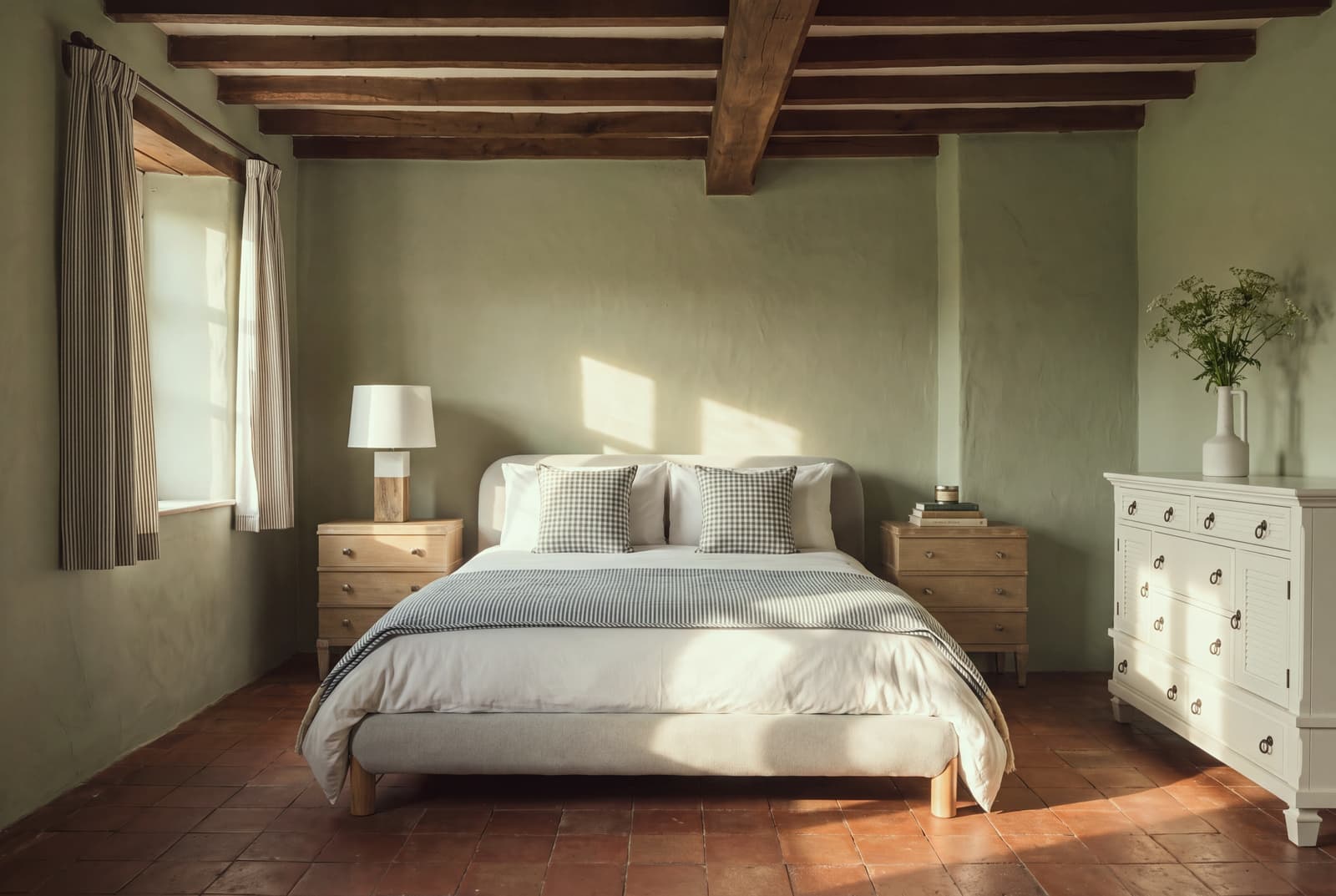
A wood or simply upholstered bed frame, layered natural-fiber bedding in linen or waffle weave, and a mix of painted and plain wood case goods carry a farmhouse bedroom. Exposed beams or a shiplap accent wall, where the architecture allows for it, reinforce the working-house feel without adding a single decorative object.
Materials and Furniture
Farmhouse furniture rewards buying for use rather than for display: solid wood over veneer, a sink and hardware chosen for actual durability, and textiles that are meant to be washed and worn in rather than kept precious. If you are buying new, look for genuinely painted finishes rather than a printed wood-grain laminate, and turned or straight legs over anything with a decorative flourish that has no working precedent.
Farmhouse in a Rental or Small Kitchen
A rental kitchen's plain cabinets already share farmhouse's preference for unfussy fronts; open shelving can often be added without altering the cabinetry itself, using a removable bracket set. A large butcher-block cutting board left permanently on the counter, a wire or wood plate rack, and a set of stoneware in daily use will carry the aesthetic in a small kitchen without any structural change at all.
Where to Start
- Put a real wooden surface where your hands actually go: a tabletop, a counter, a cutting board kept out rather than put away.
- Choose painted finishes over stained ones, in muted greens, clays and off-whites, and check that they are actually painted rather than printed.
- Let the working objects be the decoration rather than buying a decorative version of them.
- Add open shelving or a plate rack before adding a single sign or a purely decorative object.
If you would rather start from a finished room than a checklist, we have put one together: a farmhouse kitchen with every piece in it listed and priced, so you can see what the whole thing costs before committing to any of it.
See every room in the Farmhouse hub.
Not sure where to start?
Quick choices between rooms, a few questions about your home, and a finished room for each room you want to furnish, every piece priced. A few minutes.
Start your home profile