
Industrial Interior Design: Applying the Palette Without the Building
Industrial design takes its logic from buildings that were never meant to be homes. Most houses have no structure worth exposing, which is the real practical problem, and the workable answer is to borrow the materials rather than the architecture.
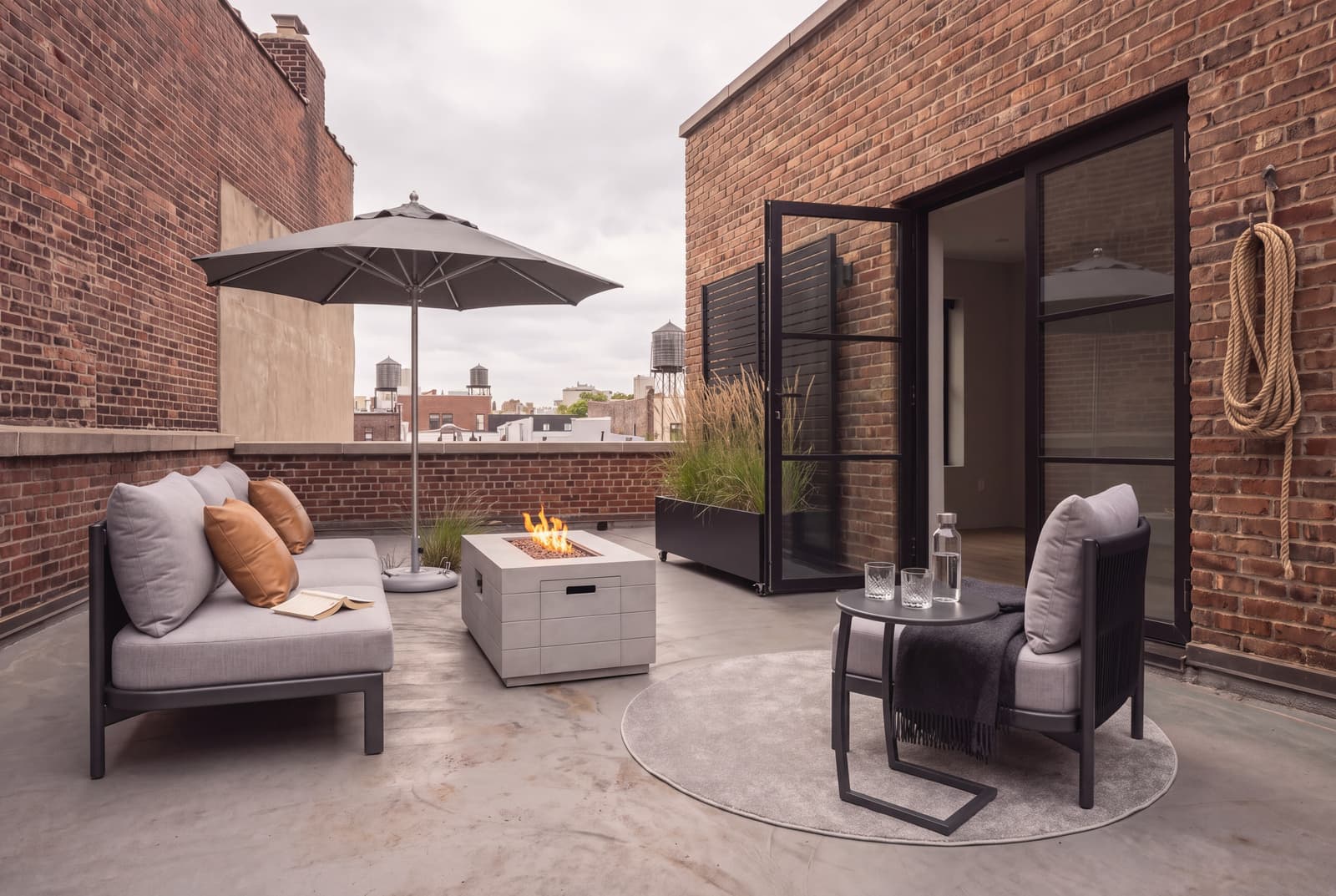
Hover or tap a dot to see what it is. See the full room, priced →
Industrial design takes its logic from buildings that were never meant to be homes: exposed structure, unfinished surfaces, metal and brick left exactly as they were made. The underlying principle is honesty about construction, which is the reason a printed brick-look wallpaper panel undermines an industrial room far more completely than an out-of-period chair ever would.
Most houses, though, have no structure worth exposing. There is no cast-iron column, no factory-scale steel window, no century of brick behind the drywall. That is the real practical problem the style presents, and the workable answer is to apply industrial's material palette rather than its architecture: steel, aged leather, reclaimed timber and concrete-toned surfaces, used inside a perfectly ordinary room.
The other common failure is hardness. A room built entirely from hard, cold materials reads as a warehouse rather than a home. Industrial rooms that actually work carry noticeably more rug, leather and soft texture than the reference photography of the style tends to suggest.
What Industrial Interior Design Is
Industrial interior design borrows its vocabulary from converted factories, warehouses and lofts: exposed brick and structural steel, raw or reclaimed wood, metal-framed furniture, and lighting drawn from factory and workshop fixtures rather than domestic ones.
The characteristics that actually define it:
- Exposed or implied structure. Real exposed brick or ductwork where a building has it, or its material stand-ins, brick-toned tile, a steel beam-look shelf bracket, where it does not.
- Metal-framed furniture. Black or dark steel frames on shelving, tables and seating, often left with a visible weld or bolted joint rather than a smooth, disguised one.
- Reclaimed or raw wood. Timber with visible grain, knots and old fastening holes, paired with metal rather than finished to match it.
- Factory and workshop lighting. Exposed-bulb fixtures, caged pendants and articulated task lamps, in place of decorative domestic lighting.
- Aged leather and heavy textiles. The style's main softening element, chosen to look genuinely worn rather than distressed on purpose.
Industrial, Urban Loft and Steampunk Are Not the Same Thing
These get confused constantly in furniture listings, and the differences are worth knowing before you buy.
Industrial, specifically, is the material palette and furniture vocabulary described above, applicable in any building, factory-converted or not.
Urban loft describes an actual building type, a converted factory or warehouse space, open-plan, with genuine high ceilings, large windows and structural elements. A loft is very often furnished in industrial style because the architecture already supports it, but the two terms are not interchangeable; a suburban house furnished in industrial style is not a loft, and a converted loft can be furnished in almost any style at all.
Steampunk takes industrial's metal-and-leather materials and pushes them into fantasy and ornament, brass gears, exposed pipework as decoration, Victorian-influenced silhouettes layered on top of the industrial palette. Where industrial is about honest, functional construction, steampunk is decorative and theatrical about the same raw materials.
If you want the plain, functional material palette on its own, shop industrial directly. If you are furnishing an actual converted space, loft-specific pieces built for large open volumes may fit better. If you want the ornamental, fantastical version, steampunk is the term to search instead.
The Industrial Color Palette
- The base. Charcoal, black, warm gray and raw concrete tones, occasionally paired with exposed red or brown brick.
- The metal. Black or dark bronze steel, used consistently across furniture frames and light fixtures rather than mixed with a bright or polished finish.
- The wood. Warm, visibly grained reclaimed or raw timber, chosen to contrast against the cool metal and concrete tones rather than match them.
- The leather. Aged, saddle-toned or dark brown leather, the style's primary source of warmth against an otherwise hard, cool palette.
Industrial Living Room
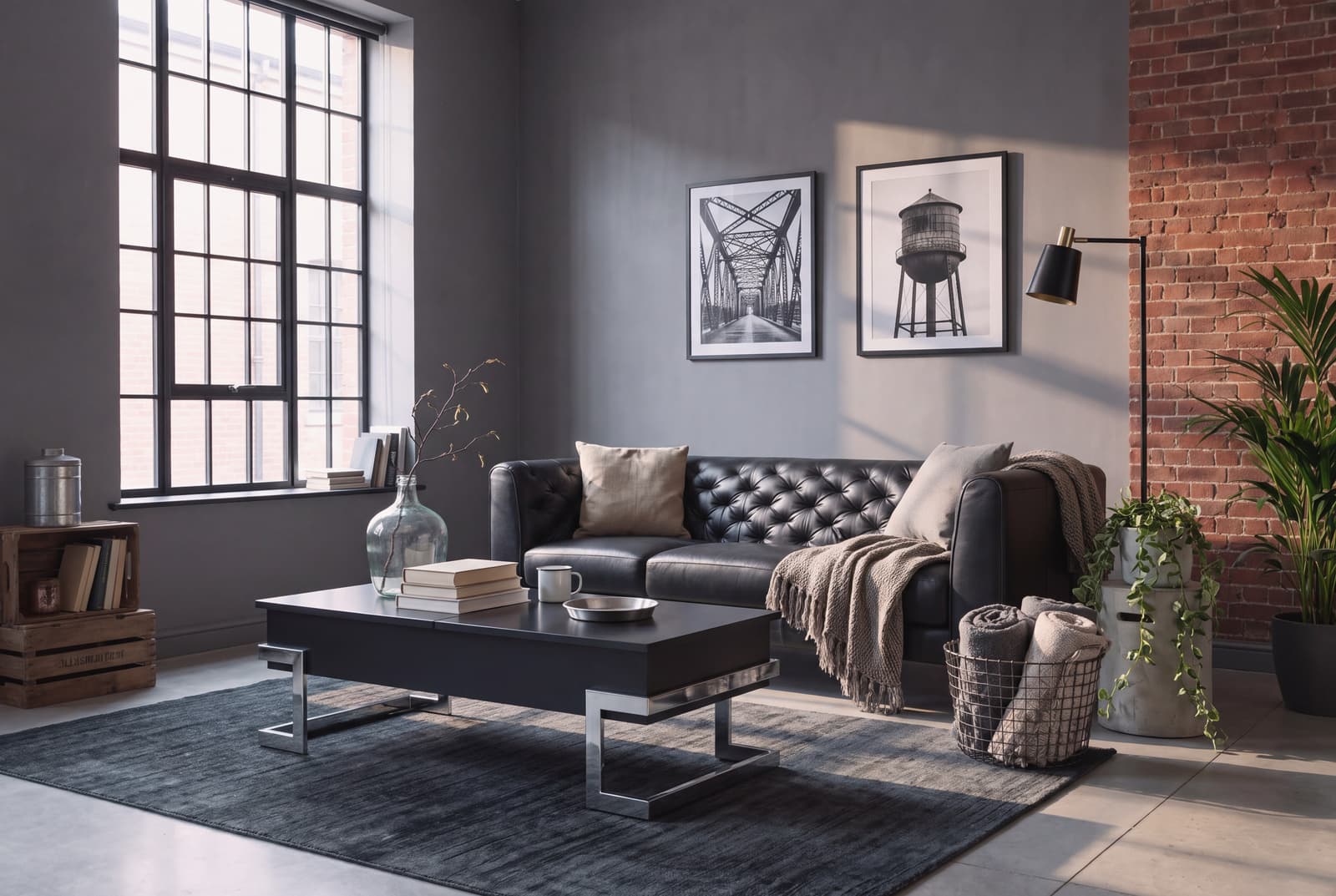
Pair a metal-framed or metal-legged sofa with genuinely worn or aged-look leather seating, and add a substantial rug, a large rug does more to soften an industrial room than almost any other single choice. A reclaimed-wood coffee table with a visible metal base ties the room's two main materials together in one piece.
Industrial Kitchen
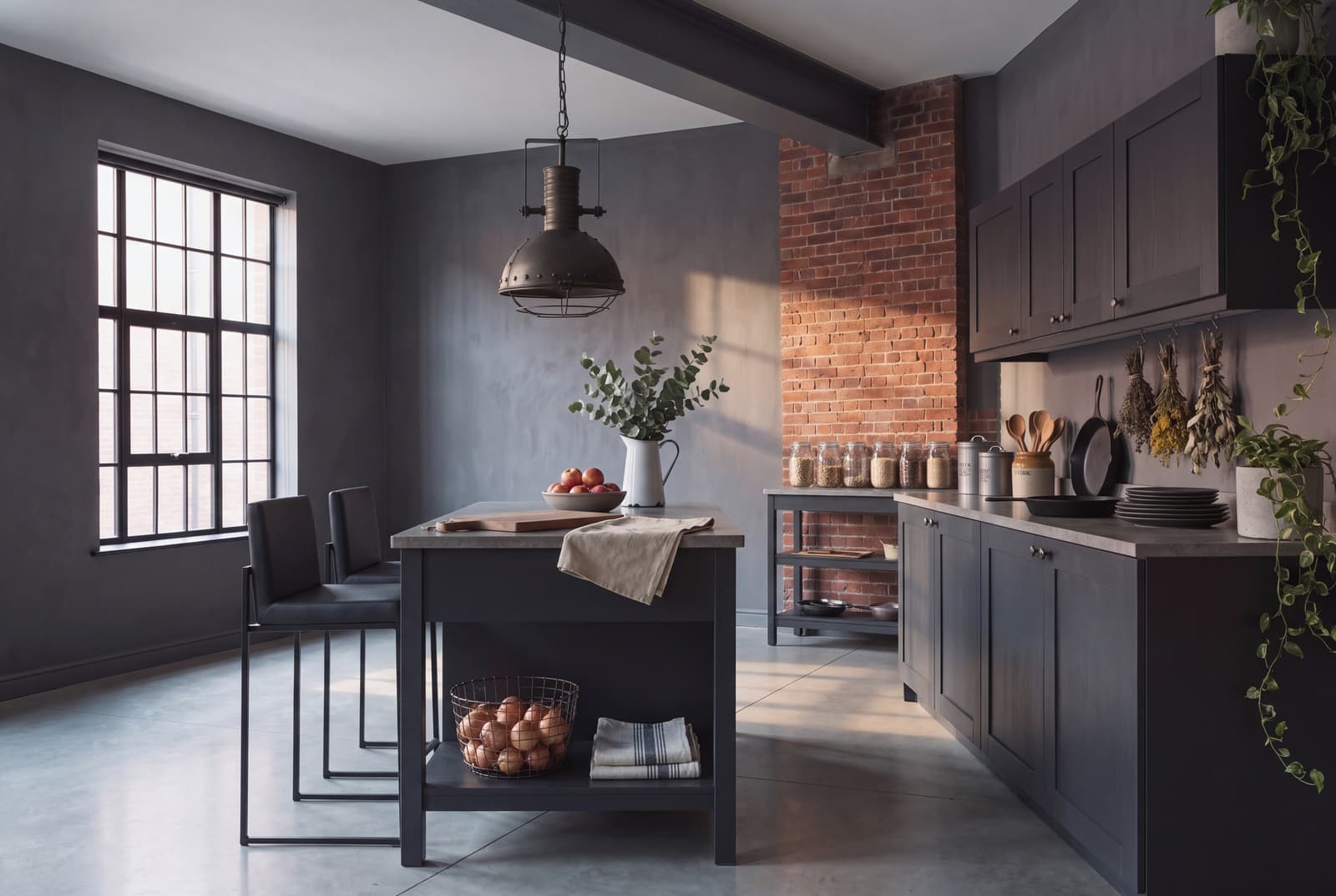
Open shelving in black metal, a butcher-block or dark stone countertop, and simple, unornamented cabinet fronts set the tone. Exposed pendant lighting over an island or a peninsula, in a caged or exposed-bulb style, is close to a defining fixture for an industrial kitchen.
Industrial Home Office
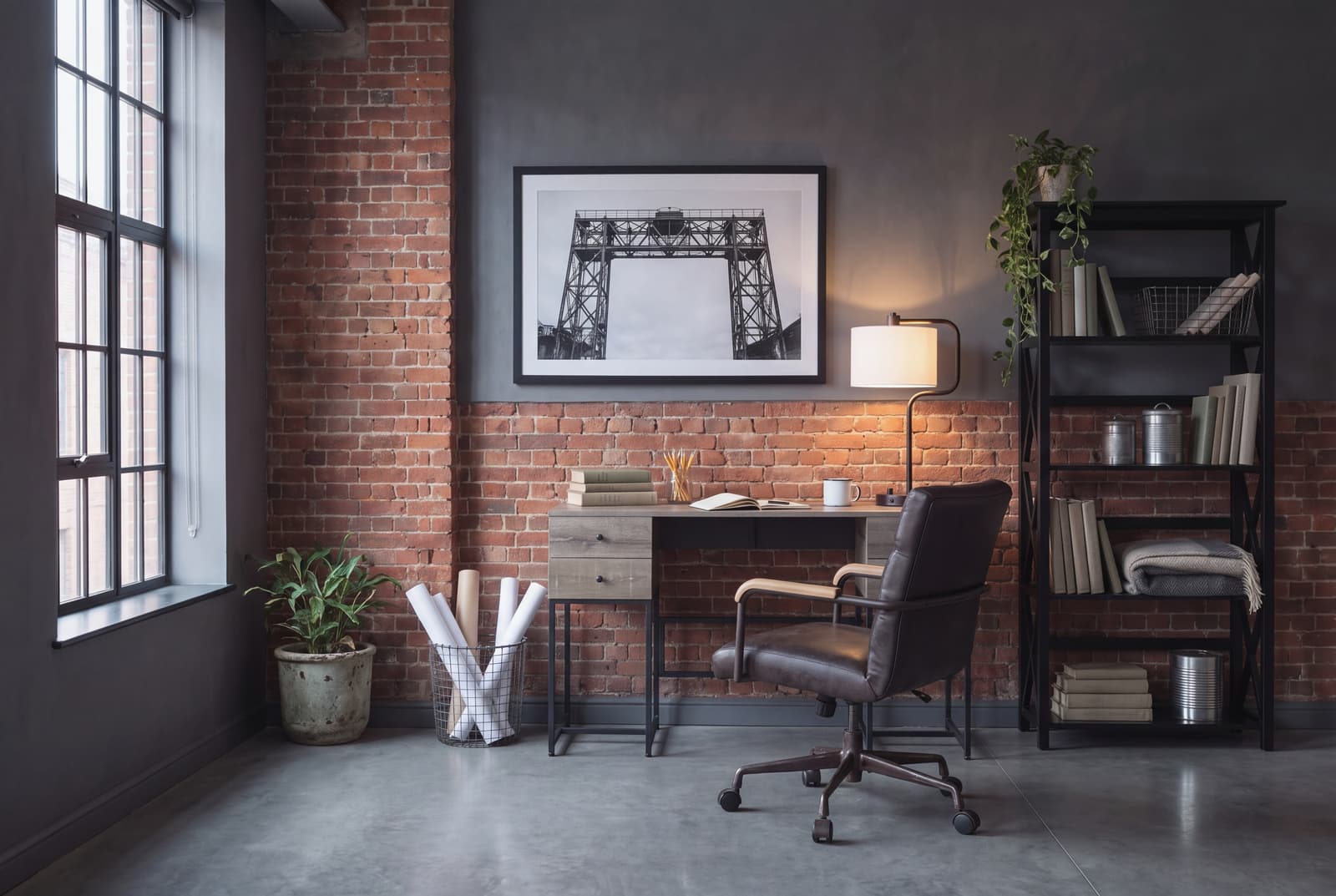
A metal-framed desk paired with a warm wood top, an adjustable task lamp with visible hardware, and open metal shelving for storage rather than closed cabinetry keep the room functional and unmistakably industrial. A leather or canvas desk chair completes the material story.
Industrial Bar
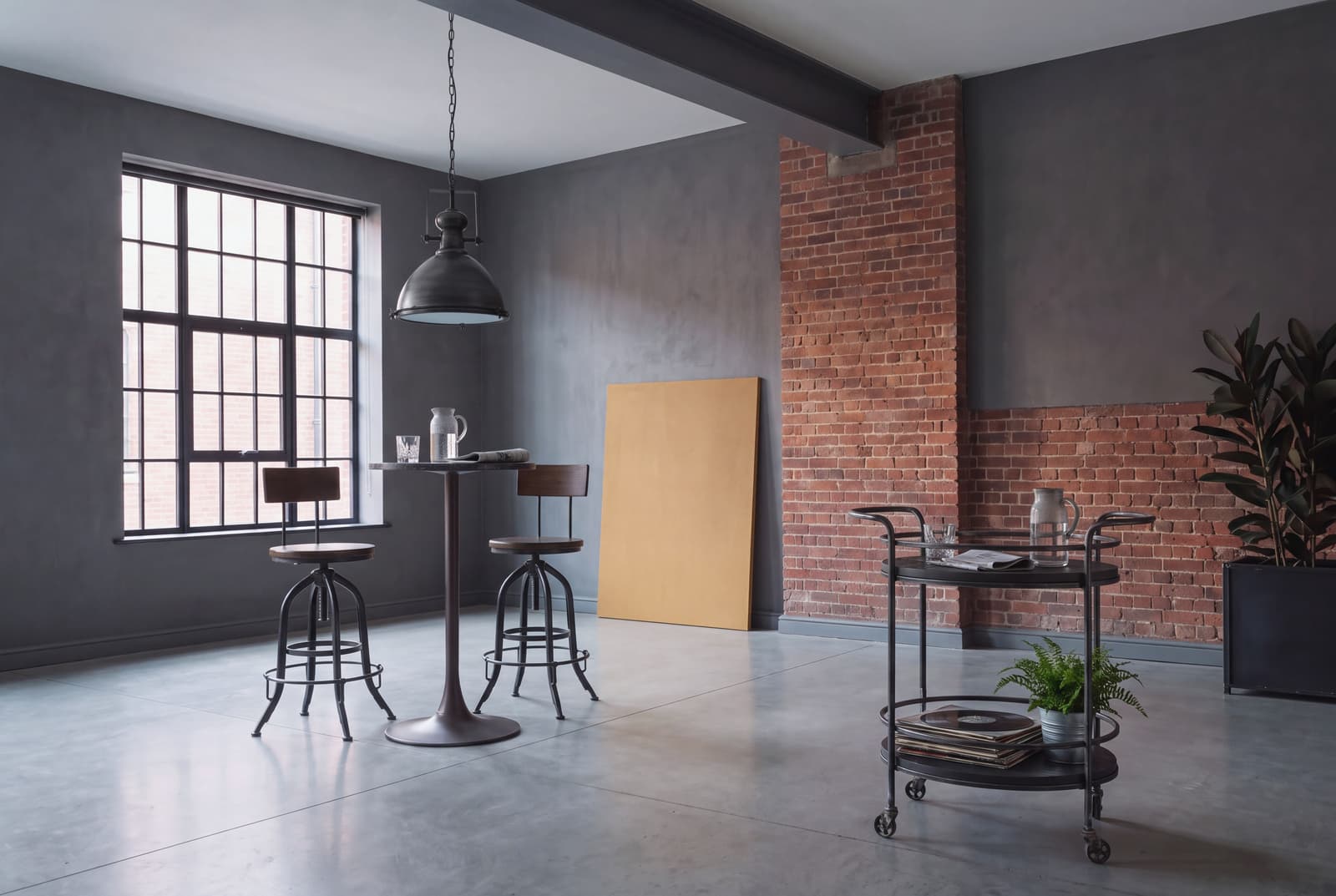
A small bar corner is one of the style's most natural applications: a bar-height table or cart in black metal and reclaimed wood, a pair of stools with a visible steel frame, and a low caged pendant overhead turn an underused corner into a coherent, functional space with very few pieces.
Avoiding the Showroom Look
The failure mode on the other side of hardness is a room that looks like a single catalog page rather than a space that accumulated its own history. Buying one matched "industrial collection," a sofa, a coffee table and a console all in the identical steel finish and the identical wood tone, produces exactly this. Real converted spaces were fitted out over years by different people for different purposes, and a room that reads as genuinely industrial usually carries at least two distinct metal finishes (a blackened steel table beside a warmer bronze light fixture, say) and more than one wood tone.
The same logic applies to age. A single piece with real visible wear, a scuffed leather chair, a tabletop with an old repair, does more for the room's credibility than five pieces distressed to match it. One honest object outweighs a set of manufactured ones.
Materials and Furniture
Choose furniture that is genuinely metal and genuinely wood rather than a printed or laminate finish standing in for either. A raw material with real weight and texture is doing the work an industrial room depends on; an imitation of one, however convincing in a photograph, reads as thin in person in a way this particular style makes hard to hide.
Look closely at how a metal piece is joined together before buying it. A visible bolt, an exposed weld bead or a riveted joint is a genuine construction detail the style is built around; a seam hidden under a decorative cap is a domestic furniture habit grafted onto an industrial shape, and it tends to show once the piece is in the room. The same test applies to wood: a tabletop with real breadboard ends or visible through-joinery reads as authentic in a way a mitered corner with a printed grain does not.
Industrial in a Rental
Concrete-look peel-and-stick flooring, a removable brick-look wallpaper panel used sparingly on a single accent wall, and freestanding metal shelving units recreate much of the style's architecture without touching a lease. Since the furniture itself, the metal frames, the leather, the reclaimed wood tabletops, carries most of industrial's identity, a rental with plain white walls can still read as convincingly industrial once the pieces are in place.
Where to Start
- Introduce one genuinely raw material, real metal, real reclaimed wood, rather than a printed imitation of either.
- Add aged leather and a substantial rug early, since the base palette is otherwise almost entirely hard surfaces.
- Use visible, simple light fixtures, an exposed bulb or a caged pendant, rather than a fixture that conceals its own construction.
- If your house has no structure worth exposing, borrow the materials rather than trying to fake the architecture.
If you would rather start from a finished room than a checklist, we have put one together: an industrial living room with every piece in it listed and priced, so you can see what the whole thing costs before committing to any of it.
See every room in the Industrial hub.
Not sure where to start?
Quick choices between rooms, a few questions about your home, and a finished room for each room you want to furnish, every piece priced. A few minutes.
Start your home profile