
Modern Interior Design: What Actually Defines It, Room by Room
Modern design is usually described by what it removes. It is more useful to describe it by what it demands, because a room with almost nothing in it has nowhere to hide a bad decision.
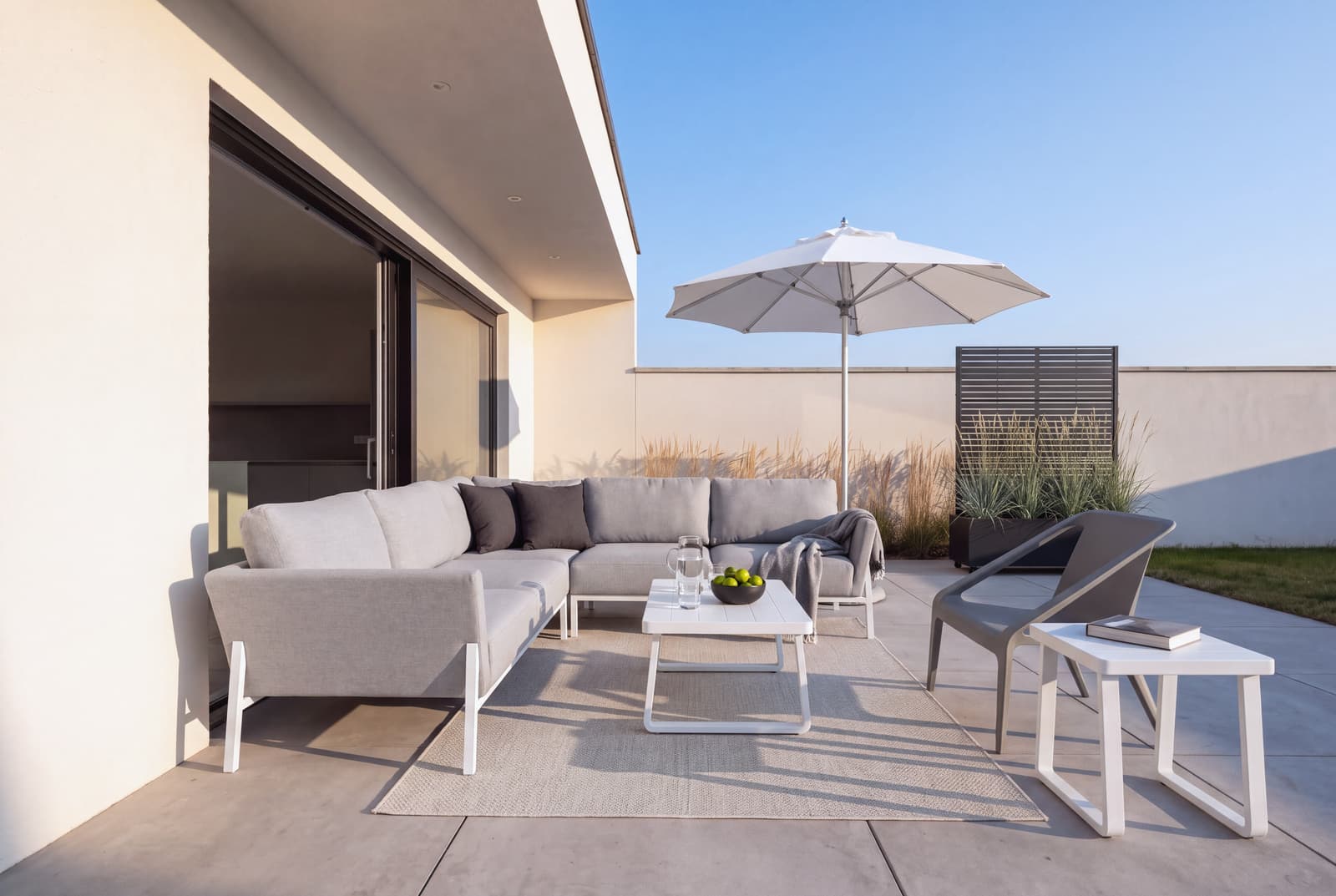
Modern design is usually described by what it removes: no ornament, no pattern, no clutter. That description is accurate and not very useful, because it tells you what is missing without telling you what has to take its place.
What actually defines modern design is proportion. With little ornament and few objects in a room, every remaining line is visible, so the shape, spacing and finish of what stays behind carry all the weight that pattern and accumulation carry in a busier style. A modern room does not hide a mediocre proportion behind a patterned rug the way a maximalist room can. It has nowhere to hide it.
That has a practical consequence before it has an aesthetic one. Modern rooms are unforgiving of cheap furniture in a way busier styles are not, because there is nothing else in the room for the eye to land on. Three well-proportioned pieces and an empty corner will look more resolved than eight adequate ones filling the same square footage.
What Modern Interior Design Is
Modern interior design is a style built on clean geometric lines, a restrained material palette and the deliberate use of negative space, developed from the early twentieth century architectural movements of the same name (Bauhaus, De Stijl, the International Style) and adapted for domestic rooms.
The characteristics that actually define it:
- Clean, geometric silhouettes. Straight lines, right angles, minimal or absent ornament on the furniture itself. A sofa reads as a rectangle with legs, not a shape built up from tufting and skirting.
- A restrained, mostly neutral palette. Whites, grays, warm woods and black, with color introduced in small, deliberate amounts rather than spread evenly across the room.
- Honest materials, smooth finishes. Walnut and oak with visible grain but a flat, unfussy finish, veined marble or stone, glass, and matte or brushed metal. Nothing carved, distressed or aged on purpose.
- Function drives form. A piece exists because the room needs it, not because a surface looked empty. This is the actual throughline from the movement's architectural roots.
- Negative space as a deliberate choice. An empty wall or an uncovered floor is not an unfinished room. It is where the eye rests between the pieces that matter.
Modern, Contemporary and Minimalist Are Not the Same Thing
These three get used as synonyms constantly, and the mix-up causes real shopping mistakes.
Modern, properly, refers to a specific historical design movement, roughly 1920s through the 1950s and 60s, and the furniture forms it produced: tubular steel, molded plywood, clean rectilinear case goods. When a listing says "mid century modern," this is the tradition it means.
Contemporary means whatever is currently fashionable, by definition, and it changes decade to decade. Today's contemporary furniture borrows heavily from modern's clean lines but softens the edges with curves, and it tolerates more decorative variety than modern ever did. A contemporary room from 2026 and one from 1995 look quite different; a modern room from either decade looks similar, because modern is a fixed vocabulary rather than a moving target.
Minimalist is a philosophy about quantity, not a style about shape. A minimalist room can be furnished in modern, Japandi or even traditional forms, as long as there are very few of them. Modern rooms tend to look sparse because the style favors restraint, but a modern room can absolutely be filled with more furniture than a strict minimalist would ever allow, as long as the proportions and finishes stay disciplined.
If you want the shape vocabulary specifically, shop modern. If you want current styling regardless of era, shop contemporary. If you want fewer objects regardless of shape, apply minimalism on top of whichever style you choose.
The Modern Color Palette
Modern rooms run on a narrow palette used with discipline rather than a wide one used carefully.
- The base. White, off-white or light gray walls, paired with a mid-toned wood floor or a pale gray one.
- The furniture neutrals. Charcoal, warm gray and black upholstery, with wood in walnut or white oak.
- The accent, used sparingly. One material rather than one color usually carries the accent role: veined marble, brushed brass or polished chrome, introduced on a single surface rather than repeated throughout the room.
- Color, when it appears. A single saturated cushion, a piece of art, or one upholstered chair. Modern rooms that use color use very little of it and place it where it draws the eye on purpose.
Modern Living Room
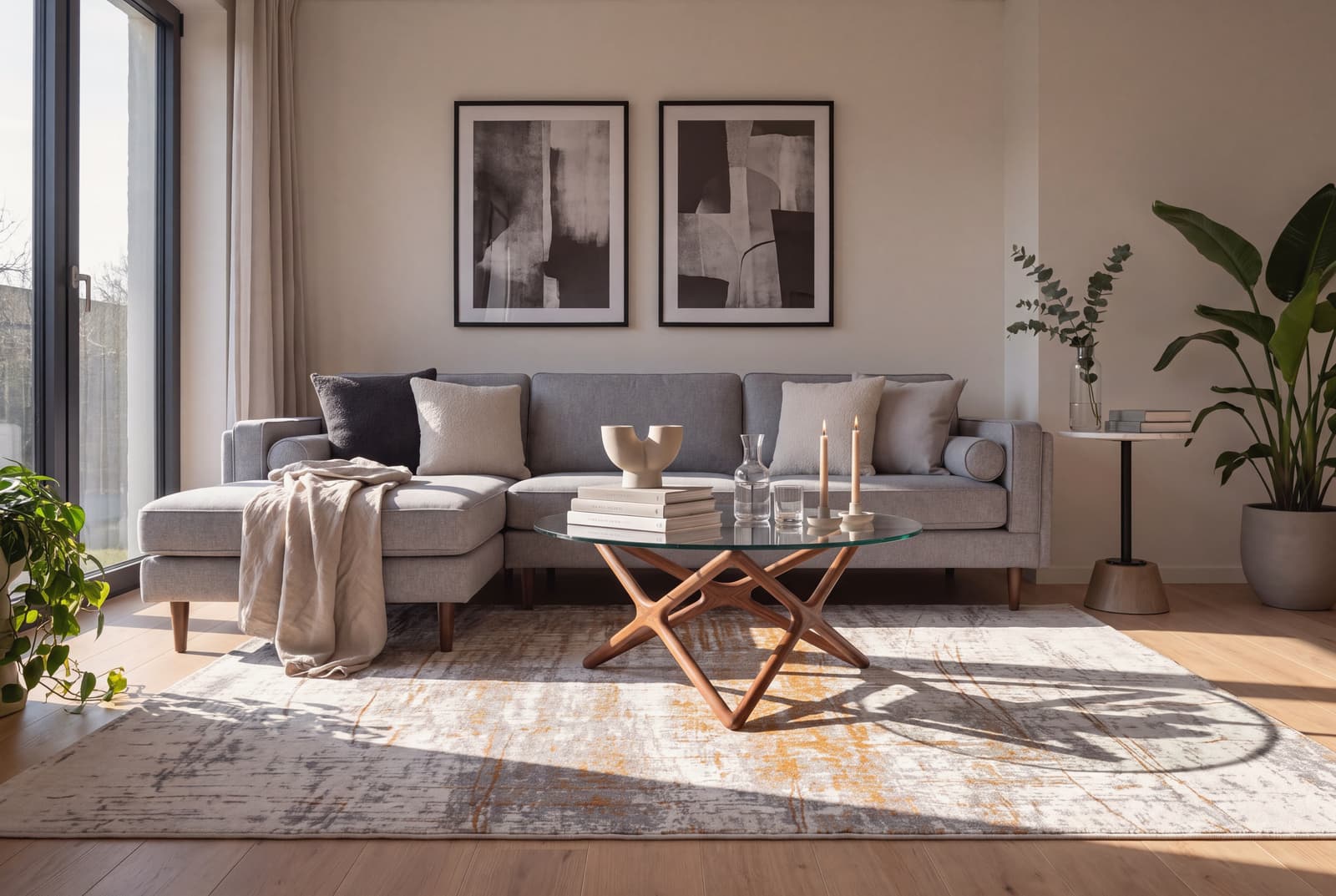
A modern living room is built from a small number of correctly proportioned pieces rather than a full suite. A low sofa in a solid neutral, a wood or stone coffee table with visible material quality, and one chair with a distinct silhouette are usually enough. Leave one wall genuinely empty and hang a single piece of art rather than filling every surface.
Modern Kitchen
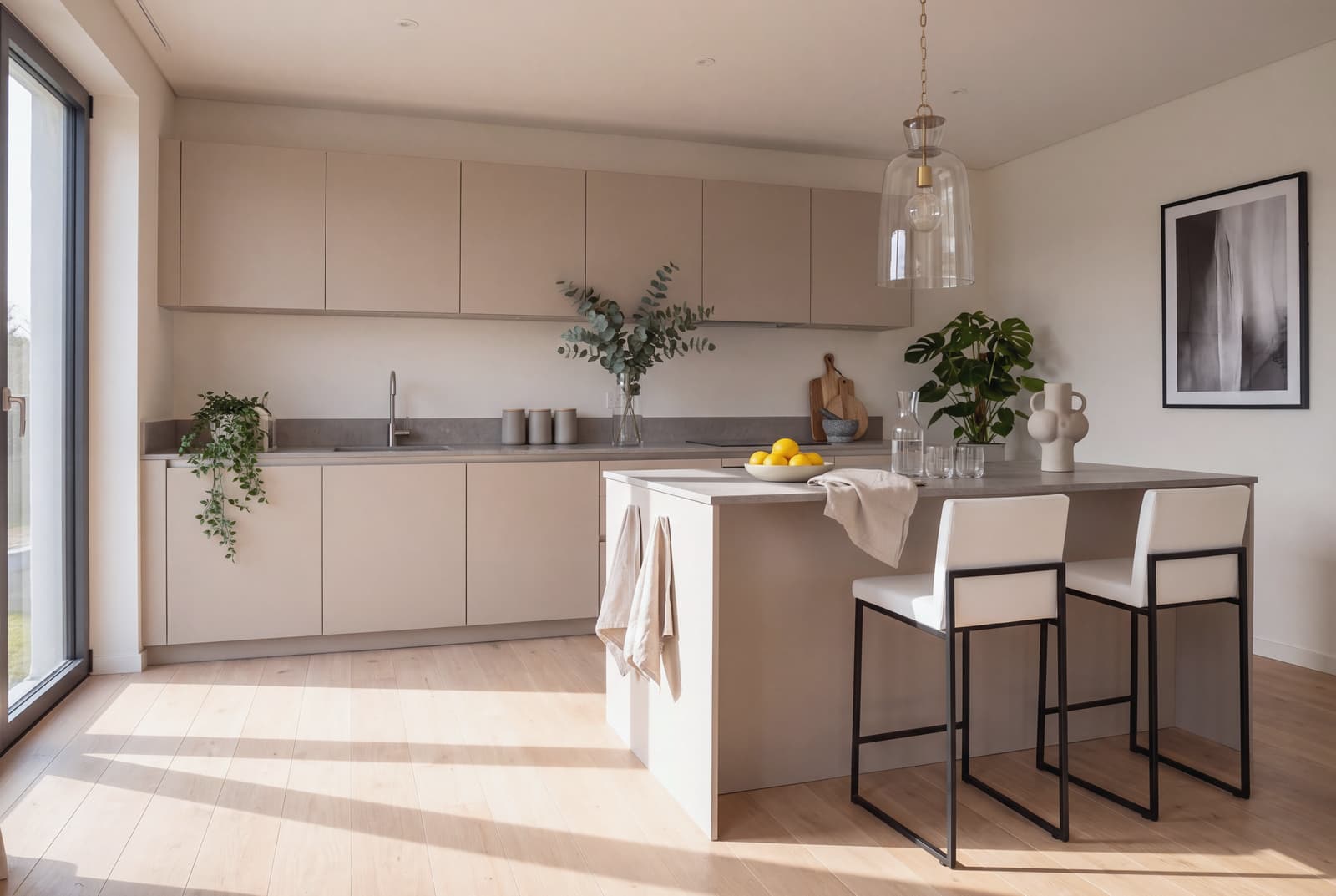
The modern kitchen runs on hard, engineered surfaces held together by a warm material or two. Flat-panel cabinetry, a stone or engineered-stone countertop, and a simple tile or polished floor set the architecture. A wood countertop section, a set of wood or leather counter stools, or a warm pendant light keep the room from reading as sterile.
Modern Bedroom
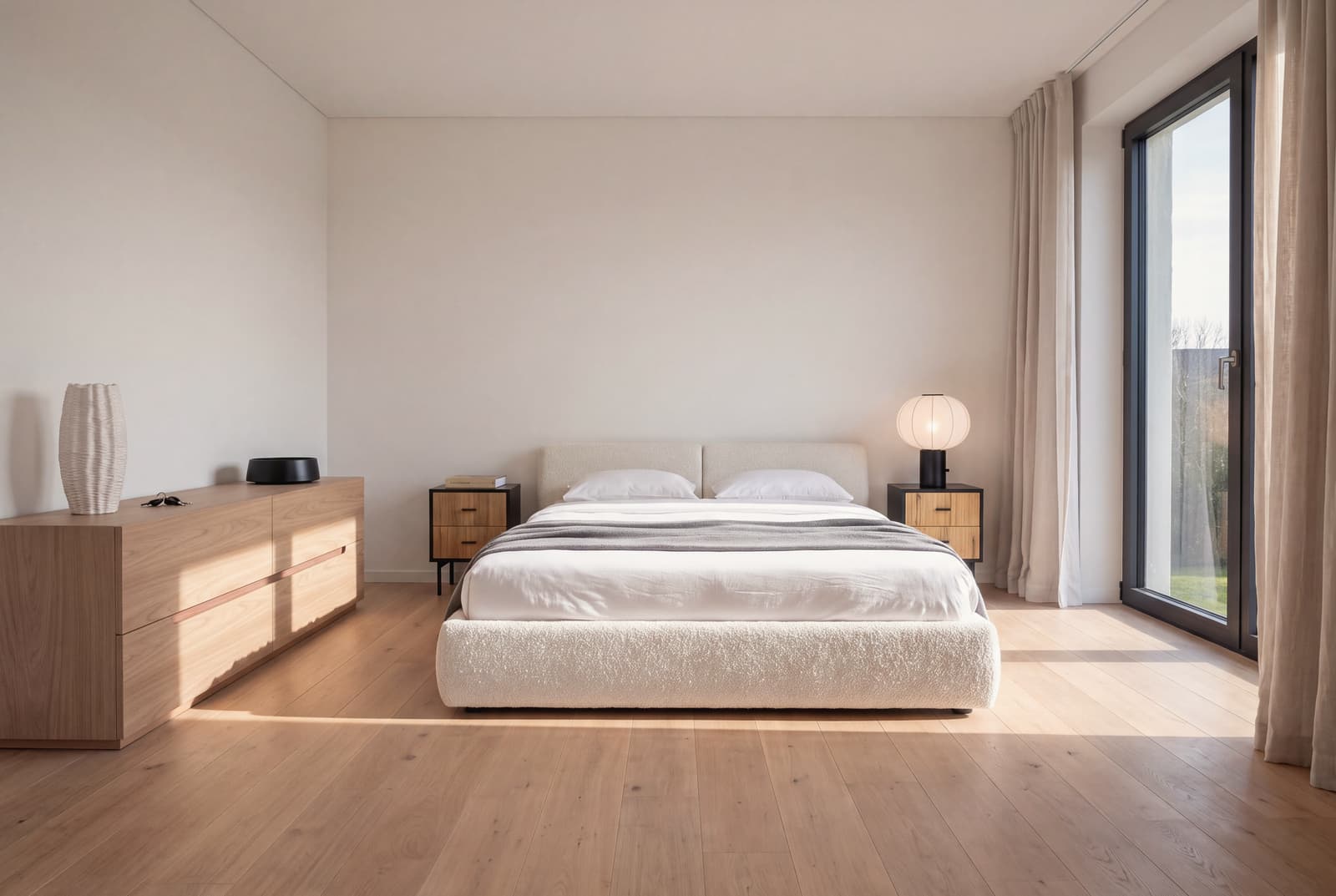
Keep the bed frame low and simple, in wood or a plain upholstered headboard with no tufting. Nightstands should match the bed's material logic rather than being chosen separately. A single piece of textured bedding, in linen or a heavy weave, is usually the only pattern the room needs.
Modern Home Office
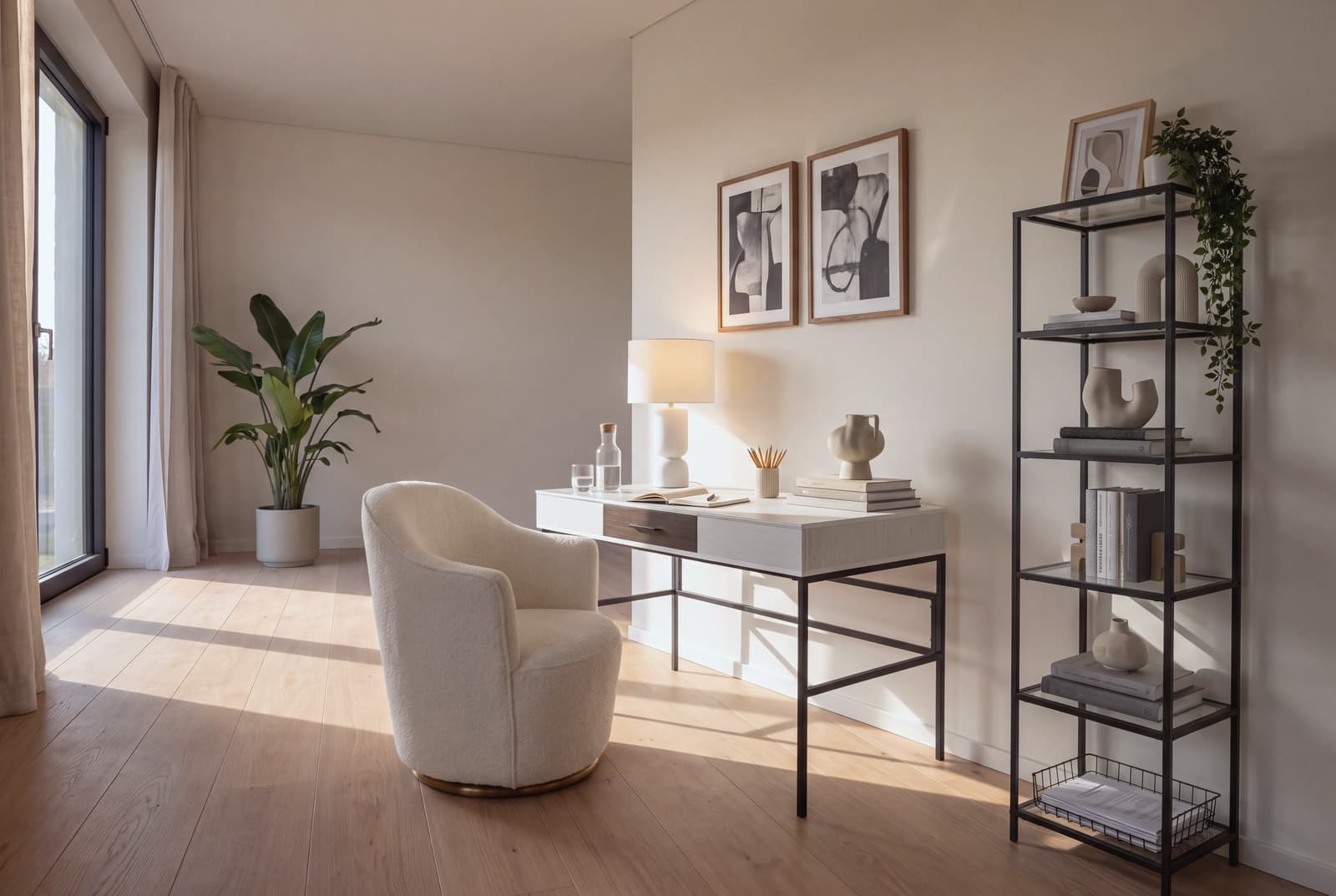
A modern office is a desk, a chair, storage and a light, each chosen on its own merits rather than as a matching set. The desk should have a clean, unornamented profile; the chair should be genuinely comfortable rather than merely photogenic, since it is judged daily rather than on a listing photo.
Modern Dining Room
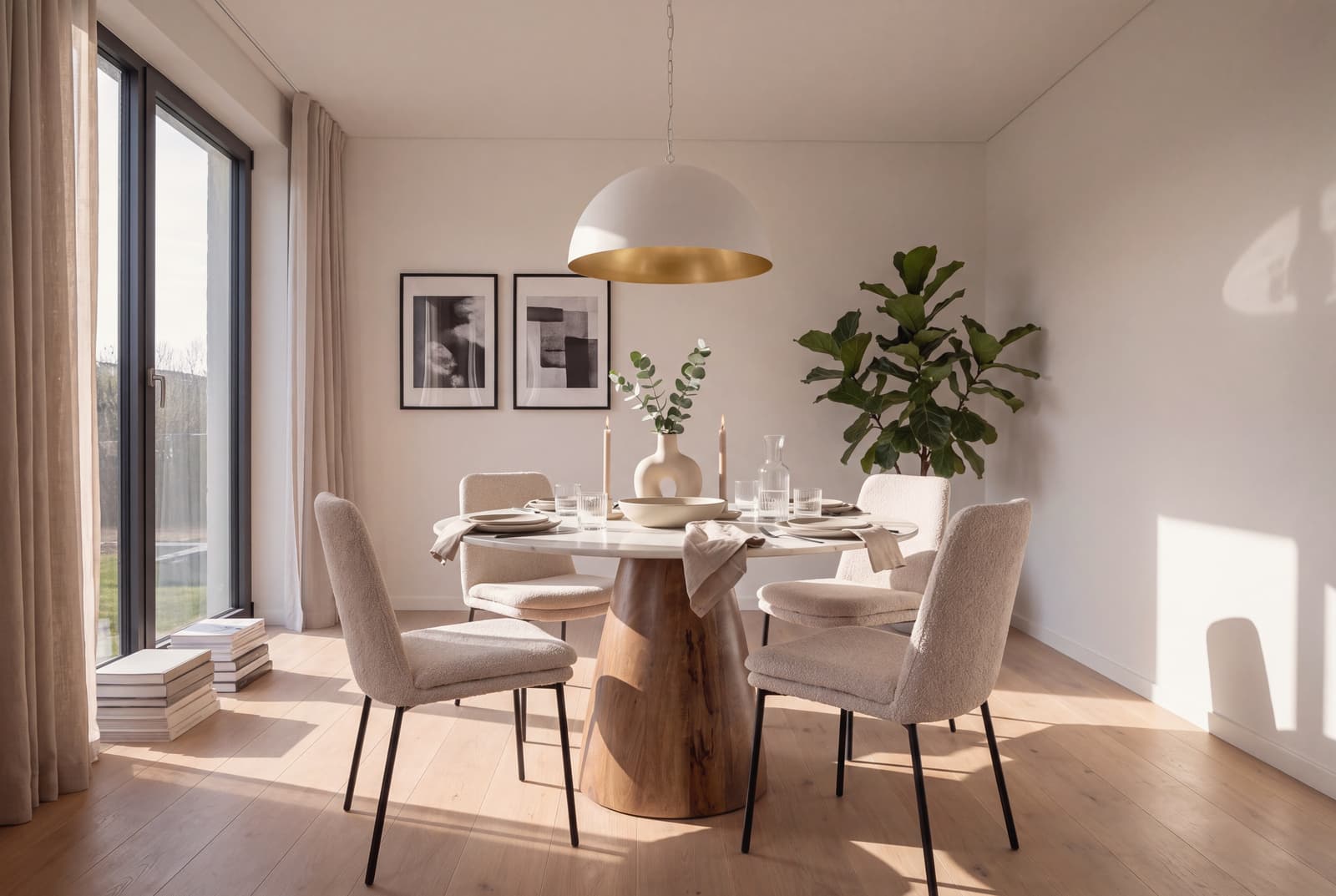
The table is the room. A pedestal or trestle base in wood or stone, paired with chairs that share its material logic rather than competing with it, does most of the work. A single overhead fixture, hung low and off to one side of strict centering if the room allows it, replaces a chandelier's ornament with proportion instead.
Warm Modern vs Cold Modern
The most common complaint about modern rooms is that they feel cold, and it is a fair complaint about the version most often photographed for furniture catalogs: white walls, gray upholstery, glass and chrome, with no material that holds warmth.
The fix is not to add more objects. It is to add material variation deliberately: a wool or boucle textile against a hard surface, a warm wood tone against white walls, a woven basket or ceramic vessel with visible hand-making against machine-precise lines. A modern room with one warm material introduced against every two hard ones reads as considered rather than austere. A modern room with none of them reads as a waiting room.
Materials and Furniture
Modern furniture favors a small number of honest materials used without disguise: walnut and white oak with a flat matte or satin finish, veined marble or a marble-look engineered stone, glass with a visible edge rather than a beveled decorative one, and metal in matte black, brushed brass or chrome. Upholstery runs to boucle, linen, velvet and performance weaves in solid colors, almost never a printed pattern.
Because the style depends on proportion rather than ornament, buy the largest piece in a room first and let its scale set the standard for everything you add around it.
Modern in a Rental or Small Space
Modern's discipline is an advantage in a small room, because a restrained palette and a small number of correctly scaled pieces make a room read as larger than it is. Choose furniture with visible legs rather than a solid base, which lets the floor read as continuous underneath it, and keep the wall color unified rather than introducing a feature wall. Anything you cannot repaint or replace, a laminate floor, a builder-grade white wall, already fits the palette without alteration.
Where to Start
- Choose the largest piece first, usually the sofa or the dining table, and spend the most on it, since its proportion sets the standard for the room.
- Add one warm material against the hard surfaces before you add a single decorative object.
- Use directional or architectural lighting, wall sconces, a floor lamp with a distinct arm, rather than a single central ceiling fixture.
- Leave at least one wall or one corner genuinely empty. It is doing work.
If you would rather start from a finished room than a checklist, we have put one together: a modern living room with every piece in it listed and priced, so you can see what the whole thing costs before committing to any of it.
See every room in the Modern hub.
Not sure where to start?
Quick choices between rooms, a few questions about your home, and a finished room for each room you want to furnish, every piece priced. A few minutes.
Start your home profile