
Retro Home Decor: The Colorful 1950s to 70s, Room by Room
Retro home decor is the colorful side of the 1950s to the 70s: mustard, orange and teal, chrome and vinyl, glossy floors and a starburst clock on the wall. It is cheerful, a little playful, and built for company.
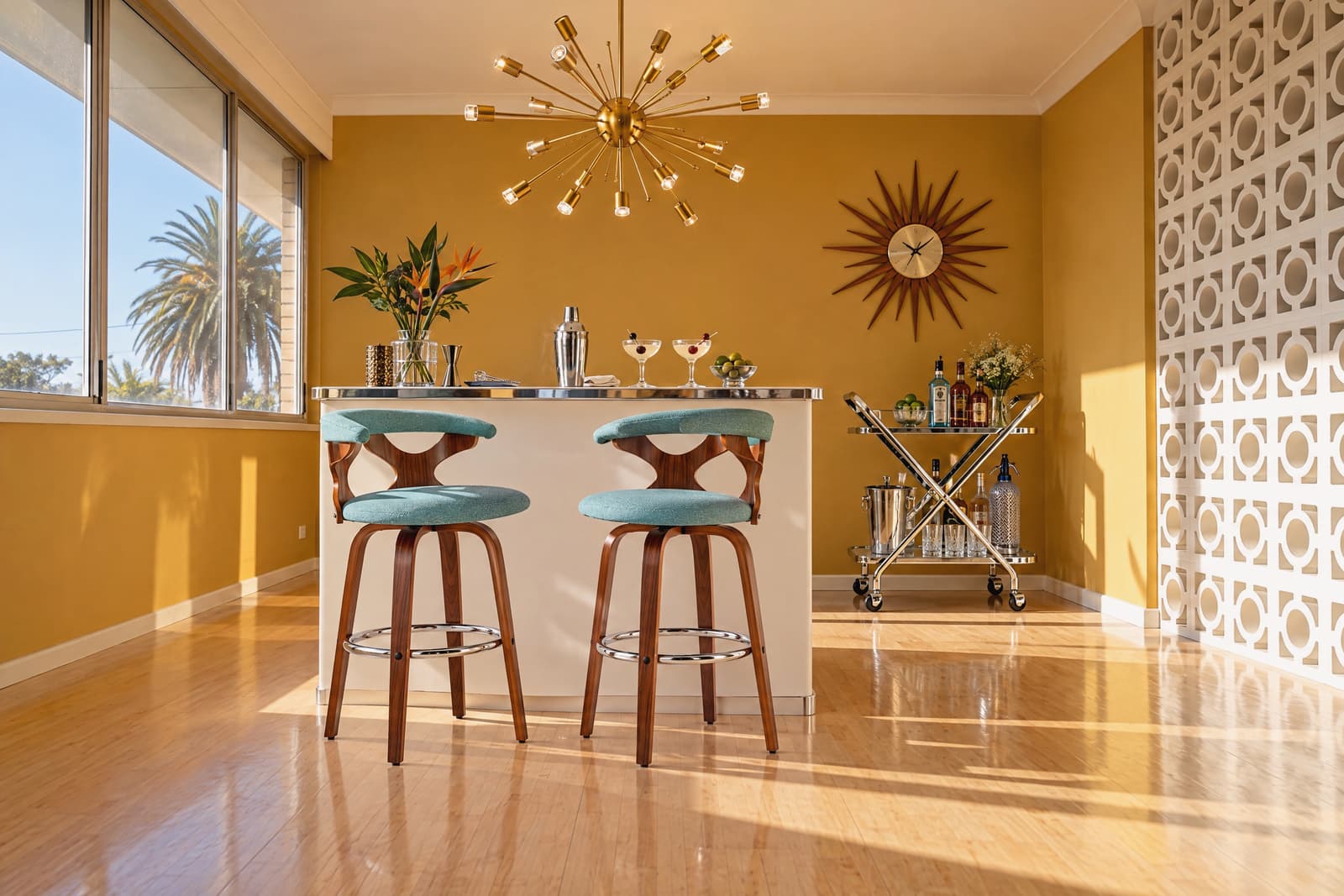
Hover or tap a dot to see what it is. See the full room, priced →
Retro home decor is the colorful side of the 1950s to the 70s. Mustard yellow walls, a glossy floor, a teal sofa, an orange chair and chrome that catches the sun. It is the look of the suburban house in its first confident decades, when color was cheap, optimism was high and every room was ready for company.
The furniture is low and curved, upholstered in velvet and vinyl in saturated colors, and set on chrome, brass or tapered wood legs. Lighting does a lot of the work: a sputnik chandelier, a globe pendant or a brass arc lamp reaching over the sofa. A starburst clock on the wall finishes the room.
What makes a retro room feel right is color used with confidence. Two strong colors against a warm wall, repeated from room to room, read as a style. The same pieces in beige read as a showroom.
What Retro Home Decor Is
Retro home decor is a style drawn from American homes of the 1950s, 60s and 70s, built on saturated color, chrome and glossy surfaces, curved upholstered furniture and atomic-age lighting, with a playful, sociable mood.
The characteristics that define it:
- Saturated color. Mustard, orange, teal, turquoise and olive, usually two or three of them in one room.
- Chrome and glass. Chrome legs and edges, glass table tops and bar carts that shine.
- Velvet and vinyl. Button-tufted sofas, curved armchairs and diner-style stools.
- Atomic lighting. Sputnik chandeliers, frosted globe pendants and arc floor lamps.
- Glossy surfaces. Lacquered floors, white laminate counters and gloss cabinet fronts.
- Period accents. A starburst clock, a breeze block screen, a cocktail shaker on the bar.
Retro and Mid-Century Modern
Both come from the same decades, and the difference is in color and finish.
Mid-century modern is the restrained side of the era: walnut and teak, clean lines, leather and neutral wool, with color used sparingly. Our mid-century modern guide covers it in full.
Retro is the popular side of the same years: the diner, the cocktail party and the family kitchen. It turns the color up, swaps much of the walnut for chrome and gloss, and adds the playful pieces, the starburst clock and the sputnik light. A retro room can borrow a mid-century sofa; what makes it retro is the color around it.
The Retro Color Palette
- The base. Warm mustard or butter yellow walls, with white ceilings and trim.
- The floor. Glossy pale maple or a checkerboard tile in the kitchen.
- The cool accent. Teal, turquoise and deep green, on a sofa, a chair or a tiled splashback.
- The warm accent. Orange and burnt orange, on an armchair, a rug or a cushion.
- The metals. Chrome first, with a little brass on a lamp or a light.
Retro Living Room
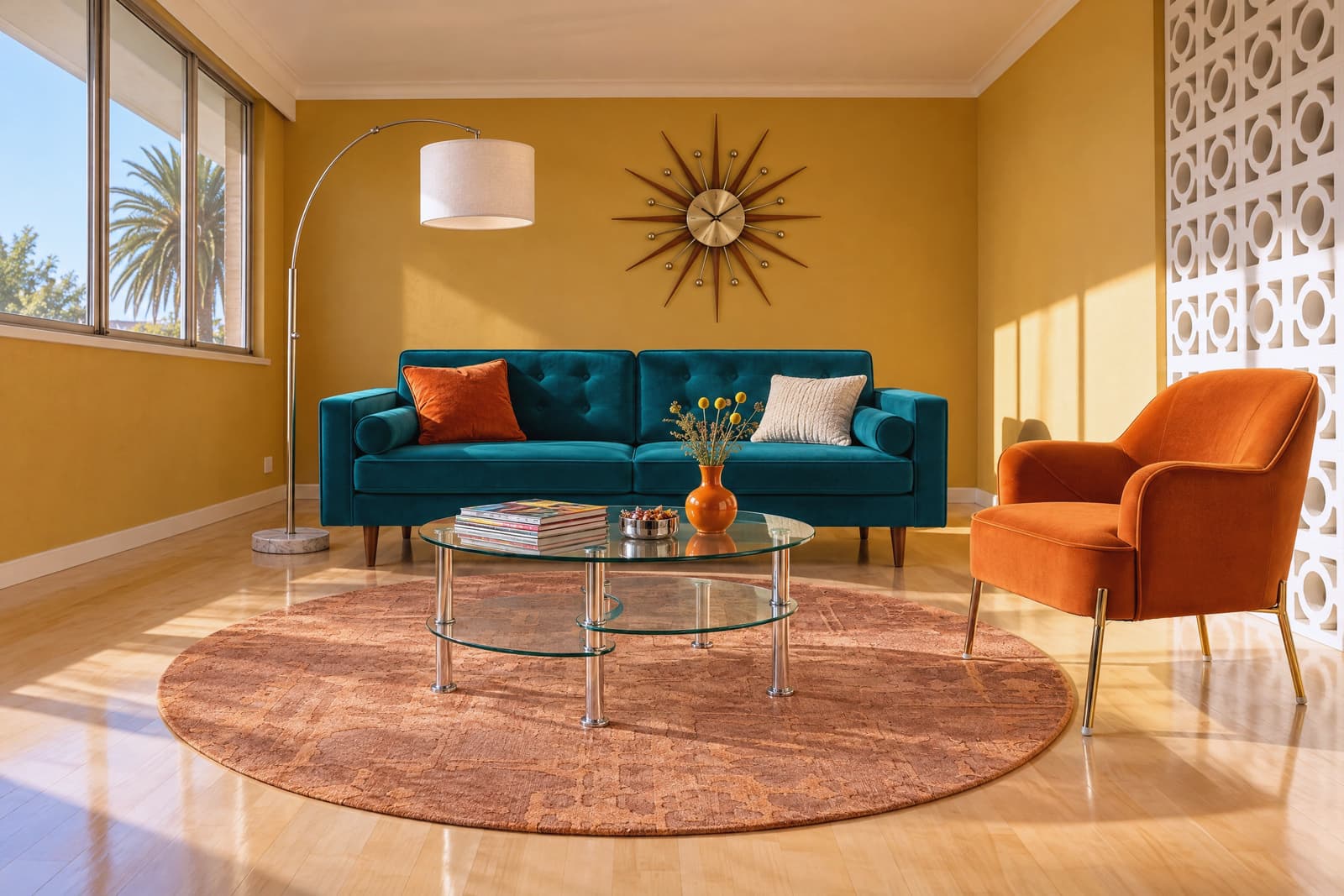
Start the retro living room with a velvet sofa in a strong color: teal against mustard walls is the classic pairing. Put an armchair in the second color across from it, orange velvet on slim legs suits it well, and stand an oval glass and chrome coffee table on a round orange rug between them. A brass arc floor lamp reaching over the end of the sofa and a starburst clock on the wall complete it.
Retro Kitchen
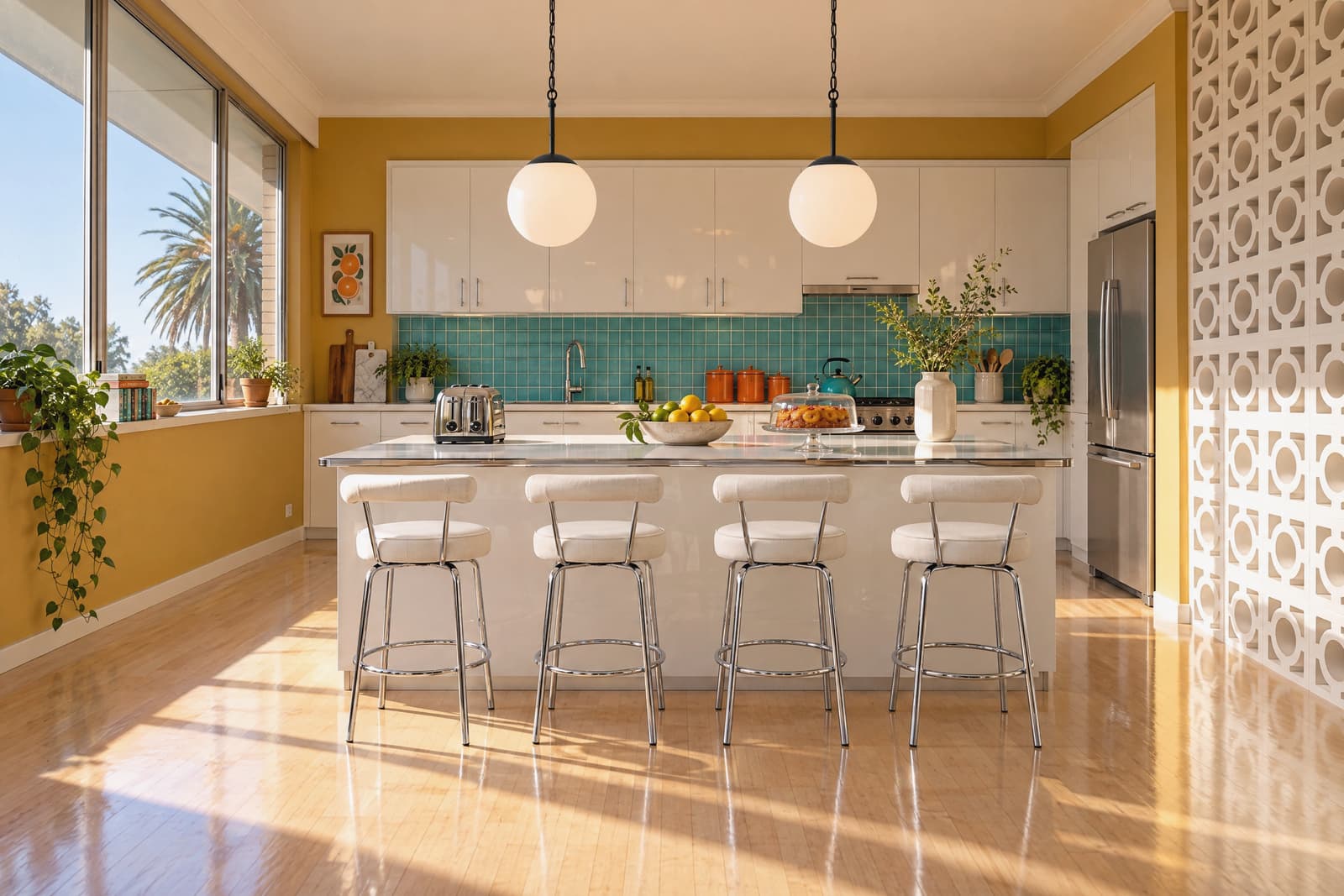
The retro kitchen shines. Glossy white cabinets with chrome bar handles, a white counter edged in chrome and a splashback of small turquoise tiles set the scene. Line the island with chrome counter stools with cream upholstered seats and curved backs, and hang two frosted glass globe pendants above it. A chrome toaster and a row of orange enamel canisters on the counter finish the look.
Retro Dining Room
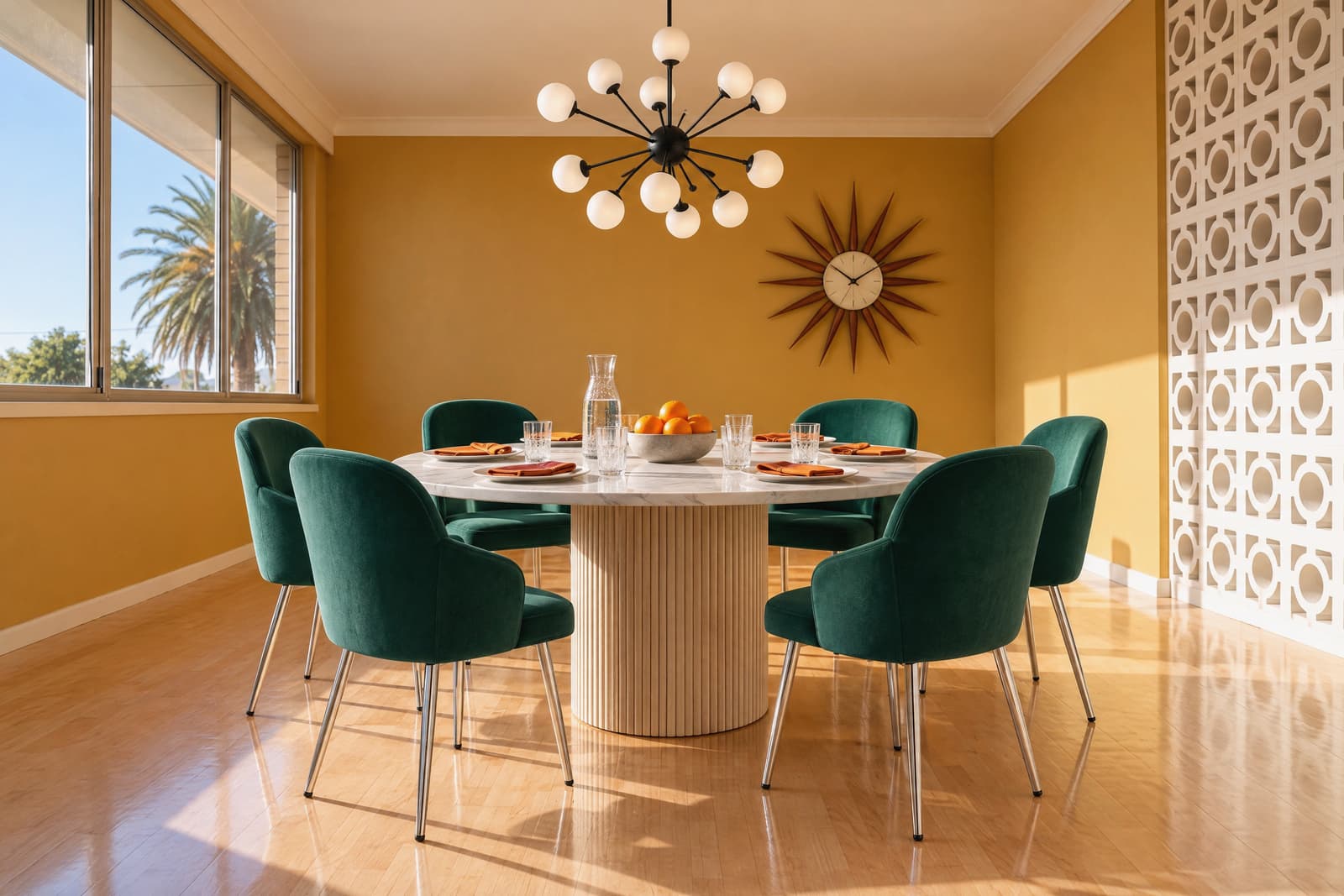
A round table seats six most comfortably in a retro dining room: at 54 inches across, six chairs fit around it with room for elbows. Choose a white top on a single pedestal base, and set six velvet chairs on chrome legs around it, green or teal against mustard walls. An atomic chandelier of frosted glass globes overhead brings the room together. Set it with white plates and orange napkins.
Retro Home Bar
Retro bar stools are where most people start, and a pair of them is all a home bar needs. Teal swivel stools at a white counter with a chrome edge set the tone. Add a chrome bar cart with glass shelves for the bottles and the soda siphon, and hang a gold sputnik chandelier above. Put out a cocktail shaker and two coupes.
Retro Bedroom
A retro bedroom keeps the same palette at a calmer pitch. A low upholstered bed in a warm color, a pair of nightstands with globe or mushroom lamps, and a sunburst mirror above a chest of drawers carry it. Use the strongest color on the bedding or a single chair, and keep the walls warm.
Retro Bathroom
The retro bathroom is about tile. Pastel or turquoise wall tile, a white vanity with chrome fittings and a round mirror give the look, and a globe sconce on each side of the mirror adds the period lighting. Keep towels in one of the accent colors.
Retro Home Office
A retro home office pairs a simple desk on slim legs with a swivel task chair in a strong color, orange or mustard on a chrome base. A globe or mushroom lamp on the desk and a starburst clock above it carry the period, and a teal or white bookcase keeps the books in view.
Retro Patio
Retro patio furniture is about color and metal. Painted steel chairs in orange, yellow or turquoise around a small round table set the look, and a striped cushion or an umbrella in a matching color finishes it. Breeze block, a palm in a pot and a pitcher of lemonade complete the scene.
Keeping Retro Fresh
Retro goes wrong when it turns into a theme. Three habits keep it livable:
- Two strong colors, then stop. Teal and orange against mustard is a scheme; every color at once is a costume.
- Let one period piece speak. One starburst clock or one sputnik light per room reads as retro; a wall of memorabilia reads as a diner.
- Mix in comfort. Velvet, deep seats and a soft rug keep a glossy room warm enough to sit in.
Materials and Furniture
Look for chrome that is plated over steel, which keeps its shine and resists rust. On glass tops, tempered glass is the safe choice for a coffee or dining table that will see daily use.
For upholstery, velvet gives the saturated color that defines the style and holds it well; performance velvet resists stains on dining chairs and stools. A glossy floor shows every mark, so a round rug under the coffee table and felt pads on chair legs are practical additions.
Where to Start
- Pick your two colors: one cool, one warm, against a warm wall.
- Start with one statement seat: a velvet sofa or a pair of bar stools.
- Add chrome and glass: a coffee table, a bar cart or the legs of the dining chairs.
- Hang one atomic light: a sputnik, a globe cluster or an arc lamp.
- Finish with a starburst clock.
If you prefer to start from a finished room, every room in our retro collection is put together and priced, starting with the retro living room, so you can see what the whole look costs before committing to any one piece.
See every room in the Retro hub.
Not sure where to start?
Quick choices between rooms, a few questions about your home, and a finished room for each room you want to furnish, every piece priced. A few minutes.
Start your home profile