
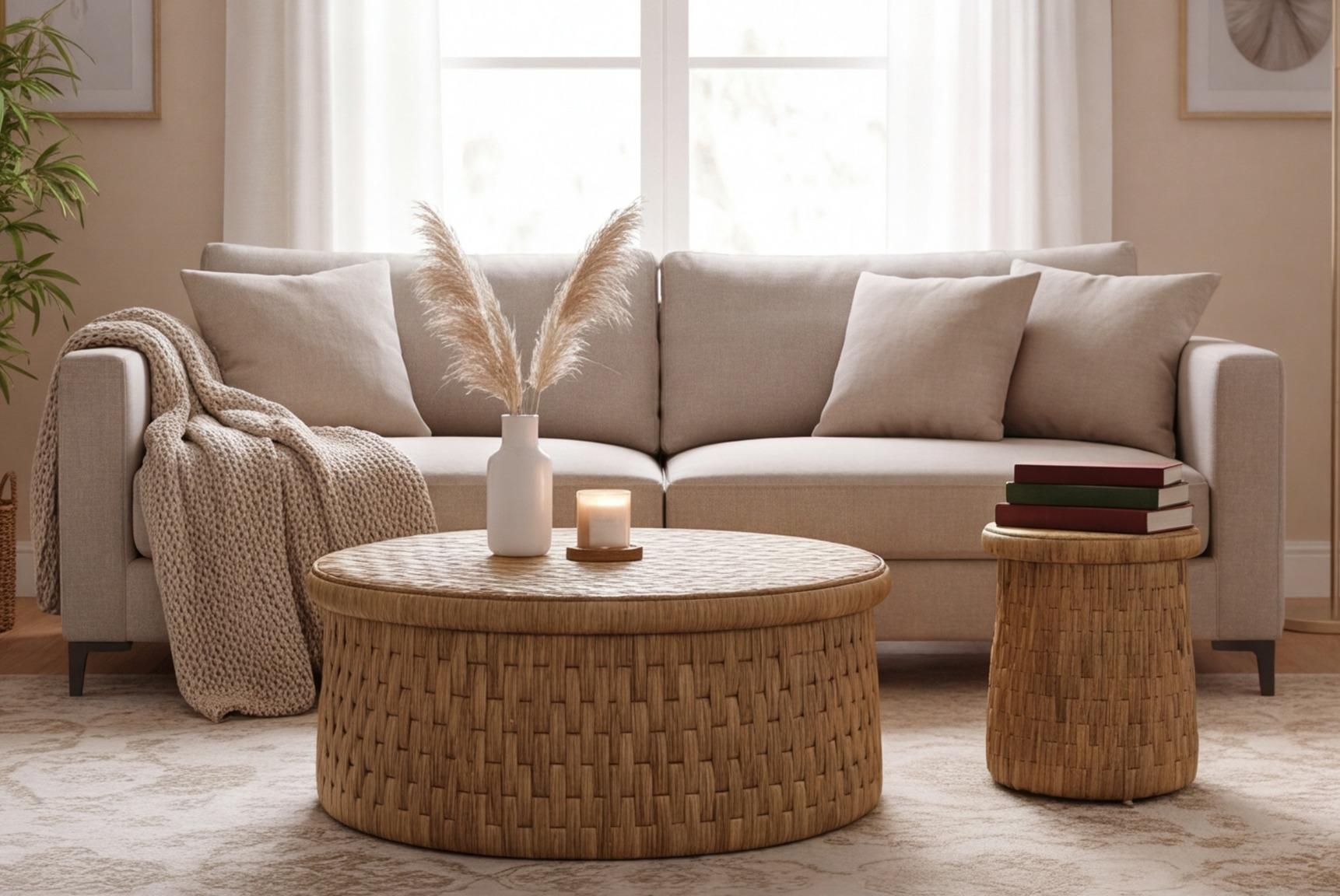
Organic modern interior design is a warm, natural-material take on modern rooms, and the materials that work depend on where you live. This guide defines the style, compares it with similar ones, ranks what to buy first, adapts it to difficult spaces, and shows how to keep it from going bland.
What Organic Modern Looks Like, and How It Differs from Japandi, Warm Minimalism and Wabi-Sabi
Organic modern is a style built from natural materials, soft curves, a muted palette and clean lines. If someone asks what this style is called when a room looks like pale oak, plaster walls and a rounded sofa, the answer is organic modern. It is popular with professionals too: 58% popularity for organic and natural design in the NKBA 2026 Kitchen Trends Report, according to Easy Room AI.
The Core Traits to Look For
Four traits repeat in nearly every organic modern room. Materials come from nature: wood, stone, linen, wool, clay. Shapes are rounded, from arched mirrors to curved sofas.
The palette is earthy and quiet, with rust, chocolate brown and mushroom tones among the common choices. Lines stay clean, which is where the modern half of the name comes from, and a little mid-century influence in tapered legs or low profiles fits comfortably.
Telling It Apart from Neighboring Styles
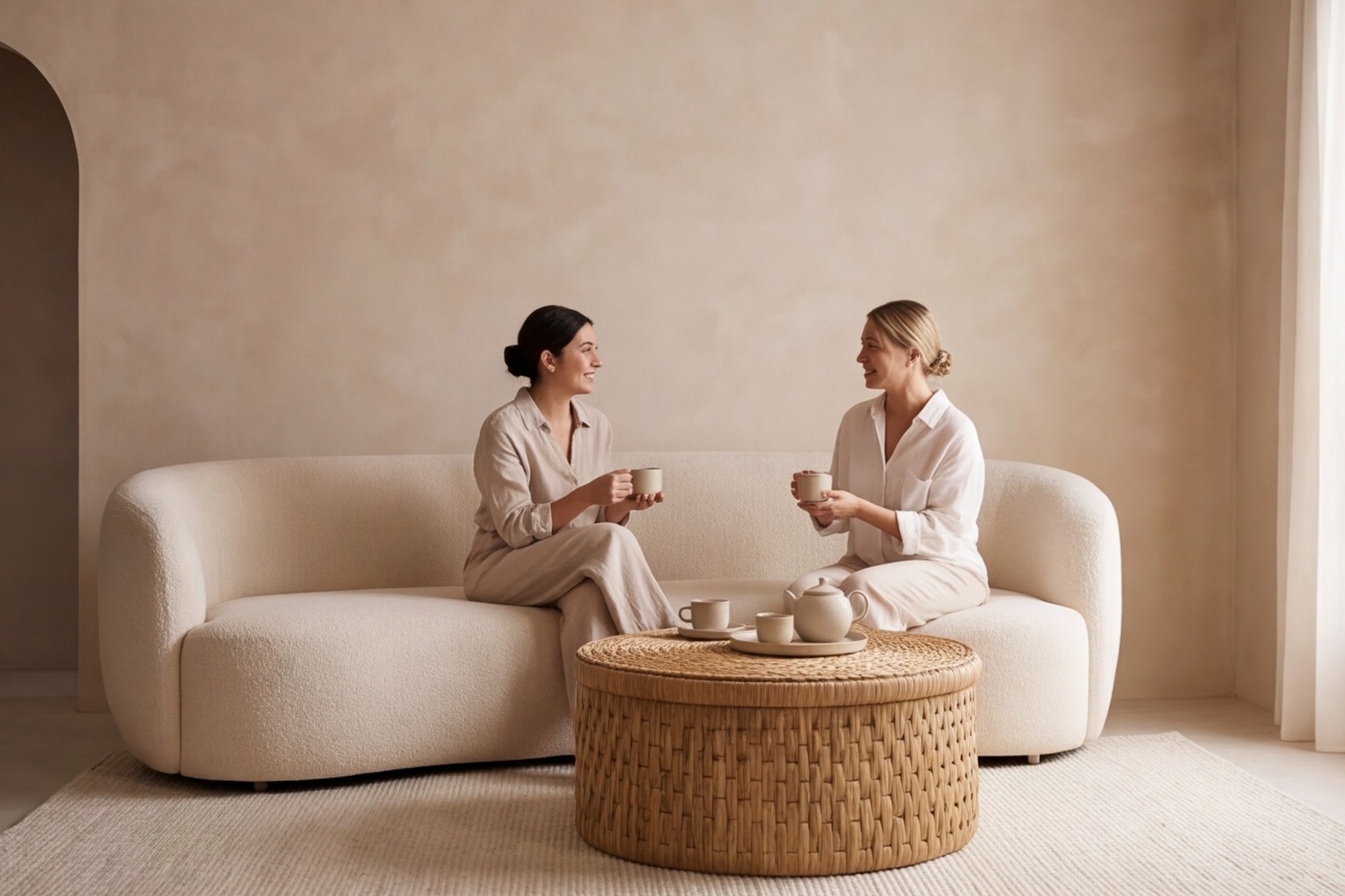
Adjacent styles share a calm mood, so the differences are small but visible. Use this list as a quick check:
|
Style |
Feels like |
Visual tell |
|---|---|---|
|
Organic modern |
Warm, soft, tactile |
Curved furniture, textured fabrics, plaster or limewash walls |
|
Japandi |
Calm, structured, philosophical |
Low straight-lined furniture, tight edit, dark wood accents |
|
Warm minimalism |
Pared back with softer neutrals |
Few objects, little pattern, minimal decor |
|
Wabi-sabi |
Imperfect, aged, humble |
Cracked glaze, uneven surfaces, visible wear as the point |
The JJones Design Co description puts it well: organic modern is a modern home with organic heart, while Japandi is a minimalist home with soul, per JJones Design Co. Organic modern allows more curves, more layered texture and more objects than the others.
Five Materials That Define the Style and How They Hold Up with Kids and Pets
The five defining materials are white oak, limewash, travertine, boucle and linen. Each ages differently, and your local climate decides which will look good longest. Humidity, UV exposure and coastal salt air all change how natural materials behave, so treat material choice as a climate decision before an aesthetic one.
Stone and Plaster: Let Them Breathe
Travertine is a porous stone with soft pitting. In humid coastal areas, Sarah Z Designs reports that tumbled travertine and honed limestone perform better because they let ambient moisture evaporate rather than trapping it beneath a synthetic seal. Authentic lime plasters also act as natural humidity regulators in that same report.
Limewash is a mineral paint that gives walls a cloudy, suede-like finish. It costs $2 to $8 per square foot installed, with most homeowners spending $4 to $6, and it contains zero VOCs, according to O'Connor Painting LLC. It scuffs more easily than standard paint, so use it on walls that kids' hands and pet shoulders do not brush daily.
Wood and Fabric: Where Kids and Pets Test Them
White oak is the workhorse. NKBA data show it as the most popular wood species at 51%, with wood-grain cabinetry overtaking painted cabinets at 59%, per Easyroomai. A matte, oiled finish hides scratches from claws and toy trucks better than a glossy one, and it can be lightly sanded and re-oiled. In very dry desert or heated cold-climate homes, solid wood moves with the seasons, so expect tiny gaps at joints.
Choose materials for your climate and household first, and let looks follow; the right finish forgives claws, toy trucks and humid air.
Boucle is a looped, nubby fabric. It looks soft but snags on claws, and pulled loops are hard to fix. If you have a cat, choose a tight-loop weave or use boucle on an accent chair rather than the main sofa. Linen wrinkles and softens with washing, handles sun well, and is forgiving of stains when it is a washable, slipcovered style.
A Quick Check That It Is Genuinely Natural
Some pieces only look organic. Zero and low VOC finishes are now a baseline for quality projects, as Sara Mosele Design notes. Run through these checks before buying:
- Ask for the fiber content. Linen, wool and cotton should be listed, not just polyester described as linen-look.
- Look at the wood end grain or an underside. Solid wood shows continuous grain, while veneer or printed laminate repeats a pattern.
- Ask what the finish is and request low-VOC documentation for paint, sealants and glues.
- Smell it. A strong chemical odor out of the box suggests off-gassing finishes.
Which Rooms to Furnish First and Where to Spend or Save
Furnish the living room and bedroom first, because they carry daily life and sleep. Within each, spend on pieces you touch every day and save on pieces you can change later. This order protects a first-time buyer's budget from being spread across rooms that can wait.
The Order That Keeps You from Overspending
- Bedroom: a good bed frame and mattress. Sleep comes before style.
- Living room: the sofa, then the rug, then one or two side tables.
- Dining area: a table that can double as a work surface.
- Everything else: add as the budget and timeline allow.
Rooms like a bathroom or a corner bar are lower priority. Once the main rooms are settled, our organic modern bathroom shows how few pieces can carry a small room.
Spend on Anchors, Save on Accents
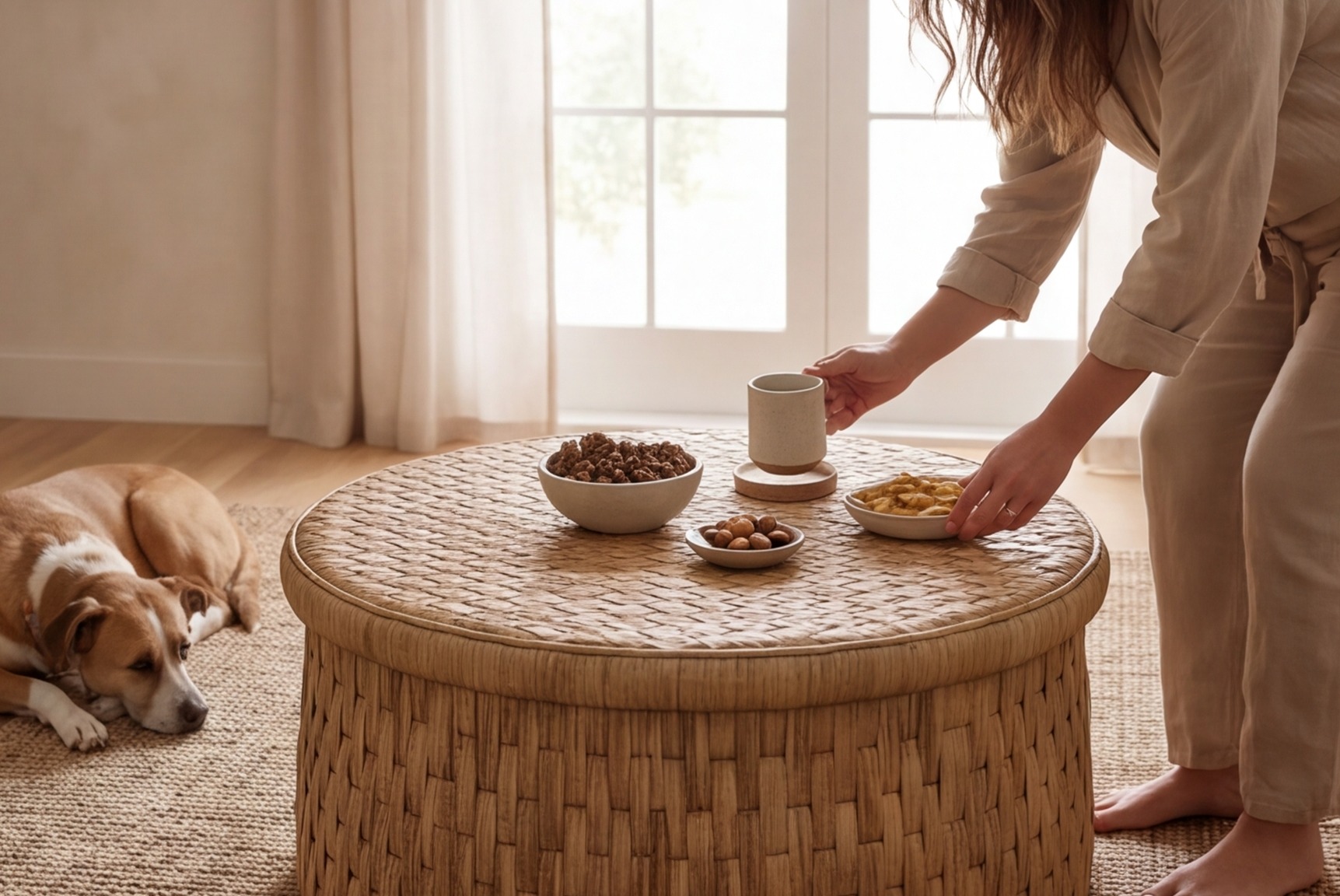
Anchor pieces are the large items that set the shape of the room and get used daily. Spend on the sofa frame, the bed, the dining table and the rug, because wear shows there first. A solid oak table or a well-built sofa with removable covers will outlast several accent refreshes.
Save on vases, throw pillows, lamps, baskets and wall art. These are easy to swap as your taste sharpens, and secondhand ceramics or handmade pieces from local makers often look better than new ones.
Renter-Friendly and Lower-Budget Routes
Organic modern does not need a big budget or permission from a landlord. Swap in linen curtains, a wool or jute rug, plug-in sconces with paper shades and a few large plants. A peel-and-stick textured wall panel or a limewash-look paint can add depth where painting is allowed, and a single curved piece, such as a round side table, gives the shape of the style for little money.
Building Organic Modern Interior Design in Small, Dark or Builder-Grade Spaces
Organic modern interior design works in difficult homes when you scale furniture to the room, choose textures that bounce light, and work around fixed features rather than fighting them. The soft shapes and warm neutrals suit awkward layouts better than harsh minimalism does.
Small Apartments
Choose fewer, lower pieces so walls and sightlines stay open. A curved sofa with exposed legs shows floor underneath and feels lighter than a skirted one. Use one large rug rather than several small ones, and let a round table replace a rectangular one where traffic is tight.
Low-Light Rooms
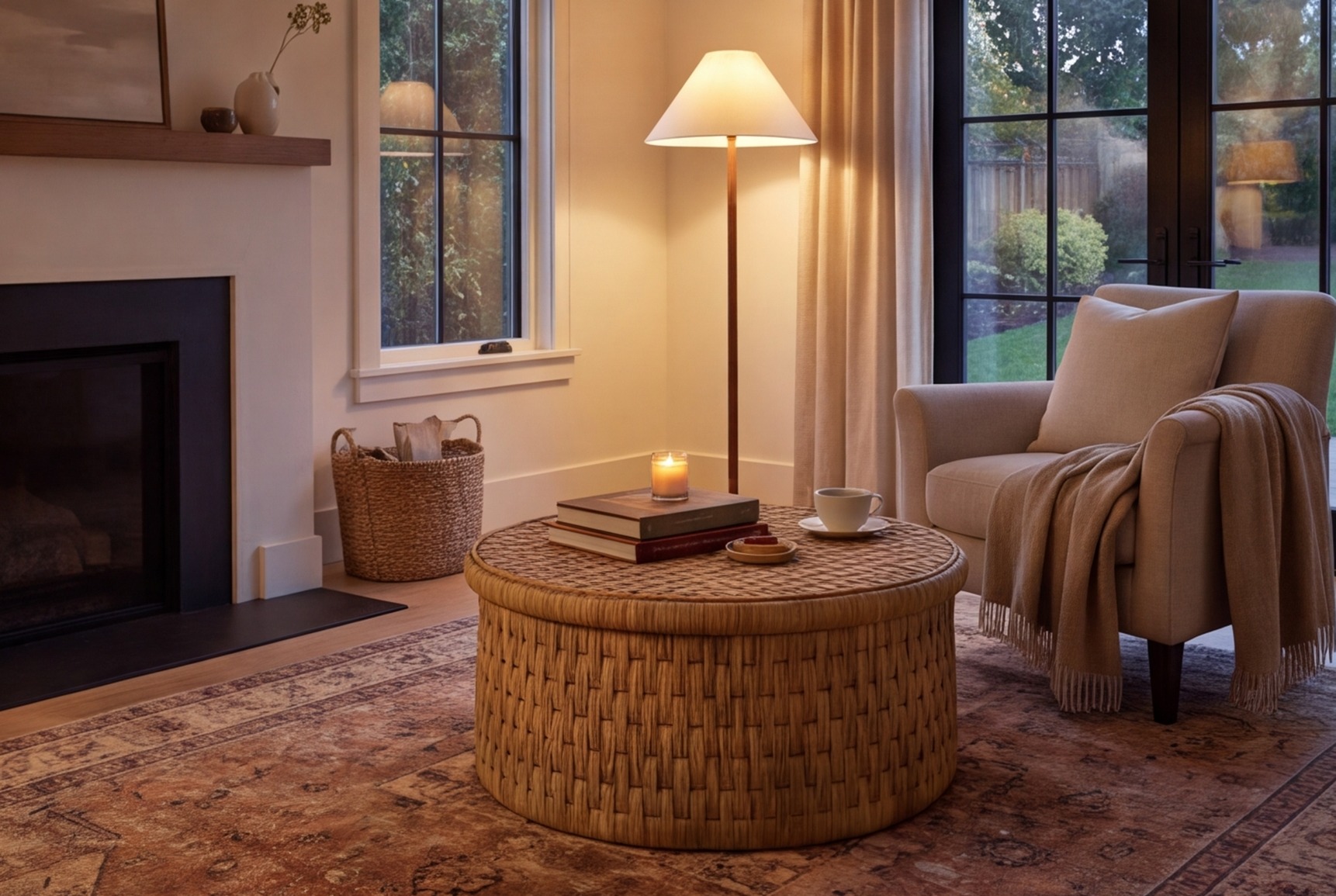
Dark rooms need texture that catches light. Pale limewash, off-white linen, and a mirror with a thin wood frame bounce what daylight there is. Warm bulbs at different heights make a better evening glow than a single overhead fixture. Avoid heavy dark finishes on every surface, since they absorb the little light available.
Builder-Grade Interiors
Builder-grade means standard, inexpensive finishes: beige carpet, hollow doors, basic light fixtures. Work around what is costly to change: cover flooring with rugs, and update cabinets with natural-toned hardware. Replace what is cheap and visible: light fixtures, cabinet pulls and curtains.
How Climate Shifts the Choices
Region changes the palette as well as materials. Humid coasts suit breathable stone and lime finishes and lighter, sun-faded woods. Cold or low-sun regions can carry heavier wool, deeper rust and chocolate tones, and darker oak, since there is less glare. In strong sun, linen and solid-dyed wool resist fading better than many delicate fabrics.
Adding Contrast and Personality So the Room Doesn't Turn into a Beige Box
An organic modern room avoids bland by varying darkness, texture and one color, and by including objects that belong to you. A flat all-beige result comes from using the same tone and surface everywhere, so the fix is contrast within the same warm family.
Use a Simple Color Ratio
A 70/20/10 tonal split gives structure: a 70% architectural neutral, a 20% grounding tone and 10% disruptive color, according to Visionary Abode. That same analysis notes that flat beige is disappearing as warm neutrals grow more complex, using oatmeal, clay, walnut and muted olive.
Beige alone goes flat; a few dark accents and varied textures give a calm room depth without losing its softness.
Layer Darkness and Texture
Add one or two dark anchors: a walnut side table, a dark iron lamp, or a charcoal-brown cushion. Mix surfaces within a single color family, such as smooth ceramic beside nubby boucle beside rough plaster. Designers quoted in Vogue's 2026 trends report say that the more digital our world becomes, the more valuable qualities like texture, variation, and imperfection feel, according to Vogue.
Make It Yours
Personal objects stop a room from looking like a catalog. Frame a drawing you love, display ceramics from a trip, or place a family chair with visible age beside newer pieces. Handcrafted items fit the style naturally because irregularity is part of its charm.
A Check Before You Buy More
Stand in the doorway of the finished room and look for these four things:
- One dark element near eye level.
- At least three different textures.
- One color beyond neutrals, even in a small amount.
- One object with a story.
If any are missing, add that before buying anything else. If you are unsure whether this style suits you at all, our free style quiz takes about three minutes and needs no account.