
Scandinavian Interior Design: Why It Looks That Way, and How to Do It
Scandinavian design is usually explained as a taste for white walls and pale wood. It is really a set of solutions to a light problem, and once you know which problem each element solves, the style stops being a look you copy and becomes a set of decisions you can make.
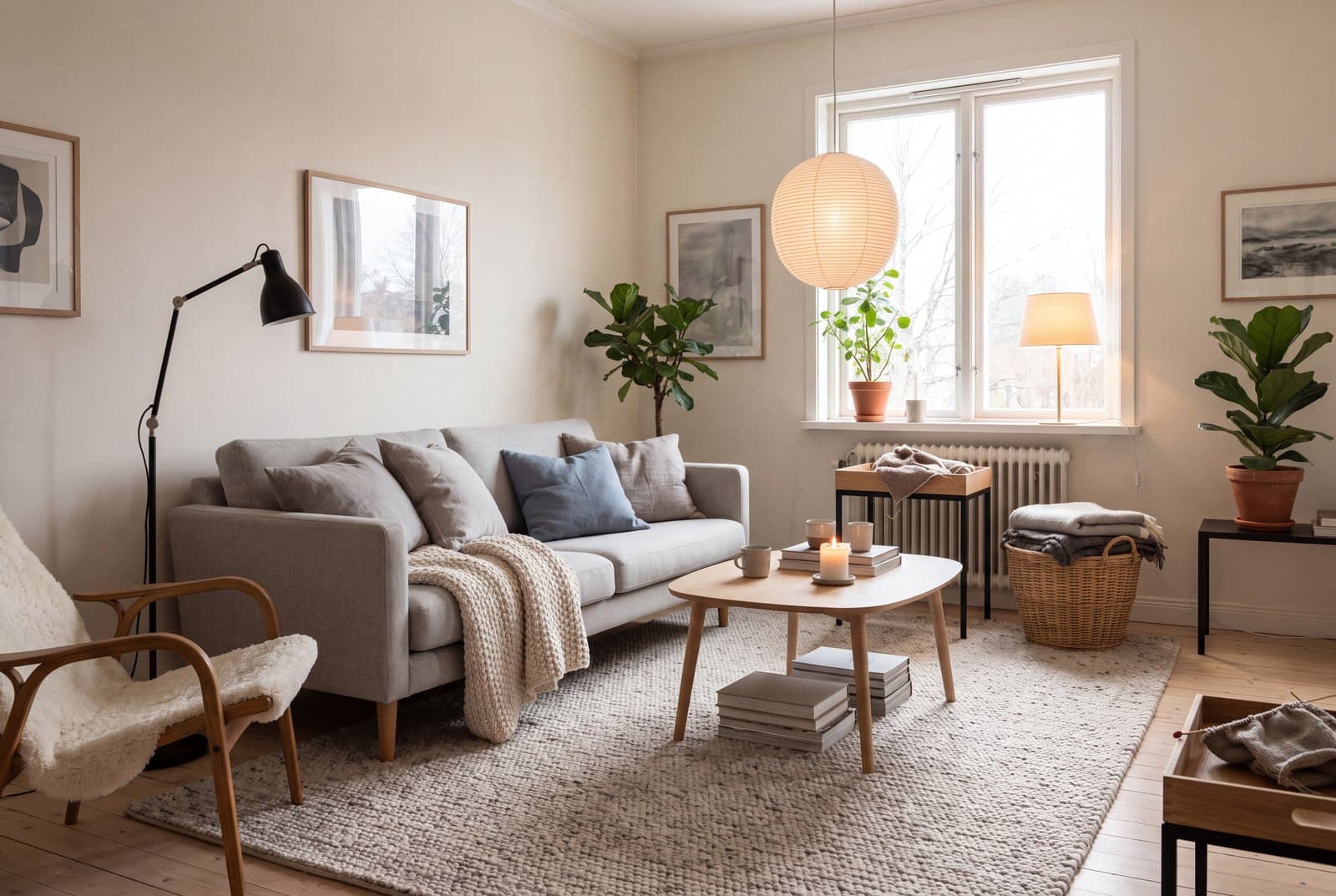
Scandinavian design is a set of answers to a light problem, and almost every explanation of it skips that fact and goes straight to the white walls.
The problem is latitude. Stockholm gets around six hours of daylight in December, and that daylight is weak and low-angled for months at a time. Every element people recognize as Scandinavian is a response to that: pale surfaces because they redistribute scarce light, big undressed windows because none of it can be wasted, light wood because it stays warm at low light levels, and a great many lamps because the room has to work for the eighteen hours when there is no sun at all.
Once you know which problem each element solves, you can apply the style deliberately instead of copying it, and you can tell which parts of it you actually need in a house that gets plenty of sun.
What Scandinavian Interior Design Is
Scandinavian interior design is a functionalist style from Denmark, Sweden, Norway, Finland and Iceland, characterized by light surfaces, natural materials, restrained decoration and a strong preference for objects that are useful as well as good-looking.
The characteristics people actually recognize:
- A pale, low-contrast base. White or off-white walls, pale wood floors, light textiles. The room has very little tonal drama.
- Natural materials with visible grain. Oak, ash, birch and pine, plus wool, linen, leather, cane and paper.
- Restrained but not empty. Fewer objects than a traditional room, but not the severe emptiness of true minimalism. There are books, plants, blankets and things in use.
- Function first. A chair that is uncomfortable is a failed chair regardless of how it looks. This is the actual ideological core, and it is inherited from mid century modern Danish furniture design rather than from any decorating trend.
- Layered low lighting. Multiple warm sources, almost never a single ceiling light.
Scandinavian, Nordic and Minimalist Are Not the Same Thing
These three get used interchangeably and it causes real confusion when shopping.
Scandinavian properly refers to Denmark, Sweden and Norway, and in design it usually means the mid-century-descended tradition: warm woods, organic curves, craft, and a certain softness.
Nordic takes in Finland and Iceland as well, and in practice the label is used for a cooler, starker, more contemporary version: more concrete and stone, more black, fewer curves. If you find a room described as Nordic reads as harder than you wanted, this is why.
Scandinavian minimalism is a subset, not a synonym. Plenty of Scandinavian rooms are not minimalist at all; they are full of textiles, plants and books. The style shares minimalism's restraint about ornament but not its dislike of comfort or accumulation.
The style it is most often confused with is japandi, which is a genuine hybrid of this tradition and Japanese design. Japandi is lower, darker and more austere; Scandinavian is lighter and softer.
The Scandinavian Color Palette
The palette is narrow and mostly achromatic, which is what makes the wood and the textiles read so strongly.
The base is white or, better, a warm off-white. Pure brilliant white is a common mistake: it goes blue and clinical in weak northern light, which is the exact opposite of the intent. Choose whites with a hint of warmth in them.
The secondary range is soft gray, greige, and the pale sandy tones of untreated wood. Black appears, but as a graphic accent in small quantities: a lamp, a chair frame, window mullions, the legs of a table.
Color is used sparingly and usually muted: dusty blue, sage, ochre, soft terracotta, and the faded reds of traditional Nordic textiles. One or two of these, in textiles rather than on walls.
What is absent is as defining as what is present. There is no high-gloss anything, no strong contrast, and very little pattern beyond simple stripes, checks and folk-derived geometrics.
Light, Which Is the Actual Subject
If you do only one thing from this page, do this one, because it is the element most often left out of Scandinavian rooms outside Scandinavia.
Scandinavian homes use many small warm light sources rather than one bright overhead. Three to five per room is normal: a floor lamp by the seating, a table lamp on a side table, something low on a shelf, a pendant over the table hung lower than you would expect, and candles.
The bulbs are warm, around 2700K, and often dimmed. The effect is a room with pools of light in it rather than an evenly lit box, and that unevenness is the point. It is the same principle that produces hygge, which is the Danish concept most directly connected to this style.
Then the windows, which are treated almost the opposite way to most countries. Curtains are light and unlined where they exist at all, and often there are none. Sills are kept clear or hold a plant and a lamp rather than being packed. Nothing blocks the glass, because the daylight is too scarce to spend on decoration.
Scandinavian Living Room
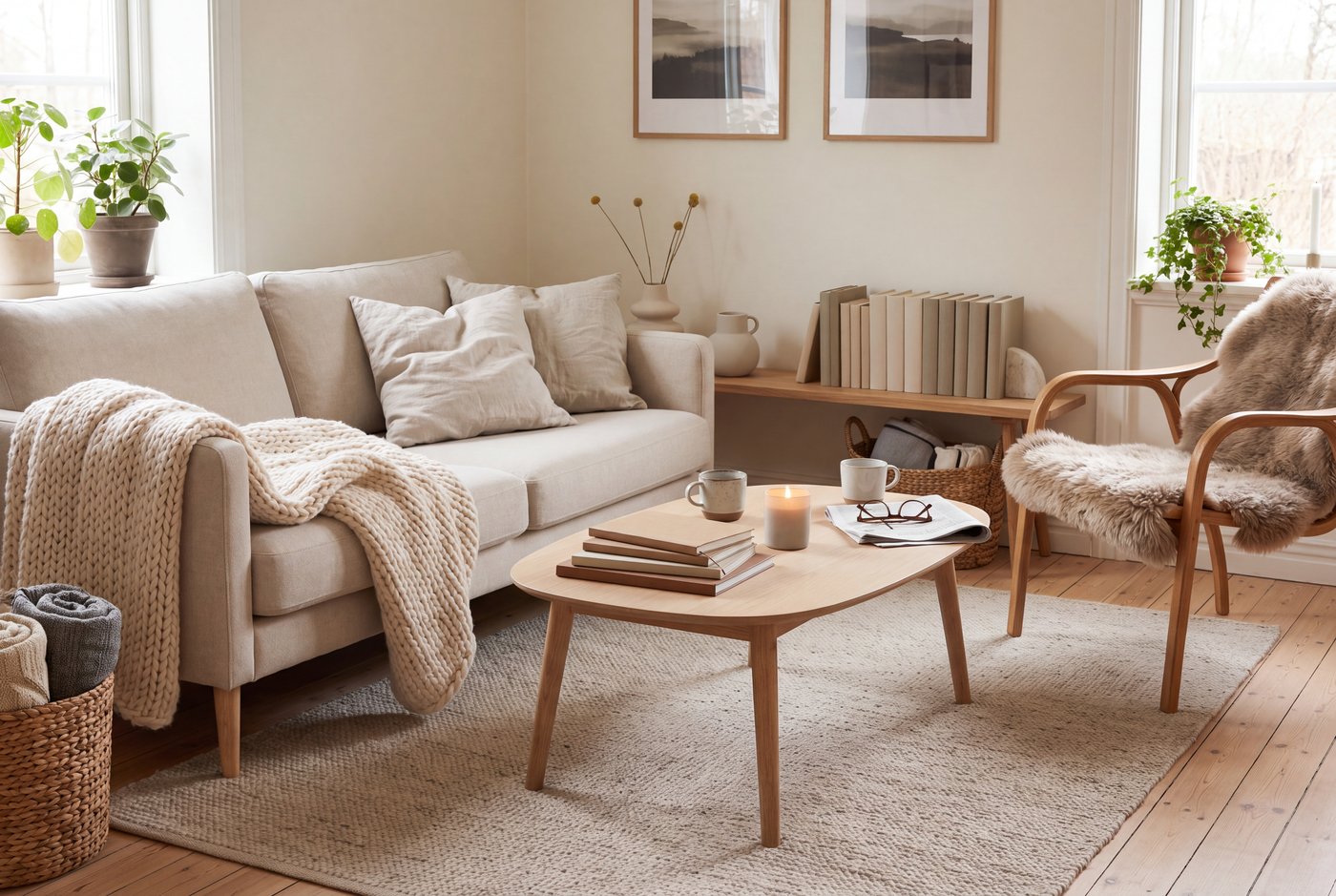
The living room is built around one large light-toned upholstered piece and a lot of natural texture.
The sofa should be simple in shape with visible legs, upholstered in wool, linen or a pale leather. Raised legs matter more than they sound: they let light travel under the furniture and keep the room feeling open, and heavy skirted upholstery is one of the fastest ways to break the look.
Add a wooden chair with character, a bentwood or a spindle-backed piece, and drape a sheepskin over it. Then a pale wood coffee table with rounded edges, a wool or jute rug that leaves a border of floor visible, and a low shelf rather than a tall bookcase.
Texture does the work that color would do in another style: a chunky knit throw, linen cushions, a wool rug, a woven basket for logs or blankets, and two or three plants. Without those the room reads as bare rather than serene, and that gap is the single most common failure.
Keep the walls mostly clear with one or two pieces of restrained art, and hang them at eye level rather than in a cluster.
Scandinavian Bedroom
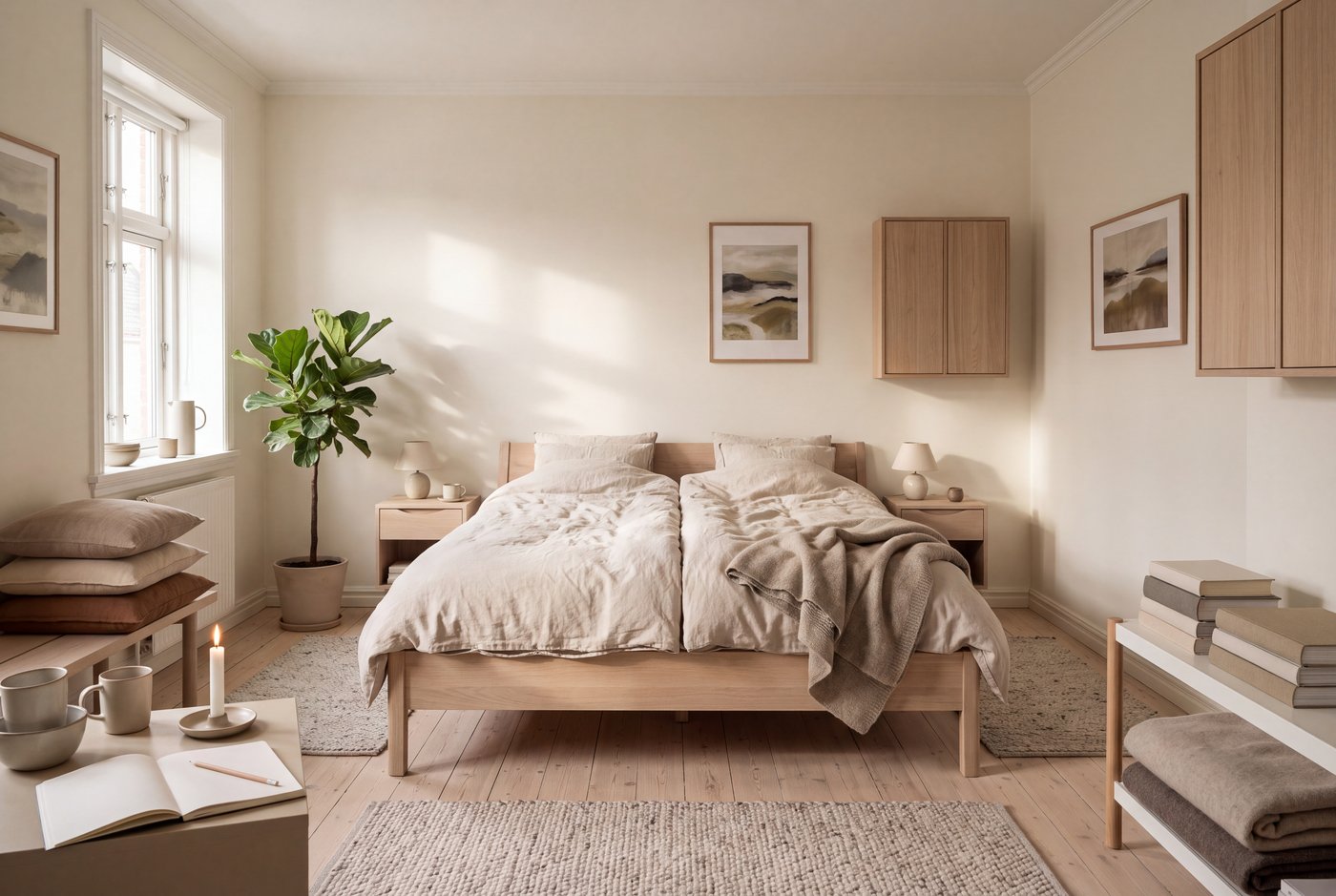
The bedroom is the simplest room in the style and the hardest to overdo.
A low wooden bed frame in pale oak or ash, or a simple upholstered one in a light neutral. White or oatmeal linen bedding, deliberately rumpled rather than pressed, layered with a wool blanket folded across the foot and one or two cushions. The Nordic convention of two single duvets on a double bed is worth knowing about and is genuinely more comfortable than it sounds.
Pale wood nightstands, a lamp on each side, a wool rug beside the bed so the first step is warm. A single plant.
Keep the storage closed. Visible clutter breaks a pale low-contrast room faster than it breaks a busy one, because there is nothing else for the eye to look at.
Scandinavian Kitchen
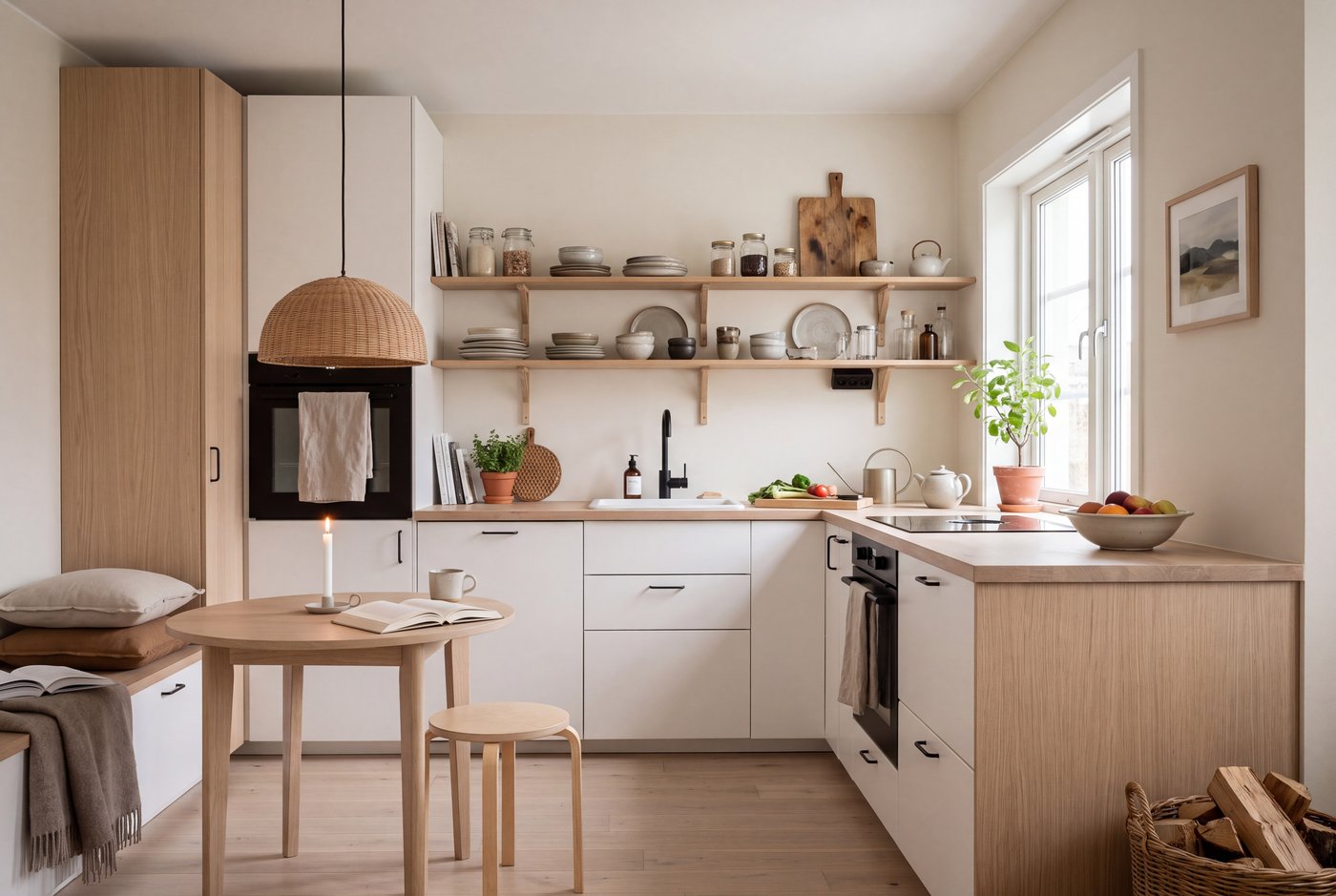
The Scandinavian kitchen is flat-fronted, light and largely undecorated.
Handleless or simply-handled cabinets in white, pale gray or light wood, with a wooden or pale stone countertop. Open shelving in small quantities holding things in daily use rather than a display: stoneware, glass, a wooden board.
Black or brushed steel fixtures as the graphic accent. A pendant over the table hung low. A wooden stool, a linen towel, a plant on the sill and a bowl of fruit.
The one thing that distinguishes it from a generic modern kitchen is warmth of material. A wooden countertop, a wooden chopping board and a wooden-handled utensil rack in an otherwise white kitchen do more than any decorative object would.
Scandinavian Bathroom
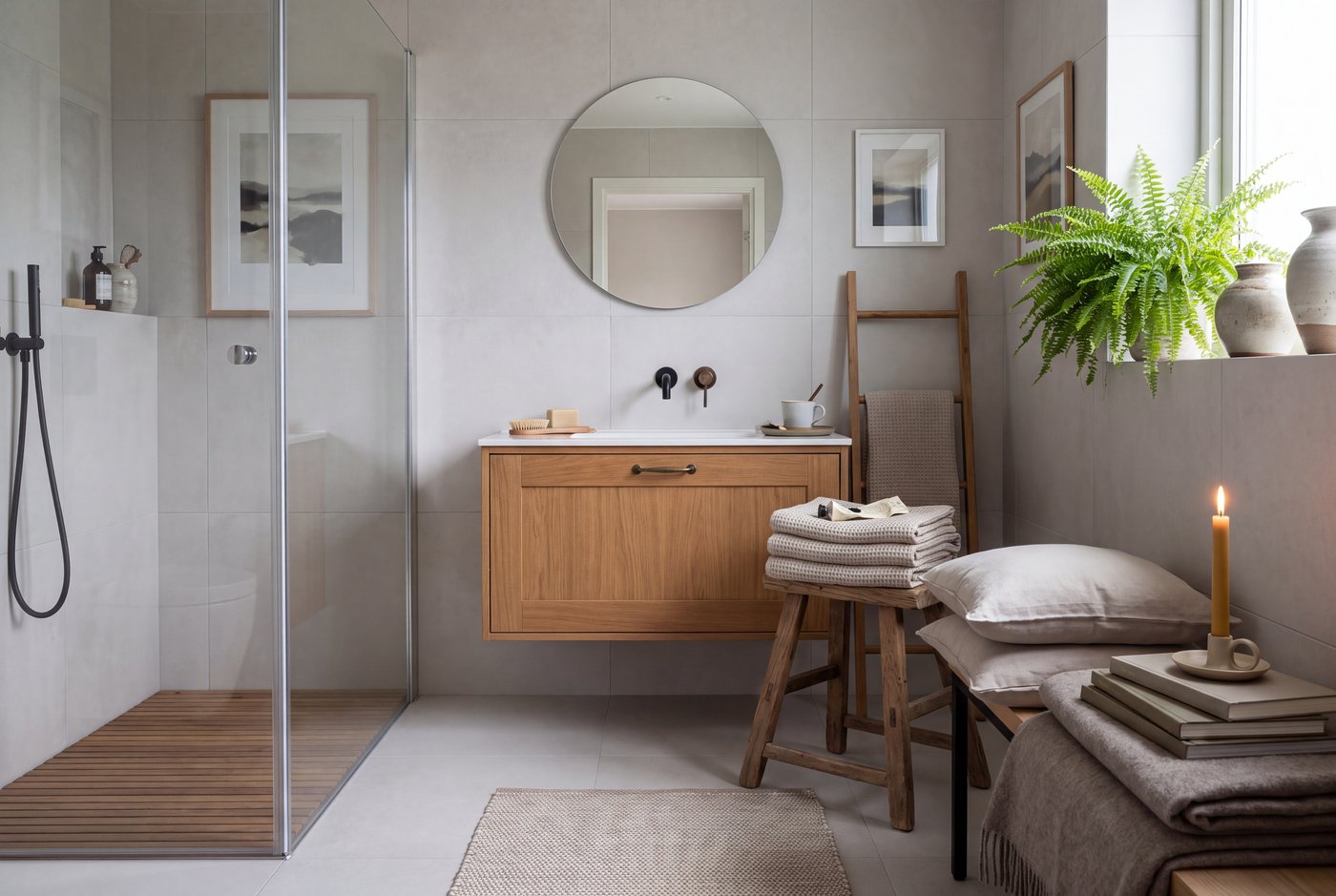
The bathroom follows the same rules with more tile.
Large-format white or pale gray tile, or microcement, with a wooden vanity to keep it from going cold. A round mirror, black or steel fittings, and a teak duckboard or a wooden stool.
Then the textiles, which are what stop it reading as a hotel: waffle-weave or linen towels in oatmeal or gray on an open shelf or a wooden ladder, and a cotton rug rather than a bath mat. A plant that tolerates humidity.
Warm and Cozy Scandinavian
The most common criticism of this style is that it looks cold, and it is a fair criticism of the version that gets photographed for furniture catalogs. The fix is well established.
Warm Scandinavian interior design keeps the structure and changes three things. First, the whites go warm: creams, oatmeals and bone rather than brilliant white. Second, the wood goes warmer and darker: oak with a natural oil finish, or walnut in small quantities, rather than white-washed pine. Third, and most importantly, the quantity of textile goes up substantially. Sheepskins, chunky wool, layered rugs, heavy linen curtains.
Add candles and lamplight and you have essentially arrived at hygge, which is what the cozy end of this style is properly called.
If your room gets plenty of sun, you should be doing this version rather than the bright one. The pale-and-spare original is solving a problem you do not have.
Dark Scandinavian
The dark variant is less known and works extremely well in rooms that were never going to be bright.
It keeps the shapes, the materials and the restraint and inverts the value range: charcoal, deep green or black walls, with the same pale wood floors, the same simple furniture and the same textile layering. The wood and the wool now read as light against a dark ground rather than the other way round.
This is the version to use in a north-facing room, a basement, or a room with one small window. Fighting a dark room with white paint produces something that looks washed out and slightly grim; leaning into it produces a room that feels deliberate.
Keep the lighting discipline exactly the same. A dark Scandinavian room with one overhead light is just a dark room.
Rustic and Cabin Scandinavian
The rustic version draws on the traditional Nordic cabin rather than on the urban apartment, and it is the oldest strand of the style.
Visible timber, either as plank walls or exposed beams, often painted a chalky white or left raw. Heavier, simpler furniture. More folk pattern in the textiles, particularly checks and geometric weaves. Cast iron, enamelware and a wood stove.
It sits close to cottagecore in feeling but is far more restrained in ornament: the same warmth and age, with a fraction of the decoration.
Furniture and Materials
Scandinavian furniture is the one area where buying new is genuinely defensible, because the tradition is a manufacturing one and good contemporary pieces are widely available.
What to look for: solid pale wood with visible grain, tapered or splayed legs, rounded edges rather than sharp ones, and upholstery in natural fiber. Shapes should be simple but not severe, and there should be some organic curve somewhere in the room.
The materials that carry the style: oak, ash and birch; wool in quantity; linen; leather that will patina; cane and rattan; paper, particularly in lamp shades; and sheepskin.
What to avoid: high-gloss finishes, veneer with a printed grain, chrome, and anything heavily ornamented. Also avoid buying a complete matching set, which produces a showroom rather than a room.
Secondhand mid-century Danish and Swedish furniture is the highest-value purchase available in this style if you can find it, because the design quality is exceptional and the pieces were built to last.
Scandinavian Design in a Rental
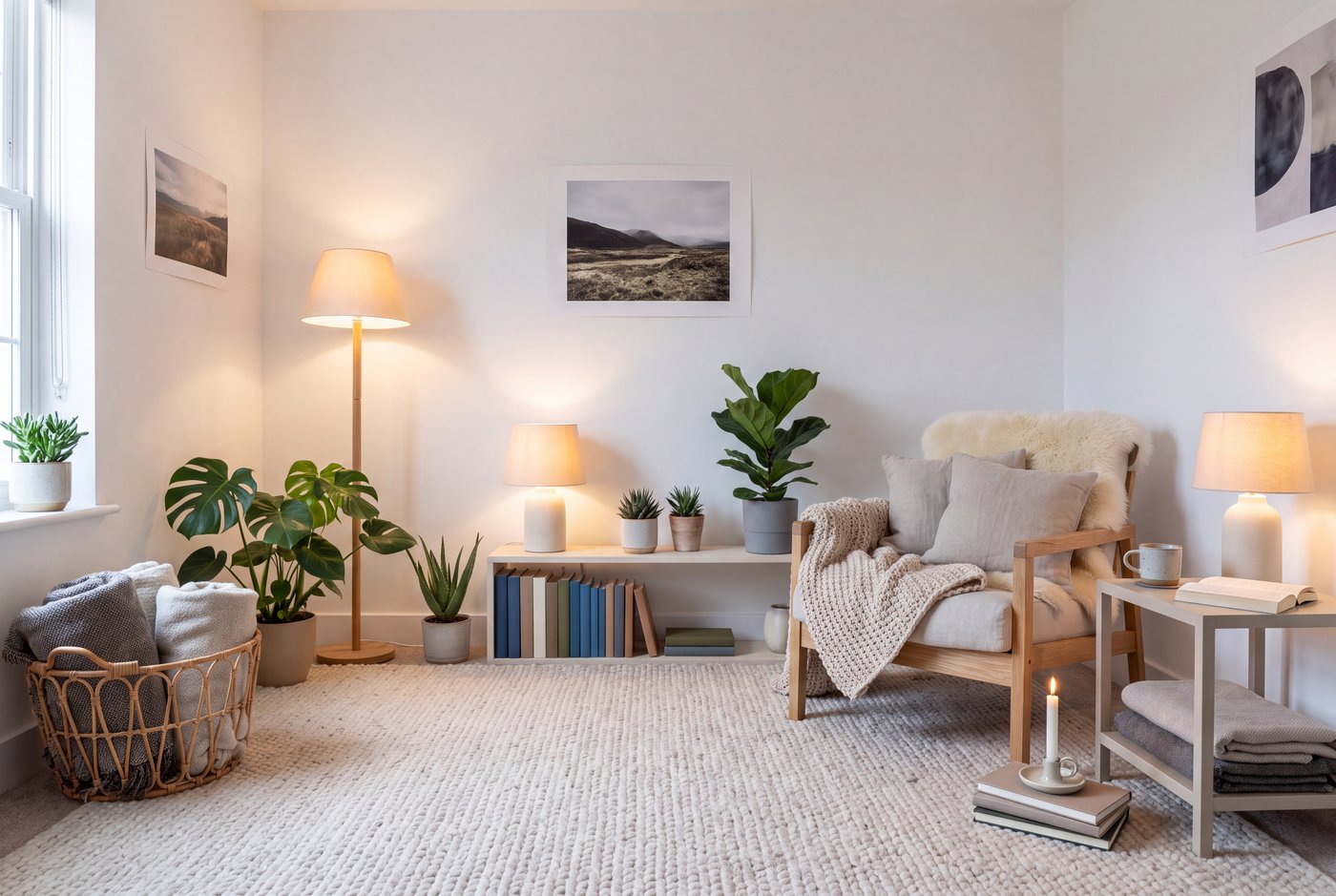
This style transfers to a rental better than almost any other, because most of what defines it is portable.
You probably already have white walls, which is the expensive part. What is missing is warmth and light, and both are portable: three lamps with warm bulbs, a wool rug, a sheepskin, linen bedding, a chunky throw, two plants and a woven basket will convert a bare rental room more completely than paint would.
If the flooring is bad, a large pale rug is the single highest-value purchase. If the overhead light is harsh, stop using it entirely and rely on lamps, which is what the style does anyway.
Where to Start
Start with light, because it is the thing the style is actually about and the thing most often skipped. Put three warm lamps at different heights in the room you use most and stop using the ceiling light for a week.
Then add texture before you subtract objects. Most rooms that are trying to be Scandinavian and failing are not too full, they are too flat: they have the pale palette but none of the wool, sheepskin, linen and wood that is supposed to make it warm.
Scandinavian is one of the six defined profiles in our style quiz, which takes about three minutes and returns a palette, a material direction and reference rooms you can hold a real piece of furniture up against. If you want this restraint with a darker, lower and more austere character, look at japandi; if you want it warmer and lower-lit, hygge is the same tradition pushed toward atmosphere.
Not sure where to start?
Take the style quiz and get a design profile you can actually furnish against. About three minutes.
Take the Find Your Room