
Organic Modern Interior Design, Explained Room by Room
Organic modern keeps modern architecture's clean lines and replaces its hard edges with curves, warm neutrals and natural material. Here is what defines it, and how it lands in each room.
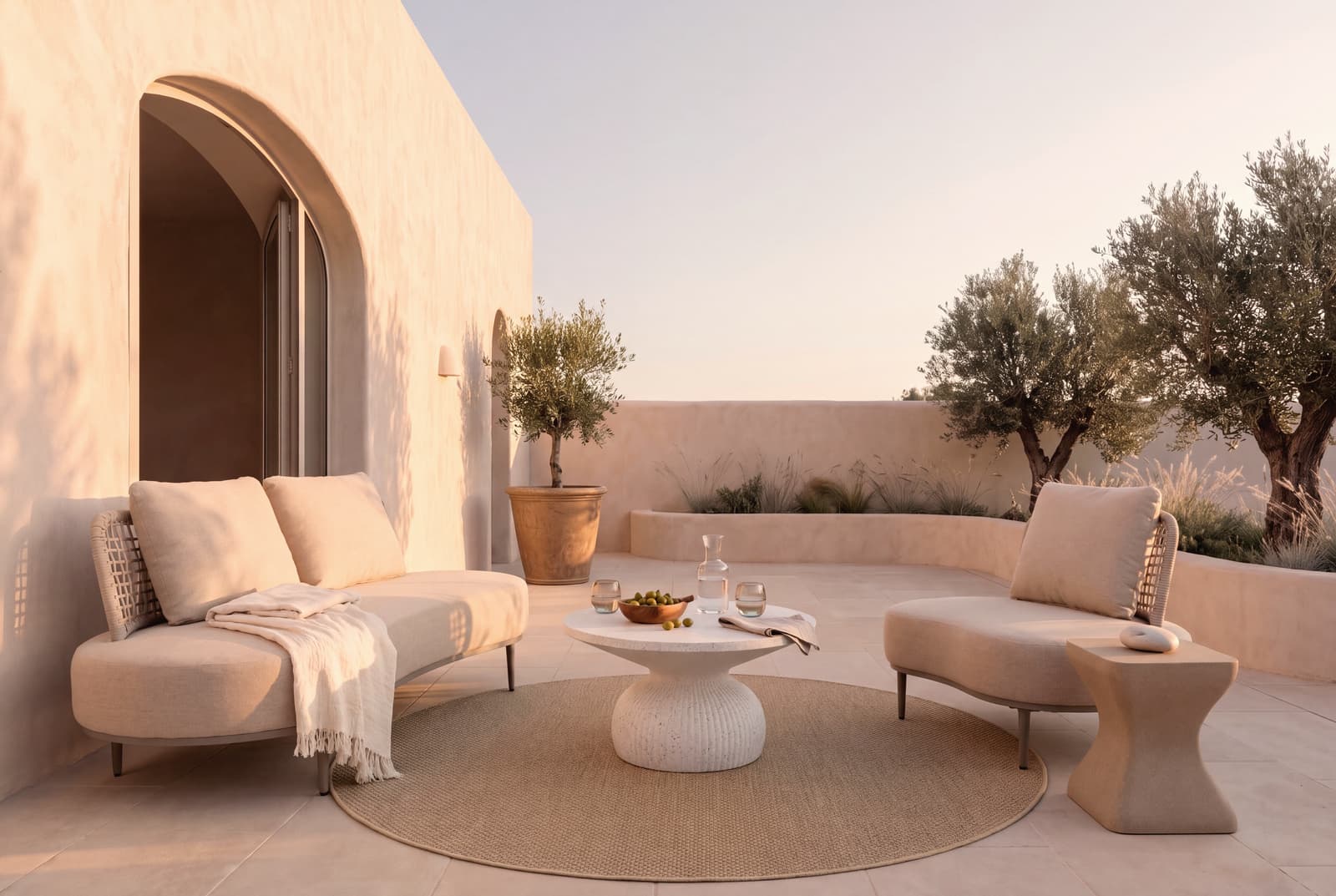
Hover or tap a dot to see what it is. See the full room, priced →
Organic modern is what modern design looks like once it stops being afraid of curves.
The bones are still modern: open plan, clean lines, no ornament, large windows, a restrained palette. What changes is everything at the surface. Straight edges soften into arcs. Glass and chrome give way to plaster, oak, travertine and bouclé. The cool gray of 2015 becomes warm sand and clay. The result is a style that photographs like a modern house and feels like a warm one, which is why it has spread so quickly.
It is also the most commercially available style on this list. Almost every mid-market furniture retailer now sells organic modern shapes, which makes it easy to furnish and easy to overdo.
What Organic Modern Style Is
Organic modern is a contemporary style that pairs modern architectural forms with natural materials, curved silhouettes and a warm neutral palette.
The word "organic" is doing two jobs, and separating them helps.
Organic as in material. Real wood, stone, plaster, wool, linen, jute, rattan, clay. Materials that came from something rather than being formulated. Visible grain, visible veining, visible weave.
Organic as in form. Curved and irregular shapes taken from nature rather than from geometry. Arched doorways, rounded sofa arms, a coffee table that is a soft blob rather than a rectangle, a lamp shaped like a river stone.
Modern organic style needs both. Natural materials in strictly rectilinear forms give you something closer to Japandi. Curved forms in synthetic materials give you a retro-futurist look that is a different thing entirely.
The Five Elements That Do the Work
1. A warm neutral palette, layered in tones rather than colors. Sand, oatmeal, bone, camel, clay, taupe, warm white, with a darker anchor in walnut, bronze or charcoal. Almost no saturated color. The interest comes from the tonal range, so use four or five neutrals rather than one.
2. Curves in the large objects, not just the small ones. A rounded sofa, an arched mirror, a curved-back dining chair, a plaster arch. Adding only curved accessories to a room of rectangles does not read as organic modern; it reads as a room with some round things in it.
3. Texture as the substitute for pattern. Bouclé, plaster, unfilled travertine, chunky wool, linen, oak grain, cane. There is essentially no pattern in this style, so texture carries all of the visual interest and there has to be enough of it.
4. Scale, deliberately large. Organic modern is not a small style. One oversized pendant, one very large piece of art, one substantial sofa. Several medium objects will look tentative where one large one looks resolved.
5. Real plants, treated as sculpture. Large-leaved single specimens in floor pots, not a shelf of small succulents. An olive tree, a fiddle leaf fig, a large monstera. One or two per room, sized to matter. If you want the version of this with a framework behind it rather than an aesthetic, read biophilic design.
Organic Modern Living Room
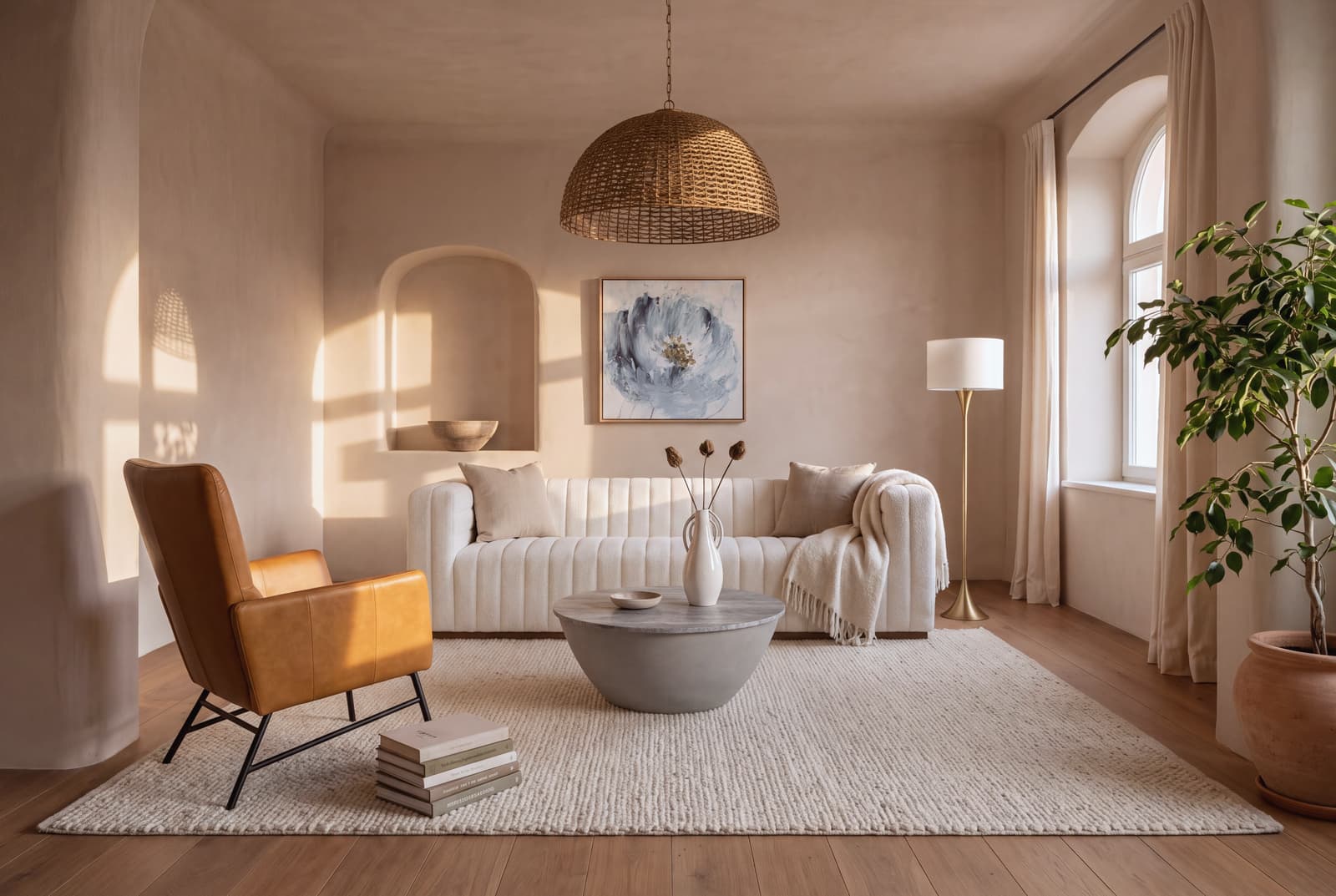
The organic modern living room begins with a curved, low-back sofa in cream bouclé. Pair it with a rounded travertine coffee table to create stone against bouclé, the single most characteristic material pairing in the whole style. Ground the space on a large textured wool rug beneath warm, sculptural lighting.
Moody Organic Modern
The moody organic modern living room is the same style with the value scale inverted, and it is a genuinely better answer for some rooms.
Instead of pale walls and warm light woods, use deep earth tones: chocolate brown, olive, charcoal, plaster in a dark clay tone. Keep the curves, keep the natural materials, keep the texture. Change only the depth of the palette.
It works for the rooms that pale organic modern struggles with. North-facing rooms, rooms with a single small window, rooms with a low ceiling, and rooms you mainly use at night. A pale scheme in a dark room reads as dingy rather than as light, and no amount of cream bouclé fixes it.
The technique is the same as with any dark scheme: commit fully, take the color up the walls and across the ceiling, and then over-light it at low level with plenty of warm lamps. A moody room that is underlit fails. A moody room with six warm light sources in it is the most enveloping thing in this entire guide.
Keep one or two pale elements for relief. A bouclé chair, a limestone table, an unbleached rug.
Organic Modern Kitchen
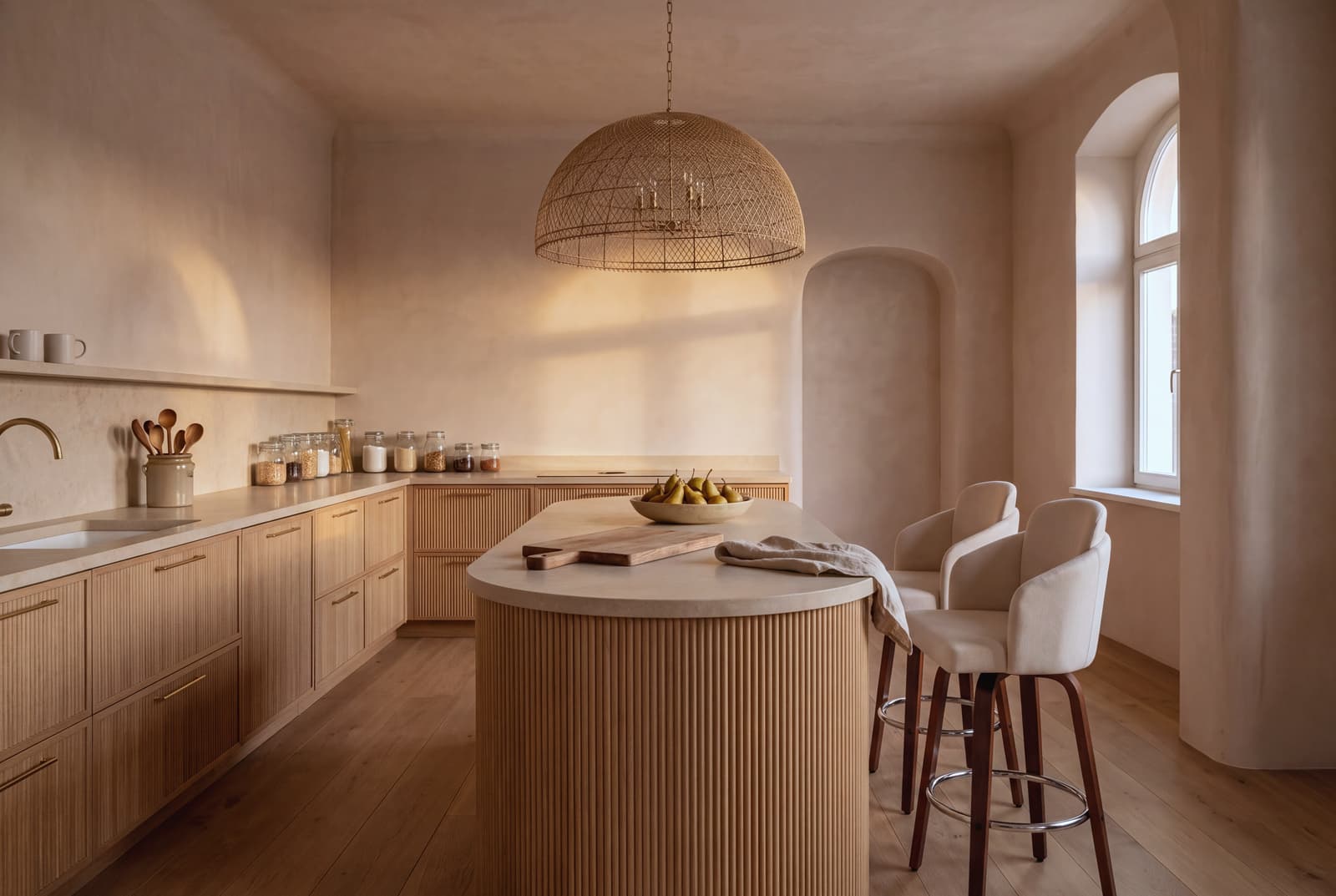
The organic modern kitchen is defined by cabinet fronts, countertop material, and the island shape. Reeded and fluted timber detailing is one of the few textures allowed to be repetitive. The island asserts the style through a curved end, a full stone waterfall, or a rounded timber-clad base.
Organic Modern Bedroom
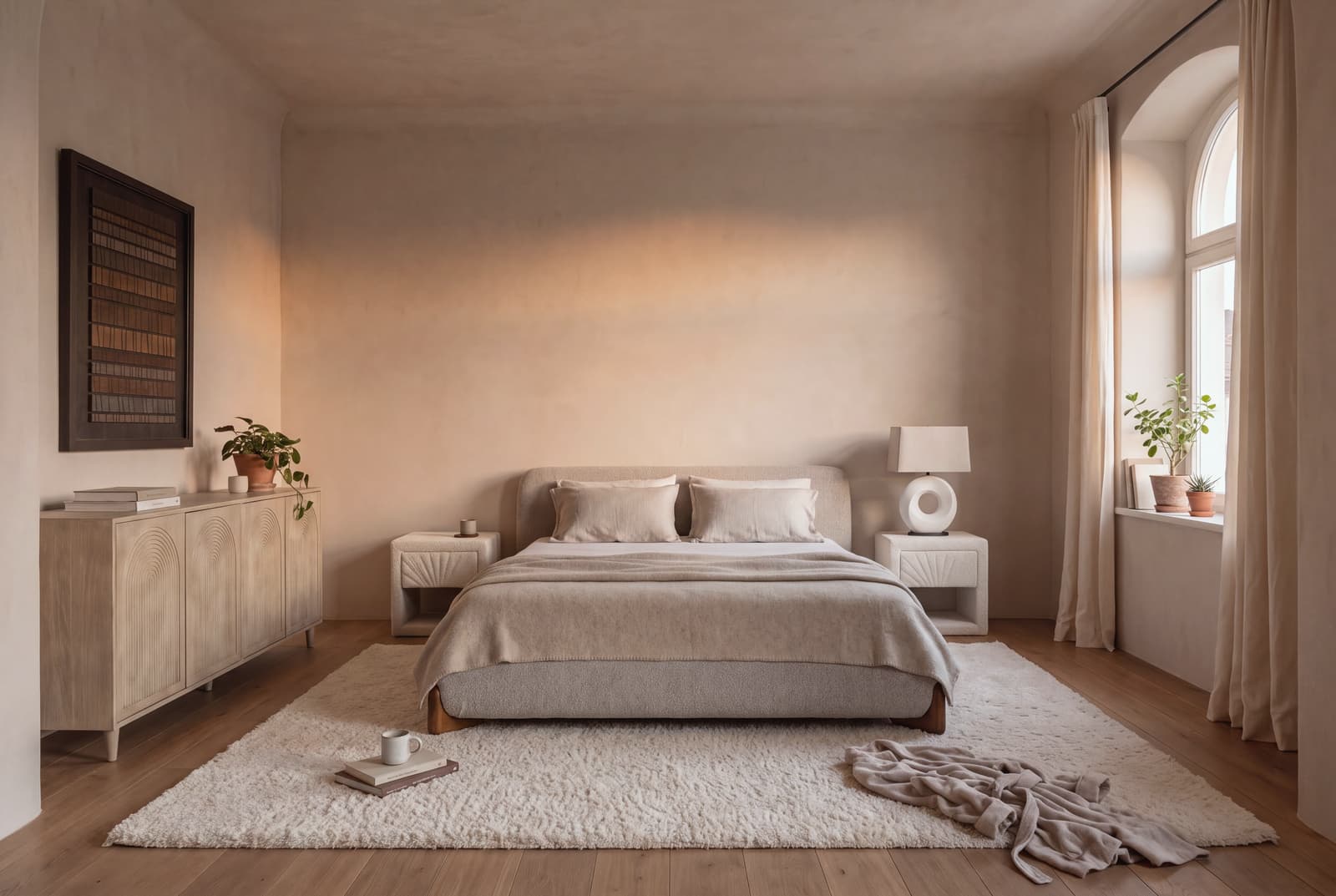
The organic modern bedroom is the easiest room to execute because most of it is textile. Begin with a curved or channel-tufted upholstered headboard in bouclé, linen, or wool. Layer the bed in tonal neutrals, finishing with cushions in three textures within the same narrow color range.
Organic Modern Bathroom
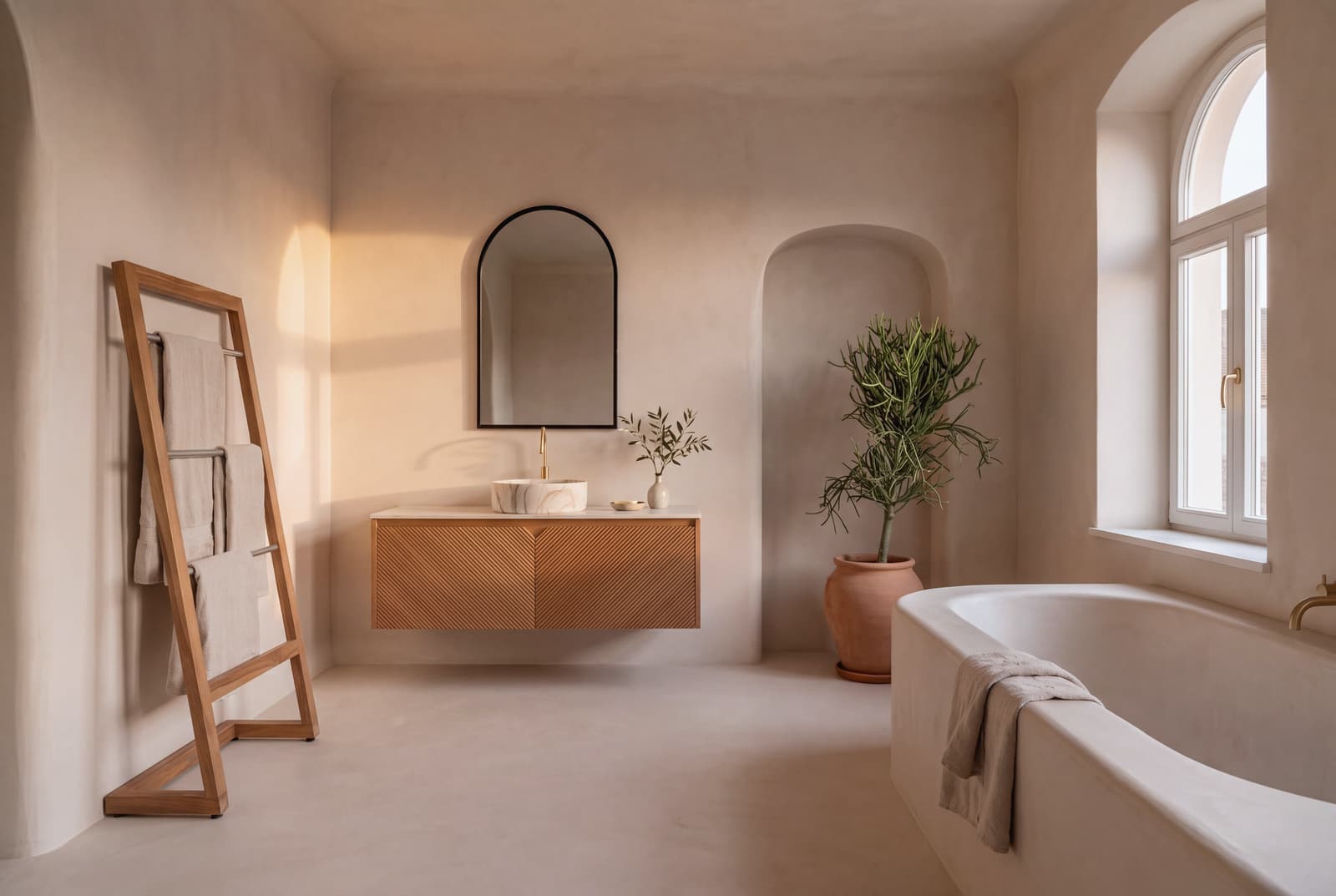
An organic modern bathroom design lives on continuous plaster surfaces, warm timber, and aged bronze fittings. The critical element to police is the sanitaryware, where choosing an off-white or stone basin for the vanity completes the warm sand room.
Organic Modern Dining Room
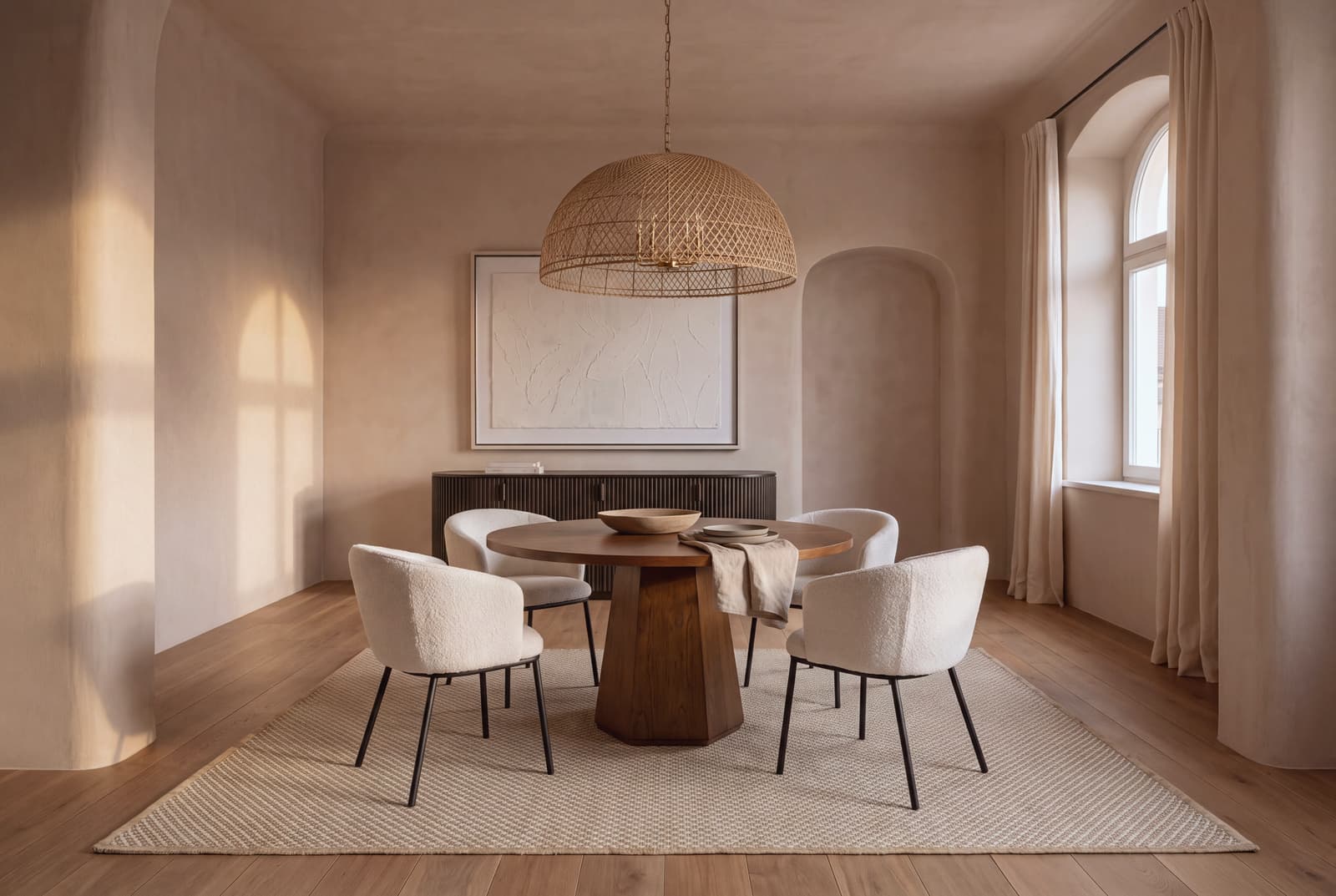
A round or oval table in solid timber, travertine, or limestone anchors the room, using a pedestal base that leaves the floor visually open. Surround it with curved chairs in contrasting bouclé or cane. Overhead, hang a single oversized pendant in plaster, ceramic, or rattan, where the scale rule matters most.
Organic Modern Furniture
Organic modern furniture is widely available, which is both the convenience and the trap.
What to look for:
- Curved and soft-cornered silhouettes in the large pieces.
- Bouclé, wool, heavy linen and full-grain leather in upholstery.
- Warm white oak, walnut and cane in case goods.
- Travertine, limestone, warm quartzite and solid timber in tables.
- Plaster, ceramic, rattan and linen in lighting.
What to avoid: chrome, glass tabletops, cool gray anything, high gloss, and hard geometric forms in large pieces.
The trap is buying a whole room of it at once from a single retailer, which produces a set rather than a room. The style has a strong enough grammar that mixing sources actually improves it. One good curved sofa, one real stone table, and everything else can come from anywhere as long as the material and the shape are right.
Organic Modern Decor
Modern organic decor is sparse, large and material-led.
- Large ceramic and stone vessels. Floor-standing, or one substantial piece per surface.
- Sculptural objects in travertine, wood or plaster. Abstract forms, no figurative detail.
- Dried branches, pampas alternatives, olive stems in a tall vessel. Large-scale rather than small arrangements.
- Woven and textured wall pieces, or one very large abstract canvas in a muted palette.
- Books, in small stacks, used as risers as much as reading material.
Modern organic home decor fails the same way it succeeds: through repetition. Three bouclé objects, four arches and five travertine bowls is a showroom. One of each, given space, is the style.
Organic Modern, Japandi, Wabi-Sabi and Boho
Four adjacent styles that share a material vocabulary and differ in temperament.
Japandi uses the same natural materials with strict rectilinear geometry, lower furniture and much more empty space. Quieter, more disciplined, less sculptural.
Wabi-sabi shares the natural materials but wants age, irregularity and visible wear. Organic modern is new and resolved; wabi-sabi is old and unresolved on purpose.
Bohemian shares the natural fibers and the plants but adds pattern, saturated color and layered global textiles. If you find organic modern too quiet, boho is the direction.
Modern is the parent. Same lines, same restraint, colder materials and hard geometry.
Where to Start
Buy the sofa and the dining table first, and make both of them curved and material-honest. Those two objects establish the style more definitively than any number of accessories, and getting them right means the rest of the room can be assembled slowly and cheaply.
Then choose your value scale, pale or moody, based on how much daylight the room actually gets rather than on which reference images you liked. That single decision determines whether the room reads as calm or as dingy.
Organic modern has eight rooms of its own here, each shown complete and priced to the last piece. If you are not sure it is the right direction, our consultation is quick choices between rooms and a few questions about your home, a few minutes in all; it ends with a finished room for each room you want to furnish, every piece priced. It sits closest to Modern and Scandinavian, and both are worth reading beside it.
See every room in the Organic Modern hub.
Not sure where to start?
Quick choices between rooms, a few questions about your home, and a finished room for each room you want to furnish, every piece priced. A few minutes.
Start your home profile