
Contemporary Interior Design: The Look of Right Now, Room by Room
Contemporary design is the style of the present day, which makes it the one style whose definition moves. Today it means high contrast, polished surfaces and one sculptural shape per room, and it is easy to tell apart from modern once you know which era each one belongs to.
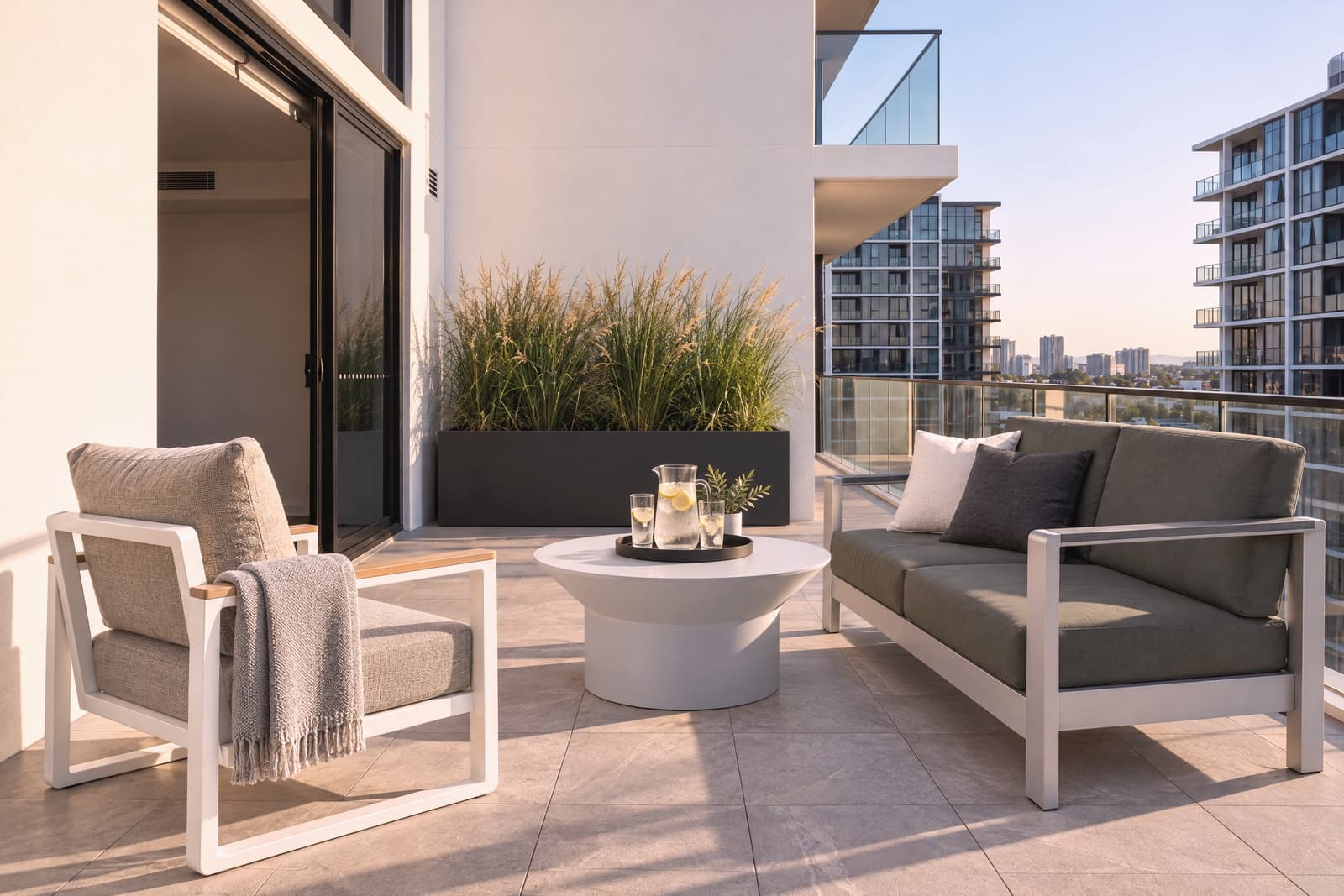
Hover or tap a dot to see what it is. See the full room, priced →
Contemporary design is the style of the present day, which makes it the only style whose definition keeps moving. A contemporary room from 1995 and one from today look quite different, because each one was simply the current look of its own decade.
So the useful question is what contemporary means now. Right now it means contrast: black set against white, polished chrome and clear glass, stone and gloss lacquer, sharp clean shapes, and one sculptural piece in each room that the eye goes to first. It is the urban, polished end of current design, and it is the look most new apartment buildings and hotels are finished in today.
That polish is also the style's main risk. A room built only from hard, shiny, colorless surfaces can feel like a lobby. The contemporary rooms that work as homes keep the contrast and the shine, and add enough leather, wool and texture underfoot that someone would actually want to sit down in them.
What Contemporary Interior Design Is
Contemporary interior design is the style of the current moment. In its present form it combines a black, white and gray palette, reflective materials such as chrome, glass, lacquer and polished stone, and crisp or sculptural furniture shapes, arranged with plenty of open space so each piece reads clearly.
The characteristics that define it today:
- High contrast. Black against white is the basic move, with gray in between. A contemporary room usually has one dark anchor, such as a black sofa or a black bed, set against pale walls and floors.
- Reflective surfaces. Polished chrome, clear glass, gloss lacquer and polished stone catch and bounce the light. They do the work in a contemporary room that pattern and color do in other styles.
- Silver-toned metal. Chrome, nickel and brushed steel. Gold and brass belong to glam and art deco; contemporary keeps its metal cool.
- Clean or sculptural shapes. Straight lines and sharp edges for most pieces, with one deliberately sculptural form per room: a twisted dining table base, a drum side table, a chandelier of glass rods.
- Statement lighting. A light fixture is often the boldest object in the room, chosen as much for its shape as for the light it gives.
- Space around each piece. Fewer, larger pieces with clear floor between them, so every outline stays readable.
Contemporary vs Modern: The Era Is the Difference
These two words are used as synonyms constantly, and the mix-up causes real shopping mistakes. The simplest way to keep them apart is to ask which time period each one refers to.
Modern refers to a specific design movement from roughly the 1920s to the 1960s, and the furniture it produced: walnut and oak case goods, tubular steel, molded plywood, leather slings, and a strict, rectilinear restraint. Because it belongs to a fixed period, a modern room looks much the same whether it was put together in 1960 or last month. Our modern interior design guide covers it in full, and mid century modern is the warmer, more colorful late chapter of the same movement.
Contemporary refers to now. Today that means the high-contrast, polished look described above: more black and white than modern uses, more chrome, glass and gloss, and a willingness to put one sculptural, attention-seeking piece in a room, where modern would choose restraint every time.
In practice the two share a lot of furniture. Many clean-lined pieces work in both, and that is why so many stores sell them under one combined "modern and contemporary" label. What separates the rooms is the overall treatment:
- Wood or shine. A modern room leans on warm wood grain. A contemporary room leans on reflective surfaces: lacquer, glass, chrome and polished stone.
- Restraint or a statement. A modern room avoids a showpiece. A contemporary room usually has one.
- Warm neutrals or black and white. Modern sits in walnut, cream and gray. Contemporary sits in black, white and silver.
If you want the period look with its warm woods, shop modern. If you want the current, polished look, shop contemporary.
The Contemporary Color Palette
- The base. White and pale gray on the walls and floors, kept light so the dark pieces stand out sharply against them.
- The anchor. Black, used in one or two large pieces per room: a sofa, a bed frame, a dining table base, a vanity.
- The middle tone. One gray, in a gloss chest, a stone countertop or a wool rug, so the room is not only two values.
- The metal. Polished chrome or brushed nickel, used consistently across lamps, legs and hardware.
- The accent, if any. A single color in art or a cushion, kept small. Most contemporary rooms work in black, white and gray alone.
Contemporary Living Room
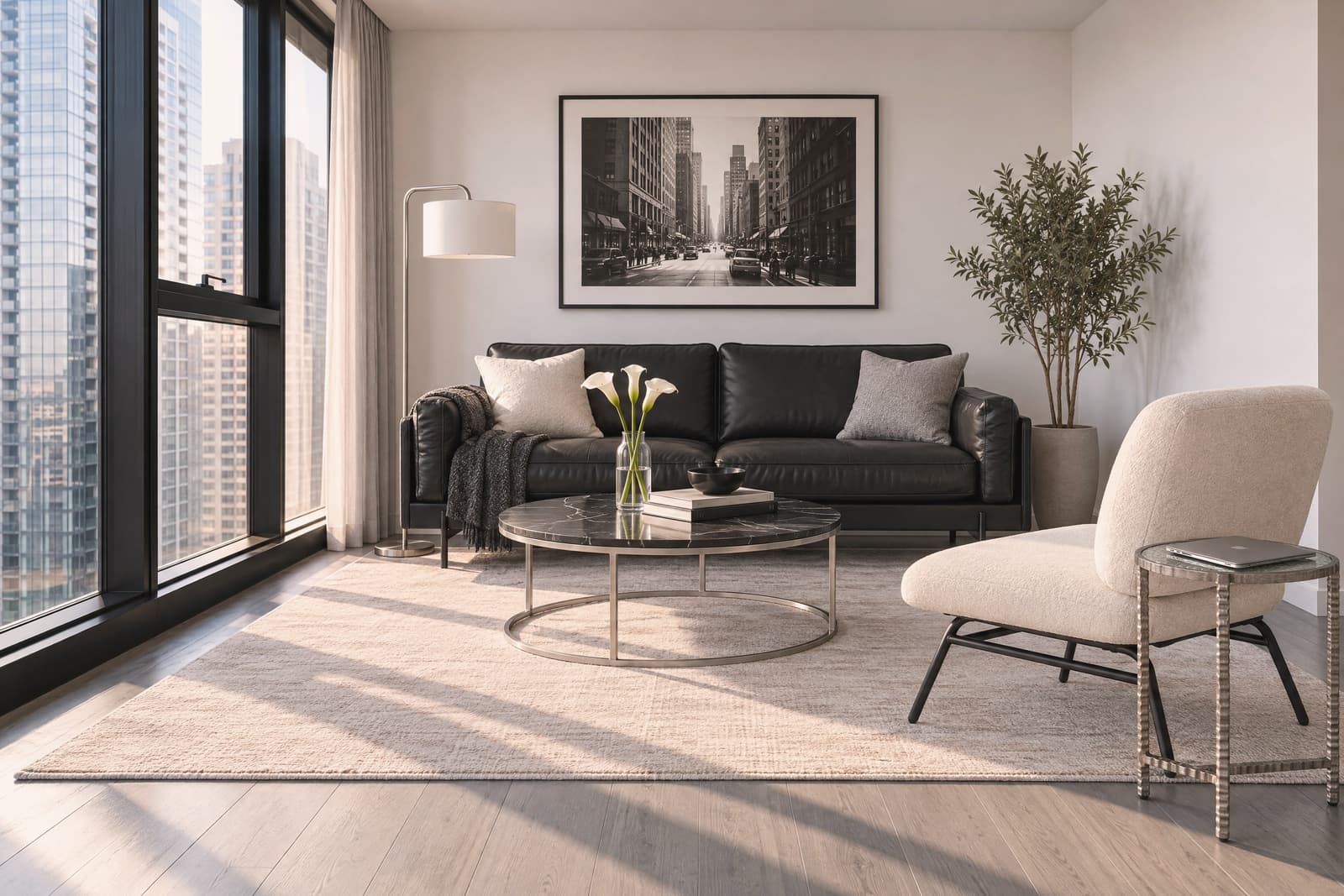
Start with a dark sofa, black leather is the classic choice, and answer it with a single pale armchair so the room balances. The coffee table is a good place to bring stone and metal together in one piece, such as black marble on a brushed steel base, or to keep the floor visually open with glass and chrome. A quiet ivory rug lets the dark pieces stand out, and an arched floor lamp in nickel carries the metal up to eye level.
Contemporary Kitchen
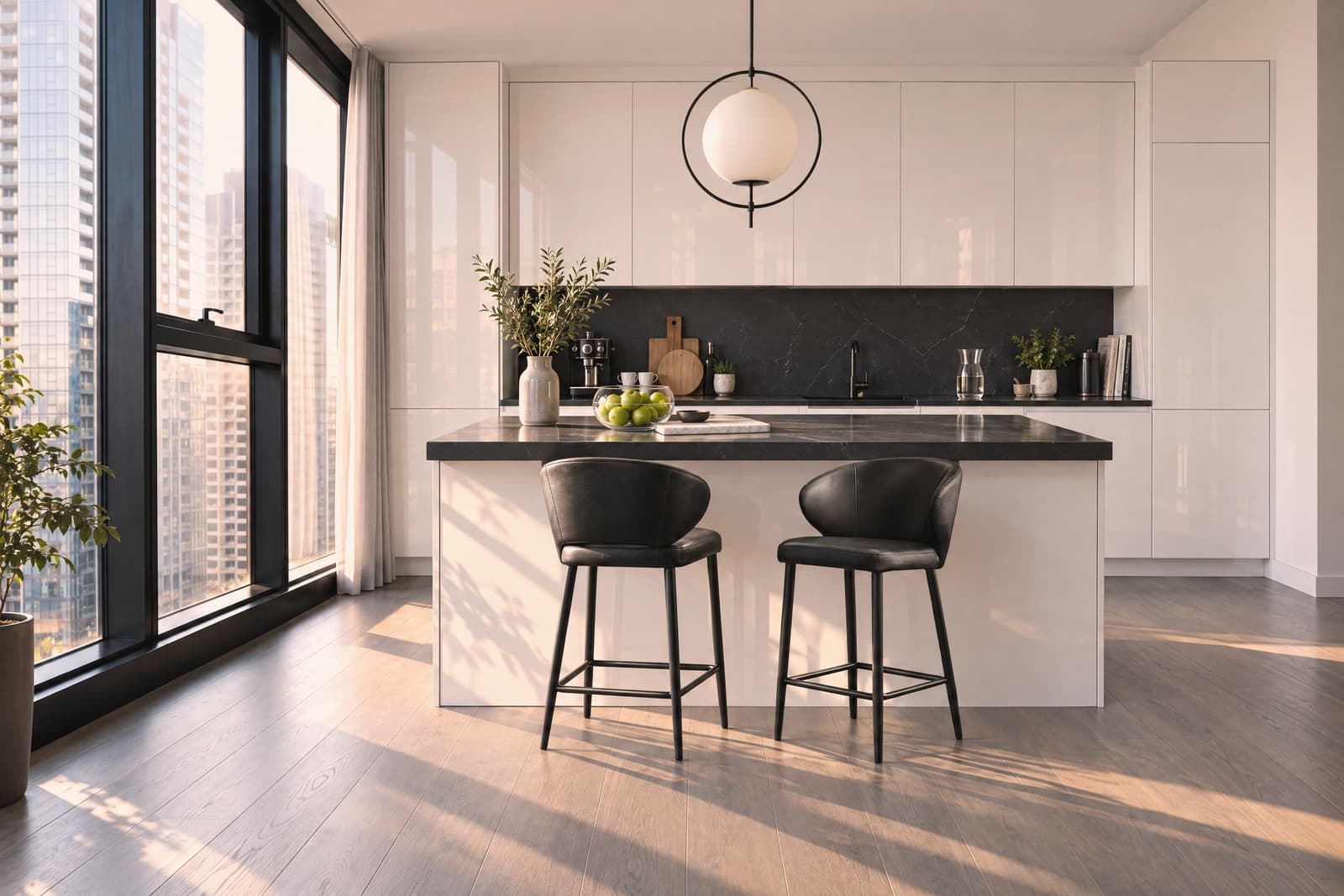
Flat-front gloss white cabinets with no visible hardware, a dark stone or quartz countertop, and black leather counter stools at the island set up the contrast. Over the island, one pendant with a strong shape, such as a frosted globe held in a black ring, gives a room of straight lines its one curve.
Contemporary Bedroom
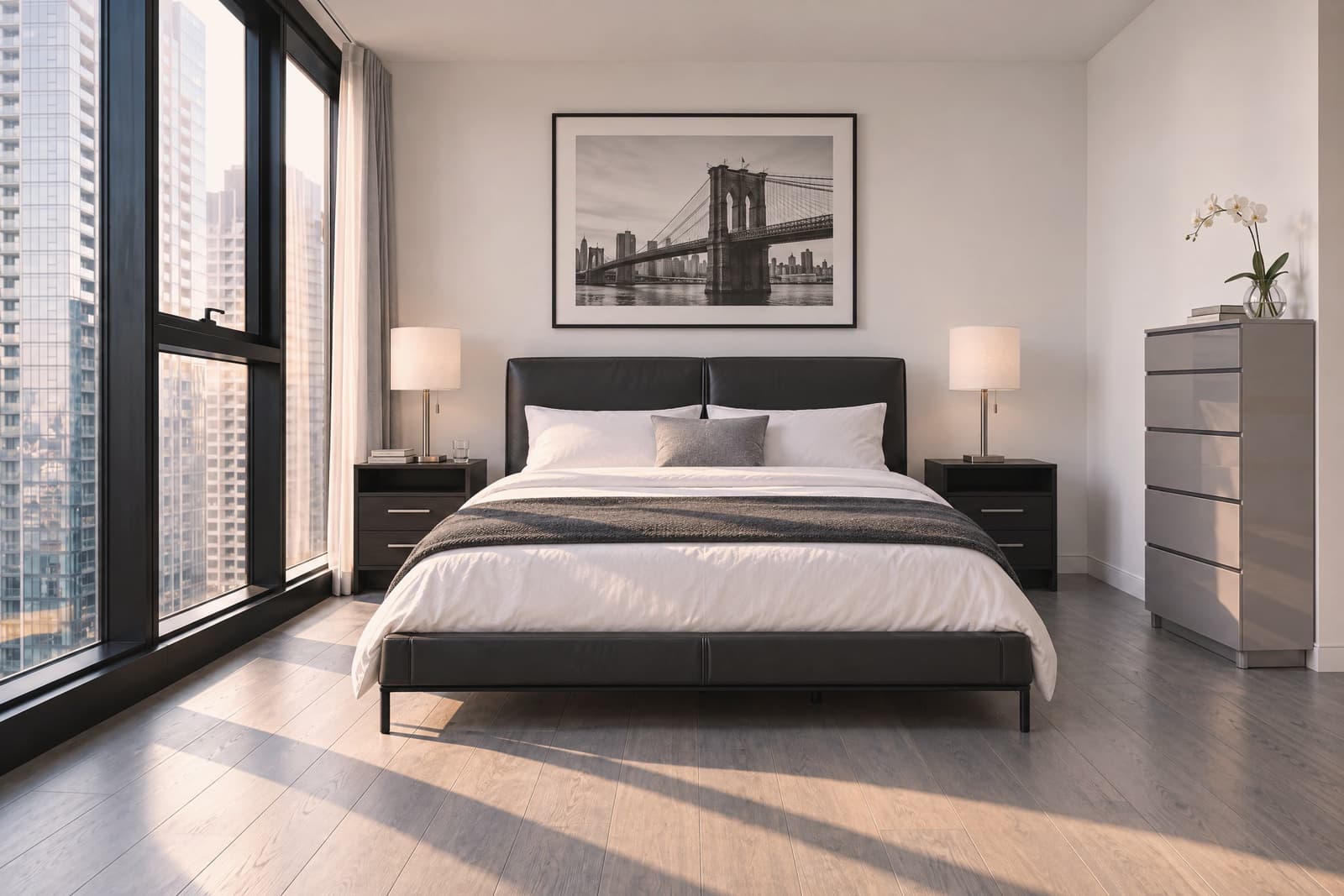
Build the room from three values: a black upholstered bed and black nightstands, crisp white bedding, and one gray piece such as a gloss chest of drawers. Matching lamps on both sides of the bed keep a spare room looking deliberate. One large black and white photograph above the headboard is all the wall needs.
Contemporary Dining Room
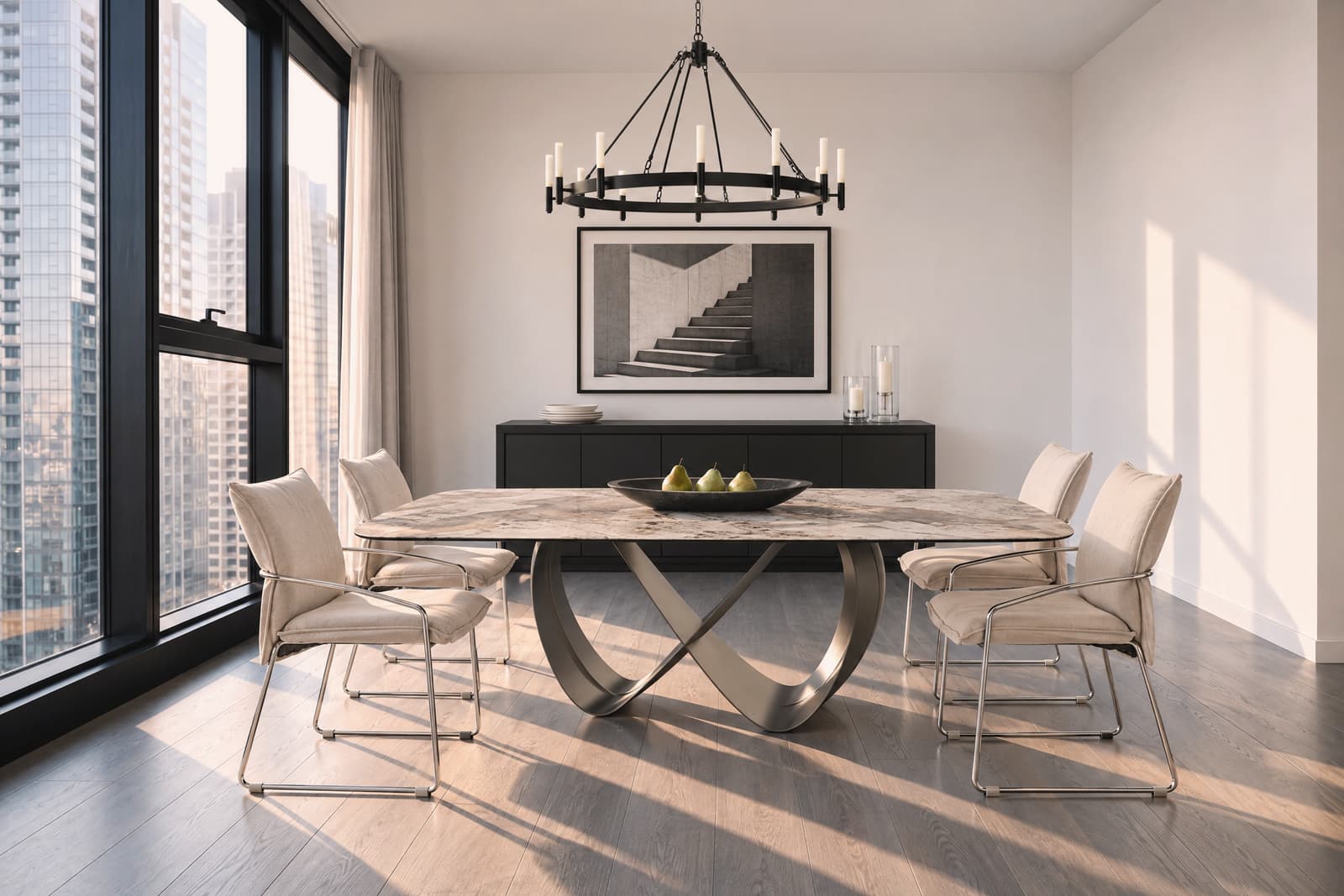
The dining table is where contemporary rooms most often put their sculptural piece: a stone or ceramic top on a dramatic black steel base. Keep the chairs pale and light, on slim chrome frames, so you see past them to the base, and keep the sideboard a plain dark box. A chandelier overhead can repeat the room's black in a simple ring of lights.
Contemporary Home Office
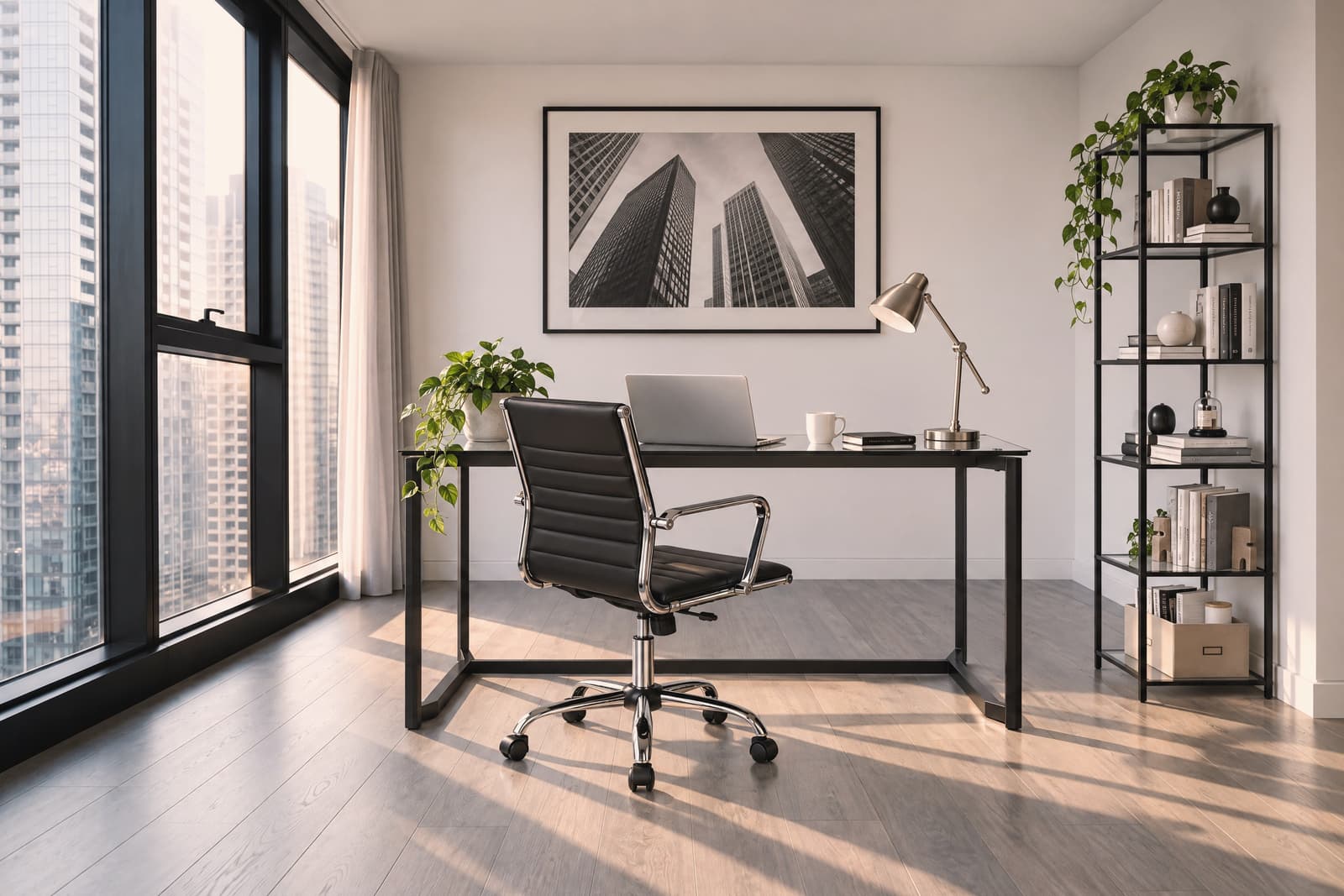
A glass-topped desk on a slim black steel frame keeps the floor visible and the room feeling large, and a black metal bookcase with glass shelves applies the same idea vertically. A black leather desk chair on a chrome base repeats the room's two materials, and a silver task lamp on an adjustable arm finishes the desk. Four well-chosen pieces are enough.
Contemporary Bathroom
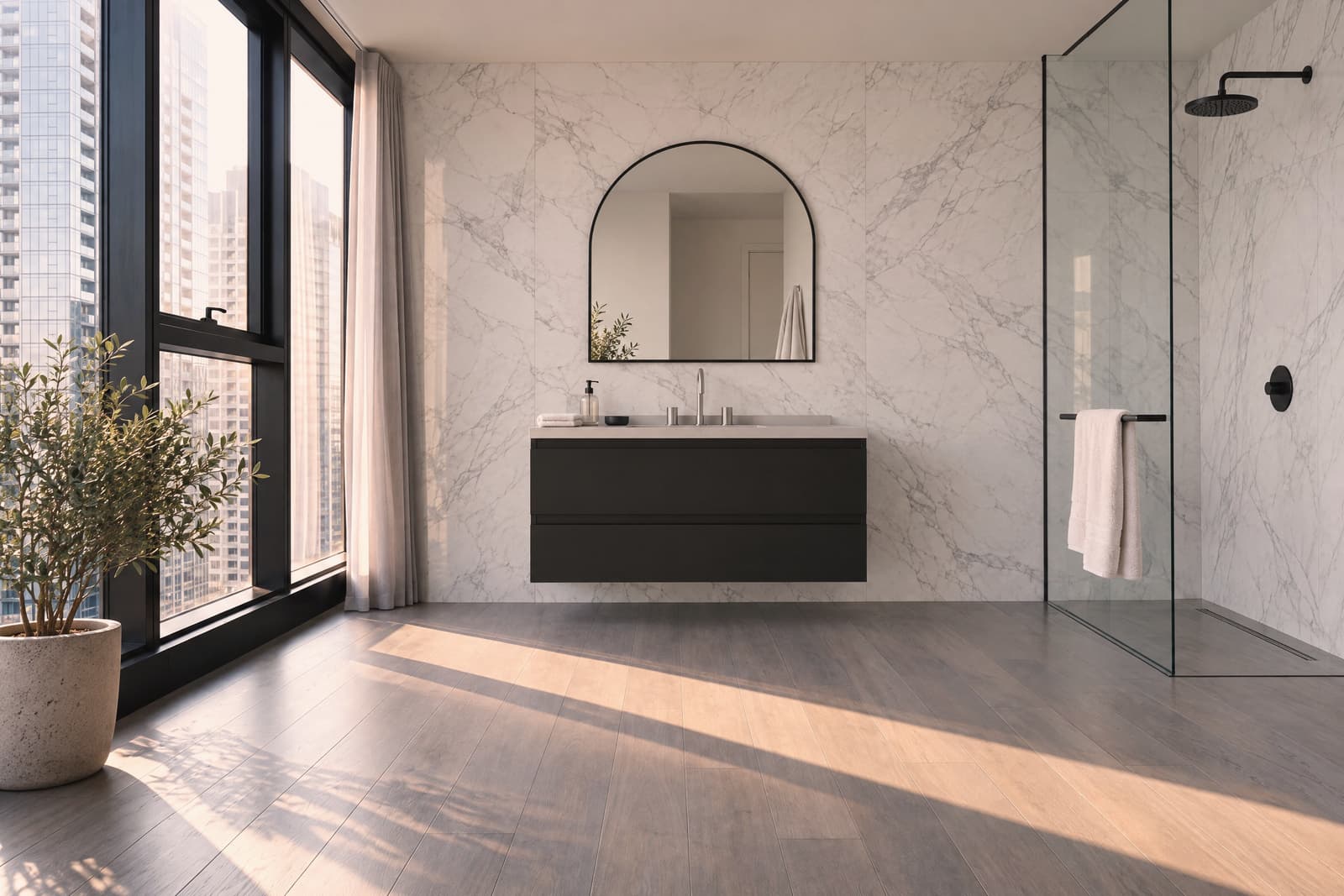
White marble or large-format pale tile on the walls and a wall-hung vanity in matte black give the room its contrast. A wall-hung vanity also makes a small bathroom look larger, because the floor runs uninterrupted underneath it. Keep the fixtures in chrome or matte black and the towels white.
Keeping a Contemporary Room Warm
The failure mode is a room that photographs well and feels cold to live in. Three things fix it without diluting the look:
- Leather and wool. Black leather seating and a thick wool rug add warmth and sound absorption while staying inside the palette.
- Warm light. Use warm white bulbs in every fixture. Cool white light on chrome and white walls is what makes a room feel clinical.
- One natural element. A large plant, a stone sculpture or a single piece of pale wood gives the eye somewhere soft to rest among the polished surfaces.
Materials and Furniture
Buy the reflective pieces in real materials where you can. Real tempered glass, real chrome plating and real stone or a convincing ceramic top hold up to the close look a spare room invites. A printed or thin-plastic imitation shows quickly when there is little else in the room to draw the eye away from it.
Check the finish of every metal piece against the others before buying. A contemporary room depends on its silver tones matching across lamps, table legs and hardware, and a single warm brass finish among cool chrome reads as a mistake rather than a mix.
Where to Start
- Choose the dark anchor piece first, usually the sofa in a living room or the bed in a bedroom, because everything else is placed in relation to it.
- Keep the walls and floor pale so that anchor stands out clearly.
- Add the reflective layer: a glass table, chrome lamps, a gloss surface.
- Choose one sculptural piece for the room and keep everything around it simpler.
- Finish with leather, wool and warm light so the room is comfortable as well as sharp.
If you would rather start from a finished room than a checklist, every room in our contemporary collection is put together and priced, starting with the contemporary living room, so you can see what the whole look costs before committing to any one piece.
See every room in the Contemporary hub.
Not sure where to start?
Quick choices between rooms, a few questions about your home, and a finished room for each room you want to furnish, every piece priced. A few minutes.
Start your home profile