
Minimalist Interior Design: Fewer Pieces, Room by Room
Minimalist interior design keeps only what a room needs: two or three pieces in white, black or pale wood, bare walls and clear floors, with the light and the space doing the rest.
Hover or tap a dot to see what it is. See the full room, priced →
Minimalist interior design keeps only what a room needs. A bed and two nightstands. A sofa and a table. Six chairs around one long table. Everything else leaves the room, and what stays is chosen carefully enough to stand on its own against a white wall.
The palette is short: white for the walls and floor, black for the pieces that should read as lines, and pale wood for the pieces that should feel warm. Surfaces stay clear. Light does the decorating, falling across a bare floor in a single sharp shape that changes through the day.
A minimalist room works when every piece earns its place. Two good pieces in a quiet room read as calm and deliberate. The same two pieces surrounded by baskets, plants and prints read as an ordinary room.
What Minimalist Interior Design Is
Minimalist interior design is a style built on the fewest pieces a room needs, a palette of white, black and pale wood, clear surfaces and bare walls, with space and natural light treated as part of the design.
The characteristics that define it:
- Few pieces. Two or three in most rooms, each one doing a job.
- A short palette. White, black and pale wood, usually two of the three in any one room.
- Clean lines. Rectangular and round forms, flat fronts, slim legs and frames.
- Hidden storage. Handleless cabinets, flush doors and drawers that close on everything.
- Bare walls and clear surfaces. The wall is a plane of white and the table top is empty.
- Light as decoration. A large plain window and the shadows it throws across the room.
Minimalist, Scandinavian and Japandi
All three are calm and pale, and they differ in how much they keep.
Scandinavian is warmth first: wool throws, sheepskins, layered lamps and pale wood, with a room built for long dark evenings. Our Scandinavian interior design guide covers it in full.
Japandi adds craft and texture: warm oak, linen, stoneware and a low, horizontal line, with a few handmade objects on display. Our japandi guide covers it.
Minimalist is the strictest of the three. It keeps the furniture and lets the textiles, lamps and objects go, and it is happy with black. A minimalist room can borrow a Scandinavian sofa or a japandi table; what makes it minimalist is how little is around it.
The Minimalist Palette
- The walls. Pure white plaster, smooth and flat, with the skirting kept slim or left out.
- The floor. White-painted boards, pale oak or a pale polished concrete.
- The black. Bed frames, chair frames, table bases and stool legs, where a piece should read as a clean line.
- The pale wood. Oak, ash and natural finishes on nightstands, dining tables and stool seats, for warmth.
- The white furniture. Sofas, desks and cabinets that sit back into the room.
Minimalist Bedroom
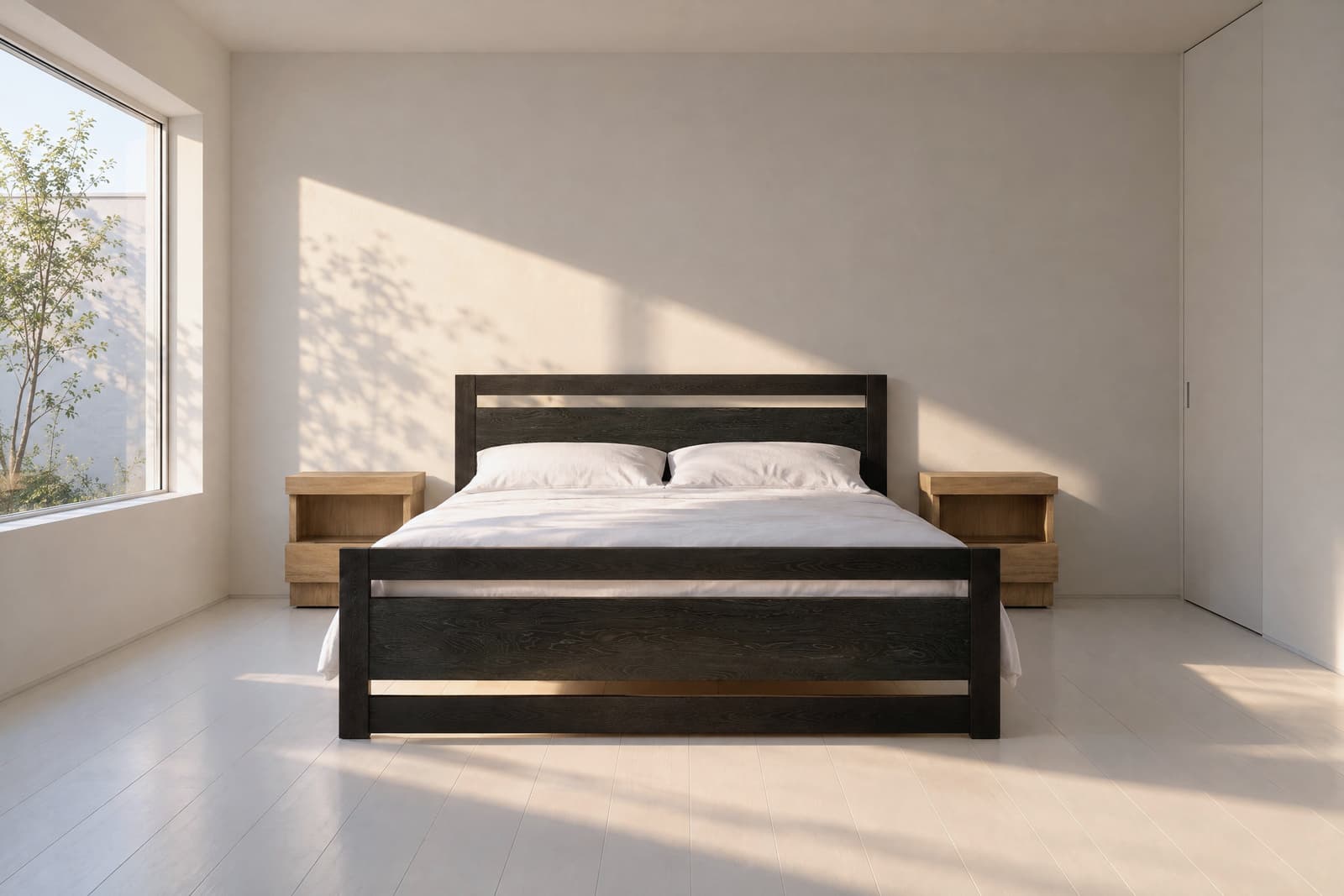
The minimalist bedroom is where most people start, and it needs three pieces. Choose a simple bed with a clean rectangular frame: a black wood bed with a slatted headboard against a white wall gives the room its one strong line. Put a pale oak nightstand on each side, with a drawer and an open shelf, and keep their tops clear. Make the bed in plain white linen. The rest of the wall stays bare.
A minimalist bedroom set is the same idea bought together: a bed and a matched pair of nightstands. Leave the dresser and the bench out unless the room genuinely needs the storage, and if it does, choose a low, handleless chest in white.
Minimalist Living Room
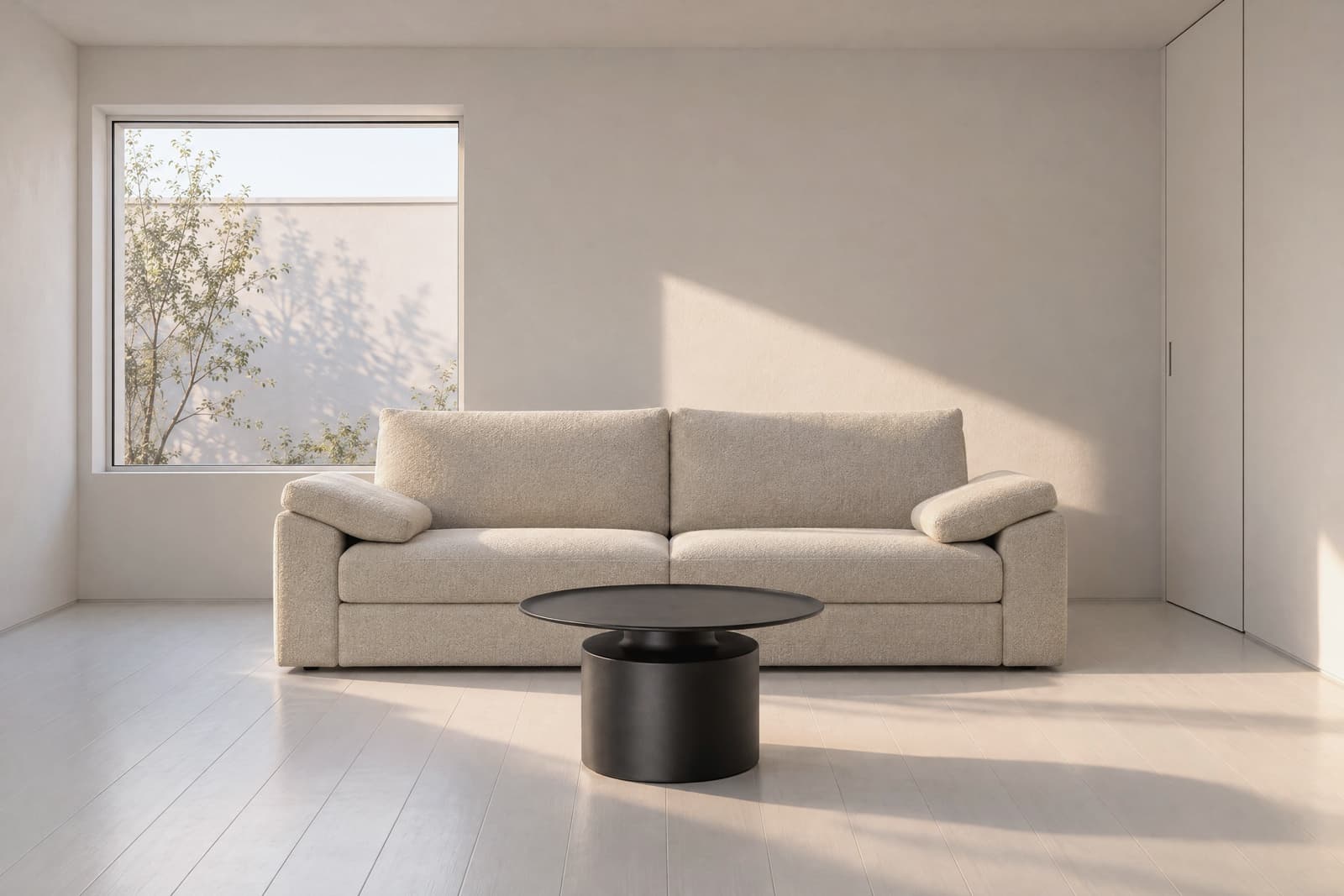
The minimalist living room is a sofa and a table. Pick a sofa in off-white or pale gray with square arms and plain cushions, and center it on the longest wall. Stand a round coffee table in matte black in front of it, on a solid drum or pedestal base, so the floor beneath stays easy to see and easy to clean. The wall above the sofa stays bare, and the light from the window is the only pattern in the room.
Minimalist Dining Room
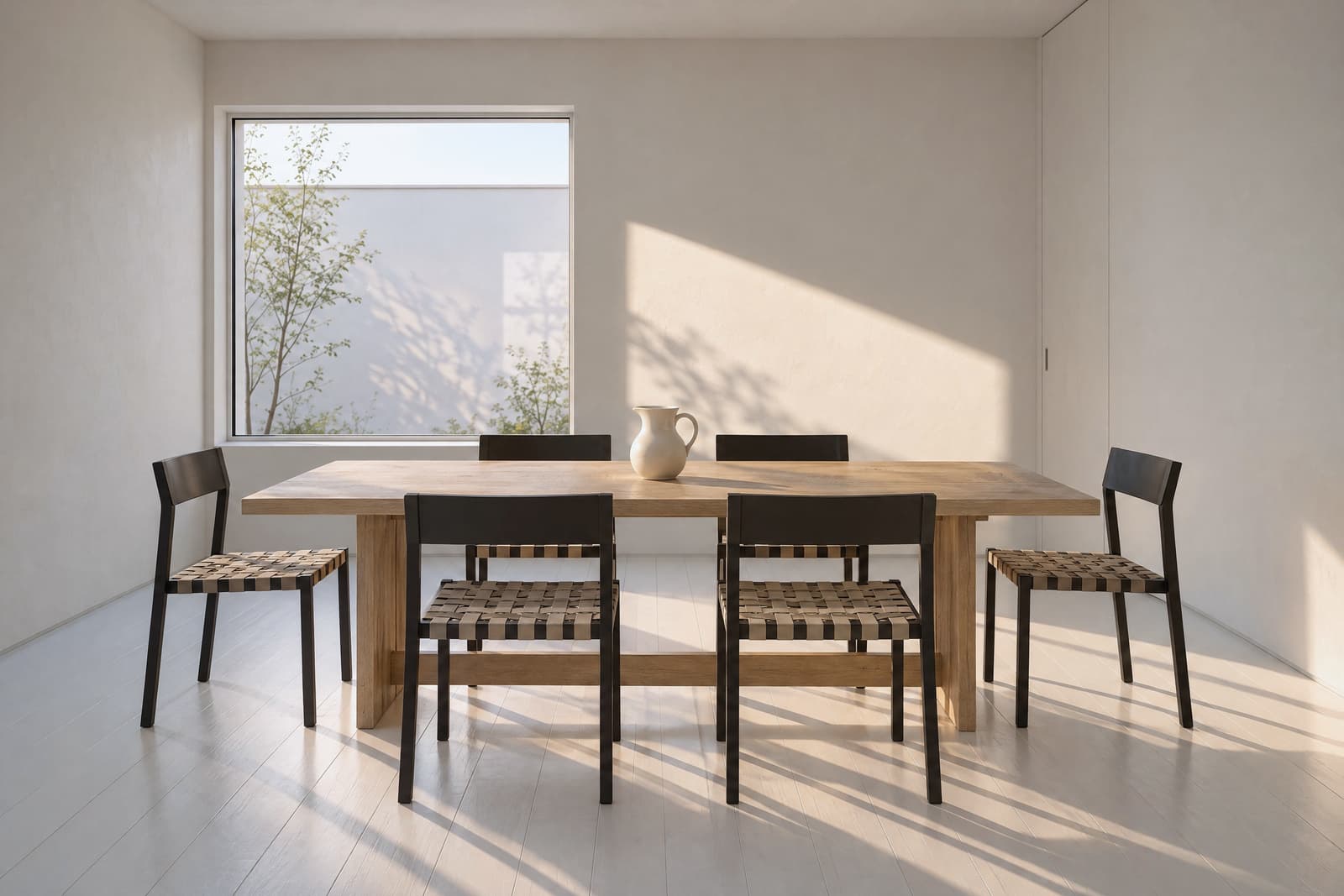
A minimalist dining table is long, plain and solid. An 84 inch table in pale wood on two slab trestle legs seats six with room to spare. Surround it with six black chairs with a slim frame and a simple back, two on each long side and one at each end. A woven seat adds texture without adding color. Keep the table bare between meals, with one jug of water at most.
Minimalist Kitchen
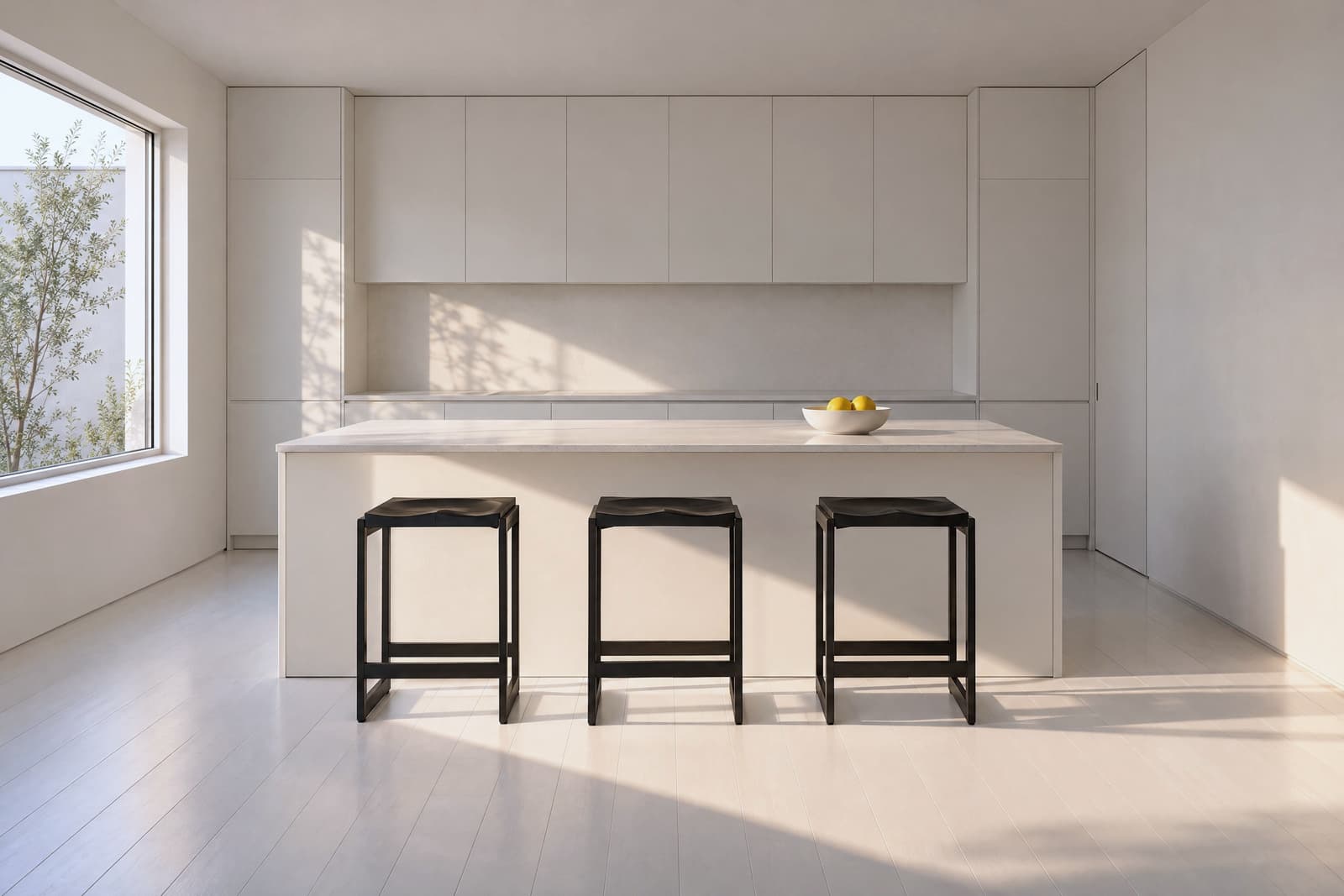
In a minimalist kitchen the cabinets do the work. Flat, handleless white fronts from floor to ceiling hide the appliances and everything else, and a thin white stone counter runs the length of the wall. A long white island in the same finish is the only freestanding piece. Line it with three black counter stools, wood seats on slim metal frames, and keep the counter clear apart from a bowl of fruit.
Minimalist Home Office
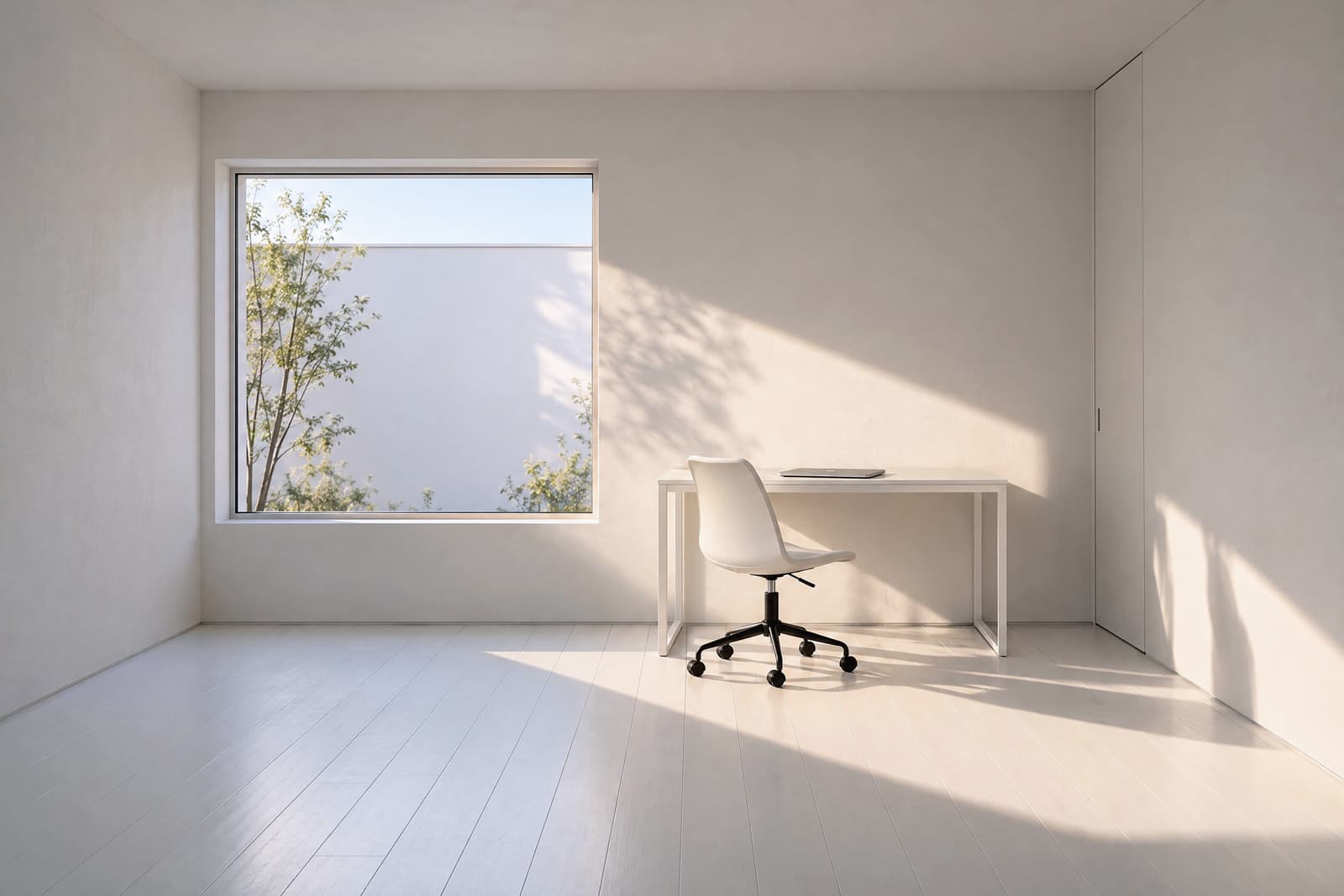
A minimalist home office is a desk, a chair and a window. Choose a white desk on a slim steel frame and set it against a bare wall, with the window to one side for daylight on the work. A white swivel chair on a black base keeps the palette to two colors. Store papers out of sight, so a closed laptop is the only thing on the desk at the end of the day.
Minimalist Bathroom
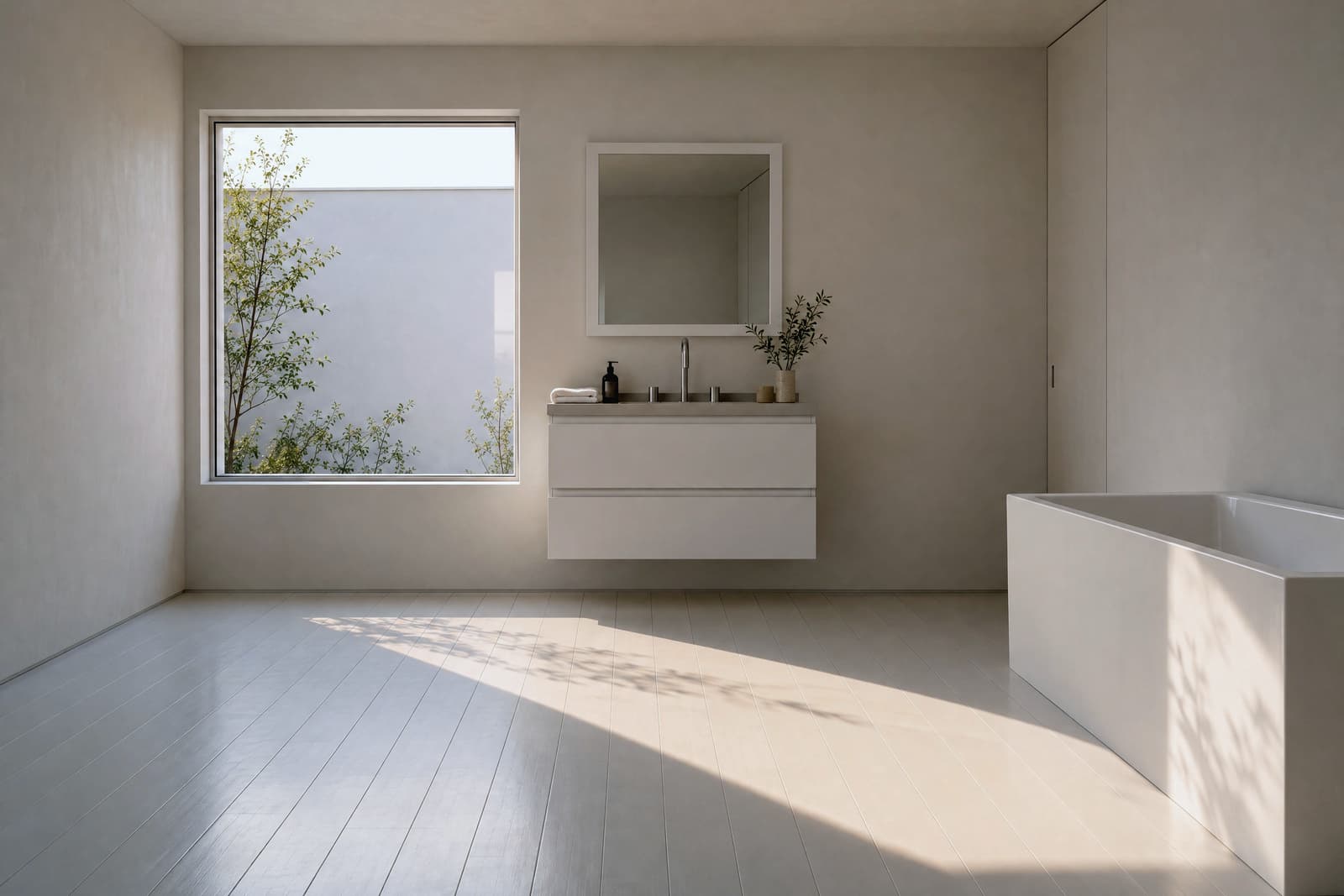
The minimalist bathroom is white on white. A floating vanity with handleless drawers keeps the floor clear beneath it, and a plain square white framed mirror hangs directly above. A white rectangular freestanding bath completes the room. Keep one folded towel on the vanity and store everything else in its drawers.
Minimalist Home Bar
A minimalist home bar needs a table and two stools. A round black bar table on a slim pedestal stands by the window, with two stools in pale wood and black metal drawn up to it. Keep the bottles and glasses in a closed cabinet and set out only what is being poured.
Minimalist Patio
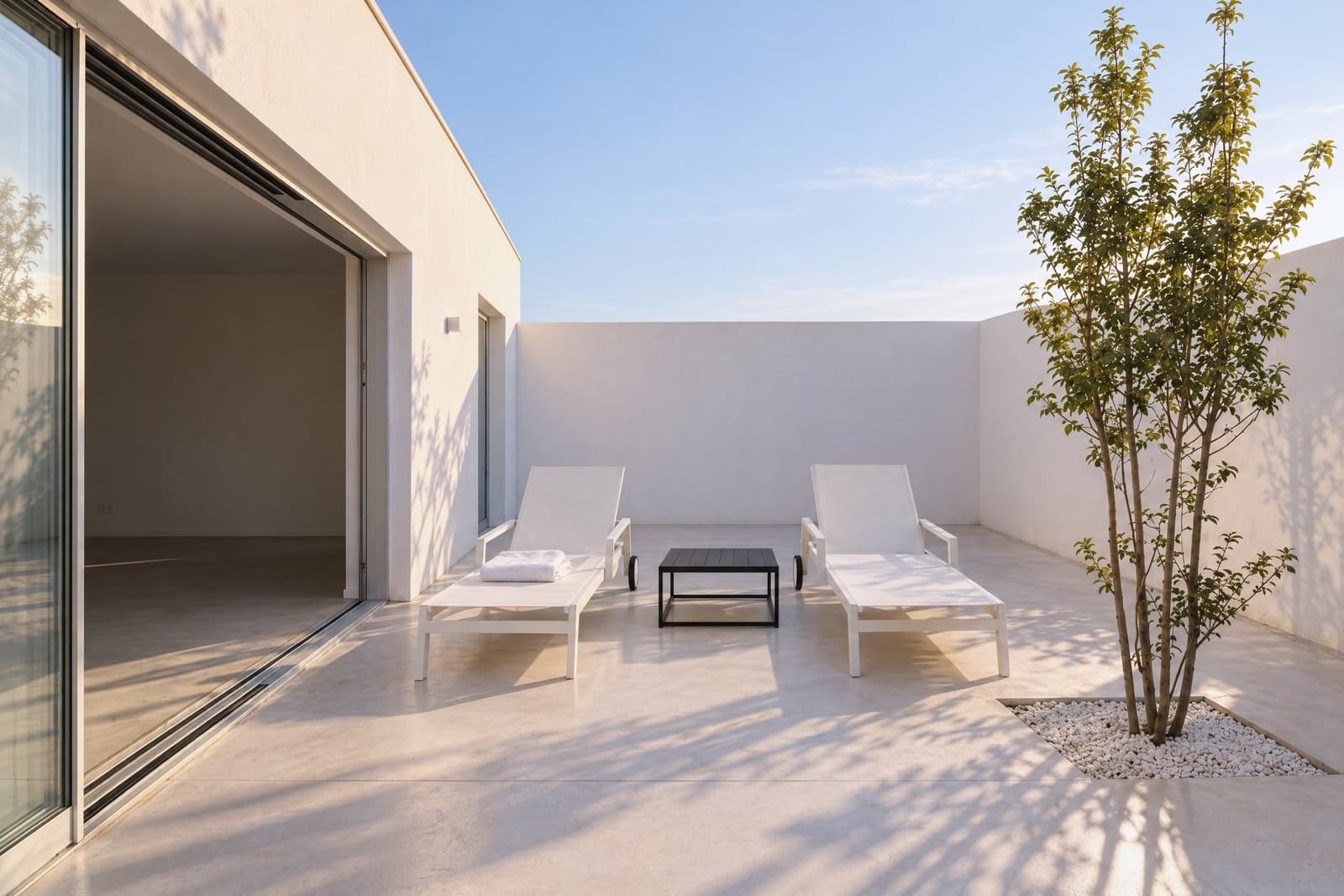
Minimalist patio furniture follows the same palette outdoors. Two white aluminum chaise lounges with sling seats, set side by side, and one square black table between them are enough for a courtyard. Pale concrete or stone underfoot, a white wall and one tree complete the scene.
Keeping Minimalist Livable
A minimalist room has to be lived in every day. Three habits keep it comfortable:
- Choose comfort in the few pieces you keep. A deep sofa and a good mattress matter more in a room with nothing else to soften it.
- Give everything a closed home. Minimalism depends on storage: handleless cabinets, drawers and a closet that hold what the room does not show.
- Keep two colors per room. White with black, or white with pale wood, holds together; all three together in one small room starts to feel busy.
Materials and Furniture
Look for solid wood or a good veneer on the pale wood pieces, since a plain surface shows every flaw in a cheap finish. On black pieces, a matte powder-coated steel or a dark stained wood hides fingerprints better than gloss. White upholstery is practical in a performance fabric, which resists stains and can be cleaned with water.
White-painted and pale floors show dust and marks quickly, so felt pads on every chair and table leg are a sensible first purchase. In a room with so few pieces, scale matters: measure the wall and keep the main piece to about two thirds of its length.
Where to Start
- Empty the room and bring back only the pieces it needs.
- Pick two colors: white with black, or white with pale wood.
- Start with the main piece: the bed, the sofa or the dining table.
- Add storage that closes, so the surfaces can stay clear.
- Leave the walls bare and let the window light the room.
If you prefer to start from a finished room, every room in our minimalist collection is put together and priced, starting with the minimalist bedroom, so you can see what the whole look costs before committing to any one piece.
See every room in the Minimalist hub.
Not sure where to start?
Quick choices between rooms, a few questions about your home, and a finished room for each room you want to furnish, every piece priced. A few minutes.
Start your home profile