
Transitional Interior Design: Classic Shapes, Plain Fabric, Room by Room
Transitional interior design keeps the shapes of a traditional room, rolled arms, wingbacks and turned legs, and dresses them in plain linen, warm wood and soft neutral color, with greige walls and crisp white trim.
Hover or tap a dot to see what it is. See the full room, priced →
Transitional interior design keeps the shapes of a traditional room and dresses them plainly. A sofa still has rolled arms. A chair still has wings. A desk still stands on turned legs. The fabric on all of them is a quiet linen or chenille in cream, oatmeal or gray, the wood is a warm brown with a simple finish, and the walls are a soft greige held by crisp white trim.
The result is a room that feels familiar and calm at the same time. It has the comfort and proportion of a traditional house and the clean surfaces of a modern one, which is why it suits so many homes and why it lasts. A transitional room rarely looks dated, because its shapes are already classic and its colors are already neutral.
The style is also forgiving to build. A rolled-arm sofa, a pair of wingback chairs and a walnut coffee table can each be bought on their own, and as long as they share the palette they settle into one room.
What Transitional Interior Design Is
Transitional interior design is a style that pairs traditional furniture shapes with plain, neutral materials: classic silhouettes in linen, chenille and warm wood, a greige and white palette, little pattern and no ornament.
The characteristics that define it:
- Classic shapes. Rolled arms, wingback headboards and chairs, turned and tapered legs, pedestal tables and paneled doors.
- Plain fabric. Linen, chenille and slipcovers in solid cream, oatmeal, taupe and gray.
- Warm wood. Walnut, brown oak and fir with a simple stain, mixed with black painted pieces.
- Greige and white. Soft warm gray walls, white trim, and a mid-tone wood floor.
- Restrained pattern. A faded oriental or a quiet geometric rug, and little else.
- Comfort first. Deep seats, padded backs and tailored upholstery.
Transitional, Traditional and Modern
Transitional sits between two styles, and it helps to know both.
Traditional is the full classic room: deep colored walls, carved wood, pattern on pattern, brass, and lamplight in the evening. Our traditional interior design guide covers it in full.
Modern is the clean-lined room of the twentieth century: rectilinear furniture, wood, steel and leather, and very little decoration. Our modern interior design guide covers it.
Transitional takes the furniture shapes from the first and the plain surfaces from the second. A rolled-arm sofa in white linen, a wingback chair in gray chenille, a walnut table on simple tapered legs: each piece is traditional in outline and modern in finish.
The Transitional Palette
- The walls. A soft greige, a light warm gray with a little beige in it, in a matte finish.
- The trim. Crisp white crown moulding, skirting and window casings that frame the greige.
- The floor. Wide oak boards in a natural mid-tone honey brown.
- The upholstery. Cream, oatmeal, taupe and soft gray, in linen, chenille and faux leather.
- The wood. Walnut and brown oak for tables, desks and bookcases, with black on nightstands and accents.
- The metal. Antique nickel and brushed finishes on lighting and hardware, with a little gold on a lamp base.
Transitional Living Room
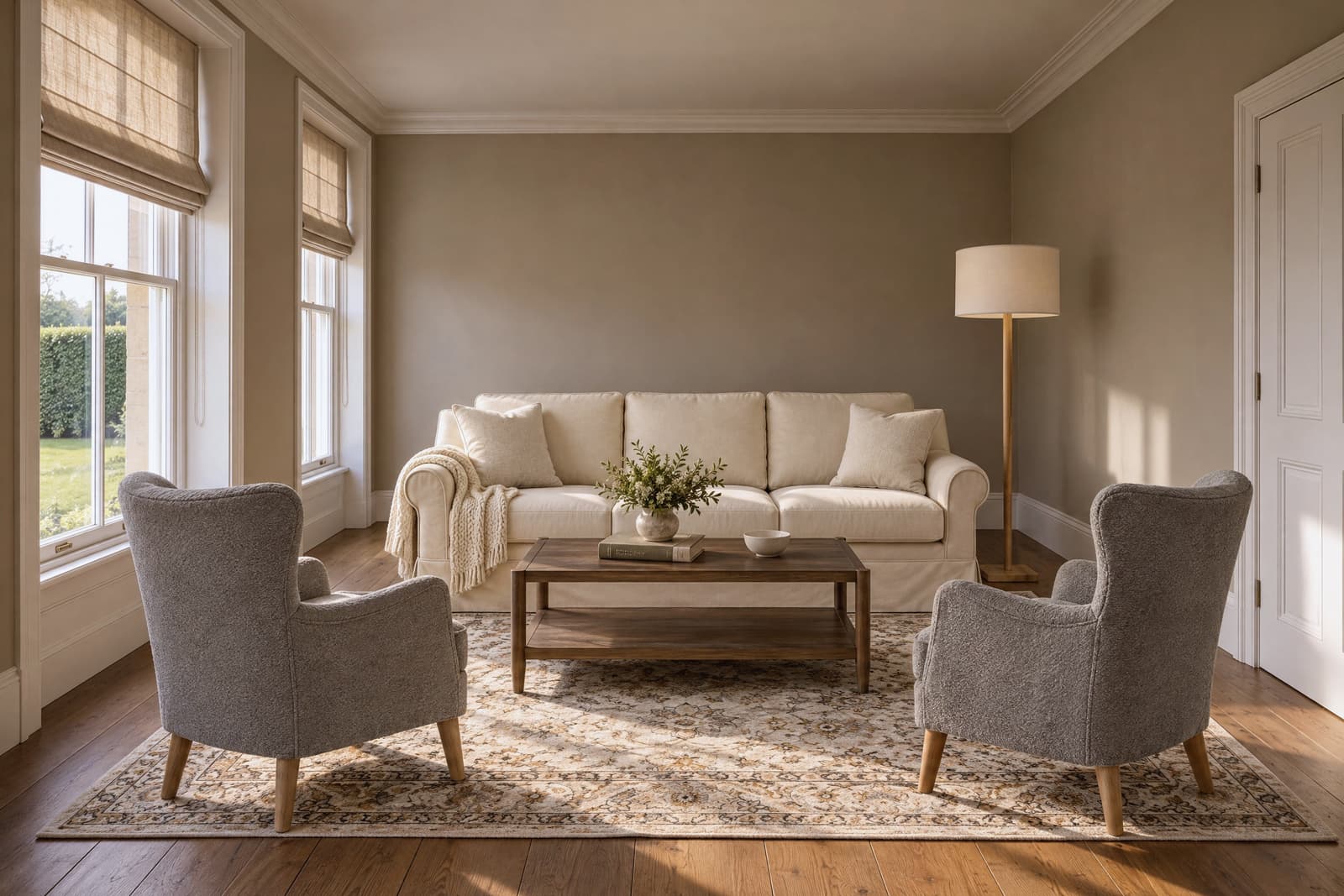
Start the transitional living room with a rolled-arm sofa in a cream or oatmeal linen slipcover, centered on the longest wall. Set two wingback chairs in gray chenille opposite it, angled slightly toward each other so the group reads as a conversation. A rectangular walnut coffee table with a lower shelf goes between them, on round tapered legs that keep the floor visible. Add a floor lamp with a natural wood column and a white linen drum shade at the end of the sofa, and ground the whole group on an ivory and gray oriental rug large enough for the front legs of every piece.
Transitional Dining Room
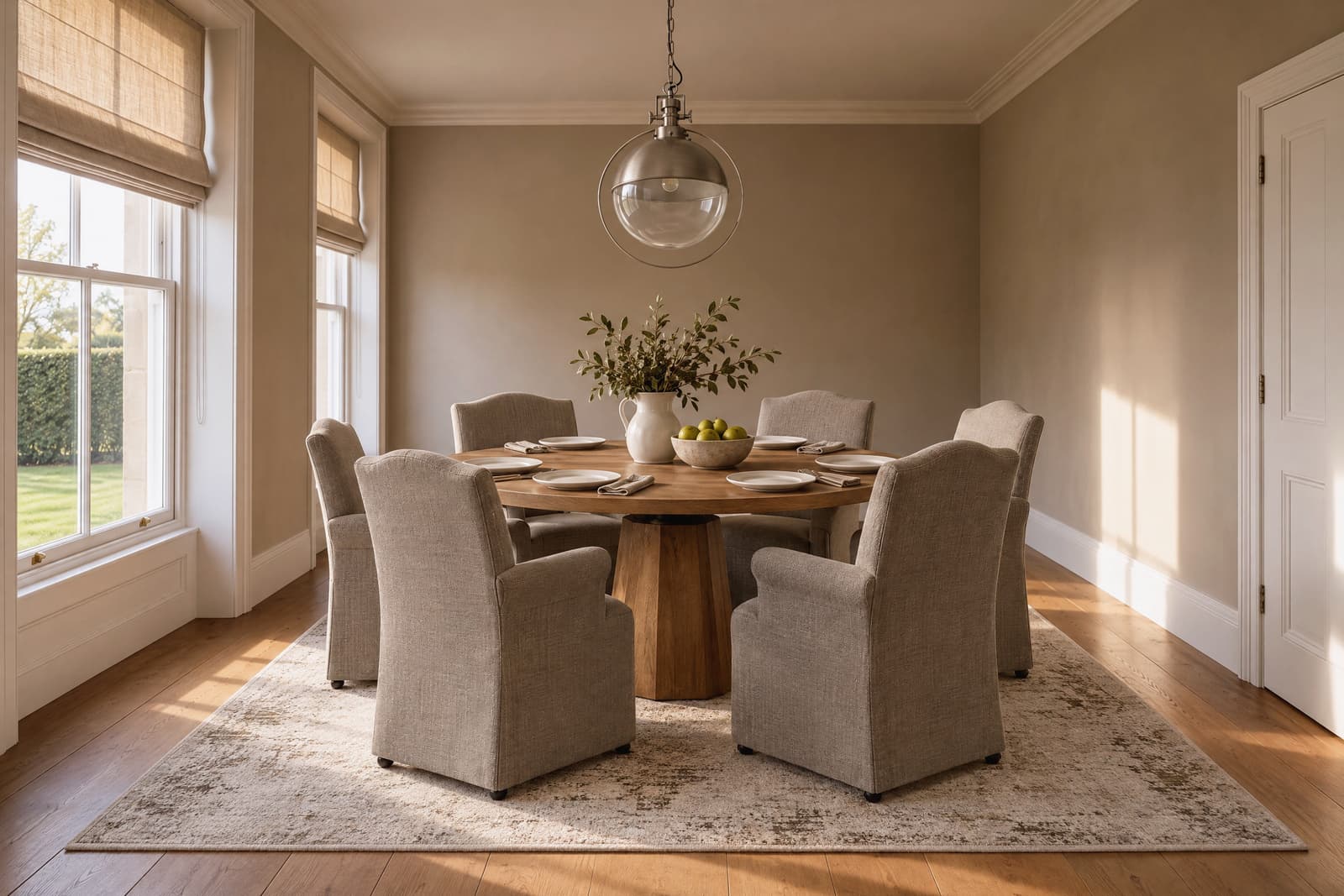
A transitional dining table seats six comfortably. A 60 inch round table in light brown wood on a faceted pedestal leaves room for every chair and every pair of knees. Surround it with six slipcovered dining chairs with rolled arms in a soft gray weave; casters on the back legs make them easy to pull in and out. Hang a single antique nickel and glass globe pendant low over the center, and lay an abstract beige and gray rug underneath that extends past the chairs when they are pushed back.
Transitional Bedroom
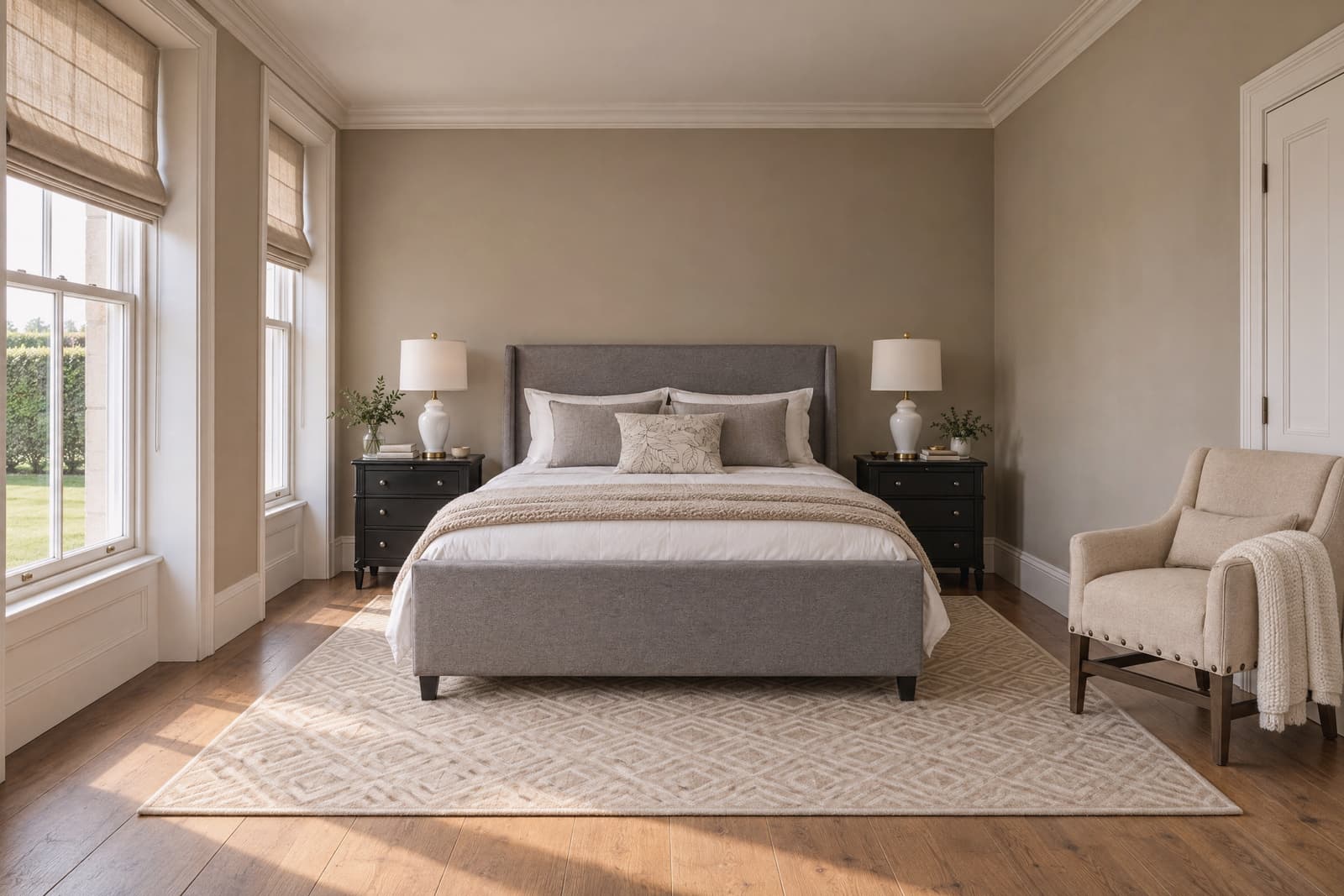
The transitional bedroom centers on an upholstered bed. A queen bed with a wingback headboard in gray linen gives the room its classic outline, and two black three-drawer nightstands on tapered legs give it contrast. Put a white and gold urn lamp with a linen drum shade on each nightstand. A cream linen armchair on a wood frame in one corner gives the room a place to sit, and a beige geometric rug under the lower two thirds of the bed softens the floor.
A transitional bedroom set is the bed and the matched pair of nightstands. Add a dresser in the same black or a warm brown if the room needs storage, and keep the wall above the bed as an open plane of greige.
Transitional Kitchen
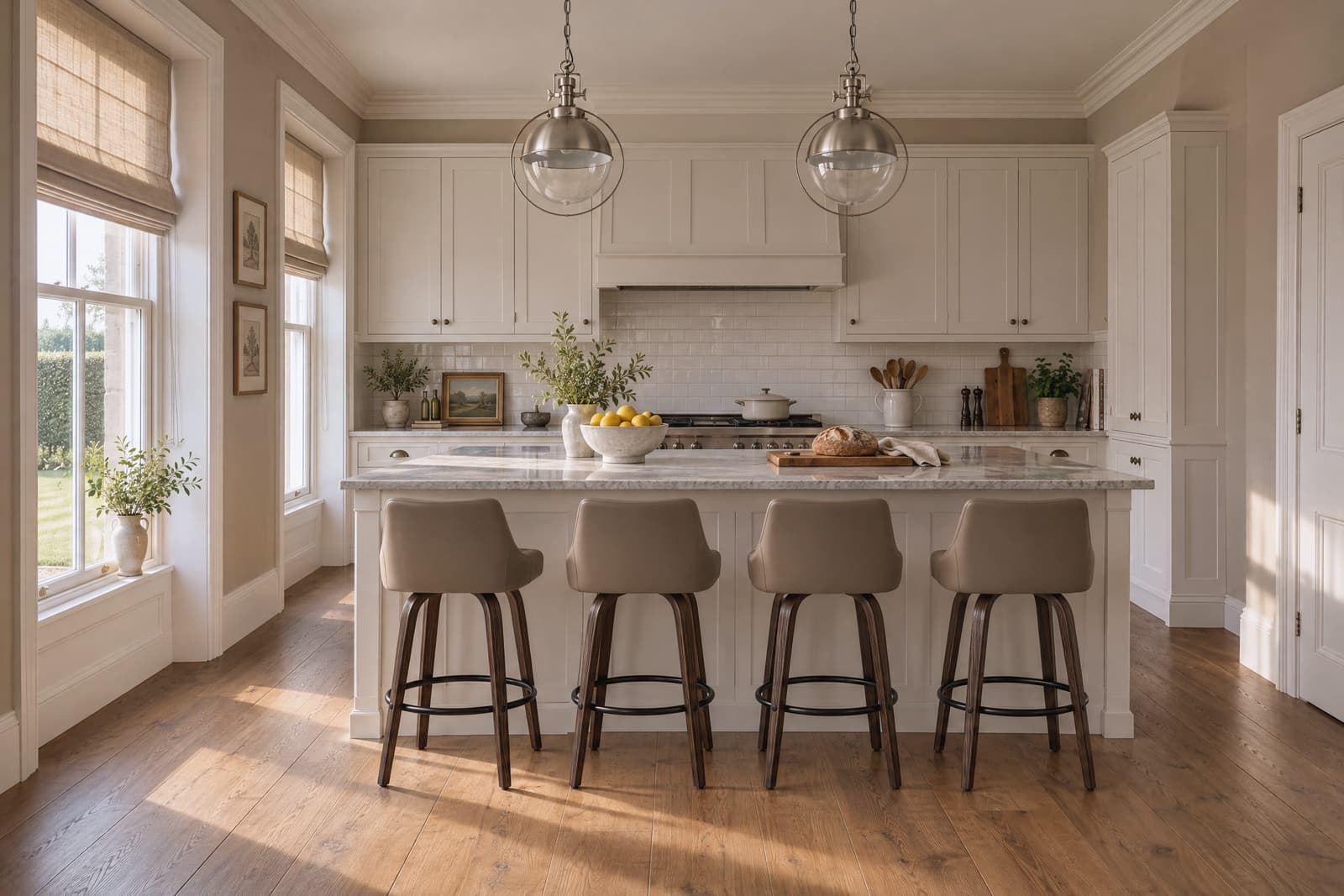
A transitional kitchen pairs white Shaker cabinets with a pale marble counter and lets the seating bring the warmth. Line the island with four swivel counter stools in brown faux leather on curved wood legs, and hang two antique nickel globe pendants above it. Simple dark bronze knobs on the cabinets and a white subway tile splashback complete the look.
Transitional Home Office
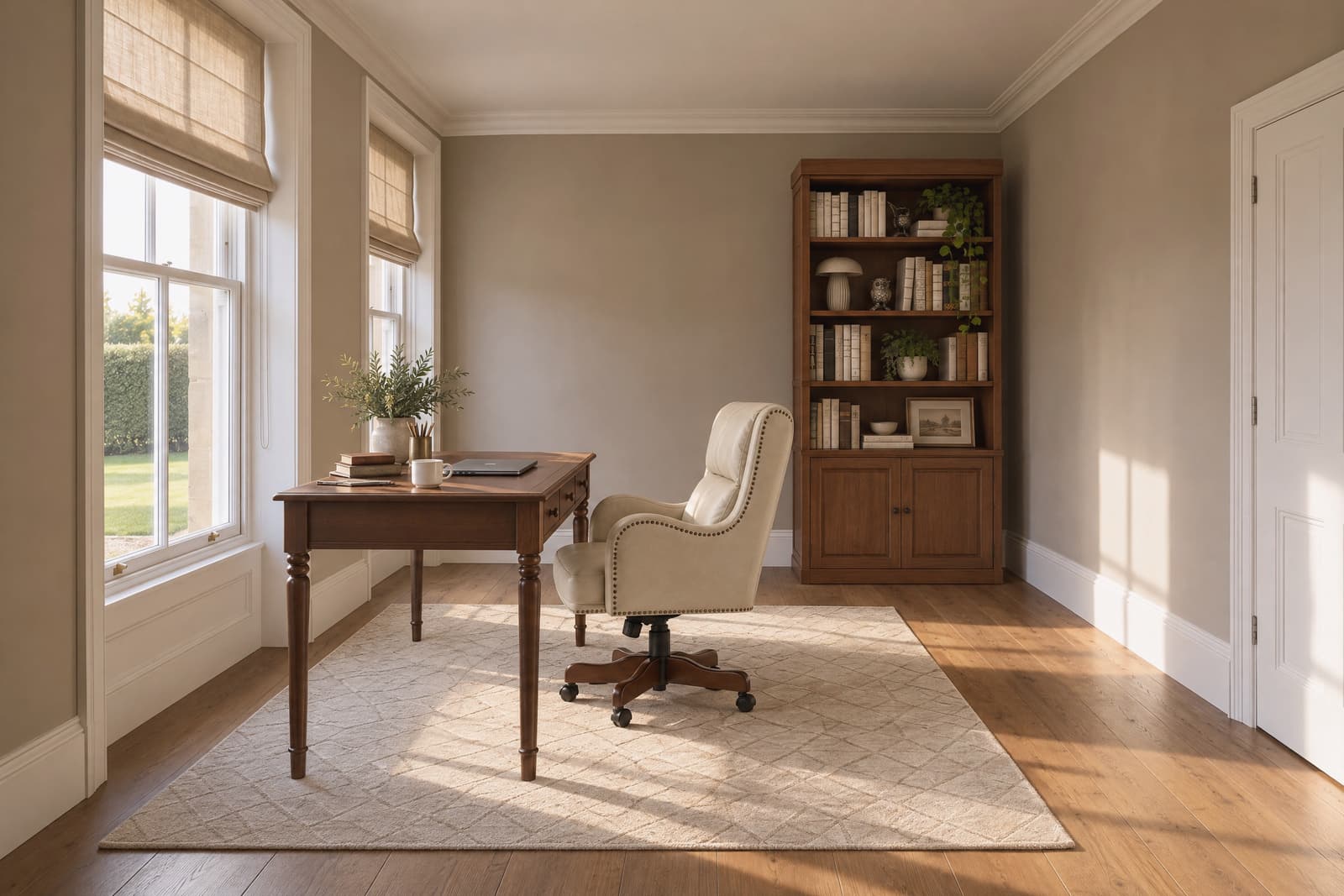
The transitional home office is built around a writing desk on turned legs. Choose a desk in brown solid wood with two shallow drawers and set it side-on to the window, so daylight falls across the work. A desk chair in cream vegan leather with nailhead trim on a wood five-star base keeps the classic outline, and a 72 inch walnut library bookcase with two lower doors holds the books above and the paperwork below. An ivory and gray hand woven rug under the desk defines the work area.
Transitional Bathroom
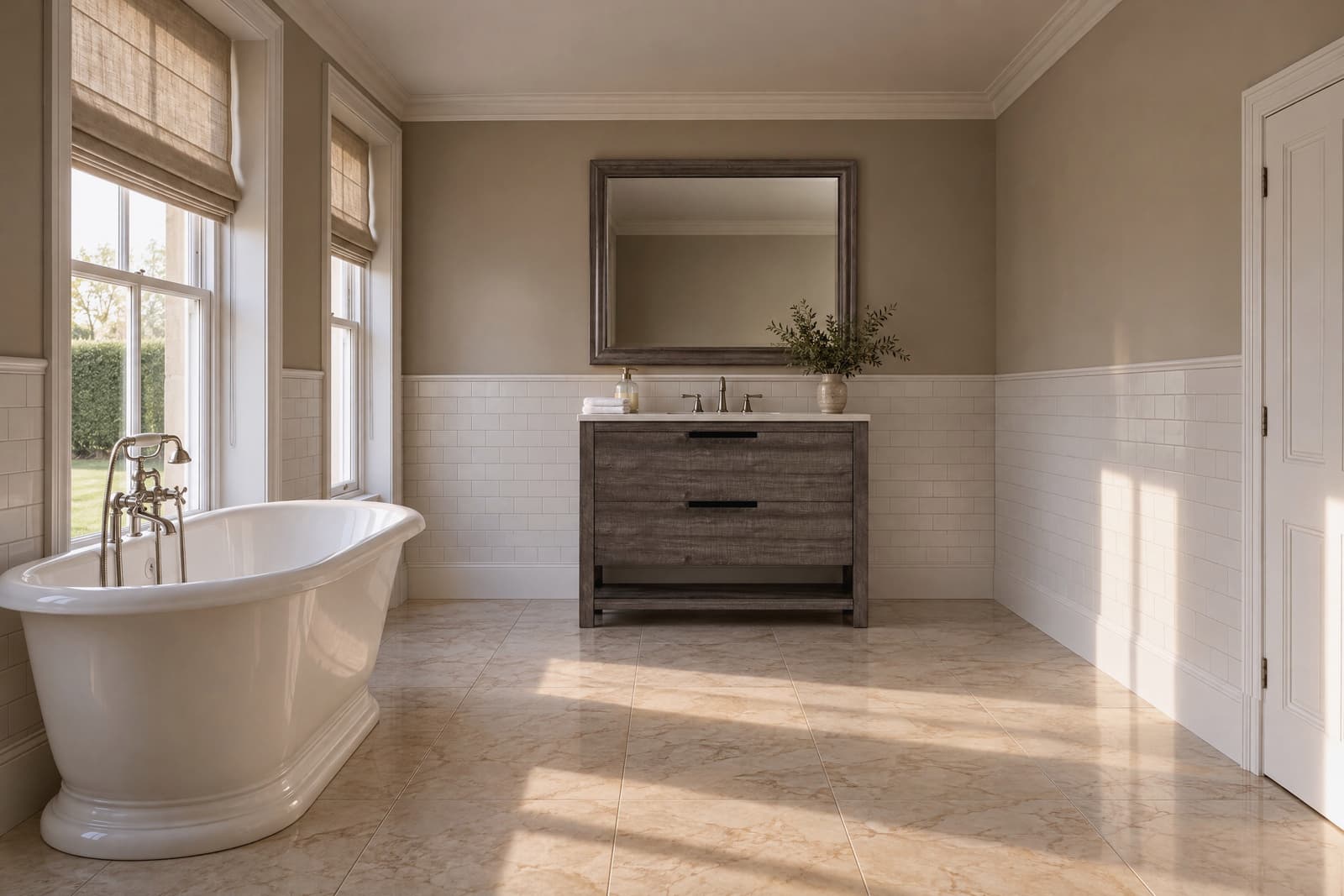
The transitional bathroom keeps to gray, white and greige over a warm cream marble floor. A 36 inch freestanding vanity in gray oak with two drawers and a white integrated sink stands below a gray wood framed mirror of the same width. White subway tile to shoulder height and greige paint above give the walls their two tones, and a white rolled-rim bath under the window completes the room.
Transitional Home Bar
A transitional home bar uses dark wood and soft seating. A dark wood home bar in the middle of the room gives guests a counter to gather at, with two swivel bar stools in gray fabric with nailhead trim drawn up to it. Behind it, a dark brown bar cabinet with carved doors and turned corner posts stores the bottles and glasses.
Transitional Patio
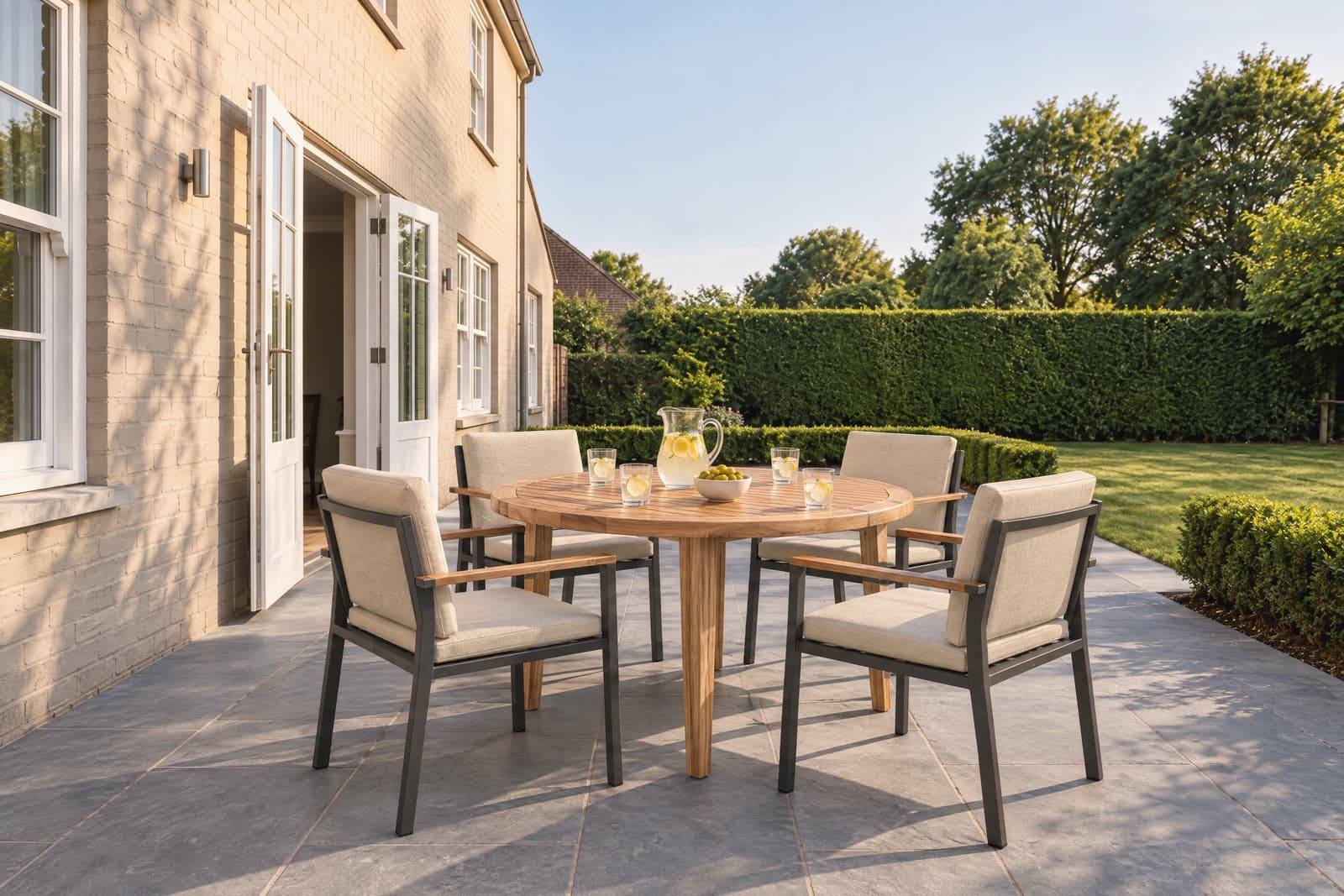
Transitional patio furniture carries the palette outdoors. A 36 inch round table in natural solid teak with four dining chairs around it, each on a charcoal frame with teak arms and a taupe cushion, suits a stone terrace outside a pair of French doors. Gray bluestone underfoot and a clipped boxwood hedge complete the scene.
Keeping Transitional Balanced
A transitional room stays balanced when the classic shapes and the plain surfaces are kept in proportion. Three habits help:
- One classic detail per piece. A rolled arm, a wing, a turned leg or a row of nailheads is enough; a piece carrying all four starts to read as traditional.
- Solid fabric on the big pieces. Keep pattern to the rug and perhaps one cushion, so the shapes of the furniture can be seen.
- Mix two woods at most. A warm walnut or brown oak with black reads as deliberate; three or four wood tones in one room start to compete.
Materials and Furniture
Slipcovered sofas and dining chairs suit the style and suit family life, since a removable cover can be washed. Chenille and performance linen hold up well on chairs that are used every day. On wood pieces, look for solid wood or a good veneer with a simple stain, since a plain finish shows the quality of the timber.
Greige walls change with the light, reading warmer in the evening and cooler on an overcast day, so test a sample on two walls before painting a whole room. White trim in a satin finish wipes clean and keeps its edge against the matte wall.
Where to Start
- Paint the walls a soft greige and the trim a crisp white.
- Choose the main piece in a classic shape: a rolled-arm sofa, a wingback bed or a pedestal dining table.
- Upholster it in a plain neutral fabric.
- Add two or three pieces in warm wood and one in black.
- Finish with one faded or quiet rug and simple lighting in nickel or white.
If you prefer to start from a finished room, every room in our transitional collection is put together and priced, starting with the transitional bedroom, so you can see what the whole look costs before committing to any one piece.
See every room in the Transitional hub.
Not sure where to start?
Quick choices between rooms, a few questions about your home, and a finished room for each room you want to furnish, every piece priced. A few minutes.
Start your home profile